
News   Apr 02, 2026
 1K     1 
News   Apr 02, 2026
 680     0 
News   Apr 02, 2026
 1.8K     2 

VIA Rail

The 16 km/h test, is that the test where they simulate being stuck behind a freight train?
No, you are thinking of the 0 km/h between stations test. The 16 km/h test is travelling over poorly maintained or poorly implemented trackage... like 4x4 offroading but with a passenger train.
 
I fine it strange some what that VIA is using the same train style as Brightline from the same builder using a cab car at one end and Brightline is using power at both end. Then, VIA is the only system moving to a cab car at one end compare to systems around the world that I know of on long distance trains. Other than crush load, see no need to have power at both end for 4 cars.

Brightline newest train set shot by Progressive Railroading
1633026684643.png
 
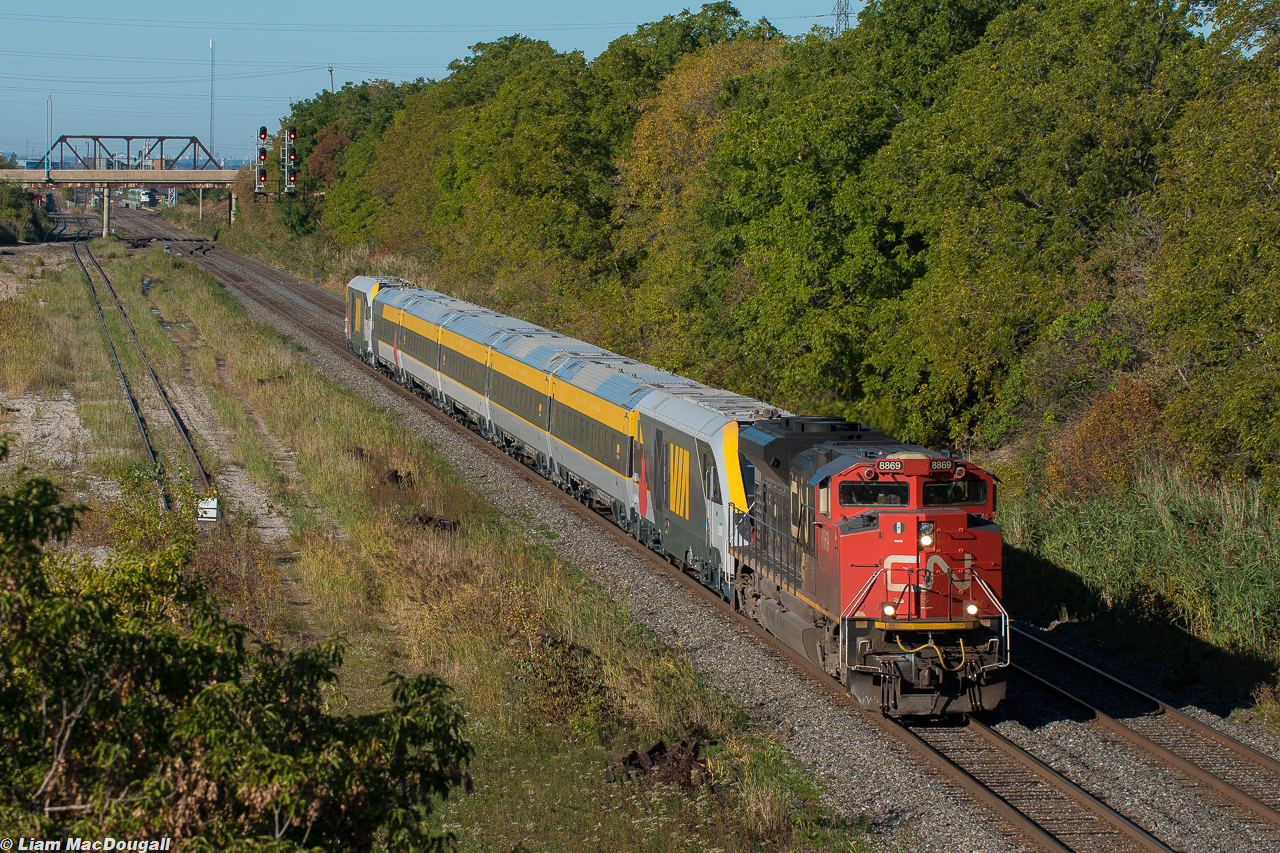
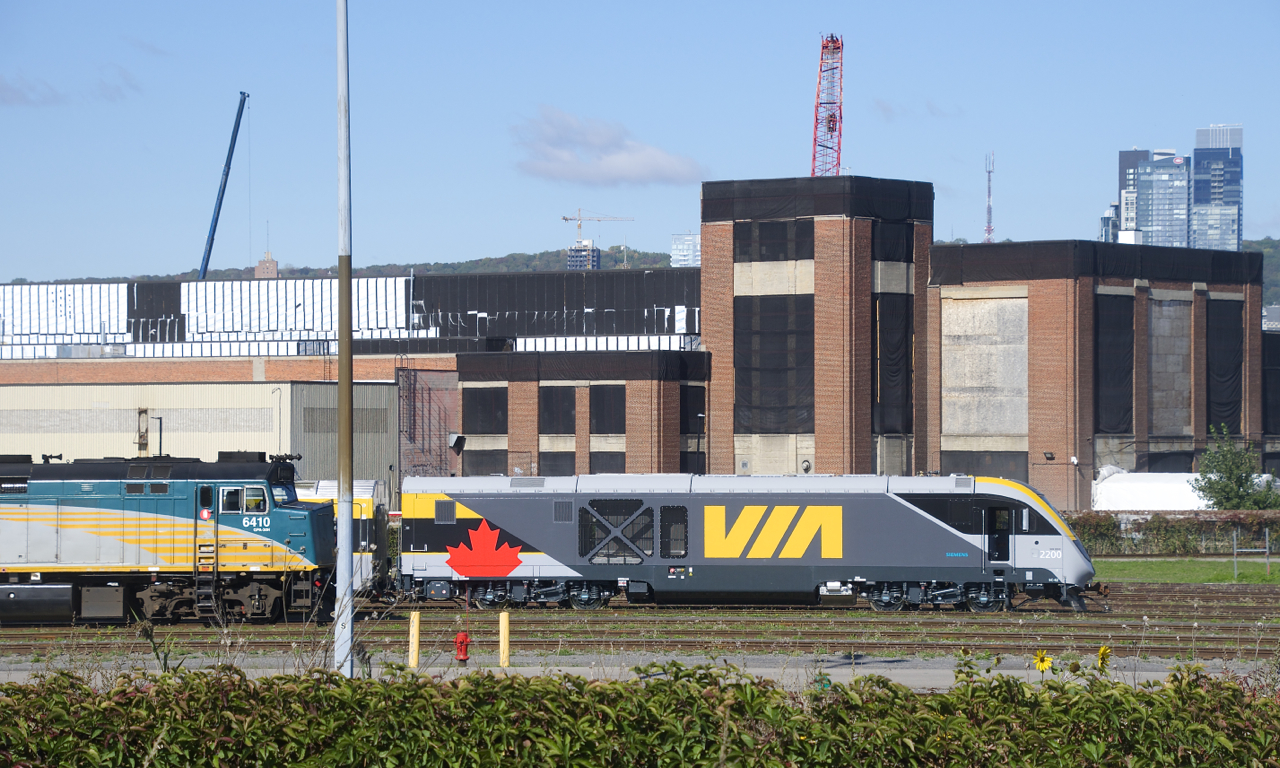
Lots of great shots of the new rolling stock out there but here are two unique ones:


Lots of great shots of the new rolling stock out there but here are two unique ones:


Really a juxtaposition between the new one and that old EMD train.
 
It's easy when the only thing you customize is the paint and fabric colors.
And that was exactly the point of chosing Siemens: VIA needed a design which was off-the-shelf and proven to minimize the risk of delays they couldn't afford while faced with the reality of operating a rapidly decaying fleet...
 
And that was exactly the point of chosing Siemens: VIA needed a design which was off-the-shelf and proven to minimize the risk of delays they couldn't afford while faced with the reality of operating a rapidly decaying fleet...

And good on them for doing so!

My point wasn't to knock Via, but to highlight how radically different this procurement was from the streetcars. Custom width, custom gauge, custom voltage, insanely small turning radius, insanely small overhang, additional power truck, oh we need pantos and poles, plus custom ramps, oops not to those specs though, please redo the custom ramps... What do you mean you can't make them lemon scented?
 
I fine it strange some what that VIA is using the same train style as Brightline from the same builder using a cab car at one end and Brightline is using power at both end. Then, VIA is the only system moving to a cab car at one end compare to systems around the world that I know of on long distance trains. Other than crush load, see no need to have power at both end for 4 cars.
First off, even under exaggerated assumptions of 100 people per car and 100 kg per person, you would have only 10 tons tonnes of "human weight" per car and thus no more than 50 tons tonnes per train (note that you still need a 5th car, even if you replace the cab car for a second locomotive), which should still be less than the weight of one empty Venture car and thus have negligible effect on acceleration compared to lighter passenger loads (trust me, this is my day job!)...

Anyways, may I ask you what intercity rail services still use trainsets with a locomotive on both ends? Granted, that was standard for the first generation of HSR trainsets (e.g. Advanced Passenger Train, Alstom's TGVs, ICE 1, Eurostar e300), but with the notable exceptions of France and Sweden, they more or less all have been superseded by either locomotive-and-cab-car concepts (e.g. ICE 2, Railjet, Class 91 with Driving Van Trailer or virtually any intercity train across Europe and beyond) or EMUs (ICE 3/T/4, Alstom's AGV, Eurostar e320), whereas Japan's Shinkansen seems to have never bothered with locomotive-hauled trains...
 
Last edited:
Loving the look of the new train. And so glad they went with Siemens. Nice to see rolling stock arriving on schedule as opposed the street car fiasco with Bombardier.
I should add that the designer in me doesn’t like the red maple leaf slapped on to the side. I’m certain some bureaucrat was “we need a maple leaf to people know we’re Canadian”. I don’t like it. DB, SNCF, NS, and PKP don’t use their national flags and colours. Branding and visual identity is different from national identity. The yellow, black, grey look great on this fleet.

for those wondering whomever worked on the visual identity of the new VIA train sets certainly took note of Pantone 2021 colours of the year: https://www.pantone.com/color-of-the-year-2021

With the HP1 updated the fleet is looking very good. Will look better once the whole flagship Canadian is complete.
 
Last edited:
Then, VIA is the only system moving to a cab car at one end compare to systems around the world that I know of on long distance trains. Other than crush load, see no need to have power at both end for 4 cars.
For a guy who seems to follow Progressive Railroading and the other industry rags, you seem to be painfully unaware of the two massive orders currently underway for Austria's and the Czech railways ordering - *GASP* - trainsets equipped with cab cars. Austria's even ordering overnight trains that will be cab-car equipped.

Oh, and Caltrain would also like a word, too.

Dan
 
First off, even under exaggerated assumptions of 100 people per car and 100 kg per person, you would have only 10 tons of "human weight" per car and thus no more than 50 tons per train (note that you still need a 5th car, even if you replace the cab car for a second locomotive), which should still be less than the weight of one empty Venture car and thus have negligible effect on acceleration compared to lighter passenger loads (trust me, this is my day job!)...

Agreed, though the metric unit is spelt tonne. One ton is approximately equal to 0.9 tonnes.

What is the mass of an empty Venture car? The link you provided says the Charger locomotive "weighs just 271,000 pounds" but it doesn't mention the mass of the Venture cars. I suspect this is because each car will be different depending on how it is configured, but it would be nice to have a ballpark or range.

Anyways, may I ask you what railroads use trainsets with a locomotive on both ends? Granted, that was standard for the first generation of HSR trainsets (e.g. Advanced Passenger Train, Alstom's TGVs, ICE 1, Eurostar e300), but with the notable exceptions of France and Sweden, they more or less all have been superseded by either locomotive-and-cab-car concepts (e.g. ICE 2, Railjet, Class 91 with Driving Van Trailer or virtually any intercity train across Europe and beyond) or EMUs (ICE 3/T/4, Alstom's AGV, Eurostar e320), whereas Japan's Shinkansen seems to have never bothered with locomotive-hauled trains...

Interesting. I agree there isn't a power issue with a single locomotive. The worry I have with using cab cars more has to do with the physics of pushing a train. On straight track, if a car derails while being pushed, the slight offset resulting from the derailment will create an outward lateral force, pushing the car away from the centre of the track. When being pulled, that lateral force will be inward and pull the car back to the centre of the track, tending to keep it aligned on the centre of the track.

I would assume they have safety measures in place that will detect a derailment like this and automatically have the locomotive slow down when pushing, putting the train in tension, thus pulling the cars back to the centre. Otherwise, if unchecked, the situation could quickly escalate (especially at higher speeds) and could result in the train accordioning.

Regarding Brightline, my guess is that since it was a small order (only 5 trainsets), the NRE cost of designing a cab car exceeded the cost of purchasing 5 extra locomotives. Also, I gather the plan is to eventually expand the trainsets up to 10 cars, so maybe they would need a second locomotive then.
 

Back
Top