



crs1026
Superstar
And hopefully on into the Park Car....Everyone to the Panorama Lounge!
- Paul
|
|
|
And hopefully on into the Park Car....Everyone to the Panorama Lounge!
I asked the same question in a different forum and the answer was essentially reliability. The due to weather conditions the roads are not reliable enough for bus service in the North. Train is able to go through severe weather situations where the bus cannot.Heres my opinion on the matter. And I know it will be unpopular around here. Plus, note I am a train nerd and love trains.
Most of those routes, are better served by buses. Some like the Churchill route still exist because there are no roads, but there is little gained in these low density areas that a train will bring over a frequent bus route.
The exception is the Canadian having a more southerly route through Calgary etc. The Canadian should move back to its original route, with a high speed train between Calgary and Edmonton, and perhaps a branch that comes off of the Canadian Winnipeg to Edmonton as well.
That being said bus services in Canada have been gutted as well, but I really don't see the advantages of rail in these tiny bedroom communities that the old lines served.
I asked the same question in a different forum and the answer was essentially reliability. The due to weather conditions the roads are not reliable enough for bus service in the North. Train is able to go through severe weather situations where the bus cannot.
When I looked at the subsidy costs for the Ontario Northlander, it actually wasn't much ($25m/annually) so running a national train network actually shouldn't be that bad
(especially if VIA were to run on it's own track?). At the very least, I look at preserving these communities as insurance for the country.
I thought along the same lines which led to my question about using frequent buses instead of trains.It is true that trains are more reliable in bad weather, but at what cost? Trains are significantly more expensive to run than buses and if there is less than a bus load of people on board, either the ticket prices become exorbitant or the government will be on the hook for huge annual subsidies.
The Northlander ran 6 days a week, which works out to about 313 days a year, so that is a subsidy just shy of $40,000 per train each way. Even if there was an average of 100 people on board (likely an over estimate), that works out to a government subsidy of about $400 per passenger, each way, in addition the whatever fair they paid.
I wouldn't trivialize the cost of maintaining track to any reasonable standard (a passenger train crawling along at 15mph (24 km/h) is not going to cut it). The Northlander ran on track that was also being used by Ontario Northland for freight. It is only economical if VIA is using it many times a day (like with HFR). For routes that will only see at most 1 train a day each way, those costs will be significantly higher than using another railway's track.
I thought along the same lines which led to my question about using frequent buses instead of trains.
The estimate for Northlander was around a $200-$400 per passenger subsidy.
An annual $25 million dollar subsidy isn't bad for a risk mitigation perspective. Enabling the existence of many communities may pay dividends in the future. You don't need em until you need em.
I wouldn't trivialize the cost of maintaining track to any reasonable standard (a passenger train crawling along at 15mph (24 km/h) is not going to cut it). The Northlander ran on track that was also being used by Ontario Northland for freight. It is only economical if VIA is using it many times a day (like with HFR). For routes that will only see at most 1 train a day each way, those costs will be significantly higher than using another railway's track.

Heres my opinion on the matter. And I know it will be unpopular around here. Plus, note I am a train nerd and love trains.
Most of those routes, are better served by buses. Some like the Churchill route still exist because there are no roads, but there is little gained in these low density areas that a train will bring over a frequent bus route.
The exception is the Canadian having a more southerly route through Calgary etc. The Canadian should move back to its original route, with a high speed train between Calgary and Edmonton, and perhaps a branch that comes off of the Canadian Winnipeg to Edmonton as well.
That being said bus services in Canada have been gutted as well, but I really don't see the advantages of rail in these tiny bedroom communities that the old lines served.
I asked the same question in a different forum and the answer was essentially reliability. The due to weather conditions the roads are not reliable enough for bus service in the North. Train is able to go through severe weather situations where the bus cannot.
When I looked at the subsidy costs for the Ontario Northlander, it actually wasn't much ($25m/annually) so running a national train network actually shouldn't be that bad (especially if VIA were to run on it's own track?). At the very least, I look at preserving these communities as insurance for the country.
It is true that trains are more reliable in bad weather, but at what cost? Trains are significantly more expensive to run than buses and if there is less than a bus load of people on board, either the ticket prices become exorbitant or the government will be on the hook for huge annual subsidies.
The Northlander ran 6 days a week, which works out to about 313 days a year, so that is a subsidy just shy of $40,000 per train each way. Even if there was an average of 100 people on board (likely an over estimate), that works out to a government subsidy of about $400 per passenger, each way, in addition the whatever fare they paid.
I wouldn't trivialize the cost of maintaining track to any reasonable standard (a passenger train crawling along at 15mph (24 km/h) is not going to cut it). The Northlander ran on track that was also being used by Ontario Northland for freight. It is only economical if VIA is using it many times a day (like with HFR). For routes that will only see at most 1 train a day each way, those costs will be significantly higher than using another railway's track.
I thought along the same lines which led to my question about using frequent buses instead of trains.
The estimate for Northlander was around a $200-$400 per passenger subsidy.
An annual $25 million dollar subsidy isn't bad for a risk mitigation perspective. Enabling the existence of many communities may pay dividends in the future. You don't need em until you need em.
How many snow days are there in a year are there where the bus would be cancelled but the train would run? It would be cheaper to pay for hotels for those who's bus is cancelled because of inclement weather than it would be to subsidize a train all year round.
Don't get me wrong, like @robmausser, I am a train nerd and love trains, but having rail lines heavily subsidized for sentimental reasons or the very occasional trip cancellation doesn't make sense.
Since no part of above post pertains VIA Rail and almost every single claim or rhetorical question has been debunked here countless times, I would like to kindly ask to spare me to have to read the next reliably futile attempt of correcting his misconceptions. Or if someone nevertheless feels the need to respond, I would appreciate if that was done in the General Railway Discussions thread and not here...[lots of misconceptions or outright nonsense]
I really do believe that rail service between Toronto, north bay and Sudbury is warranted.Since no part of above post pertains VIA Rail and almost every single claim or rhetorical question has been debunked here countless times, I would like to kindly ask to spare me to have to read the next reliably futile attempt of correcting his misconceptions. Or if someone nevertheless feels the need to respond, I would appreciate if that was done in the General Railway Discussions thread and not here...
Thank you!
Correct me if I'm wrong, but people just took boats over to the other side of the bridge. But honestly, you're over-romanticizing rail travel. Just wait till your inbox is filled with these ∨A train does not stop for a car accident. A train does not stop for a blizzard. Ever see a major highway closed for 12 hours and no other way around it? This reminds me of when the Nipigon River Bidge failed a few years ago. There is no road route around it in Canada. A train running the old CP Canadian route would have easily been utilized. Southern ON doesn't face that kind of issue. If the 401 is closed along the entire route, you could make your way around it.
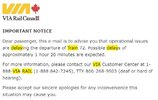

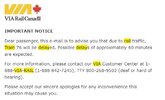
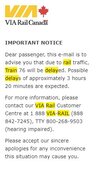
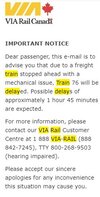


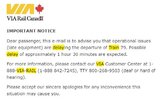


I would love to get all of these annoying emails. Reality is that nothing is going to be done to improve service outside of the Corridor.Correct me if I'm wrong, but people just took boats over to the other side of the bridge. But honestly, you're over-romanticizing rail travel. Just wait till your inbox is filled with these ∨
View attachment 300648View attachment 300649View attachment 300650View attachment 300651View attachment 300652View attachment 300653View attachment 300654View attachment 300655View attachment 300656View attachment 300658
There's more where these came from, and these are only the delays from before I boarded my trains.
Let’s do a little timetabling exercise: if a train was to reach Toronto in the morning in time for the start of a working day (i.e. arrival no later than 8:30), what time would it pick up passengers in Sudbury, North Bay and Muskoka? And, if the return train was to leave after the end of a working (i.e. departure no earlier than 17:30), what time would it drop off passengers at these places?I really do believe that rail service between Toronto, north bay and Sudbury is warranted.
People are moving from the city to Muskoka to work remotely, and they will need to visit the city for work and pleasure.
Currently, Toronto-Kitchener-London has two trips per day and the extension to Sarnia only one. Don’t you think that these corridors are much more deserving of four trains per day than Toronto-Sudbury?As more people move to the outlying areas there will be more demand for travel between the surround 300km's. If you only had to go to the Toronto office twice a month and you could take the train and know reliably that you would get to work on time it makes it an attractive proposition.
For that to happen you need at least two trips in either direction everyday. Four would be ideal.
These are valid observations, but have nothing to do with the topic of this thread...Buses are important as well but they need to be in coordination with each other.
You can't expect people to drive to the station. At least have carpool lots so that people can get to a bus and then connect to a train. I don't expect the bus to drop you off within a ten minute walk in Penetanguishene.
If your definition of “service” excludes all other modes of passenger transportation than railways, then of course, “nothing is going to be done to improve service outside of the Corridor”, as investments in such a capital-intensive and high-capacity mode subject to extreme economies of scale should be focused on where most people live...I would love to get all of these annoying emails. Reality is that nothing is going to be done to improve service outside of the Corridor.
Wrong answer. I would have accepted:I would love to get all of these annoying emails. Reality is that nothing is going to be done to improve service outside of the Corridor.
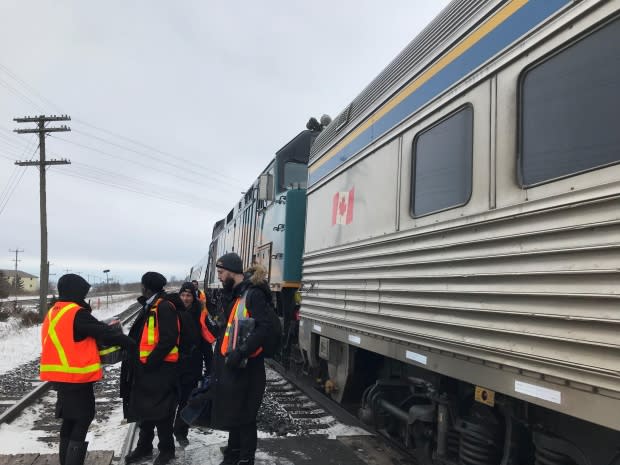
I think it was Christmas 2019, or 2018, the Canadian train was over 24 hours late. It think it was about 48 hours late. It was due to an engine failure out of Toronto. They were stopped in Capreol till a new one could be sent up to bring them the rest of the way to Vancouver.Wrong answer. I would have accepted:
I would love to be 4 hours delayed getting home because of mechanical issues (I overheard an engineer spilt coffee on the control panel) and had to wait for a replacement locomotive from Toronto (many people missed their flights home for reading week) (train 76).
I would love to be 4 hours delayed getting home because the locomotive couldn't operate properly due to subzero temperatures and that a replacement locomotive had to be brought in from Toronto (train 80).
I would love to be 2 hours delayed causing me to miss class because of a frozen track switch (train 71).
I would love to be an hour and a half delayed because of signal issues (too many to count).
I love missing family dinners because I got stuck behind a freight train (too many to count).
I would love to be delayed 4 hours causing me to miss a meeting because a coupler on a CN freight train broke blocking a single track (train 76).
I love how CN placed loose equipment on the tracks causing multiple emergency stops and the delightful smell of burning brake fluid and my train getting hopelessly delayed behind slow GO trains running into Toronto. This practice eventually culminated in fuel leaks, smashed windows, and cascading delays resulting in exhausted crews across the network over several days. I still remember reading posts on Twitter about how the people on board were stuck for hours in the cold without access to power, heat, or the toilets because the engine had to be shut off due to a suspected fuel leak (that could have been my train).
Via Rail train evacuated after being hit by debris near Trenton, Ont.
A Via Rail train traveling between Toronto and Ottawa had to be evacuated after it was hit by debris near Trenton, Ont., Saturday afternoon.ca.news.yahoo.com
If you're wondering why I'm so concerned about there being a staff member in each car ∨
I would love to be an hour and a half delayed because a woman overdosed and had a seizure on the train and had to be taken off at a level crossing just outside of Brantford (train 76).
I would love to be an hour delayed because a man had a heart attack on the train had to be taken off at Oakville (train 78).
And finally,
I love how I was 1-3 hours delayed because someone took their lives on the tracks and caused cascading delays across the VIA network (multiple times).
I would love to be 2 hours delayed because someone was smoking on the train and assaulted a crew member (train 78).
If you ask me, people who place so much importance on the availability of passenger rail service (while disdaining all other modes of public transportation), yet choose to live in a place like Sudbury, set themselves up for a life in misery. You either get over your aversion against buses or move to where train service meets your personal definition of whatever you may deem an acceptable level...So, yes, I would love all of these emails telling me my train is delayed. That would mean that I have a train.