News   Apr 01, 2026
 60     0 
News   Apr 01, 2026
 261     0 
News   Apr 01, 2026
 456     1 

VIA Rail

You can read all about Quiet Zones here:

I’ve been made aware in the meanwhile that Transport Canada has its own guidelines and application process in place:
 
Based on everything I know, 5-hour Montreal-Toronto travel times, even with frequent service, won't boost ridership much without significantly higher fare subsidies than today. Thus making me wonder if the sudden appearance of the by-pass is because of institutional concerns. Though if it only saves half-an-hour or less, as we discussed above, I still doubt it's enough.
Every analysis can only be as relevant as the data from which it is derived is: You seem to base your entire line of argument on the financial figures which are provided in VIA's Annual Reports and these indeed show for its Corridor services a per-passenger subsidy of $30 per passenger pre-pandemic:
1639252684939.png

Source: VIA Rail Annual Report 2019 (p.9)

So, clearly, if VIA already loses $30 per passenger, then it stands to bleed even more taxpayer money when increasing its services, unless the utility it provides to its passengers increases on a scale which can only be achieved by cutting at least one, if not: almost two hours from the journey time between Montreal and Toronto, right? It's notoriously difficult to predict the future, even more so if you don't have access to VIA's internal data, but let's use the little data that is readily available. Therefore, given that VIA expanded its Corridor services steadily in the 5 years leading to the pandemic, we should expect that its operating costs have increased considerably.

Well, let's have a look at what happened between 2014 and 2019. As train-mileage increased in the Corridor by 16.5%, passenger-miles increased by 22.4%, passenger counts by 34.1% and revenues by even 49% (or still 37.4%, after adjusting for inflation). At the same time, costs increased by 15.3% 20.4%, which shrinks to only 6.2% 11.0% once you adjust it for inflation:
1639631503066.png


The above table shows that for every percentage point increase of train mileage in the Corridor, ridership increased by 2.1% and revenues (adjusted for inflation) by 2.3%, while costs only rose by 0.4% 0.7% and the deficit decreased by 2% 1.4%. At the same time, it shows that two factors were certainly not responsible for this surge in ridership: travel times (which increased by 2.9% for average travel times and 5.6% for minimum travel times) and on-time performance (which slipped by 8 percentage-points).


The reason why the figures you are apparently using fail to explain VIA's performance between 2014 and 2019 is that you seemingly struggle to understand the differences between Management Accounting reporting and Financial Accounting reporting, which is summarized below:

Management accounting is a field of accounting that analyzes and provides cost information to the internal management for the purposes of planning, controlling and decision making.

[...]

Managerial accounting is concerned with providing information to managers i.e. people inside an organization who direct and control its operations. In contrast, financial accounting is concerned with providing information to stockholders, creditors, and others who are outside an organization. Managerial accounting provides the essential data with which organizations are actually run. Financial accounting provides the scorecard by which a company’s past performance is judged.

In short, Financial Accounting reports (like the tables from VIA's Annual Report) concern the past performance and provide answers for questions like "How much did VIA cost the taxpayer last year?". Conversely, Management Accounting reports inform decisions by answering questions like: "If we expanded our Montreal-Ottawa service next year, would our operating deficit increase or decrease?". Unfortunately, Managerial Accounting reports are notoriously difficult to obtain as they are generally considered commercially sensitive (ask the poor guy who has tried to obtain VIA's HFR studies through an Access-to-Information request!).

Nevertheless, given that one of the most central differences between both philosophies is the treatment of overhead and other fixed costs (Financial Accounting seeks to somehow allocate them across the various activities in the least arbitrary way possible, whereas Management Accounting ignores them as "sunk costs" which remain unchanged by whichever change in the output of the activities is studied), we can use the one report in which VIA actually separates the direct costs and revenues from its indirect costs and revenues. These figures, published in its Corporate Plans rather than its Annual Reports, show us that VIA's Corridor services actually recover 135.5% of their direct operating costs, which allowed it to contribute $77 million towards VIA's massive overhead costs, thus reducing its burden to the taxpayer by that same amount. Therefore, VIA's Corridor services generate a positive cashflow of $17 per passenger [$77.0 million / 4,782,493 passengers in 2018], rather than making it lose $30 or whatever figure you were looking at:

1585527242974-png.238779

Compiled from: VIA Rail's Summary of the Corporate Plan and Annual Plans 2017 and 2018
Note: Re-post from post #6,707


***


With all of that said, what's the implication here? The only thing which holds VIA's Corridor services in the red is the massive amount of overheads and other non-direct costs it absorbs. The growth path shown between 2014 and 2019 demonstrates that there clearly is a way for VIA to outgrow its non-direct costs by increasing its services further - without the need for massively reducing its travel times at a great expense. All it needs is the infrastructure access and fleet to do so - and these are exactly the gaps which HFR would fill...


Have a good night!

Update (2021-12-16): I've corrected a mistake in my table, which understated VIA's costs (and thus also: deficit) in 2019 by $20 million, which led to a few minor corrections in the text, as shown above....
 
Last edited:
One thing I can't understand is why does VIA stop at Aldershot and not Burlington? Is it because bus connections depart from Aldershot?
So then why did GO decide to have Niagara buses leave from Burlington? And Burlington has a bigger station than Aldershot. There has to be better planning to consolidate these services.
 
Aldershot is there because it’s Via trying to serve Hamilton, not Burlington. Hamilton just doesn’t have a train station on the line.
Indeed, VIA consolidated its existing stations at Hamilton, Dundas and Burlington at Aldershot on May 25, 1992.

Just a short operational history of these 4 stations:

Hamilton
Hamilton's CN Station at James Street North was used by almost all its Toronto-Brantford-London trains until April 1962:
1639365342460.png

Source: CN timetable effective 1961-10-29

On April 29, 1962, all such trains dropped Hamilton as a stop (thus saving approximately 20 minutes in travel time), except for eastbound westbound trains 77 (the morning Toronto-London train), 9 (the Toronto-Windsor night train) and 15 (the Toronto-Chicago night train called "International Ltd."):
1639366084226.png

Source: CN timetable effective 1962-04-29

Train 77 had its last scheduled run on December 31, 1964, the "International Ltd." its last scheduled stop in Hamilton on October 29, 1966 and the night train Toronto-Windsor ceased operation on June 30, 1967.

Nevertheless, the Toronto-Niagara Falls service continued to serve Hamilton until April 24, 1992:

1639366843375.png

Source: VIA timetable effective 1992-04-26


Dundas
Dundas had always been a minor stop for CN, but initially, they tried to ensure connectivity between London and Hamilton, by rerouting terminating its Niagara-Toronto services via at Dundas (the schedule indeed seems to suggest that the RDCs from Niagara-Hamilton were attached to London-Toronto trains, but the fact that they arrived only a few minutes before they returned towards Niagara suggests otherwise):

1639368135376.png

Source: CN timetable effective 1962-04-29

However, within months that experiment was dropped in favor of having passengers connect at Burlington or running a connecting bus between Hamilton and Dundas. VIA inherited that connecting bus service to selected departures of the Toronto-London service and rerouted it first to Brantford (in April 1977) and soon after to Burlington (in October 1978), before discontinuing it in November 1987.

Nevertheless, the stop at Dundas survived until May 24, 1992:

1639368582097.png

Source: VIA timetable effective 1992-04-26


Burlington

Most, though not all CN services stopped at Burlington and VIA continued to do so until May 24, 1992.


Aldershot

Aldershot was only used by 1-2 of CN's Hamilton-Toronto commuter trains until the stop disappeared with the timetable change on 1965-10-31 (after which the station was not used by any intercity trains until VIA decided to consolidate its Burlington/Hamilton/Dundas stops on May 25, 1992 at GO’s new station which had been built approximately 0.3 miles East of the old location):

1639373326589.png

Source: CN timetable effective 1965-04-25


***


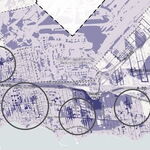
With all of that said, I can see VIA returning to stop at GO's West Harbour Station, but only if CN allows GO to build a connection from GO's platforms to its main tracks (which would shave quite a few minutes off GO's weekday commuter service from/to Niagara Falls) and obviously only for the Maple Leaf, as for Toronto-London-Windsor trains, the penalty of going via Hamilton will always be too much of an inconvenience. This is why I struggle to imagine that they would move their stop back to Burlington, as it would be quite a bit further from Hamilton, but in the end, Hamilton is located at the wrong rail corridor...
 
Last edited:
With all of that said, what's the implication here? The only thing which holds VIA's Corridor services in the red is the massive amount of overheads and other non-direct costs it absorbs. The growth path shown between 2014 and 2019 demonstrates that there clearly is a way for VIA to outgrow its non-direct costs by increasing its services further - without the need for massively reducing its travel times at a great expense. All it needs is the infrastructure access and fleet to do so - and these are exactly the gaps which HFR would fill...


Have a good night!
Being a CPA, I almost cried reading your post (in a good way)

FP&A teams have access to pretty incredible data that would never make it's way in a publicly reported publication (such as an annual report) and they're pretty amazing at working with network planning. It's the same thing with airlines, and trust me they do it pretty efficiently with a lot more uncertainty than Via.
 
Last edited:
...one of the most central differences between both philosophies is the treatment of overhead and other fixed costs (Financial Accounting seeks to somehow allocate them across the various activities in the least arbitrary way possible, ...)

That one phrase says a lot. While some fixed costs are easy to allocate to a specific service (ex. costs associated with a station that is used exclusively by corridor trains can be attributed to corridor service), costs that are shared by multiple (or all) services can be more difficult to allocate in a fair way.
 
That one phrase says a lot. While some fixed costs are easy to allocate to a specific service (ex. costs associated with a station that is used exclusively by corridor trains can be attributed to corridor service), costs that are shared by multiple (or all) services can be more difficult to allocate in a fair way.
Typically you'd allocated using a prorated value like ridership and that would provide a strong basis for auditors. However, Via doesn't present segmented information by service in their audited financial statements. The annual report mentions it, but it's a grey zone from an accounting standpoint since it's unaudited (which means that they basically can say whatever they want provided that it's generally in line with what the audited FS say). They can use managerial accounting notions in the MD&A portion of the report if they so choose.
 

Back
Top