News   Mar 31, 2026
 1.3K     2 
News   Mar 31, 2026
 220     3 
News   Mar 31, 2026
 1.2K     0 

VIA Rail

I first stepped foot into Montreal only on January 1, 2011 (as part of my first-ever VIA trip - from Ottawa via Montreal to Quebec City), but all Metro Maps I recall indicated the Commuter Rail network quite prominently.
This is something that the Toronto subway map sorely lacks. And its absence gets more glaring every year as the commuter network expands.
 
Well to be fair, I think even the most unilingual of English speakers could guess that "Gare Centrale - trains interurbains" means "Gare Centrale - interurban trains".
When I lived there, some VIA and Amtrack services departed Windsor station - which ironically was better connected to Metro Bonaventure.

There was certainly commuter trains eventually shown on the maps in the Metro cars - but only after STM (or it's predecessor) briefly took over the commuter trains.

But even relatively recently (I'm not quite sure what is shown now), there was nothing on the map to indicate where inter-city trains were to be caught from. This map isn't even that old, showing elevators at Berri and Lionel-Groulx.

1602964141046.png
 
I first stepped foot into Montreal only on January 1, 2011 (as part of my first-ever VIA trip - from Ottawa via Montreal to Quebec City), but all Metro Maps I recall indicated the Commuter Rail network quite prominently.
Though it only started when they had a single agency running the Metro and the two surviving commuter lines. I'm sure if Ford had kept his promise about Metrolinx taking over TTC subways, then TTC subways would have shown GO lines.

As you can see in the map, Bonaventure is the station closest to Gare Centrale. Nevertheless, if you are already on the green line and don’t travel with much luggage, McGill might be a better choice (both metro stations are connected with Gare Centrale and each other as part of Montreal’s Underground City):
Pretty much. But ... what if you come to the train on the Orange line from the East - particularly if you want to travel from one of the most eastern VIA platforms at Central Station. It would be interesting to have an old-fashioned foot race from Berri with 3 teams. One goes to McGill, one goes to Square Victoria, and one goes to Bonaventure. I wouldn't be surprised if the team to Square Victoria would beat the one that goes to Bonaventure, with the extra Metro stop, even with the improved connection that by-passes Place Bonaventure. Before that opened, I'd put my money on Square Victoria (though I'd normally travel to Bonaventure and jaywalk across De La Gauchetierre rather than taking the tunnel).

Having checked the STM website, it seems like they now finally also refer to the intercity rail services available at Gare Centrale
Similarly there's lot of GO connection information on TTC website pages and maps (and all the maps in the streetcar and bus shelters).

Credit to STM for the maps at the Metro entrances though ... they are far superior and consistent to anything TTC has had - one recent iteration neglected to include TTC bus and streetcar routes/stops on it - which was a big reason I used to stop and check the maps at Metro entrances when travelling somewhere different.

But I thought we were talking about the maps on the trains. Looks to me, that they still don't show Central Station or inter-city trains either by name or symbol - though it's hard to find a good image. I suppose you can guess that many of the downtown commuter trains end at Bonaventure. Though some end at Lucien L'Allier.

1602965056996.png
 
Last edited:
When I lived there, some VIA and Amtrack services departed Windsor station - which ironically was better connected to Metro Bonaventure.

There was certainly commuter trains eventually shown on the maps in the Metro cars - but only after STM (or it's predecessor) briefly took over the commuter trains.

But even relatively recently (I'm not quite sure what is shown now), there was nothing on the map to indicate where inter-city trains were to be caught from. This map isn't even that old, showing elevators at Berri and Lionel-Groulx.

View attachment 277315

That map is at least 4-5 years old, if not older.

This is the 2020 STM Metro map (in English):

1602965600371.png

 
Last edited:
This map is at least 4-5 years old.

This is the 2020 STM Metro map (in English):

View attachment 277319
Great, great map. Wow. I hadn't even noticed how good it is.
Gonna be honest, I hope the REM has a different map colour than the current green they're going for. Probably not going to happen because of the colour of the REM trains, but... it just doesn't please me the way the orange-green-blue-yellow does.
 
That map is at least 4-5 years old, if not older.

This is the 2020 STM Metro map (in English):
That seems to be from the website, not the train. The one I put above is a photo from inside a new Azur train, and you can see that the symbol for Central Station is not there, nor is there an entry in the legend.
 
That seems to be from the website, not the train. The one I put above is a photo from inside a new Azur train, and you can see that the symbol for Central Station is not there, nor is there an entry in the legend.

The "Correspondance" (transfer) section that appears before each station does say "Gare de train" or something similar. We don't see it well because of the light reflection.Bonaventure.JPG
 
When I lived there, some VIA and Amtrack services departed Windsor station - which ironically was better connected to Metro Bonaventure.
Given that VIA and Amtrak terminated services into Gare Windsor in 1984 and 1986, respectively, it seems like @crs1026 is not the only one who started riding trains "just after the dinosaurs died out"... ;)


That seems to be from the website, not the train. The one I put above is a photo from inside a new Azur train, and you can see that the symbol for Central Station is not there, nor is there an entry in the legend.
I've been using the Metro daily for almost 7 years (until Corona hit) and the map I discovered yesterday on the STM website was the first one I saw acknowledging the existence of intercity passenger trains in Montreal...


The "Correspondance" (transfer) section that appears before each station does say "Gare de train" or something similar. We don't see it well because of the light reflection.View attachment 277400
Great to have this information displayed when you are about to pass the station where you should leave to head for Gare Centrale, but imagine if that information was already made available before you board the Metro train...
 
Last edited:
Given that VIA and Amtrak terminated services into Gare Windsor in 1984 and 1986, respectively, it seems like @crs1026 is not the only one who started riding trains "just after the dinosaurs died out"... ;)

LOL.... I’m forced to admit that when visiting family in Ottawa some still refer to the VIA station as “The New Train Station”.

In this day and age I would be a lot more concerned about how on-line maps portray the train station than the transit maps alone. You can be sure that travellers, tourist or otherwise, are getting their directions from their phones. I don’t know how the algorithm for map apps work, but one would want the train station (and all public transit, frankly) to appear in a zoomed-out map as one of the highest level details. That doesn’t seem to be so. YUL stays on the map as one zooms out, but Gare Centrale doesn’t. I wonder how much Google would charge for that.

One would want the on-site maps to closely mirror the phone map, so that when the user reaches the Metro, they do not need to reorient or decypher the new map. “You Are Here” should have a Digital Recognition link so your phone can directly update to the location.

I’m curious about the statement that this is the latest Montreal Metro map..... changes to the commuter rail lines don’t seem to have made it to the map? One senses that not many commuters transfer to the Metro, or do so only having reached Gare Centrale.

- Paul
 
Last edited:
LOL.... I’m forced to admit that when visiting family in Ottawa some still refer to the VIA station as “The New Train Station”.
Toronto's city hall is from the same era and I still hear people refer to it as "New City Hall".
 
That seems to be from the website, not the train. The one I put above is a photo from inside a new Azur train, and you can see that the symbol for Central Station is not there, nor is there an entry in the legend.

Your photo from the "new" Azur train is also 4 years old... taken in 2016. STM, like TTC, regularly update maps on their trains. Does anyone have an actual "recent" (as in 2019, 2020) photo of STM metro system maps in stations / on the new Azur trains?
 
Last edited:
To be fair, when I was studying in Berlin, the intercity rail stations also were not clearly labeled on the S-Bahn / U-Bahn maps. I suppose part of the reason is that intercity ICE trains can be taken at multiple stations throughout the city (e.g. Hbf, Ostbahnhof if I remember correctly). Also, it's kind of assumed that if you want to take a Deutsche Bahn ICE train to another city your best bet is to just show up at xyz city's Hfb (Central Station), whether you are in Berlin or Munich or other major German/Austrian cities.

For example, on this map of Berlin S-Bahn / U-Bahn, nowhere does it say that intercity DB trains are available at Hauptbahnhof (Hbf) or Ostbahnhof. You just sort of know that ICE trains = Hbf.

One note about German metro maps - is that despite the size of a system such as Berlin's, I also appreciated the simplicity of it all. All S-Bahn lines are numerical, and start with "S", and U-Bahn (subway) lines start with "U), both with distinct symbols that are uniform throughout Germany. This is one of the biggest issue I have with North American systems, is this lack of uniformity/consistency.

Also, absolutely loved the S-Bahn ring loop around Berlin. There were days when I had spare time after class and I would just hop on an S-Bahn and Merry-Go-Round the city till dark :D:p

1603033827323.png
 
Last edited:
I’m curious about the statement that this is the latest Montreal Metro map..... changes to the commuter rail lines don’t seem to have made it to the map? One senses that not many commuters transfer to the Metro, or do so only having reached Gare Centrale.

- Paul
I did some original research today by taking the Metro one station back and forth on the way to the local grocery store. All maps at the stations and platforms matched the map I had posted (though with a black rather white background), whereas the Azur trains showed the following map (which means that all maps refer to Gare Centrale, but Azur trains don't mention intercity trains specifically):
CB594B5D-9E93-406D-9762-11790A45AAB3.jpeg
 
Last edited:
It’s been exactly two months since @reaperexpress published his post about "mythbusting VIA's HFR travel time claims" and I'm finally able to provide some comments onto his post (strictly as a transport enthusiast, of course!).


The assessment of any transportation project always starts with establishing a "Status Quo" (or more accurately: "do nothing") scenario and that's why I start with today's travel times, even though he omitted that part in the summary he posted here:
1603068714493.png


Train 56/646 even ran the 446 km between TRTO and OTTW in only 3:46 hours (TRTO 16:35 / OTTW 20:21) in the January 2014 schedule (which is the fastest timing I found in my database) and Train 43 ran the distance in 4:05 hours (OTTW 07:20 / TRTO 11:25) until Corona struck (while the reduction of frequencies and the addition of extra stops on the remaining trips has now inflated the fastest travel time to exactly 4:30 - Train 55: OTTW 15:23 / TRTO 19:53). However, we should rather look at the average scheduled travel times, as they are much more representative for the travel times passengers are currently promised (even though they still understate the travel time passengers actually achieve) and by doing so, we quickly see that that metric has hovered between 4:20 and 4:37 hours in the last 12 years, which I believe to be very accurately described as "travel times of approximately 4 hours and 30 minutes":
1603069237831.png

Compiled from: official VIA Rail timetables

I was getting impatient waiting for the HFR report, so I decided to do my own armchair analysis.

The whole description ended up being pretty long so I just posted it on my blog here: https://ontariotrafficman.wordpress.com/2020/08/17/mythbusting-vias-hfr-travel-time-claims/
but here's the summary:

These are the segments which appear to be upgradeable to 110 mph operation using curve widening and some relatively feasible realignments.


The biggest challenge is the 102 kilometres between Kaladar (east of Tweed) and Smiths Falls.

For the 87 kilometres from Kaladar to Glen Tay (just west of Perth), the line traverses rough rocky terrain dotted with lakes. As a result, the line follows a meandering path with frequent tight curves, with a radius of about 550 metres. This would only allow speeds around 80 km/h (50 mph) or so. Basically none of the existing ROW is useable for 110 mph operation since the curves are too close for the realigned route to rejoin the existing ROW before the next curve.
You are assuming that you need to upgrade the entire route to be suitable for 110 mph, but an average speed of only 76.4 mph (i.e. 69% of the top speed of 110 mph) is needed to achieve a travel time of 3:15 hours over a distance of 400 km (which is of course challenging enough). Therefore, the key question for how to achieve 3:15 hours is not "how do we upgrade the 102 kilometers from Kaladar to Smiths Falls to 110 mph", but "how can we achieve an average speed of 76.4 mph over the total distance with the least capital costs possible".


Big circle is 1300m (approx radius for 110 mph), small circle is the existing radius: 570m
As I've shown in a previous post, in order to achieve 110 mph, the minimum radius would even be 1500, 1900 and 3000 meters for 10, 8 and 5 inches of superelevation, respectively.


For the 15 kilometres from Glen Tay to Smiths Falls, the route follows CP’s main line. Given that the whole point of the HFR project is to avoid interference from freight trains, this segment will need a new ROW, whether it be adjacent to the CP line, or along a completely different route.
Unless I missed something when measuring the curves in Google Earth, there is only a single track without any sidings between Smiths Falls and Glen Tay and thus on a ROW which historically had two tracks (and the missing track is conveniently the more Northern one). To illustrate, this is how the level crossing with one of Perth's main streets looks like:


Therefore, building an entirely new ROW between Smiths Falls and Glen Tay (or beyond) is only one of the available options.

Given these challenges it seems like it’s a question of all or nothing for the 102 kilometres between Kaladar and Smiths Falls. If the line is to be improved at all, an entirely new alignment is required. Given the terrain, the new railway would need to make extensive use of bridges and cuttings.

But the plus side of all that grading is that the net cost of fully grade-separating the line becomes relatively low, especially since there are hardly any crossing roads in the first place. A fully grade-separated railway could operate well above the 110 mph limit that would be imposed by level crossings. VIA’s new fleet can operate at up to 125 mph (200 km/h), and it would probably be prudent to use an even higher design speed to accommodate even faster trains in the future.
I'll just respond by quoting a reply I gave earlier this month:
The key thing your figures show is that once you leave existing right-of-ways, it doesn't really matter what your design speed is. If you look at the per-km cost of the Ecotrain study, building the Quebec-Montreal-Toronto Corridor for a design speed of 300 km/h only costs 12.2% more than for 200 km/h ($22.0 vs. $19.3 million per km) and once you substract the costs for electrification (the 200 km/h scenario was fuel-operated), the cost premium decreases to only 3.8% ($20.1 vs. $19.3 million per km):

1601604133419-png.273546

Compiled from: Ecotrain Study (2011, deliverable 6 - Part 1 of 2)
Note: originally posted in Post #7,415

Therefore, leaving the existing/former ROW - except for where it is unavoidable - only makes sense if you can go to true HSR (150-200 mph / 240-320 km/h) and that means ploughing an entirely greenfield ROW through difficult and sensitive terrain if you stay anywhere close to the Havelock Subdivision east of its name-giving community...
The bottom line is: we know what building an alignment for speeds beyond 110 mph costs ($13-17 million per km, thus approximately $1.4-1.7 billion for your "new 102-kilometre high-speed railway from Kaladar to Smiths Falls" you propose further below) and we know that nobody is willing to pay the tab at the moment (or for at least as long as passenger intercity rail remains a niche mode). Therefore, I'm afraid that it's rather pointless to contemplate making extended greenfield alignments part of HFR...


To get an order-of-magnitude estimate for travel time, I assigned a speed for each segment and simply calculated the travel time at that speed. This provides the theoretical minimum travel time given those speed limits. It is not possible to achieve this travel time in the real world because it does not account for acceleration/deceleration, miscelaneous slowdowns (e.g. through switches), stops (stations, meeting trains in the opposite direction) or schedule padding.

The speed limits in the slower segments were roughly based on the radius of existing curves, except for the segments within Toronto and Ottawa, which are based on existing GO Transit and VIA Rail schedules, and within Peterborough where I assigned a 50 km/h (30 mph) limit due to the numerous awkward level crossings.

I examined three options, which include varying degrees of new alignments. The first scenario only upgrades the easiest segments. The second scenario also fills in the gaps around Havelock and around Tweed. And the third scenario adds in the big-ticket item: a new 102-kilometre high-speed railway from Kaladar to Smiths Falls.

The interesting thing here is that in either of the options without the new 102-km high speed line (HSL), it is physically impossible to achieve the 3:15 travel time that VIA has been touting. Even if the trains had infinite acceleration, infinite deceleration, never stopped at stations, never slowed to switch tracks and never stopped in sidings to let trains pass in the opposite direction, those scenarios would still take longer than 3:15.

The HSL would cost several billion dollars on its own, so I don't get the impression that it's included in VIA's current concept. But I'd love to be proven wrong.
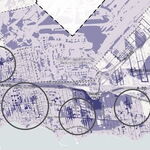
Okay, let me try that (but remember: I'm only trying to show why we shouldn't dismiss the possibility that 3:15 hours might be possible without major realignments, without any intention of proving that it is in fact feasible), as I've been busy adjusting the model I had developed for my Master Thesis to apply it to the Havelock alignment!

(Post continues below)
 
Last edited:

Back
Top