News   Dec 05, 2025
 772     2 
News   Dec 05, 2025
 2.4K     4 
News   Dec 05, 2025
 489     0 

Montréal Transit Developments

Nova Bus showed off exo's first battery-electric bus at the CUTA/ACTU Transit Show in Montreal today. One pilot bus now and nine more buses in 2026. It sounds like exo Sorel-Varennes will be the first to get them as it appears to be the first garage being equipped with charging infrastructure. New garages are supposed to follow in Sainte-Julie and La Presqu’Île.
 
For those in the MTL area, le REM is planning a weekend of activities at all 14 stations on the DM branch on the 15th and 16th of November. Ticket fares will be waived throughout the opening weekend.

Can access the new DM branch via the three interchange stations at metro orange line (Gare Centrale station), green line (McGill station), and blue line (Édouard-Montpetit station).

https://rem.info/fr/evenements/programme-inauguration-deux-montagnes?brid=mUmDc2gpo5e_2dmSHQgTng
 
Sincerely hope people are checking out the various threads on AgoraMTL!!!

fc4fdba11484150f40468f1df021ed025a9808ac_2_880x659.jpeg

09c80044e15623f38b365120165a812cdf94c0e8.jpeg

Credit: @AliFatCat

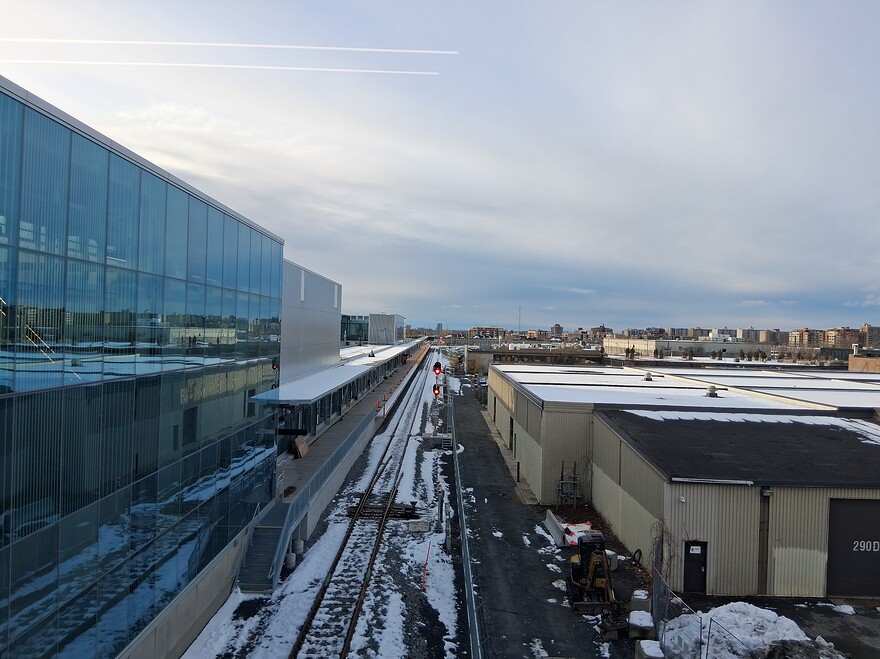
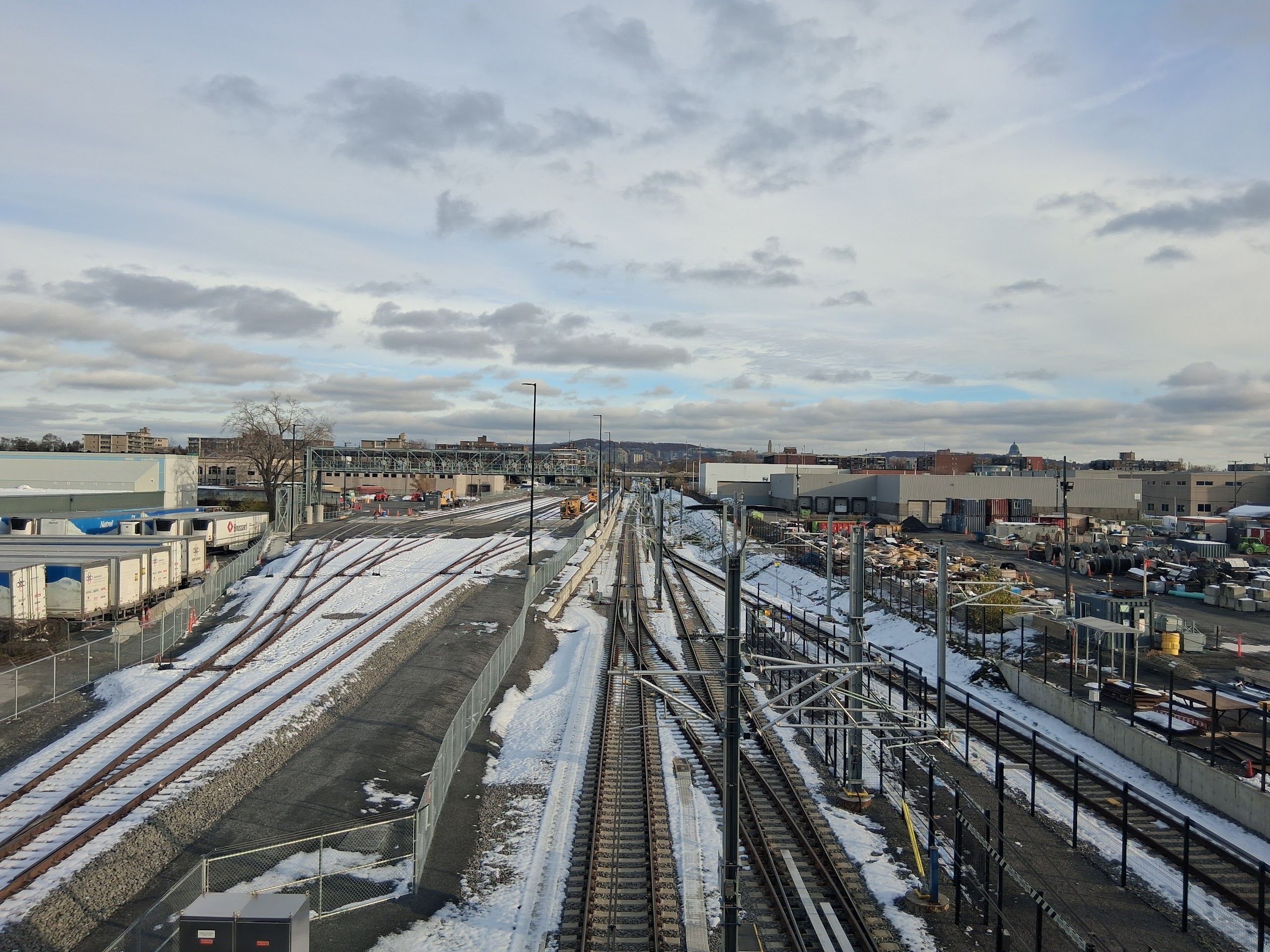
First proper photos of the Côte-de-Liesse Exo Mascouche terminus I've seen!

Ps. Miles promised he'd be there. ;)
 
REM Line A4 (DeuxMontagnes)’s first weekend of passenger service! Took a ride from the new McGill station to Deux-Montagnes.

First impressions:
- Incredibly smooth ride, wide carriages.

- Edouard Montpetit station at Université de Montreal is a game changer: a lot of passengers who stopped here were saying how it cut a previously 50 min bus journey between the two biggest universities and dense neighborhoods, now down to 5 minutes. The express elevators are really express: going down a 70 m deep station in less than 10 seconds. Not to mention a direct connection to Metro Blue Line, making the existing STM metro system all the more useful.

- Île Bigras Station: a surreal feeling walking out of a modern metro station into an almost idyllic island village of less than 1000 in population. Hard to imagine that this quiet little village surrounded by rivers, hills, and forests will now be connected to McGill and Eaton Centre in less than 25 minutes.

- Way finding needs work: while the system is not complex to navigate, the signages are not always clear, especially at interchange stations and switching between STM and REM. Even small things like font and font size of key signages could use improvement - not critical and can probably be addressed later on.

- Platform screen doors are amazing: many passengers were saying how they love the fully enclosed stations esp in the winter. Every Canadian rapid transit project should be opting for this given our weather conditions.

One thing I noticed about the enclosed stations is that while they are heated (via mostly electric space heaters on station ceilings), there seems to be no central HVAC cooling system or AC during summer time in the enclosed space. Instead they have fans for air circulation. Very likely a result of value engineering across the network to save on things like HVAC - which can cost a fortune from installation to ongoing maintenance - I don’t think most passengers noticed as long as it’s heated in the winter (I help manage the strata for our office building and our HVAC maintenance contract alone, for a modest 12 floor new commercial strata, is about $200K a year excluding electricity - you can imagine how much it can cost for a huge network like the REM if they went with full climatisation in all stations).

- Despite a lot relative negative local media coverage on the REM, people taking it were genuinely excited. I sat with a group of senior citizens who told me it was their first time in years taking public transit. And they are giving the REM a try because it’s allowing them to go from a sleepy village like Île Bigras to shopping at Eaton Centre and Saint Catherine in under 25 minutes. They were all taking photos, exclaiming at modern station amenities, and how it « opened up » Montreal for them. It was heart warming to see a group of older ladies get so excited about transit - this was probably what it felt like when they opened the Metro in 1966 - that sense of excitement and wonder.

IMG_9297.jpeg


IMG_9318.jpeg
IMG_9319.jpeg
IMG_9329.jpeg
IMG_9331.jpeg
IMG_9313.jpeg
IMG_9316.jpeg
 

Attachments

  • IMG_9297.jpeg
    IMG_9297.jpeg
    188.6 KB · Views: 21
Last edited:
Despite a lot relative negative local media coverage on the REM, people taking it were genuinely excited. I sat with a group of senior citizens who told me it was their first time in years taking public transit. And they are giving the REM a try because it’s allowing them to go from a sleepy village like Île Bigras to shopping at Eaton Centre and Saint Catherine in under 25 minutes. They were all taking photos, exclaiming at modern station amenities, and how it « opened up » Montreal for them. It was heart warming to see a group of older ladies get so excited about transit - this was probably what it felt like when they opened the Metro in 1966 - that sense of excitement and wonder.
Yup this right here is why I think ppl who in search for perfect transit dismiss flawed but very good transit solutions are missing the point.

Getting transit built is hard, great transit even harder. This rem line could legitimately change montreal or even tbe province of quebec to embrace transit more fully as the voting base will see the obvious benefits and demand more and better!


I truly hope that rem and the Ontario line will spur new standards for transit in canada and standardized things like platform screen doors and automation where possible.
 
Last edited:
Yup this right here is why I think ppl who in search for perfect transit dismiss flawed but very good transit solutions are missing the point.

Getting transit built is hard, great transit even harder. This rem line could legitimately change montreal or even tbe province of quebec to embrace transit more fully as the voting base will see the obvious benefits and demand more and better!


I too hope that rem and the Ontario line will spur new standards for transit in canada.
The REM, inadvertently or not, conforms to most Chinese practices on metro construction. Arguably some of the world's best standards.

100km/h top speed. Wide station spacing. Longitudinal seating. Platform screen doors. Full automation.

The average distance between REM stations is ~2.6 km as opposed to 1km for existing Toronto Subway and Montreal Metro. This emphasizes network length as opposed to density, which does more to take cars off the road for a given budget. People living downtown were already less likely to drive and more likely to take buses. Naturally, spacing can still be shorter downtown and wider in suburbs.

Another benefit is the REM's average speed of 51km/h versus less than 30km/h for Toronto subway lines. In reality, the travel time from Deux-Montagnes to Gare Centrale (33km) is the same if not faster than Finch to Union (16km). Since the TTC has de facto permanent slow-zones that are not even listed, I do not see this changing soon. https://www.ttc.ca/riding-the-ttc/Updates/Reduced-Speed-Zones
 
Another benefit is the REM's average speed of 51km/h versus less than 30km/h for Toronto subway lines. In reality, the travel time from Deux-Montagnes to Gare Centrale (33km) is the same if not faster than Finch to Union (16km). Since the TTC has de facto permanent slow-zones that are not even listed, I do not see this changing soon. https://www.ttc.ca/riding-the-ttc/Updates/Reduced-Speed-Zones
Rail transit was removed from the entire DM line for five years. Could probably fix a lot of slow zones if you entirely closed Line 1 Finch-Union for five weeks.
 
The REM, inadvertently or not, conforms to most Chinese practices on metro construction. Arguably some of the world's best standards.

100km/h top speed. Wide station spacing. Longitudinal seating. Platform screen doors. Full automation.

The average distance between REM stations is ~2.6 km as opposed to 1km for existing Toronto Subway and Montreal Metro. This emphasizes network length as opposed to density, which does more to take cars off the road for a given budget. People living downtown were already less likely to drive and more likely to take buses. Naturally, spacing can still be shorter downtown and wider in suburbs.

Another benefit is the REM's average speed of 51km/h versus less than 30km/h for Toronto subway lines. In reality, the travel time from Deux-Montagnes to Gare Centrale (33km) is the same if not faster than Finch to Union (16km). Since the TTC has de facto permanent slow-zones that are not even listed, I do not see this changing soon. https://www.ttc.ca/riding-the-ttc/Updates/Reduced-Speed-Zones
Not to derail the thread like crazy, but I'm left wondering if rem-like transit would be toronto midtown line solution in plain sight. I imagine the cost and speed of construction would trump any type of heavy rail construction and thats without talking about getting frequencies of a heavy real to a reasonable level.

Rail transit was removed from the entire DM line for five years. Could probably fix a lot of slow zones if you entirely closed Line 1 Finch-Union for five weeks.

Agreed but its hard to close such a critical line for that long. At least until line 5 and/or ontario line opens up. .
 
Rail transit was removed from the entire DM line for five years. Could probably fix a lot of slow zones if you entirely closed Line 1 Finch-Union for five weeks.
Of course you are correct, it's apples to oranges, Line 1 on Yonge is up to 71+ years old. So slow zones and station spacing are easily excusable. That's only part of the problem, the ATO programming of Line 1 is not conducive to high average speeds. Top operational speed is now only 75 km/h and the acceleration and braking are more gradual compared to historic Line 1 manual operations. ATO acceleration being more gradual to lower maintenance costs is a whole other can of worms.

Just wanted to point out how 7 decades of progress can change how we build urban transit. Given the limited budget the City and Province face, it could be beneficial to consider projects more like the REM as opposed to the Ontario Line in future planning. Personally, I think line length>total stations. Eventually, network length compensates for wider station spacing for each individual line. That is assuming a larger network gets built eventually.
 
Last edited:
Not to derail the thread like crazy, but I'm left wondering if rem-like transit would be toronto midtown line solution in plain sight. I imagine the cost and speed of construction would trump any type of heavy rail construction and thats without talking about getting frequencies of a heavy real to a reasonable level.
Can't take a track section away from CPKC by provincial fiat whether they liked it or not the way the DM line was removed from Exo.
 
The REM, inadvertently or not, conforms to most Chinese practices on metro construction. Arguably some of the world's best standards.

100km/h top speed. Wide station spacing. Longitudinal seating. Platform screen doors. Full automation.

The average distance between REM stations is ~2.6 km as opposed to 1km for existing Toronto Subway and Montreal Metro. This emphasizes network length as opposed to density, which does more to take cars off the road for a given budget. People living downtown were already less likely to drive and more likely to take buses. Naturally, spacing can still be shorter downtown and wider in suburbs.

Another benefit is the REM's average speed of 51km/h versus less than 30km/h for Toronto subway lines. In reality, the travel time from Deux-Montagnes to Gare Centrale (33km) is the same if not faster than Finch to Union (16km). Since the TTC has de facto permanent slow-zones that are not even listed, I do not see this changing soon. https://www.ttc.ca/riding-the-ttc/Updates/Reduced-Speed-Zones
I'm sorry but Finch to to Union is not a 37 minute travel time. No doubt REM is a faster line, but Finch>Union is more like 28-30 minutes.

I do think future Ontario Line extensions can and will be delivered closer to how REM was - a focus on elevated lines along existing infrastructure corridors.
 
I am in Montreal this week by chance and can say there seems to be a positive, genuine excitement around REM. More than a couple people have unprompted mentioned how much they love it or how it has reduced their commute. The fact that it cuts right through downtown makes it seem more immediately consequential than say the Eglinton cross town (regardless of what actual ridership may be - I honestly dont know).
 
I'm sorry but Finch to to Union is not a 37 minute travel time. No doubt REM is a faster line, but Finch>Union is more like 28-30 minutes.

I do think future Ontario Line extensions can and will be delivered closer to how REM was - a focus on elevated lines along existing infrastructure corridors.
You clearly do not ride Line 1 on a daily basis. You probably got that 28-30 minute time from Google maps or other app which lists theoretical ETAs, which have not been adhered to for many, many years. I timed my own trip from North York Centre to Union at 34 minutes from train doors close to doors open on Monday. My wife's trip Union to Finch was 37 minutes yesterday early afternoon. I will gladly record videos on separate days if anyone does not believe me.
1763567214769.png
 
You clearly do not ride Line 1 on a daily basis. You probably got that 28-30 minute time from Google maps or other app which lists theoretical ETAs, which have not been adhered to for many, many years. I timed my own trip from North York Centre to Union at 34 minutes from train doors close to doors open on Monday. My wife's trip Union to Finch was 37 minutes yesterday early afternoon. I will gladly record videos on separate days if anyone does not believe me.
View attachment 696680
I admit I haven't ridden that stretch regularly since.. oh god, 2014 or so - it was definitely around that 28-30 minute range then. The ridiculous slow-zone crap the TTC is perpetuating all through the network wasn't a thing back then and theoretically could go away with a stroke of a pen too. It's mismanagement causing those travel times, not infrastructure design.

The OL is exciting to me as it will transform transit use in Toronto in a similar way to REM - cutting inner city east-west travel times massively and much better connecting Scarborough and East York into downtown. Eglinton is an important project to provide consistent, reliable service along that corridor, but it's not going to transform travel in the busiest areas of the city like the OL will.
 

Back
Top