



reaperexpress
Senior Member
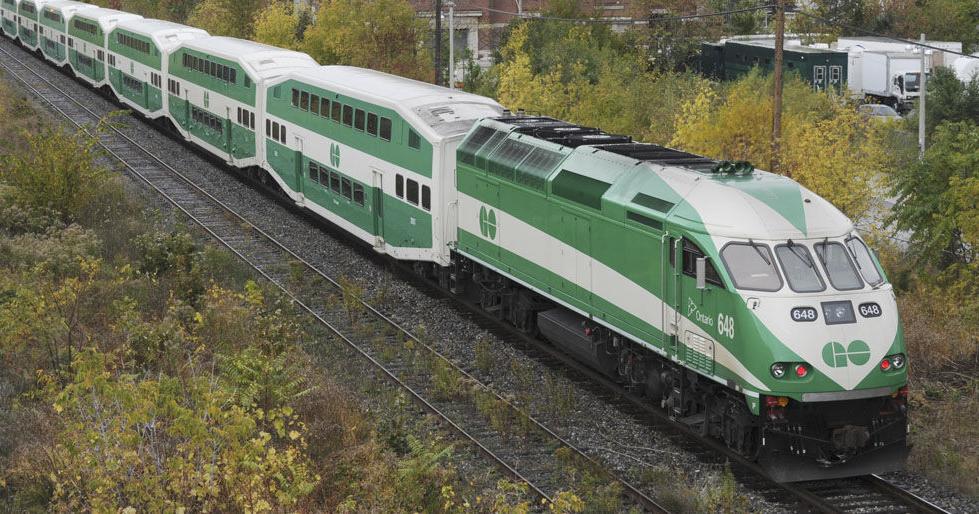
I don't doubt your expertise, but I'm still struggling to understand how rolling stock is the key factor preventing us from increasing peak service, when just a few months ago we were running far more service than today. As far as I'm aware, we have not sold off a bunch of cab cars and locomotives.Because there are 65-ish trainsets in service today, with a locomotive roster of 91. That's almost at the limit of the number of units that can be used in service every day - they might be able to manage another 5 units each day. Unlike a bus, there are regulatory restrictions to the operation of locomotives and railcars. The same goes for cab cars although to a lesser degree, and so the spare ratio can be lower - and the refurbished cab cars will help this.
The additional 20 or so locomotives that are projected to be purchased will help ameliorate this.
Pre-COVID there also wasn't any off-peak express service so of course operating all-local service now will restore a high proportion of that ridership. Because long-distance trips were already underrepresented in the "base case" ridership. In the case of Lakeshore West, note the popularity of Route 16, whose sole purpose is to bypass the slow local train service. Also note that the current weekend service is exactly the same as pre-pandemic, except that one hourly train now extends to West Harbour, and the schedule is a couple minutes faster (due to lower ridership during the pandemic).Is it though?
Ridership has been coming back quite strongly in the off-peak hours when there is no express service. And the off-peak ridership was very, very robust prior to COVID.
During peak periods where former express services have now been eliminated, ridership has not recovered as well. There is a much bigger difference in attractiveness between the current service offerings and the pre-COVID offerings, particularly for long-distance trips. Whereas off-peak services are (nominally) faster than pre-COVID, peak services are slower due to the loss of express service.
Strongly disagree.
The higher the frequencies we make the operation, the more likely that people will view the service like a subway, where one simply just shows up at a station - they don't need to think about a schedule. The less time people spend waiting for the service, the more likely they are to use the service.
The time spent in transit isn't as important because at that point they feel that they are already in motion, and so it isn't felt as "time wasted".
The relative importance of frequency versus travel time is highly dependent on the trip distance and particular station. If you're starting from Clarkson, then clearly 4tph local will be better for you than 3tph local. But if you're at Oakville or Port Credit, there would be 4 tph either way, it's just that you have a 1/4 chance of getting an express train.
Regional bus connections such as routes 12, 15 and 18 operate hourly and are timed to meet a particular train, so if there were an hourly express service, all of those connecting passengers would benefit directly.
15 minute headways are not short enough that it is convenient to randomly show up at the station. Doing so would result in an average wait of 7.5 minutes and a maximum wait of 15 minutes. People checking the schedule before heading to the station will commonly aim around 5 minutes before departure, so the threshold for "subway-like" behaviour nominally kicks in around 10 minute headways. What going from 30-minute headways to 15-minute headways does is increase the flexibility of people's scheduling. For example, if they have an appointment at a specific time, they could avoid getting there 15 minutes earlier than necessary. But if their exact arrival moment doesn't particularly matter (e.g. job with somewhat flexible start time, leisure trips, etc), then increasing the frequency has relatively little impact on their experience. Faster service, however, always benefits them regardless of the flexibility of their schedule.
Last edited: