




|
|
|
You are using an out of date browser. It may not display this or other websites correctly.
You should upgrade or use an alternative browser.
You should upgrade or use an alternative browser.
GO Transit: Construction Projects (Metrolinx, various)
- Thread starter drum118
- Start date


drum118
Superstar
Nov 06
Metrolinx needs to move the east bridge over Bloor St for the 4 track aka track 1 that will require a closure over a weekend.
There is most likely some traffic movement for the Davenport work.
At the end of the day, traffic is and will be an issue regardless what is taken place due too many vehicles in the first place.
TTC is doing work in the Dundas/College/Lansdowne area for track and overhead. They finished the Howard Park Intersection.What Metrolinx construction is happening in this area? Is the planned Metrolinx closure of Bloor St W related to the Davenport Overpass or the Kitchener Line 4th track? I assume it's the Davenport Overpass? cc @crs1026
www.facebook.com
View attachment 281604
Metrolinx needs to move the east bridge over Bloor St for the 4 track aka track 1 that will require a closure over a weekend.
There is most likely some traffic movement for the Davenport work.
At the end of the day, traffic is and will be an issue regardless what is taken place due too many vehicles in the first place.
drum118
Superstar
Nov 06
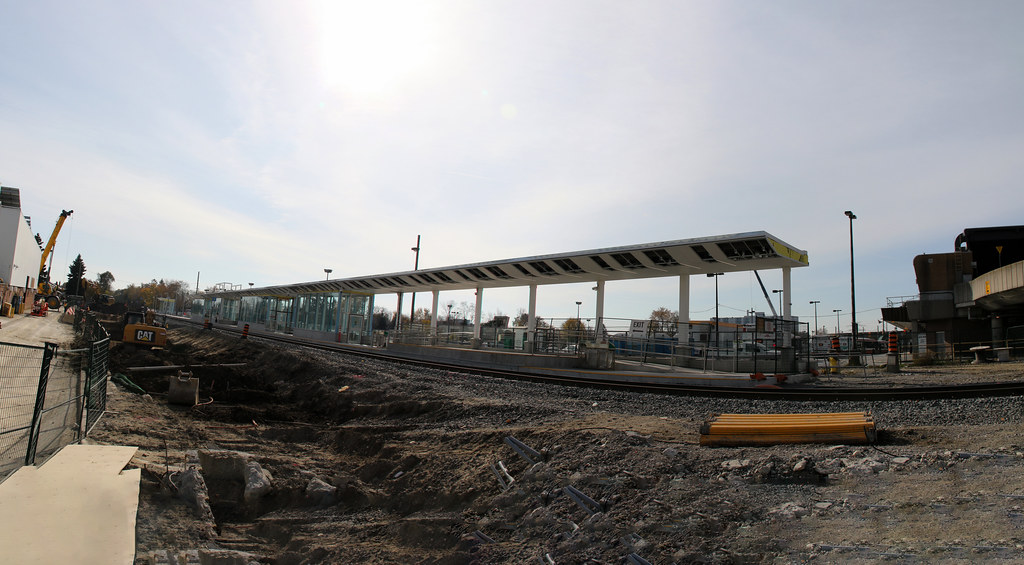
Kennedy GO Station
Switch will be remove once both tracks and platform are in place as well a new switch to the south of the platform.


Locomotive stop south of the accessibility platform and part of the north platform in place

Still digging the tunnel under the track and the SRT. Until the tunnel base and wall in place, can't build the 2nd track bridge



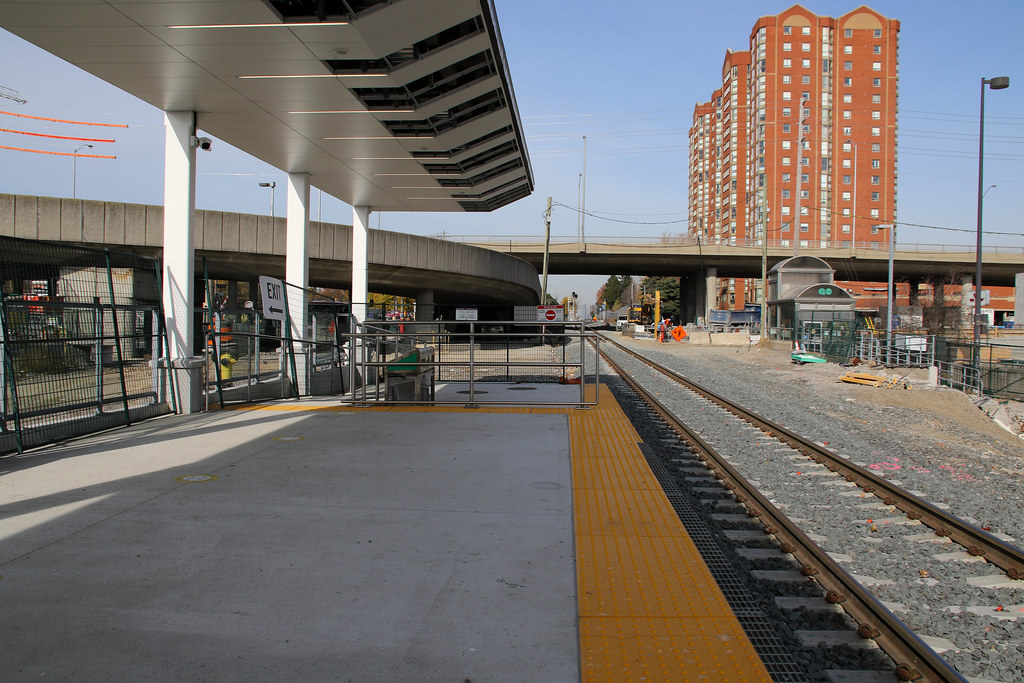

Handrail & protection for the platform is the same as the Crosstown LRT line
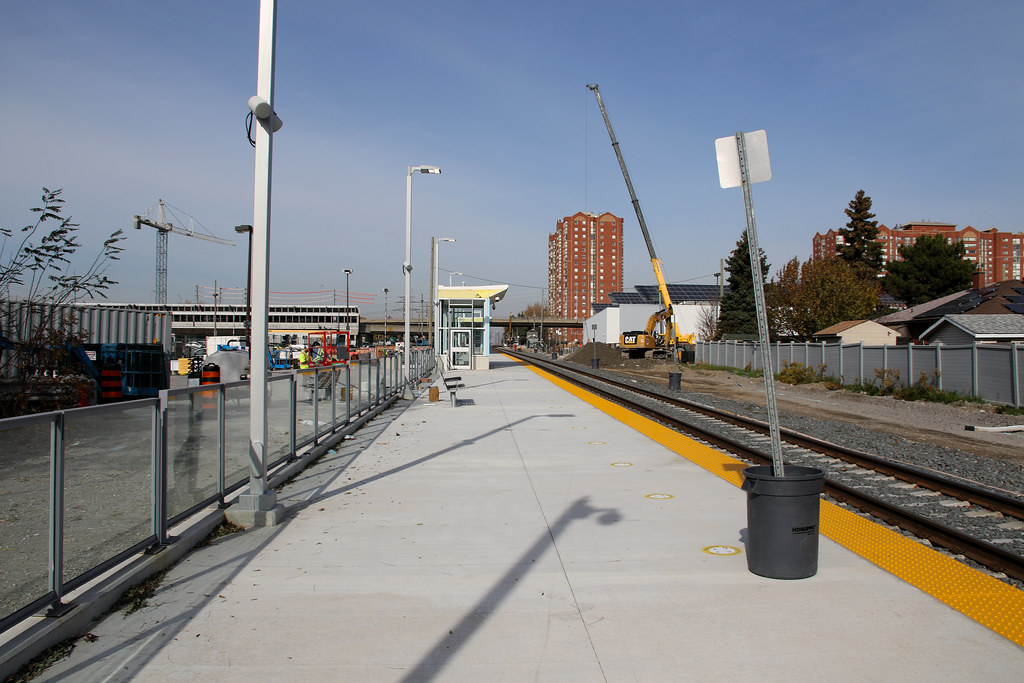


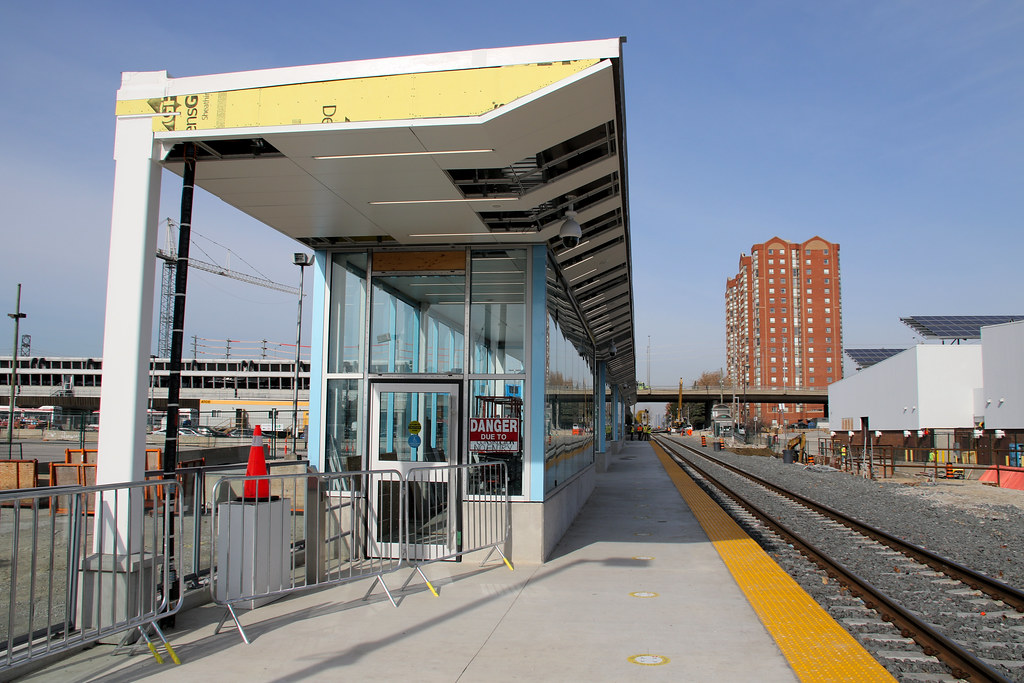

Kennedy GO Station
Switch will be remove once both tracks and platform are in place as well a new switch to the south of the platform.
Locomotive stop south of the accessibility platform and part of the north platform in place
Still digging the tunnel under the track and the SRT. Until the tunnel base and wall in place, can't build the 2nd track bridge
Handrail & protection for the platform is the same as the Crosstown LRT line
abovetoronto
New Member
More info on Bloor St closure and bridge demo here:What Metrolinx construction is happening in this area? Is the planned Metrolinx closure of Bloor St W related to the Davenport Overpass or the Kitchener Line 4th track? I assume it's the Davenport Overpass? cc @crs1026
View attachment 281604
Northern Light
Superstar
Kennedy GO Stn is certainly a marked improvement over what it was.
I'm not overly fond of the backless design of the side platform as it exposes riders to more of the elements than need be; but still, a big step forward.
I'm not overly fond of the backless design of the side platform as it exposes riders to more of the elements than need be; but still, a big step forward.

Reecemartin
Active Member
Check out Milliken station's construction progress here:

cplchanb
Senior Member
i still dont get why new build platforms are still using the ancient curb heights. why cant they bring up their elevations to match the doors of the trains despite countless empircal evidence to proves that level boarding is much more efficient??
Its so backwards that we are still following 1950s rural rail design principles.....
Its so backwards that we are still following 1950s rural rail design principles.....

ARG1
Senior Member
i still dont get why new build platforms are still using the ancient curb heights. why cant they bring up their elevations to match the doors of the trains despite countless empircal evidence to proves that level boarding is much more efficient??
Its so backwards that we are still following 1950s rural rail design principles.....
Because this type of level boarding would require major modification to the design of the coaches, and Metrolinx doesn't want to deal with that right before they place an order an brand new EMUs, the specs and size that I assume even they do not know yet. Part of the GO Expansion project is to provide level boarding, they can't do that until they know the door placement on the EMUs, and since they don't know the door placement, it would be foolish to change the platform height and the coach design just for a few years and redo it all over again. Yes, the current platform design has a raised accessibility platform that is closer to door height, but even then, the operator that stands in the accessibility coach still has to pull out a ramp and manually place it in order to let accessible people in. Yes, a lot of this reeks of mismanagement at the top level, but unfortunately this is the only sensible and cost effective way out of the predicament, and yes, this might result in many of these stations being rebuilt AGAIN once we edge closer to the introduction of EMUs to the corridor.
cplchanb
Senior Member
fair points, but may i add, why cant they do a little homework on what is currently out there that they can potentially get for rolling stock? why cant they design their platforms around the most common height of the doors and include that as part of the tender specs? unless they are allowing for high floor cars to be considered there shouldnt be much difference between different stock. set the height that the door needs to be and make the suppliers abide by it. obviously the height has to be reasonable within what is currently offered but they can be proactive about it. right now we are letting the suppliers dictate the our infrastructure, but it should be the other way around and it will be a tremendous waste of money to rip up a new platform in 5 years when they couldve done some homework and been more proactive. typical retroactive decision making hereBecause this type of level boarding would require major modification to the design of the coaches, and Metrolinx doesn't want to deal with that right before they place an order an brand new EMUs, the specs and size that I assume even they do not know yet. Part of the GO Expansion project is to provide level boarding, they can't do that until they know the door placement on the EMUs, and since they don't know the door placement, it would be foolish to change the platform height and the coach design just for a few years and redo it all over again. Yes, the current platform design has a raised accessibility platform that is closer to door height, but even then, the operator that stands in the accessibility coach still has to pull out a ramp and manually place it in order to let accessible people in. Yes, a lot of this reeks of mismanagement at the top level, but unfortunately this is the only sensible and cost effective way out of the predicament, and yes, this might result in many of these stations being rebuilt AGAIN once we edge closer to the introduction of EMUs to the corridor.
NY99
Active Member
fair points, but may i add, why cant they do a little homework on what is currently out there that they can potentially get for rolling stock? why cant they design their platforms around the most common height of the doors and include that as part of the tender specs? unless they are allowing for high floor cars to be considered there shouldnt be much difference between different stock. set the height that the door needs to be and make the suppliers abide by it. obviously the height has to be reasonable within what is currently offered but they can be proactive about it. right now we are letting the suppliers dictate the our infrastructure, but it should be the other way around and it will be a tremendous waste of money to rip up a new platform in 5 years when they couldve done some homework and been more proactive. typical retroactive decision making here
money would be "wasted" either way. Limiting our EMU options by specifying a pre-determined boarding height would create significant costs of its own. This isn't cut and dry.

Just looking at the roof line and layout of the new platform at Kennedy Station, it looks as if it has been designed so that it can be mirrored behind it (the roof on the back side just abruptly ends). I wonder if that's some future-proofing in the event that they can use the SRT ROW once it's removed and make it an island platform instead. You would already have the access points in place, it would just mean pouring a new platform on the other side and extending the roof.
smallspy
Senior Member
i still dont get why new build platforms are still using the ancient curb heights. why cant they bring up their elevations to match the doors of the trains despite countless empircal evidence to proves that level boarding is much more efficient??
Its so backwards that we are still following 1950s rural rail design principles.....
If it was easy, don't you think that they would have done it already?
Okay, that's slightly flippant. Let me walk that back and explain the whole problem.
Under the current Transport Canada (and FRA) rules, the height of the current low-level platforms are as high as they can get while being close enough to get to the doorways of the cars. If the platforms were built at the height of the floors of the cars - as the accessible platforms currently are - then their edge needs to be cut back from the track in order to clear the equipment using the tracks.
This is why GO has the attendants in the accessible cars putting out the ramp from the car to the raised, accessible platform. That gap is massive.
"Why not bolt on a threshold on the side of the car to fill that space?" you ask. And it's a valid question. The answer is that it can't be done, and the reason is those same clearance diagrams that the platforms need to fit into. The higher off of the top of the rail, the wider the railcar in the diagram is, but - at the height of the floor on the BiLevels, it is not wide enough to allow for a threshold that would bridge that gap. Higher up it is wide enough, and that's why the UPX cars have a threshold to bridge the gap between the platform and the floor of the car.
"Could they not make some sort of powered, automated ramp to bridge that gap?" Very easily, in fact. But what will be the cost to retrofit almost 1000 pieces of rolling stock (each with 4 doors) with some sort of powered, automated ramp, not to mention the 140-ish platform faces that will need to be raised in height to the new standard? How many elevators and stairs will need to be rebuilt to meet the new platform heights? Oh, and since this obviously can't be done over the course of one night - how do you stage all of the construction?
"So they need to get Transport Canada to change the rules then." Yes, absolutely. But you also have to keep in mind that Transport Canada has basically become a lobbying body for the major freight railroads, and doesn't seem to be particularly interested in making things easy for passenger rail in the country. They can try - but there's no guarantee that anything will come of it.
So yeah.....as good as it would be to have, it's not really a small ask, either.
Dan
Northern Light
Superstar
So, the GO presser at Cooksville w/the Minister this morning was a non-news event.
It was the 'official opening of Cooksville', post re-do.
 news.ontario.ca
The Minister actually took credit for the project, awarded, funded and construction started, under the previous government.

While that's not exactly unheard of in politics; its certainly reasonable.
It was the 'official opening of Cooksville', post re-do.
Ontario Newsroom
news.ontario.ca
The Minister actually took credit for the project, awarded, funded and construction started, under the previous government.
While that's not exactly unheard of in politics; its certainly reasonable.
rbt
Senior Member
"So they need to get Transport Canada to change the rules then." Yes, absolutely. But you also have to keep in mind that Transport Canada has basically become a lobbying body for the major freight railroads, and doesn't seem to be particularly interested in making things easy for passenger rail in the country. They can try - but there's no guarantee that anything will come of it.
I expect the answer for Lake Shore is a mechanism like Georgetown South; restrict freight to specific tracks which adhere to various clearance requirements and let GO do whatever they can with the others. Busy stops like Oakville might need a 5th track (Local stops, Express stops, + through-track).
It should be something they can force (with additional switches) now that the operations centre is functional.
Last edited:
abovetoronto
New Member
Movement on the Confederation GO station:
RQQ-2020-PROC-479 - RQQ-2020-PROC-479: Procurement Service Provider for Construction Management Gene
RQQ-2020-PROC-479 - RQQ-2020-PROC-479: Procurement Service Provider for Construction Management Gene
Tender No. RQQ-2020-PROC-479
Metrolinx is issuing this Request to Qualify and Quote (RQQ) to retain the services of Vendor to provide the goods and/or services described herein. Metrolinx intends to notify a Proponent of acceptance of its Submission and enter into a Contract through an open, fair and competitive process.
Metrolinx is accepting Submissions for the Procurement Service Provider for Construction Management General Contractor (CMGC) Procurement Model as more particularly described in this Request Document as required by Metrolinx.
Metrolinx is a crown agency of the Government of Ontario under the Metrolinx Act, 2006, reporting to the Ministry of Transportation. It was created to improve the coordination and integration of all modes of transportation in the Greater Toronto and Hamilton Area (GTHA). The Metrolinx mandate includes delivering the best possible transportation services today while leading the way to an even better, more convenient service tomorrow; making the best possible use of public transportation investment dollars; and measurably improving the quality of life in the region.
In September 2018, Metrolinx’s Sponsors Office prepared a business case to appraise the business need for Confederation GO Station based on estimated construction costs and the latest ridership demand projections. It determined that the Full LEED Gold Station building, as originally designed, would not be required to serve the demand of the Centennial Parkway area of Hamilton. Following discussions with the Project Delivery team, Stakeholders, and Sponsors Office, it was agreed to de-scope the work and to redesign Confederation GO Station to suit current needs and projected demand.
All construction scope to the south parking area, has been eliminated. Due to the removal of these works, a retaining wall will be constructed following the south property line to support the future Track 4. Tracks 1 & 2 will be relocated by CN prior to construction, and future Tracks 3 and 4 will be installed by CN following construction, as previously planned.
The platform canopy has been reduced to extend from the mini-platform to Centennial Parkway Rail Bridge and to additional stand-alone shelters on the west end of platform. The rail platform, canopy and structure have been designed to be compatible with future level boarding design.
This project also includes infrastructure improvements undertaken by CN, which include the supply and installation of four through plate girders (TPG) spans, fibre-optic cable relocation, related corridor grading and track shifts to accommodate a future four track corridor for two CN tracks and two GO tracks. A new retaining wall on the south ROW will protect the embankment for the future track construction. All work on the south side parking lot has been de-scoped and will be considered for future expansion.
The objective of this Request to Qualify and Quote (RQQ) is to solicit proposals from Proponents for the provision of services in providing expertise and lead a Construction Management General Contractor complex procurement over a one (1) year term with the option of one (1) extra year at the end of the first year.
The requirements are more particularly described in Scope of Work of this Request Document.
ELECTRONIC BID SUBMISSION will be accepted until 3:00 p.m. on November 30,2020.