News   Feb 03, 2026
 472     0 
News   Feb 03, 2026
 1.3K     0 
News   Feb 03, 2026
 319     0 

Toronto Eglinton Line 5 | ?m | ?s | Metrolinx | Arcadis

The icon on the right looks like a streetcar. Maybe this isnt a big deal to the general public, but this looks so messy for regionwide wayfinding and designation purposes. Semiotics is a tricky field, but this level of differentiated symbols is unnecessary.
Only copying what is found in Europe and they being doing it a lot longer than ML
 
When this warping happened from heat in 2021, leading to their removal…
… I was hopeful Metrolinx would’ve opted for some commonality with at least the signage pylons between Lines 5 & 6.

I don’t necessarily agree with this pylon design, but it should’ve been used for the Line 5 stations (not surface stops) as well.

Just hoping the Line 6 surface stops will at least have a grey version of these:
 
EglintonSpaceInvaders.png
 
Ah, yes, this is extremely clear and not obtuse at all.

View attachment 513703
View attachment 513704
I mean, honestly, I’m not sure I’d be able to come with different images to differentiate between subways, metros and LRVs/streetcars. Also, images that have to be easily recognizable, can be recognizable at different scales and in various lighting conditions, etc.

It is a tough problem, regardless of whether we think it’s a problem worth ‘solving’ by Metrolinx.
 
Well, as it happens, I actually happen to agree with Metrolinx that there is no need to have a separate graphic for subway and LRT. All forms of rapid transit should be shown as such - whether it uses sensible old technology or some gadgetbahn nonsense is irrelevant to riders.

What I find baffling is the fact that, at length, the current LRT graphic is going to be replaced by a different one, as logical as that alternative may be. Isn't the whole point of these symbols that they're supposed to be fixed in place so that the public starts associating the type of transit with that particular symbol? If they change it, there is a not insignificant portion of the populace who will be confused by this. And that's fine, having spent many years working in retail, I fully support anything and everything that forces the unwashed masses to think a little, but I'm confused as to what their argument is for it. If you're not going to idiot proof it, why bother having any symbols at all?
 
Is this missed because there are conflicting standards document on the projects or were they simply published incorrectly by the vendors? I'm sure from my own experiences that this is not simple as just not inspecting properly. Don't they have a whole system than runs the line and sets the gauge. Or is something to do with the profiles of the rail? Just curious if anyone knows.
 
Oct 22
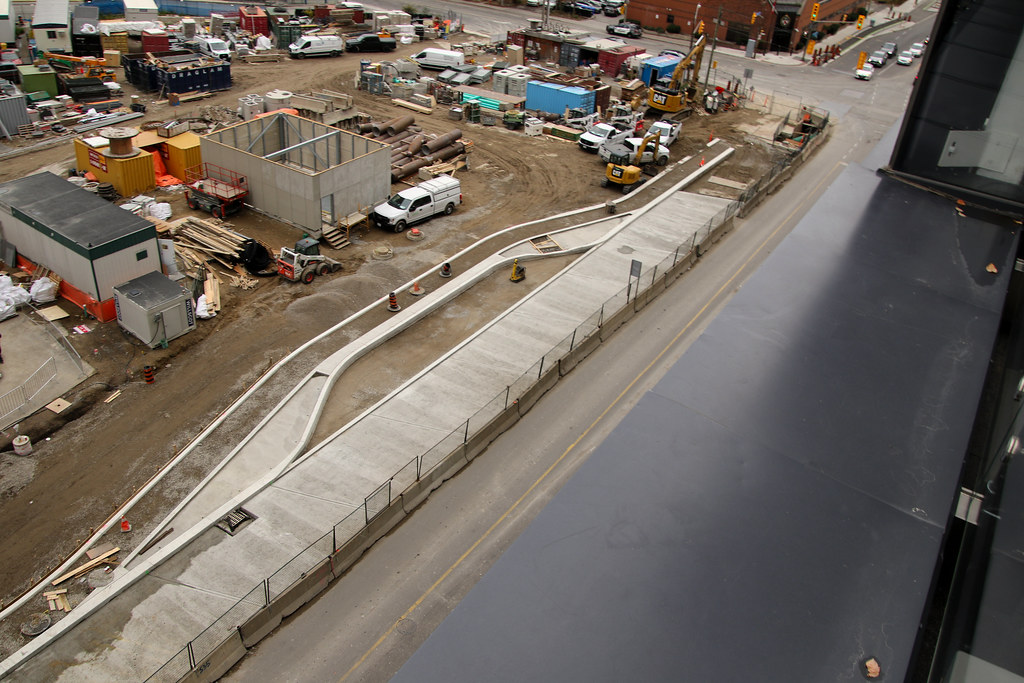
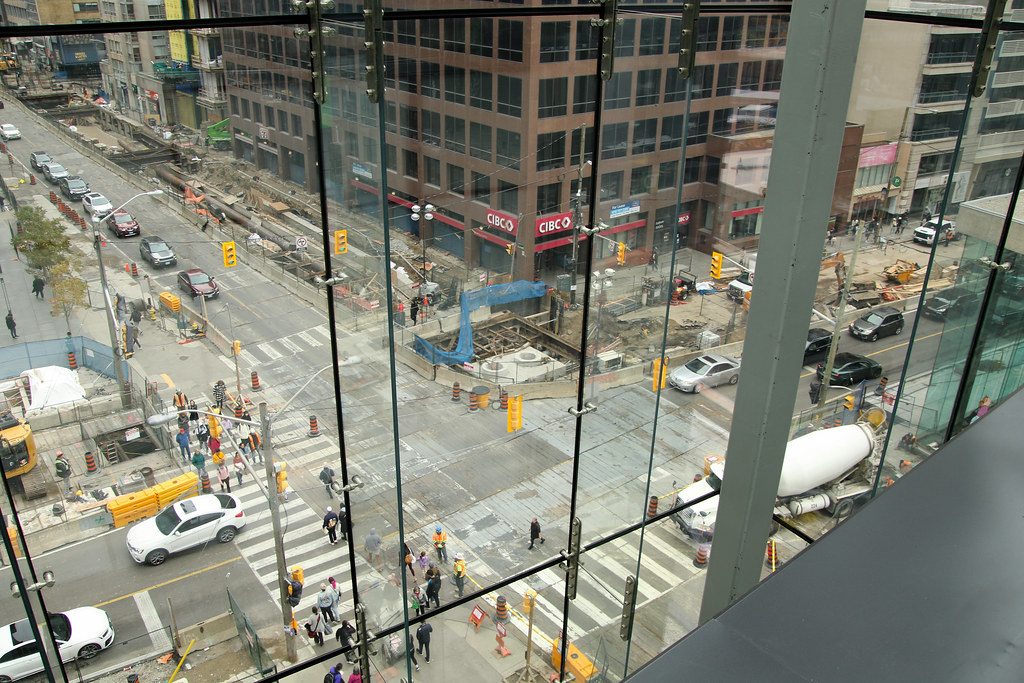
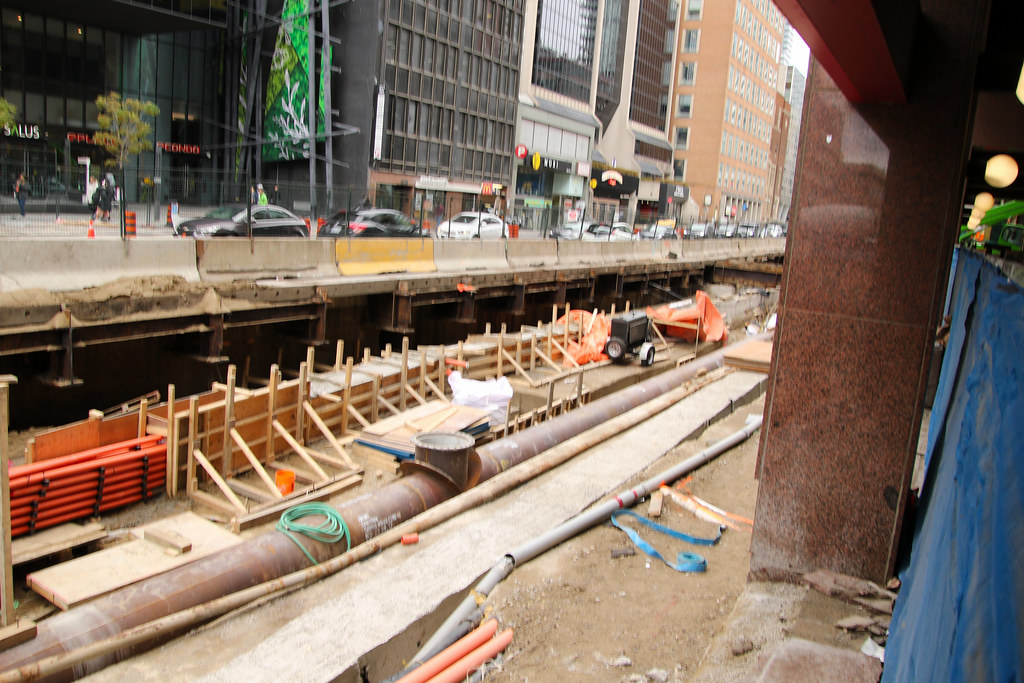
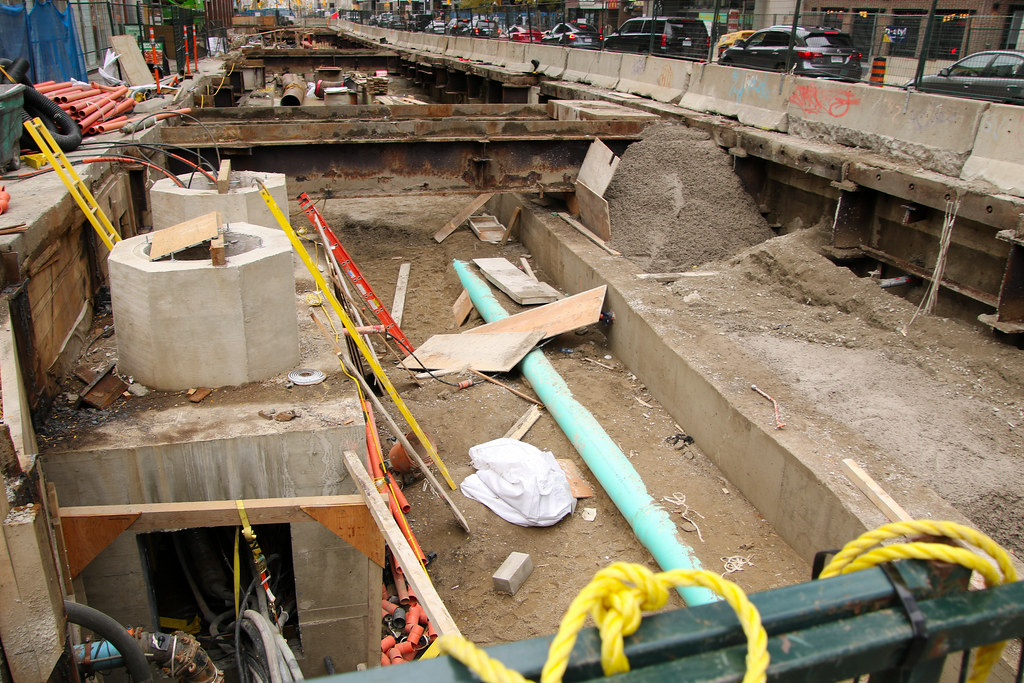
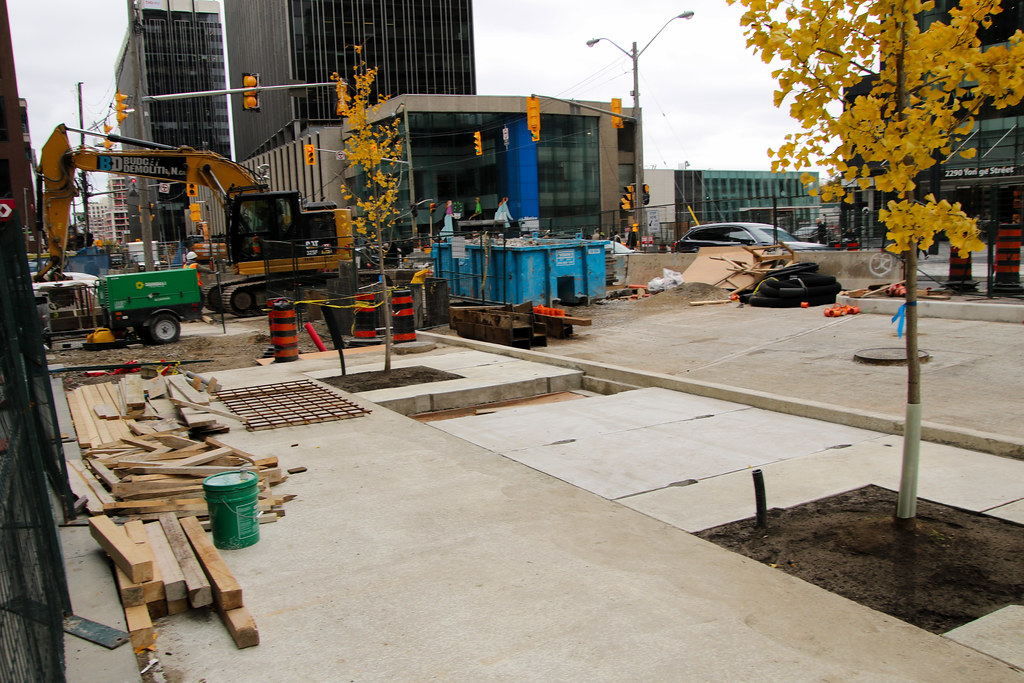
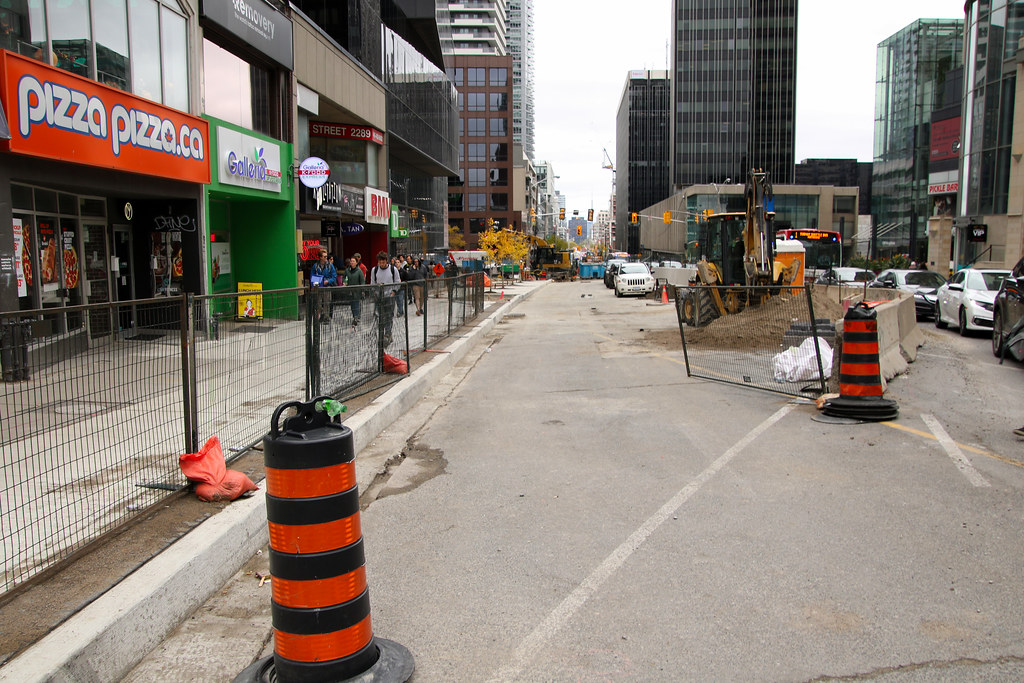
Most of the eastbound road west of Yonge is built with separate bike lane. Still got to build the huge wide sidewalk.

There are 2 duct banks east of Yonge and being form to be encase like parts of them are already. Still more wet utilities to be install and then the back filling can take place.

Yonge Road is in place north of Eglinton with work taking place for the north-east corner of the intersection. The vaults for the south-east corner is basely in place and may see the road built over it by year end.

The intersection still has to be built.

By spring, this area for roads and sidewalk maybe back to been normal

More up on my site
53277898521_c43a9c59d4_b.jpg

53278187348_60a3488b0e_b.jpg

53277897876_47bfcccd5e_b.jpg

53277010697_dbc960f60b_b.jpg

53278282791_cf7ae55282_b.jpg

53278282801_57c084de1e_b.jpg
 
I looked carefully driving past the Victoria Park stop on Eglinton. I can't believe that pillar is so narrow, with such small symbols on it. That's outright absurd.

The pillar should be holding up the symbol (whatever that symbol is)
Yes, that is in the standard, but unfortunately the Metrolinx standard was defined and solidified after the contract for the Crosstown was signed so Finch West and projects being contracted later are following the standard. All these entrance beacons were defined in the plan prior to the existence of a fully flushed out way-finding standard.

Crosstown design that predates way-finding standard, and the two options provided for in the standard at entrances (that are not vehicular), one with way-finding map included, and one without.
1698093918409.png
1698094283380.png
 

Back
Top