News   Dec 18, 2025
 608     2 
News   Dec 18, 2025
 941     5 
News   Dec 18, 2025
 429     0 

Toronto Eglinton Line 5 | ?m | ?s | Metrolinx | Arcadis

Can you explain the reasoning behind the idea of roof design exposing the mentioned cities to 'legal issues'?
If the roof is at the same height of the bus roof and at the edge, there is a chance the bus can hit it even with a hit platform and cause damage and injuries to riders on the bus and platform. Hitting a post can cause the roof to come .down.

The roof needs to be set back at least 6 inches

The cost between a post roof an a L support roof is not going to be much more.
 
If the roof is at the same height of the bus roof and at the edge, there is a chance the bus can hit it even with a hit platform and cause damage and injuries to riders on the bus and platform. Hitting a post can cause the roof to come .down.

The roof needs to be set back at least 6 inches

The cost between a post roof an a L support roof is not going to be much more.
I'm sure the built version will have taken the existence of busses into account, unlike the conceptual blockout...
Is this an issue in BRTs in Bogota etc?
1623361579275.png


It would be something to ask during a community session maybe. But I looked at the render again and the cover is offset from the curb. So unless the bus crashes into the shelter then I dont think this is an issue for these shelters.
1623361686951.png
 
If the roof is at the same height of the bus roof and at the edge, there is a chance the bus can hit it even with a hit platform and cause damage and injuries to riders on the bus and platform. Hitting a post can cause the roof to come .down.

The roof needs to be set back at least 6 inches

The cost between a post roof an a L support roof is not going to be much more.
That's why...

TTC says it has no plans to roll out double decker buses

From link.

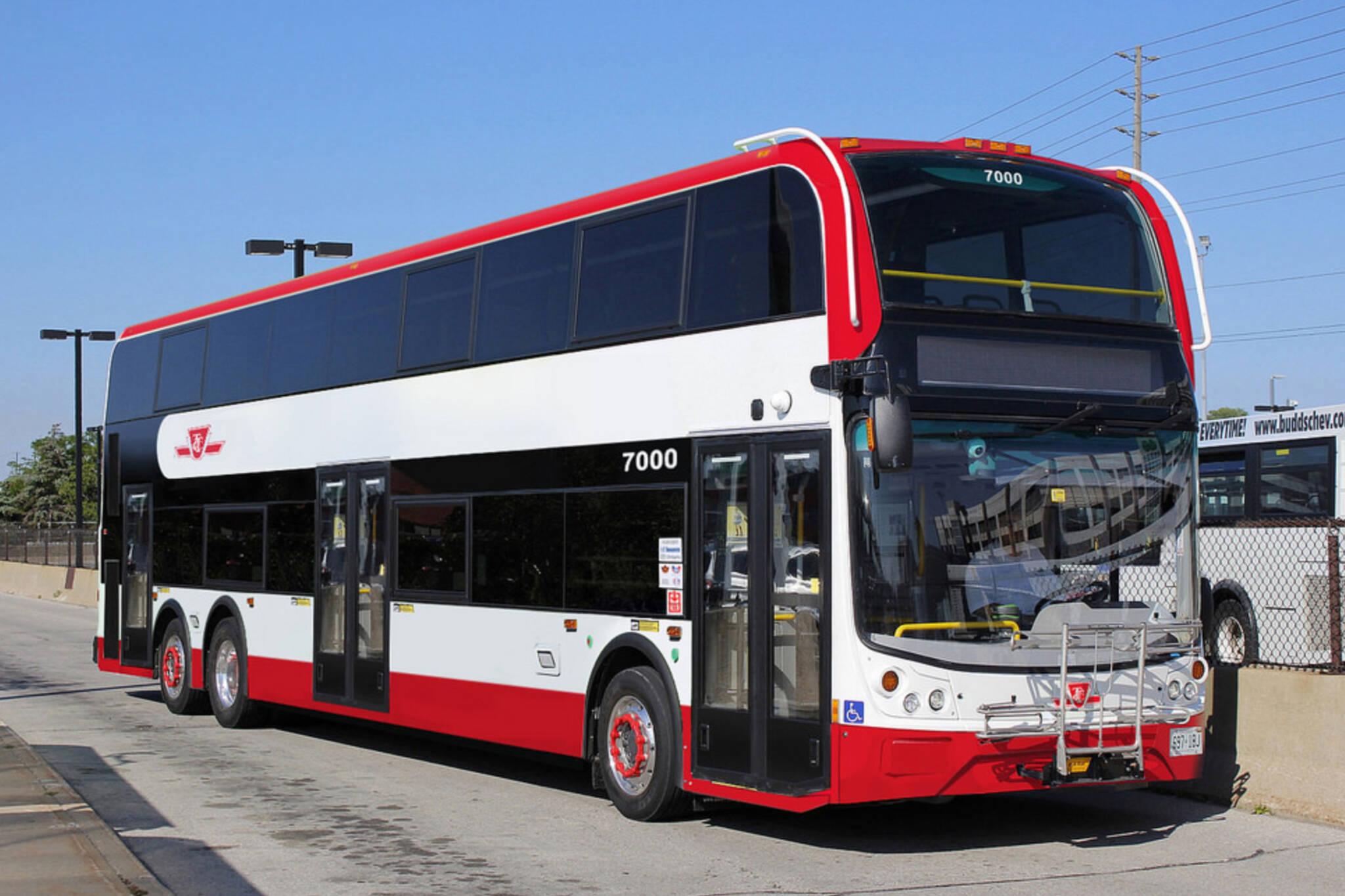
201799-double-decker-bus-ttc.jpg

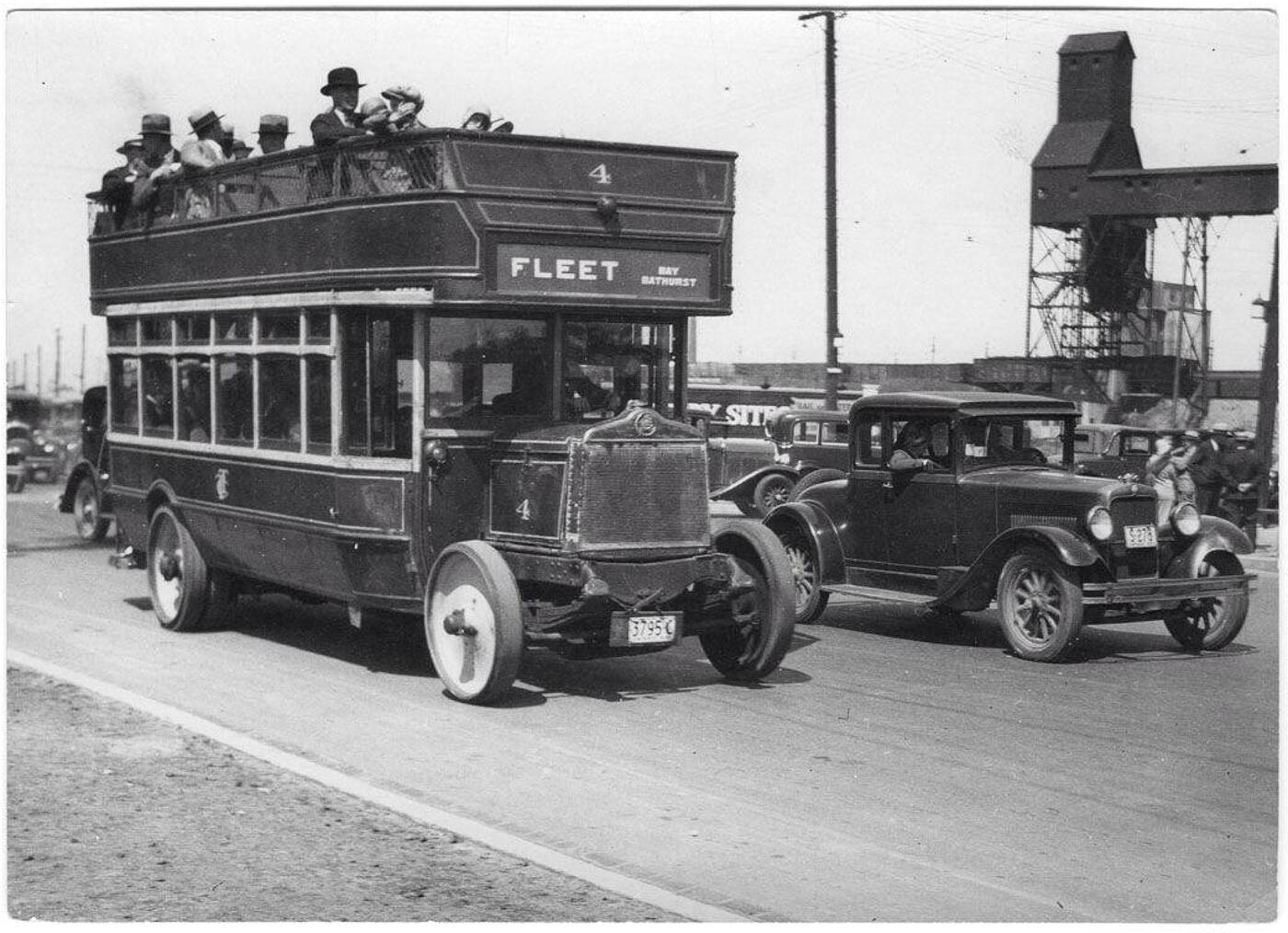
Many people might not know that at one point the TTC had double decker buses. They were first introduced back in 1922 and were a regular sight in the city through the 1940s.

But don't expect to see them on Toronto streets anytime soon.

It's long been a favourite pastime among TTC aficionados to dream up ways to bring back some of the nostalgia of years gone by and double decker buses check all the right boxes.

As Eddie Ho pointed out back in 2012, double decker buses could make sense for busy routes. They have more space, great views and could likely come at only an incremental cost.

Last year, local artist Adrian Badaraco took the dream a step further when he came up with a full realization of the double decker bus. It looked so realistic that some actually thought they were in the works.

My parents (ttc drivers) just got emailed pictures of double decker ttc busses that'll be on the road soon! I'm amped lmao pic.twitter.com/zQFjhcnQbU
â SDSđ (@SHAYBUTTER__) September 8, 2017

Alas, they're not to be. TTC Executive Director of Corporate Communications Brad Ross confirms it's just a pipe dream and that the TTC currently has no plans to reintroduce the vehicles.
201799-double-decker-bus-ttc-old.jpg

A TTC double decker bus as it looked back in 1930. Photo via Toronto Archives.

The TTC used to have a host of vehicles of varying functions, like the city's first horse drawn streetcar, carriage sleigh, and an electric streetcar, all of which are currently housed in storage and sadly not available for public viewing.
 
If the roof is at the same height of the bus roof and at the edge, there is a chance the bus can hit it even with a hit platform and cause damage and injuries to riders on the bus and platform. Hitting a post can cause the roof to come .down.

The roof needs to be set back at least 6 inches

The cost between a post roof an a L support roof is not going to be much more.
That's a bad driver ramming the bus into the shelter at high speed after loosing control hitting a snowbank. There's a chance that bus would have jump the curb even if the roof wasn't there.
 
That's a bad driver ramming the bus into the shelter at high speed after loosing control hitting a snowbank. There's a chance that bus would have jump the curb even if the roof wasn't there.
Only take one case of X doing what they did to create a mess for everyone and need to open the pocket book. A driver hitting black ice even at low speed could do a number on that shelter, let alone at high speed on clear road. Its better to be safe than sorry on day one.

End of the day, a life lost or injure is one too many

My 2 cents
 
The OC Transpo incident is the precedent for accident-proofing any structure that might come in contact with an upper level of a tall bus. In the downtown, that applies not just to transit shelters but in may places to the built form of the street.

It would be a huge task just to verify, inventory and address the low hanging wires, traffic signals, etc just to get one or two TTC routes qualfied for double deckers. With the number of road obstructions we see in Toronto - planned and unplanned - a lot of work would go into having a network of approved alternate routes and diversion contingencies.

It’s doable…. at considerable expense. And it would be 2-3 years just to do the study and prepare the work order for changes….many of which might have to be contracted with a bid process. And then there would be heritage structures that might be showstoppers.

It’s an interesting alternative, and I can’t naysay it…. but one can certainly see why TTC hasn’t found it worth the effort.

- Paul
 
I hope MX does better with the Ontario Line, but initial renters indicate that they're sticking with their lazy, yet functional design style.
I disagree, I do like the OL stations based on initial renderings. I like the warm and modern atmosphere these stations give IMO. But hey, they'll probably end up the Toronto grey we all love.

1623416644761.png


1623416732808.png


1623416807964.png
 
I disagree, I do like the OL stations based on initial renderings. I like the warm and modern atmosphere these stations give IMO. But hey, they'll probably end up the Toronto grey we all love.

“Warm and modern”.should not be the goal. Tastes change. Nothing stays modern very long.
Let’s try “Timeless and maintainable”. And maybe “upgradeable”.
I like the spaciousness and use of natural light, but imagine a decade of grime and dust on louvers and perforated panels. And a couple generations’ of upgrade to technology, signage, lighting..
How often will all that glass get washed?
Those “sterile” fifties and sixties subway stations were warm and modern when they opened… but with decades of leaking roofs, relocated turnstiles and barriers, retrofitted cabling, new security systems, and new styles of signage that don’t synch to the original design,….. when I look at station renders I try to imagine what the janitor and the next decade’s electricians see. Garbage receptacles? Safet alarm panels?

- Paul
 
Last edited:
“Warm and modern”.should not be the goal. Tastes change. Nothing stays modern very long.
Let’s try “Timeless and maintainable”. And maybe “upgradeable”.
I like the spaciousness and use of natural light, but imagine a decade of grime and dust on louvers and perforated panels. And a couple generations’ of upgrade to technology, signage, lighting..
How often will all that glass get washed?
Those “sterile” fifties and sixties subway stations were warm and modern when they opened… but with decades of leaking roofs, relocated turnstiles and barriers, retrofitted cabling, new security systems, and new styles of signage that don’t synch to the original design,….. when I look at station renders I try to imagine what the janitor and the next decade’s electricians see. Garbage receptacles? Safet alarm panels?

- Paul


You cannot future proof stations.

What we have now may not be the standard in the future. Now we have electrical wiring in conduits but who knows.. in the future we may have Nikola Tesla style wireless energy.

I do agree though that louvers are not the way to go. Take Lawrence West and Glencairn for example...
 
“Warm and modern”.should not be the goal. Tastes change. Nothing stays modern very long.
Let’s try “Timeless and maintainable”. And maybe “upgradeable”.
I like the spaciousness and use of natural light, but imagine a decade of grime and dust on louvers and perforated panels. And a couple generations’ of upgrade to technology, signage, lighting..
How often will all that glass get washed?
Those “sterile” fifties and sixties subway stations were warm and modern when they opened… but with decades of leaking roofs, relocated turnstiles and barriers, retrofitted cabling, new security systems, and new styles of signage that don’t synch to the original design,….. when I look at station renders I try to imagine what the janitor and the next decade’s electricians see. Garbage receptacles? Safet alarm panels?

- Paul
That's hard to properly categorize. Even then, if you make something look nice for an era, it has a good chance to at the very least be a good stylistic representation of that era. If we look at the Montreal Metro for example, the original sections were entirely built with big brutalist architecture that absolutely screams the 70s, and even though its not "modern" and its hard to say if it aged well, its definitely a relic that just screams the 70s and its something many people appreciate it for.
1623420773737.png


If you look elsewhere around the world, like Moscow, you see the same thing. Sections of the Metro opened in the 40s and 50s have this classical and royal style of architecture that screams the stalinist era it was built in, meanwhile the modern metro is extremely glossy and modern.

Images Below:
Image #1: Electrozavodskaya Station on Line 3 - Opened May 15 1944
Image #2: Electrozavodskaya Station on Line 15 - Opened Dec 31 2020
(Same Station, platforms built in completely different time periods)

1623421120945.png

1623421162295.png
 
I don’t mind stations being representative of their time - that’s a plus, in my opinion. They should be designed for maintenance regardless. I think part of the problem in Toronto is that we’re historically a low-tax city that doesn’t believe in spending to maintain its public spaces well (see parks, stations, etc.)
 

Back
Top