News   Feb 11, 2026
 32     0 
News   Feb 11, 2026
 190     1 
News   Feb 10, 2026
 1.1K     1 

You think Toronto's got problems?

Yeah. I'm a semi-choice rider, I could afford a car (but barely at this point) but I'd still rather put up with the TTC at this point given all the costs involved.

I'd say true choice riders (those who could easily drive and have regular access to a car) would be 40 percent at most. Semi-choice riders who could drive, but choose not to in order to save thousands that they could afford, but not really want to spend, or other reasons, might be another 20-25 percent.

GO Transit's margin of true choice riders might be closer to 85 percent, because they rely on people driving to their lots for ridership anyway.
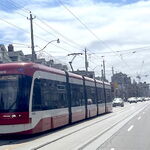
 
Transport issues elsewhere....

Everyone: This has turned into an interesting topic on cities in North America and elsewhere use transport modes. HD has some very interesting points on Page 1 of this topic. I agree that North America has car usage so ingrained that public transit is seen in certain cities only for poor people that cannot afford cars. You can truly live without a car in cities like NYC and Boston(to an extent) but in cities like LA and Dallas/Fort Worth a car is of much more importance.
I will mention Philadelphia-I am here now at NRHS there and the local transit system suffers to an extent from an us vs. them mentality. In SEPTAs 5-county area the City/County of Philadelphia has two thirds of SEPTAs ridership and the city contributes more than the other 4 PA counties (Delaware,Montgomery,Bucks and Chester) and SEPTAs needs are a delicate balance between the Center City office workforce as an example-a good portion of these riders have access to a car and are somewhat affluent - The lion's share of Regional (commuter) Rail's ridership as an example serves these people.
On the other hand the City of Philadelphia has a substantial number of working poor and low-middle income riders. I remember that I found that 25 percent of PHLs population is living at or below the poverty line. What has happened to an extent is the City-reaching out to this lower class-has gotten SEPTA to serve this core clientele - but at the expense,to an extent of SEPTAs most affluent riders-the Center City worker living in the suburbs and riding Regional Rail trains to their Center City jobs. I attended hearings over the Summer on SEPTA's funding crisis and a resulting fare increase that took effect in July.
I saw first hand how entrenched the us vs. them mentality is-especially vocal were poor minority City residents that feel that everyone is out to get them,so to speak. City Transit services like buses is seen by some as something for the poor only-not as an alternative to auto use. I have found that mentality to be obviously very divisive-just think "United we stand,Divided we fall" - not to mention Pennsylvania's bad policy on transit funding and Philadelphia's image to some PA residents-that it is a place that squanders state funds and the factions are:
1-The Cities of Philadelphia and Pittsburgh
2-The suburbs of both cities and some smaller metro areas-like Allentown/Bethlehem and Scranton/Wilkes-Barre
3-the small towns and rural areas of much of this state-Democratic strategist James Carville described this as PHL,PGH with Alabama in between-it describes the anti-urban feelings held my many rural Pennsylvanians towards cities like Philadelphia in particular.
Because of the divisiveness PA politics can be interesting due to these factions. I remember reading that some Ontarians have similar feelings toward the Golden Horseshoe cities. Is Ontario policies toward transit divided and where outside of Toronto is transit looked down as a poor people's system? Does Toronto dominate ONT like NYC can dominate NY State? - I will add at the chagrin of many Upstate residents.
In closing everyone should get together to solve transport problems-a divisive mentality is never constructive!!! That's the way I see it-LI MIKE
 
Is Ontario policies toward transit divided and where outside of Toronto is transit looked down as a poor people's system?

Other than Toronto, Ottawa has a very high transit ridership for a city of its size, and Kitchener Waterloo is probably the third most conscious transit city in the province but elsewhere the philosophy is still "if you're ridingthe bus after 30, you've failed life."

Does Toronto dominate ONT like NYC can dominate NY State? - I will add at the chagrin of many Upstate residents.

Oh, God, no!!! Toronto is the most powerless city in the developed world. We are Ontario, no, Canada's bitch. If it weren't for our (and Alberta's) tax dollars, basically every community east of Montreal island would have the same standard of living as Peru. To show their gratitude, the rest of the country hates us for being greedy.
 
PS: Here's a joke.

Q: What's the difference between Toronto and Mumbai?

A: One is a city that is being left to rot by feckless governments, has an embarassingly large homeless population, suffers from mounting traffic congestion with no transit plan in sight and doesn't know what to do with its garbage...and the other is the largest city in India.
 
I had no idea that matters had gotten this bad in Mumbai.

In fairness, if you look into several other large Indian cities, you will also see much over-crowding, massive poverty, poor train service and poor city services, with corruption and incompetence on all levels. But do any of these other cities go down to this level? I should hope not, because this is too much to comprehend as it is.

And that airport scene must be the most "in your face" illustration of a broken system than any other that could be cited.
 

Back
Top