News   Apr 01, 2026
 36     0 
News   Apr 01, 2026
 352     0 
News   Apr 01, 2026
 361     0 

VIA Rail

I‘m not stressing out over this, I‘m just seeing the danger that if this bid was selected that endless litigation would delay or even derail the project. However, if these conflicts of interest get recognized and lead to a different bid getting selected, I would be very happy…

It's not the US. Anybody suing would have to show real damage caused by illegal activity. That's actually really hard in this case. Air-rail integration and codeshare isn't illegal. Nor is it illegal for Porter customers to simply prefer rail for Corridor travel.
 
It's not the US. Anybody suing would have to show real damage caused by illegal activity. That's actually really hard in this case. Air-rail integration and codeshare isn't illegal. Nor is it illegal for Porter customers to simply prefer rail for Corridor travel.
I‘m not that familiar with competitive (or any) law in this country, but considering how anxious some people here are about PP cancelling HFR, the enthusiasm for an alliance with ex-monopolist AC which could shut down out and harm private competitors like Porter and WestJet strikes me as rather surprising…
 
Last edited:
I‘m not that familiar with competitive (or any) law in this country, but considering how anxious some people here are about PP cancelling HFR, the enthusiasm for an alliance with ex-monopolist AC which could shut down out and harm private competitors like Porter and WestJet strikes me as rather surprising…

To be clear, it's not they I'm enthusiastic for Cadence . I just think it probably helps the case that the airline that probably lobbied most against rail in the Corridor (before Porter) is getting onboard. And it's mostly driven by real infrastructure and HR constraints they face. It's a rather unique alignment.

The real threat to this project, is probably Porter at this point. It's the airline that stands to lose the most.

As for the political threat, I still think PP may cancel this project. But at least airline lobbying will be split on this, instead of 100% opposed to rail.
 
It does seem to me that the FRA takes a more aggressive approach to ADA than occurs here. I couldn’t imagine that there would not be pressure on VIA to have high platforms in places like London and Windsor where they have one or more platforms off the main.

Compare the Amsterdam, NY station plan phase 1 with London for example
IMG_5103.jpeg
 
Three major changes in the operating environment are going to completely upend current boarding/detraining processes at Union Station within the next 10 years:

1) The standardization of all intercity trains with modern rolling stock
2) The complete reconfiguration of track/platform layouts/configurations, which will significantly raise and widen the existing platforms
3) The introduction of High Frequency Rail and transition to a new operator (while GO undergoes a similar transformation to RER with ONxpress)

During this period of unprecedented change, it is simply impossible to introduce significant changes to existing procedures, unless where they are driven by the need to facilitate the implementation of these long-term changes.

This makes no sense. I read the whole post and it sounds like you are saying that during these times of unprecedented changes, we cannot introduce chances. The problem right now is a low platform slowing things down at all stations.High platforms, especially is needed at the major stations. One major station will be doing that. Am I the only one who does not see that as problem solved?
 
Three major changes in the operating environment are going to completely upend current boarding/detraining processes at Union Station within the next 10 years:

1) The standardization of all intercity trains with modern rolling stock
2) The complete reconfiguration of track/platform layouts/configurations, which will significantly raise and widen the existing platforms
3) The introduction of High Frequency Rail and transition to a new operator (while GO undergoes a similar transformation to RER with ONxpress)

During this period of unprecedented change, it is simply impossible to introduce significant short-term changes to existing procedures, unless where they are driven by the need to facilitate the implementation of these long-term changes. The focus is to improve future customer experience by ensuring that the future infrastructure corresponds with future commercial and operating needs. It‘s not a question of will, but of the capacity for implementing changes, which prevents the kind of seemingly obvious adjustments to current procedures which you two envision. There already is and will be more than enough moving parts which will constantly change during this challenging transition period…
I‘m trying to phrase this in simpler terms:
  1. Most of the current issues with boarding procedures will be hopefully resolved in a decade‘s time when the entire Corridor uses a modern fleet, HFR is operable and the track and platform layout at Union Station has been completely overhauled to allow for much higher and wider platforms.
  2. However, in order to successfully implement these major long-term changes, we need to reduce minor, ongoing changes as much as possible. This is why any major IT systems change is preceeded by a blackout period in which only critical bugs are fixed, as every change in the IT environment might hinder the successful rollout of the major IT system change, as it might have unforeseen consequences.
  3. In short: the worst time to introduce significant, but non-critical short-term changes is when major long-term changes are imminent (as is the case with the platforms at Union Station).
  4. Therefore, it‘s often better to delay desirable, but non-critical changes and incorporate them into the long-term upgrades which are planned anyways. That means focusing on optimizing the designs for the future infrastructure (to ensure that it can accommodate desirable operating practices) rather than trying to test the limits of how far we can push the existing infrastructure in its final years.
 
Last edited:
I‘m trying to phrase this in simpler terms:

  1. Most of the current issues with boarding procedures will be hopefully resolved in a decade‘s time when the entire Corridor uses a modern fleet, HFR is operable and the track and platform layout at Union Station has been completely overhauled to allow for much higher and wider platforms.
  2. However, in order to successfully implement these major long-term changes, we need to reduce minor, ongoing changes as much as possible. This is why any major IT systems change is preceeded by a blackout period in which only critical bugs are fixed, as every change in the IT environment might hinder the successful rollout of the major IT system change, as it might have unforeseen consequences.
  3. In short: the worst time to introduce significant, but non-critical short-term changes is when major long-term changes are imminent (as is the case with the platforms at Union Station).
  4. Also: it‘s often better to delay desirable, but non-critical changes and incorporate them into the long-term upgrades which are planned anyways. Rather than optimizing what is possible with the current infrastructure which won‘t exist in its present form in just a few years‘ time, the plans for the future infrastructure should be optimized to ensure that it will allow for whatever procedures are deemed desirable.
Ah,so it is more a case of "why waste time on trying to make it work today when it will work tomorrow"?
I notice there is usually some slight scheduling adjustments once a year. Why not roll out those changes at that time? Of course, that would be only if those changes would be longer lasting.So, for instance, once the high level platforms are done and Via can use them, that year, roll out a timetable to reflect that?
 
Ah,so it is more a case of "why waste time on trying to make it work today when it will work tomorrow"?
I notice there is usually some slight scheduling adjustments once a year. Why not roll out those changes at that time? Of course, that would be only if those changes would be longer lasting.So, for instance, once the high level platforms are done and Via can use them, that year, roll out a timetable to reflect that?

High level platforms are not something that you buy in a kit at Rona and install yourself in your back yard with a few buddies over a long weekend. It's complicated.
Having said that, I do believe ViA is wasting the opportunity to move to these quickly in London and Ottawa, where they have greater control of the infrastructure and where the value of the investment is high and likely to be longstanding.
And I see little or no change needed in Montreal, so there is no barrier to begin working out new procedures and addressing "attention to detail" deficiencies in the current setup.
Toronto Union is complicated and will just have to take as long as it takes.
The change is not merely the physical platform, it's changing operationally so that trains arrive at the platform with nothing left to do but unload and load passengers. The current dwell time at Union is needed to solve minor issues and organize. Even if high platforms were in place today, VIA could not move trains thru the trainshed in a manner similar to GO or a subway train (as is done overseas). VIA will have to sort all that out.
I do not agree that VIA has to wait for HFR to act on all of these. Presumably they are talking about these things internally as part of the HxR concept specs.... but they can begin some proof of concept tests now....similar to how they implemented "top and tail" double ended diesel consists with the existing fleet in preparation for the double ended Ventures.
There's always a good reason to do nothing..... while there is wisdom in what @Urban Sky is explaining, I do feel it can be taken too far and become an excuse rather than a prudent bit of careful planning..

- Paul
 
Last edited:
High level platforms are not something that you buy in a kit at Rona and install yourself in your back yard with a few buddies over a long weekend. It's complicated.
Having said that, I do believe ViA is wasting the opportunity to move to these quickly in London and Ottawa, where they have greater control of the infrastructure and where the value of the investment is high and likely to be longstanding.
And I see little or no change needed in Montreal, so there is no barrier to begin working out new procedures and addressing "attention to detail" deficiencies in the current setup.
Toronto Union is complicated and will just have to take as long as it takes.
The change is not merely the physical platform, it's changing operationally so that trains arrive at the platform with nothing left to do but unload and load passengers. The current dwell time at Union is needed to solve minor issues and organize. Even if high platforms were in place today, VIA could not move trains thru the trainshed in a manner similar to GO or a subway train (as is done overseas). VIA will have to sort all that out.
I do not agree that VIA has to wait for HFR to act on all of these. Presumably they are talking about these things internally as part of the HxR concept specs.... but they can begin some proof of concept tests now....similar to how they implemented "top and tail" double ended diesel consists with the existing fleet in preparation for the double ended Ventures.
There's always a good reason to do nothing..... while there is wisdom in what @Urban Sky is explaining, I do feel it can be taken too far and become an excuse rather than a prudent bit of careful planning..

- Paul
Let's be honest, the government will drag their heels on anything they can. Sometimes there is a valid reasonable reason, and other times,it is just because they can. A change in Government won't change that. What is needed is to bring back accountability (did it ever exist?) to politicians.
 
High level platforms are not something that you buy in a kit at Rona and install yourself in your back yard with a few buddies over a long weekend. It's complicated.
Having said that, I do believe ViA is wasting the opportunity to move to these quickly in London and Ottawa, where they have greater control of the infrastructure and where the value of the investment is high and likely to be longstanding.

The problem is funding. VIA wrote a Proposal for Elevated Passenger Platforms for Ottawa Train Station in 2016. They got funding for Stage 1A (which they have completed), but never got the additional funding for Stage 1B (or Stage 2). My guess is the government is waiting for HFR to see if someone else will pay for it.
 
Last edited:
The problem is funding. VIA wrote a Proposal for Elevated Passenger Platforms for Ottawa Train Station in 2016. The got funding for Stage 1A (which they have completed), but never got the additional funding for Stage 1B (or Stage 2). My guess is the government is waiting for HFR to see if someone else will pay for it.

Thanks for that. The map showing the land ownership is intriguing in its own right, I will admit I always assumed that VIA owned much more real estate at Ottawa.

It would be interesting to know the all-in cost of doing all three phases in one project versus splitting them out this way. This is a case where I would argue that Ottawa is nickel-and-diming VIA and the whole thing should have been financed in one shot. The cost of mobilising and doing site prep three times probably escalates the overall cost somewhat.

- Paul
 
The problem is funding. VIA wrote a Proposal for Elevated Passenger Platforms for Ottawa Train Station in 2016. They got funding for Stage 1A (which they have completed), but never got the additional funding for Stage 1B (or Stage 2). My guess is the government is waiting for HFR to see if someone else will pay for it.
In London they don't have the excuse of possibly passing off the costs to a future HFR project because they're rebuilding the platforms anyway as we speak. London's platforms are on sidings never used by freight trains, so they'd be a particularly easy place to build high-level platforms. I emailed Via asking if the reconstruction would include high-level platforms before the project started, but they said that that info was not publicly available. It was only revealed that the platforms would remain low-level when construction started, by which point it was too late to change the plans.

If we had known beforehand that the reconstruction project was to include low-level platforms, we could have applied political pressure to advocate for the extra budget required (which shouldn't be much compared to the overall project). But since Via refused to tell anyone what the reconstruction plans entailed, we were completely unable to support them in their advocacy for high-level platforms.

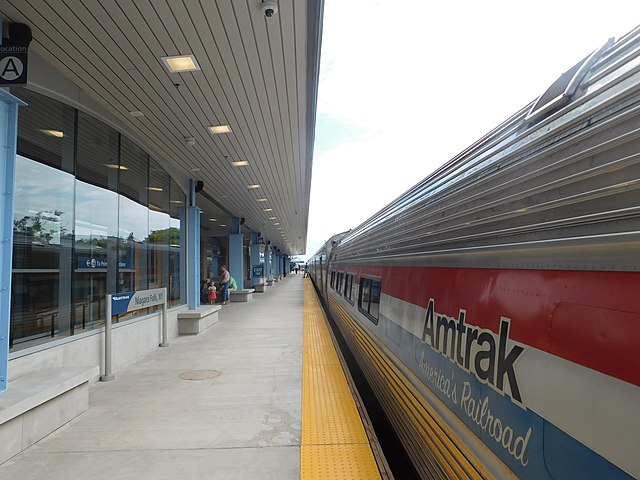
In contrast south of the border on the Empire Corridor (Toronto - New York), pretty most station reconstructions include raising the platforms to 48" above top of rail even when they're located on freight railways. In most cases they build a dedicated platform siding similar to the ones that already exist at London station.

Niagara Falls Station (rebuilt in 2016). Railway owned by CSX
640px-Niagara_Falls_station_platform.jpg


Buffalo Exchange (rebuilt in 2020). Railway owned by CSX.
640px-Buffalo_Exchange_Street_-_first_train.jpg


Rochester Station (rebuilt in 2017). Railway owned by CSX.
640px-Rochester_platform_2019.jpg


Syracuse station (rebuilt in 1998). Railway owned by CSX
640px-Syracuse_station_platform%2C_July_2016.jpg


Saratoga Springs station, railway owned by CPKC:

Screenshot 2024-08-06 at 17.43.29.png
 
Last edited:
In London they don't have the excuse of possibly passing off the costs to a future HFR project because they're rebuilding the platforms anyway as we speak. London's platforms are on sidings never used by freight trains, so they'd be a particularly easy place to build high-level platforms. I emailed Via asking if the reconstruction would include high-level platforms before the project started, but they said that that info was not publicly available. It was only revealed that the platforms would remain low-level when construction started, by which point it was too late to change the plans.

If we had known beforehand that the reconstruction project was to include low-level platforms, we could have applied political pressure to advocate for the extra budget required (which shouldn't be much compared to the overall project). But since Via refused to tell anyone what the reconstruction plans entailed, we were completely unable to support them in their advocacy for high-level platforms.

In contrast south of the border on the Empire Corridor (Toronto - New York), pretty most station reconstructions include raising the platforms to 48" above top of rail even when they're located on freight railways. In most cases they build a dedicated platform siding similar to the ones that already exist at London station.

Niagara Falls Station (rebuilt in 2016). Railway owned by CSX
640px-Niagara_Falls_station_platform.jpg


Buffalo Exchange (rebuilt in 2020). Railway owned by CSX.
640px-Buffalo_Exchange_Street_-_first_train.jpg


Rochester Station (rebuilt in 2017). Railway owned by CSX.
640px-Rochester_platform_2019.jpg


Syracuse station (rebuilt in 1998). Railway owned by CSX
640px-Syracuse_station_platform%2C_July_2016.jpg


Saratoga Springs station, railway owned by CPKC:

View attachment 586272
Could it be that when the tender went out that GO was still operating and having a high platform would make it inaccessible for their trains?
 
Article from Trains posted today.

VIA Rail Canada’s public meeting discusses challenges, offers explanations: Analysis​

By Bob Johnston | August 9, 2024

Long-distance fleet replacement is a priority, but remains unfunded


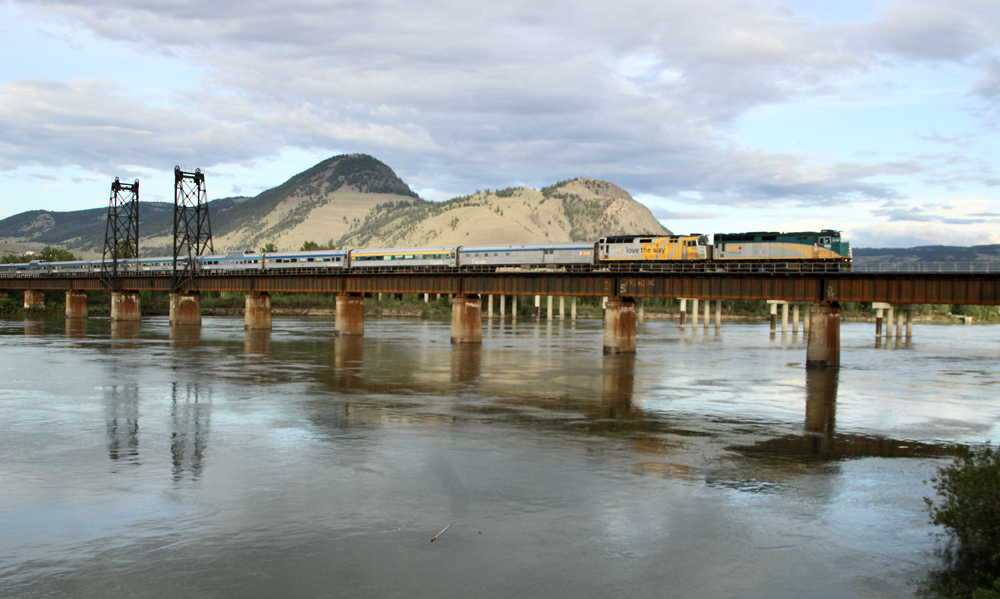
Passenger train crossing river bridge

The Canadian crosses the North Thompson River west of Kamloops BC on June 29, 2024. VIA Rail Canada says replacement of its long-distance car fleet is a priority, but as of yet there is no funding. Russ Grycan

MONTREAL — VIA Rail Canada recaps the company’s forward-looking initiatives and financial performance for calendar 2023 in a 30-minute audio recording of its annual public meeting released on Wednesday, Aug. 7. The session is moderated by Jamie Orchard, VIA’s senior advisor of corporate communication, and features board of directors chair Francoise Bertrand, CEO Mario Peloquin, and Chief Financial Officer Carl Delisle.

They discuss the rollout of a new reservation system — Bertrand says, “From day one it went very well” — and the new Venture fleet, which Peloquin confirms will be complete by the summer of 2025. He references host-railroad challenges when noting, “The promise I’ve made is that we’ll safely get you there, eventually,” admitting, “we’re not always on time but we offer the best services regardless of some delays on our trains.” The company only owns 3% of its route miles; dispatching delays have been inflicted not only by Canadian National, but more recently by Toronto commuter rail operator Metrolinx.

Delisle says VIA carried 4.1 million passengers in 2023 compared with 5 million in the pre-pandemic year of 2019. Revenue of C$432 million ($314 in U.S. dollars) was 29% higher than 2022, while expenses topped C$944 million ($687 million U.S.), up 14.7% from 2022, according to the company’s annual report.

A new fleet?​

Peloquin says the average age of the non-Venture fleet is 77 years. “In 2023,” he says, “we presented the federal government with a document explaining the imperative of replacing that fleet now.”
So far, the Trudeau government has not advanced any definitive plan for financing a procurement, although a request for carbuilder qualifications is apparently in the planning stage. There are no budget line items for fleet acquisition in the April 2024 document.

It proposes C$462.4 million (about $336 million U.S.) over five years to sustain VIA operations, but says, “funding amounts [to replace the aging fleet] are not being released to protect the government’s position for an upcoming procurement.” Meanwhile, the entirely separate High Frequency Rail company is budgeted for $371.8 million ($270 million U.S.) over six years, even though it will not operate any trains while it seeks a private construction partner [see “Air Canada involvement in High Frequency …,” News Wire, Aug. 8, 2024].

Complicating any funding commitments is that a new Canadian general election must take place on or before Oct. 25, 2025, meaning there could be a wholesale shift from Trudeau government priorities.
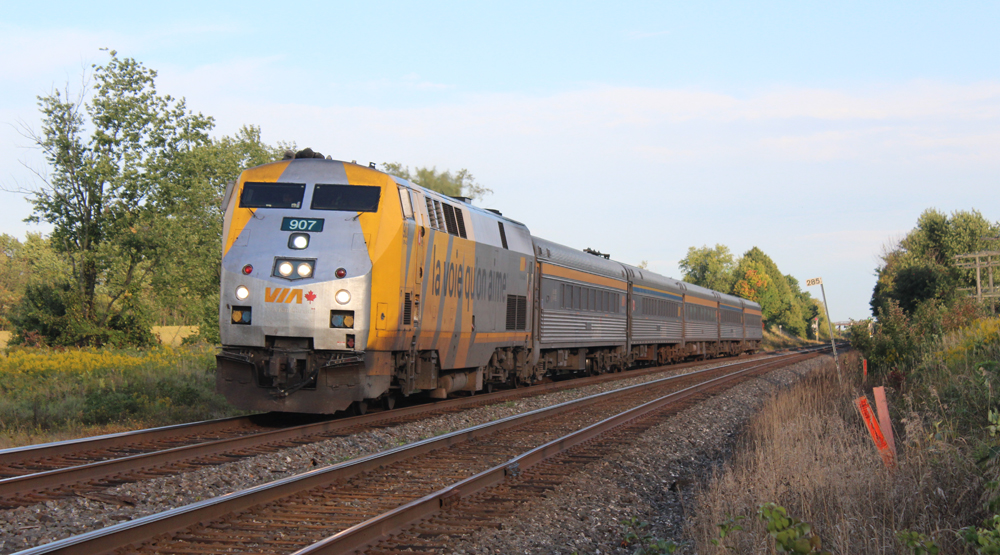
VIA corridor assenger train with heritage HEP cars

A westbound VIA corridor train with Budd HEP-1 and HEP-2 equipment approaches Oshawa, Ontario, on Sept. 13, 2022. VIA says the cars are to be repurposed once the Venture fleet delivery is complete. Bob Johnston

Regarding service expansion, Peloquin says, “Eventually, we’ll be able to release some of the older cars operating in the corridor, which may enable us to offer more services in regions where there is a need.” Not mentioned was a Request for Proposals the company recently issued seeking bids for “structural repairs” to 41 HEP-1 cars. A Montreal site visit was to take place on July 25, 2024. VIA declined to respond to several News Wire inquiries asking for details about the nature of the work and what equipment is involved.

Gaspe service among other topics addressed​

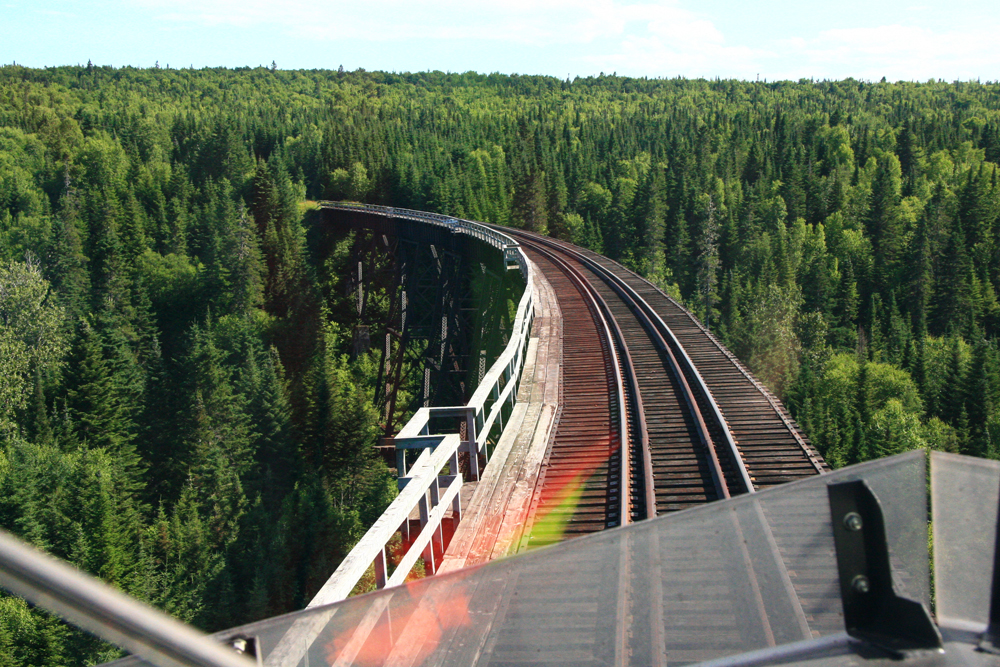
High curving bridge on rail line as seen from locomotive cab

The view from the locomotive leading VIA’s westbound Chaleurfrom Gaspe, Quebec., on July 25, 2011. The bridge is one that still needs to be rebuilt by the Quebec government after a number of the bridges were condemned and passenger service ended in December 2011. Bob Johnston

Peloquin says VIA is prepared to restart service on Quebec’s Gaspe Peninsula only when the entire line is rebuilt to a state of good repair all the way to Gaspe, “if we can offer a reasonable trip time. Operating a shortened service [to New Carlisle, Que., where tracks are intact] creates logistical problems because we can’t turn the train.”

A more detailed response on that issue, and answers to other questions submitted in advance, are available in a separate four-page online document. Concerns about bicycle carriage, baggage policy, delays to the Montreal-Halifax Ocean on CN’s Newcastle Subdivision, and on-time performance are among the topics addressed.

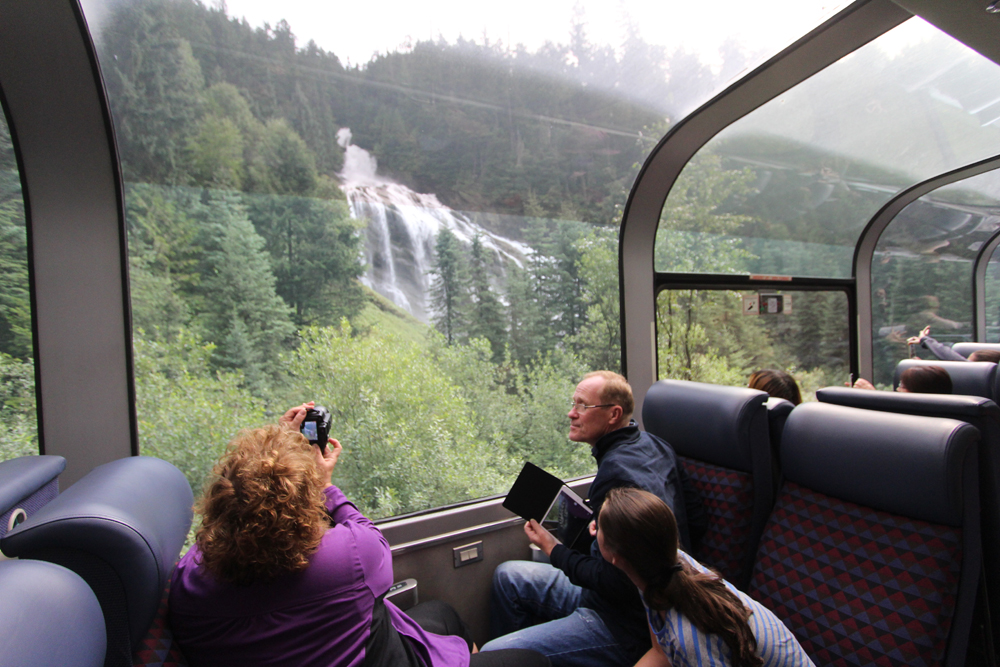
Although VIA had previously indicated the company’s three full-length, single-level Panorama domes would be ready for the summer 2024 season, just one car was repaired and is only available for “ad hoc demands.” Those cars were built for BC Rail’s short-lived Whistler Northwind service. Before the COVID-19 pandemic, a single car had been assigned to the triweekly Jasper-Prince George-Prince Rupert train in “Touring Class” service; two cars handled the Edmonton, Alberta-Vancouver, British Columbia, portion of the Canadian.

“Due to the significant financial and resources investment [for repairs],” the company says, “we do not plan on renovating on the short or medium term the remaining Panorama cars in order to, amongst others, prioritize the update of other cars that are crucial to the operation of the long-distance and regional routes.”
Passengers look at waterfall from seats in dome car

Passengers enjoy Canadian Rockies scenery through curved glass windows of a Panorama dome on the eastbound Canadian on Aug. 8, 2015. Two of the three cars remain out of service. Bob Johnston
 

Back
Top