

News   Mar 31, 2026
 1.2K     2 
News   Mar 31, 2026
 214     3 
News   Mar 31, 2026
 1.1K     0 

VIA Rail

^ Kicking the can 5 years down the road is totally viable. CN and CPR will have tested hydrogen enough to be able to run modeling. Batteries + catenary will also have more experience, as will the dedicated electric freight corridors in India.

Lots of pieces moving at the same time. Almost no benefit of moving today. Waiting is totally viable.
 
Keithz....................so your alternative to diesel trains is to do nothing at all?

Well if Ottawa decides to use that theory then I can't wait for CN & CP to take them to court because one rail system gets a pass and the other doesn't.
The use of diesel for long-haul freight and passengers is hardly low-hanging fruit. The reduction in carbon emissions compared to trucks and cars is massive.

There's little point in worrying about this, this decade. Canada isn't on the cutting edge here - by the time we need to be making decisions on this, we'll see a much clearer path forward from other jurisdictions. Who knows, by the time this really becomes pressing, VIA Rail may not even exist. And if it does, it might not even have coast-to-coast service.
 
Trains already drastically reduce carbon emissions and the engines get cleaner all the time. This video (focusing on the double stack train in the first 8 minutes and 12 seconds of the video) is mind boggling when you see the train stretch as far as the eye can see from a high vantage point and realize every container is a truck off the roads. I have to believe that equally applied carbon tax favours the most efficient mode and trains are it.
 
Trains already drastically reduce carbon emissions and the engines get cleaner all the time. This video (focusing on the double stack train in the first 8 minutes and 12 seconds of the video) is mind boggling when you see the train stretch as far as the eye can see from a high vantage point and realize every container is a truck off the roads. I have to believe that equally applied carbon tax favours the most efficient mode and trains are it.
I would wager that that one train (even powered by fossil fuels) reduces more CO2 by getting trucks off the road than VIA rail could ever do (even if electrified) in a year by getting cars off the road. Many people on here see the freight railways as the enemy, but in reality they are our friends.
 
I found this paper and thought it was worth a share.


Of note:
It is commonly assumed that taking the train serves as a more climate ‐ friendly means of travel than flying by commercial aircraft. Nevertheless, in Canada, long ‐ distance rail services are powered by aging and inefficient diesel locomotives. Moreover, long ‐ haul passenger trains are not typically loaded to capacity, and they must travel longer distances than equivalent air routes (which are able to benefit from more direct flight paths). This viewpoint considers whether traveling long ‐ distance by train generates a larger climatic footprint than flying by commercial aircraft, and offers a basic carbon footprint analysis and modal comparison of three long ‐ distance routes in Canada. It finds that taking the train does indeed generate a larger climatic impact than flying, in the cases of VIA Rail '2 warming impact into account.
Unfortunately, the climate savings of rail are not absolute, especially for long distance passengers and with the climate crisis we are in, it may be best to cancel the Canadian outright.
 
I found this paper and thought it was worth a share.


Of note:

Unfortunately, the climate savings of rail are not absolute, especially for long distance passengers and with the climate crisis we are in, it may be best to cancel the Canadian outright.
That's only if you think of the carbon emissions from Toronto to Vancouver. What about between travelling in-between those two locations? What about remote locations that dont have airports?

Everyone doesn't live in a major metropolitan area.

And the carbon emissions for a single driver in a car Driving from Toronto to Edmonton is going to be more than taking the Canadian.
 
That's only if you think of the carbon emissions from Toronto to Vancouver. What about between travelling in-between those two locations? What about remote locations that dont have airports?

Everyone doesn't live in a major metropolitan area.

And the carbon emissions for a single driver in a car Driving from Toronto to Edmonton is going to be more than taking the Canadian.
A robust intercity bus network could do the job of intermediate transport and it could do so without having to carry around the weight of bedrooms and dining spaces which sit unused for much of the journey. The same applies to the Ocean as well.

In this climate emergency we have to take decisive action, and unless utilization and energy efficiency of long distance trains sees a dramatic increase, they may not make the cut.
 
^it will be interesting to see what survives and what doesn’t. As a simple matter of amount of fuel consumed, and carbon output per train, this sounds like pretty small potatoes. Imagine what the cruise ship industry faces in comparison. A 2,000 tom passenger train by rail - versus a 50,000 ton boat moving by water?

- Paul
 
Unfortunately, the climate savings of rail are not absolute, especially for long distance passengers and with the climate crisis we are in, it may be best to cancel the Canadian outright.
Yes, there is a big difference between CN pulling a 100+ car double stacked train, and VIA Rail running old diesel engines to pull stainless steel coaches with the people per car ratio being very low. I would imagine the new VIA corridor fleet and the RDC coaches paired with the P42DCs would fair better. GO's double deck fleet would probably be as good as it gets for diesel because the double deck cars have lower car weight per passenger and the new engines meet EPA Tier 4 standards. Not sure about the Renaissance fleet as they were built with heavy steel.
 
Whatever VIA decides in terms of technology { and personally I think all 3 types of zero emissions vehicles have their place all depending upon the route} but the fact that they have no concrete plans of how they will meet net-zero by 2050 is highly irresponsible.

The very first thing VIA should do in this regard is NOT to go to Ottawa looking for money but rather meeting up with CN & CP and see what their plans and technology choice will be. Nearly every inch of VIA service is run on their freight tracks and so working together with CN & CP will not allow for far easier and faster new technology implementation but also greatly reduce VIA infrastructure costs.
 
Unfortunately, the climate savings of rail are not absolute, especially for long distance passengers and with the climate crisis we are in, it may be best to cancel the Canadian outright.
Let's get real here, the Canadian is a niche, relatively infrequent train with an absolutely tiny carbon footprint. The climate crisis is not the top reason to cancel it.

---
To everyone except Paul Langan, please hope/pray/wish for good news in tomorrow's budget.
 
Whatever VIA decides in terms of technology { and personally I think all 3 types of zero emissions vehicles have their place all depending upon the route} but the fact that they have no concrete plans of how they will meet net-zero by 2050 is highly irresponsible.
I look at the gradually reduced frequency, the minimal investment, and the increasingly poor on-time reliability that has a train that people ride to see the scenery pass through the rockies in the middle of the night as proof positive that by 2050 VIA will have achieved net-zero emissions on the route.
 
t the fact that they have no concrete plans of how they will meet net-zero by 2050 is highly irresponsible
Right now the plan should be: we will evaluate new applications of renewable and zero emissions technology to the sector as they emerge, and ensure VIA's operations are net zero by or before 2050.

Or what would likely be called no plan by you.

It would be irresponsible to have a detailed plan at this point beyond things they can do today, like fleet renewal, track side power an maintenance stations, and strategies to reducing idling.

Right now their resilience statement is:
"Reduce the environmental impacts of our own fleet and buildings and help bring transformational change to Canada by reducing the transportation sector’s contribution to climate change, congestion and smog."
1618802849529.png

1618802828870.png


And they're far ahead of the 2030 target. And they'll have further reductions due to the new corridor fleet.

Anyways, read all about it. https://media.viarail.ca/sites/default/files/publications/2019_Sustainability_Report_EN.pdf
 
Whatever VIA decides in terms of technology { and personally I think all 3 types of zero emissions vehicles have their place all depending upon the route} but the fact that they have no concrete plans of how they will meet net-zero by 2050 is highly irresponsible.

The very first thing VIA should do in this regard is NOT to go to Ottawa looking for money but rather meeting up with CN & CP and see what their plans and technology choice will be. Nearly every inch of VIA service is run on their freight tracks and so working together with CN & CP will not allow for far easier and faster new technology implementation but also greatly reduce VIA infrastructure costs.

I totally disagree with your first paragraph and totally agree with the second.

What would be totally irresponsible would be for VIA to forge ahead and pursue a potentially unique and un-integrated strategy that ignores what its host railways will inevitably have to do to manage their own carbon contribution. Having a plan today would be proof of wasting time and money. Especially since the technology isn’t ripe yet.

The freight railways are still getting their heads around the investment that will be needed. There’s a pretty obvious reality: the mega mega joules of energy they waste by relying on non-regenerative braking is as much a carbon problem as a fuel cost problem. Some technology (not necessarily wires, but I don’t rule it out) that captures and reuses kinetic (braking) energy would halve their carbon output (and fuel costs). Sourcing the remaining energy used without producing carbon is a separate but equally pressing problem

Let’s not mistreat VIA for having to wait and see how this progresses.

-Paul
 
I totally disagree with your first paragraph and totally agree with the second.

What would be totally irresponsible would be for VIA to forge ahead and pursue a potentially unique and un-integrated strategy that ignores what its host railways will inevitably have to do to manage their own carbon contribution. Having a plan today would be proof of wasting time and money. Especially since the technology isn’t ripe yet.

The freight railways are still getting their heads around the investment that will be needed. There’s a pretty obvious reality: the mega mega joules of energy they waste by relying on non-regenerative braking is as much a carbon problem as a fuel cost problem. Some technology (not necessarily wires, but I don’t rule it out) that captures and reuses kinetic (braking) energy would halve their carbon output (and fuel costs). Sourcing the remaining energy used without producing carbon is a separate but equally pressing problem

Let’s not mistreat VIA for having to wait and see how this progresses.

-Paul

I totally agree!

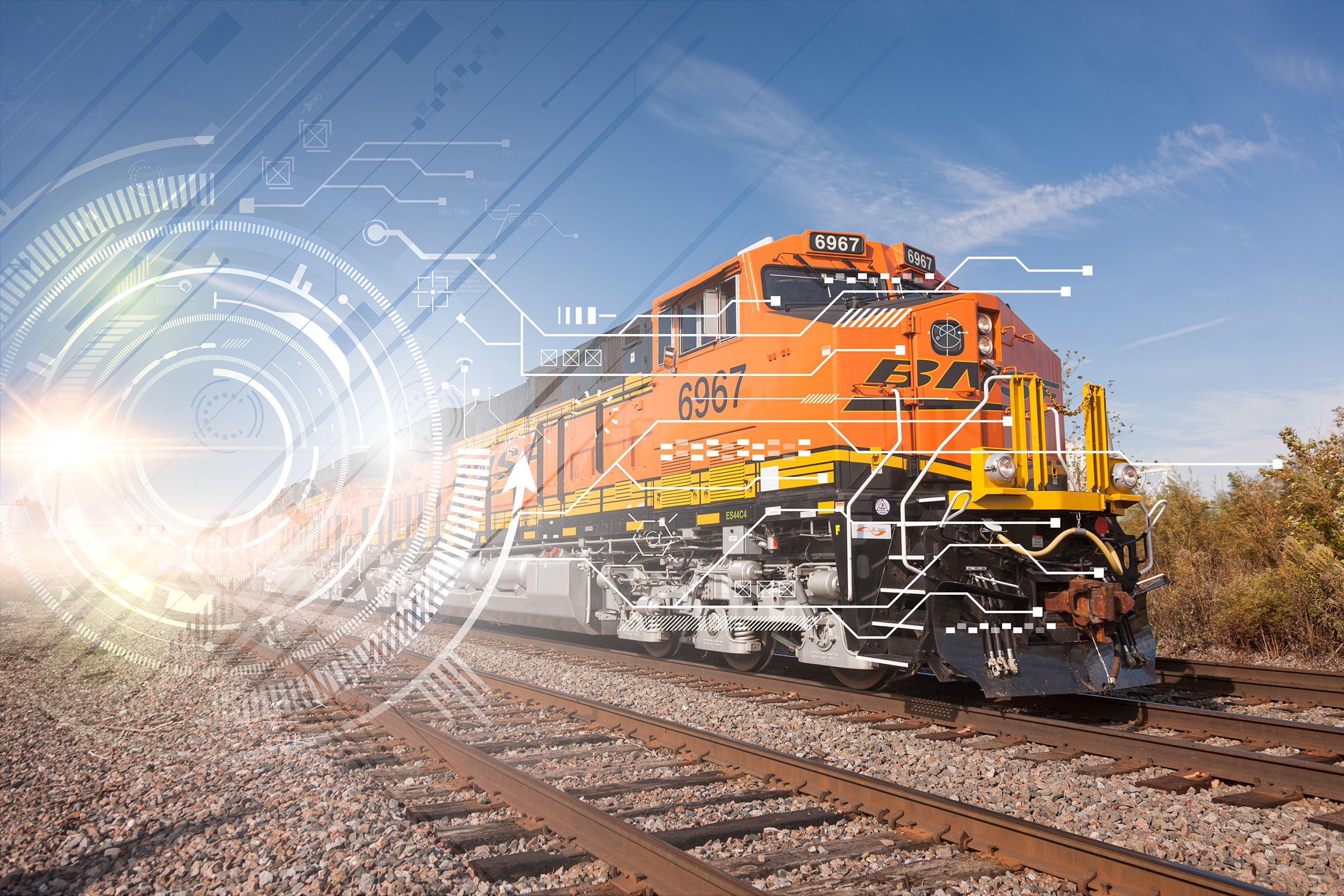
I think I have posted this before, but BNSF and Wabtec (formerly GE Transportation) are working on a battery-powered locomotive that "will be situated in a consist between two Tier 4 locomotives, creating a battery-electric hybrid consist." They are exploring several ways of using this locomotive, including (though not necessarily limited to):
  1. Recovering energy from dynamic breaking for use later, saving fuel.
  2. When stopped in a yard, powering the safety systems by battery, allowing the diesel locomotives to be shut off, saving fuel and reducing noise.
  3. While at cruising speed, the train can "graze" on battery power to save fuel.
All of these features will be controlled by a computer system that will calculate the best way utilize the battery on the planned route (when to fully charge the battery from diesel and when to leave room for regenerative breaking). Saving fuel not only saves the railways money, it also reduce emissions.

Here are a couple interesting media releases from BNSF about this:
 

Back
Top