


robmausser
Senior Member
Looks so much better than the Amtrak units with their MJ nose on the front.
|
|
|

I didn't say I had an "issue" with this rollingstock... I simply posed a question asking how the new fleet will accommodate differing platform heights on the corridor.You haven't seen the passenger cars yet so how do you know that there is an issue with the height?
Not sure if this has already been asked - but how is the new train set going to deal with different platform heights? For example, at Montreal Gare Central is there an automated step/extension to bridge the gap with the higher platform (instead of the current metal plaque that attendants manually install when in MTL...).

I hate being cynical, but given the history of passenger rail in this country, there isn't any reason to be anything but cynical. There are really only 4 scenarios that can realistically play out:First, I would caution against any kind of conclusions at this stage without any reliable sources, at least not until the JPO results are released. Second, keep in mind that the CIB has already invested some $70+ million into the JPO for HFR and has given very clear signals of their involvement. Third, we still don't know if there will be an election in 2021 given the complexities created by Covid - and even if there is an election - it doesn't mean high priority infrastructures need to be placed on hold. From a macroecon level, given the historically low interest rates/borrowing costs and the need to jump start the economy, there is every incentive for any gov't to invest more in heavy infrastructure as an easy way to boost short/medium term growth.
You know there is going to be a lot of stimulus spending on infrastructure, so it might actually get built.I hate being cynical, but given the history of passenger rail in this country, there isn't any reason to be anything but cynical. There are really only 4 scenarios that can realistically play out:
1) The JPO results are released and the government determines that HFR isn't worth the investment. The project is cancelled.
2) The JPO results are released, they look good. The project isn't funded in the budget. An election happens, the Liberals form the next government but HFR is forgotten and never heard from again.
3) The JPO results are released, they look good. The project isn't funded in the budget. An election happens and the Conservatives form the next government. In usual style, the Conservatives cancel the project, promising improvements on existing lines. VIA service becomes less and less relevant in the corridor.
4) The JPO results are released and they look good. Unfortunately because of COVID, financial constraints and hard times for the public make an investment like this politically unpopular. The project is cancelled, and VIA service becomes less relevant in the corridor.
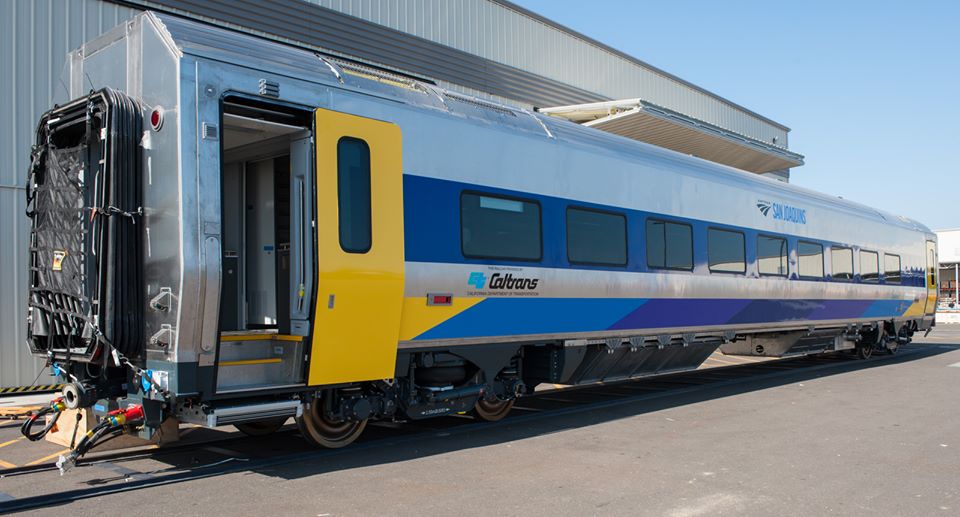
The cars will have a movable "trap" underneath the door, not unlike the LRC cars. Siemens is currently testing a couple of designs on one of the corridor baggage cars.That is a good question. If you look at one of the Amtrak San Joaquins Venture cars, it seems as if the door on one end is for high platforms and the door on the other is for low platforms, but VIA is only having doors at one end of the cars.
As you can see from first picture, the low platform door, seems to have fixed stairs inside the coach and a low gap filler and from the second picture, the high platform door has a gap filler for high platforms. It will be interesting to see what they do for VIA's cars.
Image courtesy EuroCityCard Blog
Photo by Marc Glucksman
The cars will have a movable "trap" underneath the door, not unlike the LRC cars. Siemens is currently testing a couple of designs on one of the corridor baggage cars.
With that in mind, I don't believe that it will be possible to have an extending step to account for the gap at high-level platforms, and so the hand-bombed bridge plates as currently in use will likely continue.


what does that mean? another study or actual design and procurement?

I hate being cynical, but given the history of passenger rail in this country, there isn't any reason to be anything but cynical. There are really only 4 scenarios that can realistically play out:
1) The JPO results are released and the government determines that HFR isn't worth the investment. The project is cancelled.
2) The JPO results are released, they look good. The project isn't funded in the budget. An election happens, the Liberals form the next government but HFR is forgotten and never heard from again.
3) The JPO results are released, they look good. The project isn't funded in the budget. An election happens and the Conservatives form the next government. In usual style, the Conservatives cancel the project, promising improvements on existing lines. VIA service becomes less and less relevant in the corridor.
4) The JPO results are released and they look good. Unfortunately because of COVID, financial constraints and hard times for the public make an investment like this politically unpopular. The project is cancelled, and VIA service becomes less relevant in the corridor.
A certain initial phase just to improve the tracks between Toronto and Peterborough
I'd always leave it to the feds to cock it up, but having CP own the branch is ill advised. Not only do they overcharge up to 800% for work on upgrading rails, the whole plan for HFR is passenger rail priority and eventual electrification, two things that can't happen under a CP ownership.^ That's one option, yes. Hard to know if they can strike a deal with CP given it's a branchline where they don't need to buy it outright.

 www.theglobeandmail.com
/https://www.thestar.com/content/dam/thestar/opinion/star-columnists/2021/02/10/trudeaus-strategic-plans-aimed-at-june-election/trudeau.jpg)