



kEiThZ
Superstar
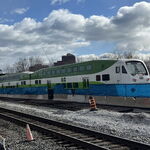
I would be so happy if our long haul fleet offered something like this:
|
|
|
The long haul fleet is about 235 coaches and 28 locomotives.
Big replacement for VIA. But not that huge a replacement in the grand scheme of things. And given that the Siemens Venture sets are based on the Siemens Viaggio Comfort design, I don't see why Siemens couldn't simply make the Railjet/Nightjet design compliant to North American standards to win any long haul fleet order. It's an order that would be worth at least CA$1.5B. And at least for VIA, commonality would be a giant benefit. But even if Siemens doesn't win, going down to just two fleets would be a large gain for serviceability.
I hope we see an RFP in 2024, after they've had 2 years of experience with the new fleet and can tweak the RFP based on lessons learned.
I don't know why you think hydrogen is so unlikely to play a significant role? There are already commercially viable hydrogen locomotives running commuter routes in multiple countries. While things are further back for freight, I think you overestimate the obstacles and underestimate private sector ingenuity.Lets think about this:
One 12 car GO train can carry 1400 people in seats. That's the equivalent to 1400 cars not on the road creating congestion assuming people dont car pool.
Trains have much lower rolling resistance than cars, which already makes this very efficient.
The carbon emissions from one train is significantly less than 1400 cars.
Making this more efficient using whatever new technology that costs millions of dollars takes away money from projects to expand the use of transit. You need to do it as cost efficient and attractive as possible.
Lets also walk before we run, so maybe Hybrid Diesel Locomotives might be something we should adopt first seeing that it's a readily available and proven technology.
That is likely going to be cheaper and more realistic than spending billions running cables eveywhere when you dont even own all the track.
And dont even get me started on Hydrogen and how you will fuel those locomotives, and train everyone on how to maintain them.
Would I like to see this happen? Yes.
Do I think that any government would pay CA$1.5B to replace the part of VIA's fleet that typically looses huge amounts of money each year? No.
I hope to be proven wrong, but I suspect they would like to cancel the long distance services, but know that doing so would be political suicide, so it is easer to just underfund them.
I don't know why you think hydrogen is so unlikely to play a significant role? There are already commercially viable hydrogen locomotives running commuter routes in multiple countries. While things are further back for freight, I think you overestimate the obstacles and underestimate private sector ingenuity.
If it was "fleets" where all the carbon emissions were registered I would agree, but this is under "facilities" where most of their carbon is. I agree completely that the cost of ships moving around, CF18s blasting their afterburners, the cost of shipping supplies all over the world with an often antiquated fleet would have a high carbon footprint... but somehow that is all dwarfed by National Defence Facilities. It seems like there are issues with the data. I downloaded the details and there are marine fleet energy costs for Transport Canada (the highest single emission source for fleets), and a much smaller marine fleet energy cost for Parks Canada, but no marine costs for National Defence which obviously makes no sense. Transport Canada and National Research Council both have aircraft energy costs, but not National Defence. Fisheries and Oceans has no marine costs but runs the Coast Guard. Clearly the data has issues.Not to mention the supersonic jets and ancient navel vessels neither of which are particularly low carbon.

There will likely be a bid to replace the rolling stock with new Superliners, and they could order more Viewliner Sleepers.I think an interesting approach might be to look at what Amtrak is going. What are their plans to replace the long haul sleeper fleet?
The problem is that if the train needs to stop to for an emergency or another reason and the battery is depleted before it gets to the station to charge? You would still need a genset on board incase the train ran out of juice before reaching the next charging point. It would be much smaller than the current prime motors used today but it would be likely the size of the HEP generators used in the F40 Fleet (Or smaller since those are already 10 years old).If Ottawa and VIA decide to go the logical route for electrification {which admittedly is doubtful} then they can use battery trains and not just standard catenary ones. This would save a lot of time and money on the Windsor/Quebec Corridor.
Even with today's basic technology, trains can now run up to 100km using purely battery power in real world conditions. With overhead charging at station stops and sections of catenary to both run the train and recharge the batteries, VIA could already get away with only putting up half the catenary to get to Ottawa and if GO puts up catenary to Burlington, it could almost already get to London catenary-free. Needless to say, these distance times will increase dramatically before VIA even starts working on HFR and the weight and size of the batteries will also shrink along with recharging times.
This would save VIA {aka Ottawa} billions and those saved billions would build a hell of a lot of new track and grade separations.
There will likely be a bid to replace the rolling stock with new Superliners, and they could order more Viewliner Sleepers.
The problem is that if the train needs to stop to for an emergency or another reason and the battery is depleted before it gets to the station to charge? You would still need a genset on board incase the train ran out of juice before reaching the next charging point. It would be much smaller than the current prime motors used today but it would be likely the size of the HEP generators used in the F40 Fleet (Or smaller since those are already 10 years old).
I dont think you understand the scale.After loosing a lawsuit filed by the Council of Canadians with Disabilities about the Renaissance cars not being accessible to wheelchair users, VIA will be a be extra careful about making sure any cars they purchase are fully accessible. I am not sure that either the Superliner or the Viewliner cars meet modern accessibility standards. I am not an expert on this though.
How is this any different from a train running out of diesel fuel? Currently they don't have a backup fuel in case they run out of diesel. The key is having plenty of reserve so that you won't run out of fuel. People on here scoffed at my suggestion that double the rated range for the distance you are traveling on battery is required, but you don't want to run out of power should there be a significant delay. Don't forget, conventional trains use HEP to power their HVAC systems.
Does anyone know how much fuel reserve VIA plans on having in their locomotives over the minimum they need? Also, I am curious, for a "nominal" 5 car train, what percentage of a locomotive's energy goes to both providing HEP on a cold winter's day and to keep the air brakes charged (the two most critical systems).
On an side note, I discovered that the Siemens Charger's dynamic breaking system has regenerative capabilities to divert power generated away from the resistor grids to the HEP inverter and other auxiliary needs, thus saving fuel.