News   Dec 05, 2025
 1.2K     5 
News   Dec 05, 2025
 3.8K     10 
News   Dec 05, 2025
 719     0 

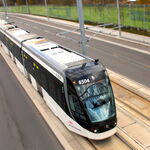
Toronto Eglinton Line 5 | ?m | ?s | Metrolinx | Arcadis

Please don't take the Ottawa example as a sensible process. For no good reason - in no way was a new name needed - they changed the station name from the neighborhood it is exactly in the centre of to a place it's not even a reasonable walk to.
It's not sensible. I'm just saying Metrolinx, like OC Transpo is going through contortions to avoid name duplication, but Metrolinx will probably end up making even more zany decisions than Ottawa as it's going to hit the issue far more often.

Actually, given future Ottawa lines will also be built by Metrolinx, any naming practice in the GTA will probably be imposed in Ottawa too

Assuming Shephard west happens, that's when this issue will really come to the forefront, as you'll have a lot of twisting to avoid duplicating names on Line 5
 
Last edited:
Would it be so bad to just embrace duplicate station names, the exercise in avoiding it is just going to get harder and harder over the years, and names will become more and more obscure historical references

New York, Chicago and Paris seem to do fine with duplicates, although Chicago's duplicates on the same line is a bridge to far in my books.
Totally agree. The whole business of obsessing over naming conventions is a bit nerdy and pedantic in my view. It leans to overthinking and unnecessary perfectionism. Very much like railcar paint schemes, locomotive horn selection, and GO cabcar spotting.

The most important things to appreciate about station naming are
a) any naming protocol is inherently likely to have contradictions and logical inconsistencies, that defy solution, so good is good enough - there is no perfect answer
b) real users especially those with regular repeat routes quickly learn and grow accustomed to odd place names that have no intuitive meaning, so arbitrary place names mostly work fine
c) real tourists don't memorize naming conventions, nor does the naming convention from the last city they visited assist them when visiting the next city - so they mostly do know how to read maps and figure things out on their phones
d) place naming decisionmaking is a gold mine for high priced consulting, usually with only marginal value added, so while irresistible to ineffective bureaucracies like ML, is something best avoided

- Paul
Paris has no duplicates - they always have at least different prefixes or suffixes, or the "duplicate" stations are interchange stations.

I agree that the naming conventions are pointless to obsess over, but I do think that duplicate station names, especially of stations which are far apart, are too confusing for infrequent users and should be avoided. IMO having suffixes or prefixes to differentiate them is good enough (e.g. in Paris: Nanterre - La Folie, Nanterre - Préfecture, Nanterre - Université, Nanterre - Ville); trying to avoid these makes it too difficult to come up with names.

Duplicate station names cause problems like this:
1746285989051.png
1746286053189.png

Worse than the fact that it's impossible to tell which 125 St station is showing up, only three 125 St subway stations show up for each search query, when there are in fact four different stations called 125 St! (Two of the search results in the second image are Subway restaurants)
 
I agree that the naming conventions are pointless to obsess over, but I do think that duplicate station names, especially of stations which are far apart, are too confusing for infrequent users and should be avoided. IMO having suffixes or prefixes to differentiate them is good enough (e.g. in Paris: Nanterre - La Folie, Nanterre - Préfecture, Nanterre - Université, Nanterre - Ville); trying to avoid these makes it too difficult to come up with names.

I agree, duplicate names should be avoided. Anyone who uses transit more than once appreciates that prefixes and suffixes matter - ie Ealing Broadway and West Ealing are different stations. But if a street name or district only appears once on the network, so much the better. Which is why I am happy with any combination of traditional, historical, or ersatz place names so long as they are unique.

- Paul
 
... even in Toronto its not uncommon to find confused tourists at Dundas Station trying to get to the airport because they confused it for Dundas West.
Just outside Dundas West TTC station once a guy asked me "Is that the Eaton Centre?" when looking the entrance to the Crossways mini-mall across the road. He just looked more confused when I told him he needed to take the subway or 505 streetcar to downtown to get to the Eaton Centre. It didn't dawn on me until after I had walked away a couple of minutes later that he must have just gotten off the subway at the wrong 'Dundas' station, likely not knowing there are two of them.
Also, at the UPX/GO Bloor station exit that leads into the FreshCo/Shoppers parking lot, I've walked past people pulling suitcases asking someone else about how to get to their hotel. Since I don't think there's a hotel anywhere near there, I assume they likely mistakenly thought they were at the Bloor TTC station (or maybe Dundas?).
 
Strongly disagree. NYC's subway system can often be pretty confusing for those not familiar with the system or the city. Heck, even in Toronto its not uncommon to find confused tourists at Dundas Station trying to get to the airport because they confused it for Dundas West. If you need to have duplicate station names, they should at least be walking distance from each other (see: Canary Wharf in London).
I really feel like this problem is on those people.
If you don't know where to go you can simply open your mouth and ask someone.
Too many people simply don't do this, or try to rely on apps that generally provide poor information.
Just ask someone, it takes seconds and save you an hour.
 
I really feel like this problem is on those people.
If you don't know where to go you can simply open your mouth and ask someone.
Too many people simply don't do this, or try to rely on apps that generally provide poor information.
Just ask someone, it takes seconds and save you an hour.
If your wayfinding system relies on people asking directions, there is a big issue.
 
I really feel like this problem is on those people.
If you don't know where to go you can simply open your mouth and ask someone.
Too many people simply don't do this, or try to rely on apps that generally provide poor information.
Just ask someone, it takes seconds and save you an hour.

You could ask the booth employees at subway stations. They'll tell you everythjing yij netd tp kpjw
 
Last edited:
Paris has no duplicates - they always have at least different prefixes or suffixes, or the "duplicate" stations are interchange stations.

I agree that the naming conventions are pointless to obsess over, but I do think that duplicate station names, especially of stations which are far apart, are too confusing for infrequent users and should be avoided. IMO having suffixes or prefixes to differentiate them is good enough (e.g. in Paris: Nanterre - La Folie, Nanterre - Préfecture, Nanterre - Université, Nanterre - Ville); trying to avoid these makes it too difficult to come up with names.

Duplicate station names cause problems like this:
View attachment 648197View attachment 648198
Worse than the fact that it's impossible to tell which 125 St station is showing up, only three 125 St subway stations show up for each search query, when there are in fact four different stations called 125 St! (Two of the search results in the second image are Subway restaurants)

I think this example misses the fact that this is not how New Yorkers interact with the subway system. A subway station here isn’t thought of as a destination but as a point on a network—like an intersection on the road network. Stations don’t really have names in the same way they do in Canadian systems; the “name,” such as it is, is merely a description of where the station is. You’d never get confused about which 125th street station to go to because you’d be thinking of it in the context of the line you were on. Just as it wouldn’t be confusing to, say, direct someone to take the 501 streetcar to Yonge, it isn’t confusing to tell someone to take the A train to 125th street.

I’d much prefer we followed a similar approach in Toronto vs coming up with unique “destination” station names every time a potential conflict arises. If I’m travelling along Eglinton and I come to a Bathurst Station there should be no confusion—I’m at Bathurst and Eglinton.
 
Last edited:
I think this examples misses the fact that this is not how New Yorkers interact with the subway system. A subway station here isn’t thought of as a destination but as a point on a network—like an intersection on the road network. Stations don’t really have names in the same way they do in Canadian systems; the “name,” such as it is, is merely a description of where the station is. You’d never get confused about which 125th street station to go to because you’d be thinking of it in the context of the line you were on. Just as it wouldn’t be confusing to, say, direct someone to take the 501 streetcar to Yonge, it isn’t confusing to tell someone to take the A train to 125th street.

I’d much prefer we followed a similar approach in Toronto vs coming up with unique “destination” station names every time a potential conflict arises. If I’m travelling along Eglinton and I come to a Bathurst Station there should be no confusion—I’m at Bathurst and Eglinton.
Bathurst and Eglinton? You're at the Forest Hill Station. Named after the Village of Forest Hill. The former Reeve of Forest Hill from 1938 to 49, was Frederick Goldwin Gardiner (who became the first chairman of Metropolitan Toronto, from 1953 to 1961). They named an expressway after him.

1746363574728.png
 
I'm really not a fan of the idea of using neighbourhood or historical names to differentiate between stations. I agree with the approach outlined by @IsaacKhouzam that thinking of station names like surface route stop names would be the most ideal approach. There is nothing special about RT lines that means that their passengers would somehow not be able to understand multiple Yonge stations, but on bus and streetcar routes it's fine. At most I'd be OK with every station being in the style of Bloor-Yonge, Sheppard-Yonge, though I don't think of it is a priority. But artificially creating unique station names by dredging up the names of obscure neighbourhoods or historical settlements is something I find incredibly offputting.
 
I'm really not a fan of the idea of using neighbourhood or historical names to differentiate between stations. I agree with the approach outlined by @IsaacKhouzam that thinking of station names like surface route stop names would be the most ideal approach. There is nothing special about RT lines that means that their passengers would somehow not be able to understand multiple Yonge stations, but on bus and streetcar routes it's fine. At most I'd be OK with every station being in the style of Bloor-Yonge, Sheppard-Yonge, though I don't think of it is a priority. But artificially creating unique station names by dredging up the names of obscure neighbourhoods or historical settlements is something I find incredibly offputting.
The St. Andrew's and St. Patrick's wards in Toronto were named after their respective patron saints, reflecting the city's diverse religious and ethnic background. St. Andrew's was named for the patron saint of Scotland, and St. Patrick's for the patron saint of Ireland. So they named the stations on the University section of Line 1 after ancient city wards.

The actual named churches...
1746367466426.png
1746367500445.png
 
Is the plan to wait until there's a firm opening date to formally announce the name change from Eglinton West to Cedarvale on Line 1? For how much signage they've installed early in preparation for Line 5 (bus stops, wayfinding in stations, etc.) it feels like there should've been more noise about this by now.
 
But artificially creating unique station names by dredging up the names of obscure neighbourhoods or historical settlements is something I find incredibly offputting.
I agree that place names should not be aritificially contrived - but there is lot of room for grey here. Transit place names should have relevance to the districts, communities (and their heritage) of the city and not simply be a technocratic grid... otherwise, we might as well just give them gps or map coordinates.

Certainly, past communities that had "official" municipal status deserve recognition and can be meaningful - Mount Dennis, Fairbank, Forest Hill, Swansea, Leaside, Weston, were actual municipalities with councils and post offices and fire brigades. There is value in keeping that heritage alive, and integrating transit names with community is good for the promotion of the city generally. Other points that had distinct identity or longterm use as a landmark (Cedarvale, Donlands, Six Points, Thistletown come to mind) may also merit retention. This will be subjective, as not everybody remembers or knows every bit of city history or was present when that name was used for a place. (Sometimes, where a place or a bit of history has crept into the naming of roads, there's a convenient convergence.)

We need to show much more respect for the original indigenous place names, as well. Transit should not exclude itself from this.

(My grandparents used to refer to a particular place as "The Village" because when they built their house in the 1930s, it was indeed a village with the surrounding area being countryside. Everyone in my family still uses that term, whereas most current day Torontonians would offer a blank stare if it were used. How many people know why we have Downsview? Runnymede? Scarlett Heights?....aviators will likely still think of Humber Bay as "Whiskey Point", because there was once a collection of large buildings forming a distillery that were used as a visual reference for one of the Pearson flight paths )

Longevity is not the only thing. Science Center has turned out to be unfortunate (well, scandalous, but that's not a transit issue). Hakimi is regrettable, but if someone proposed renaming NYCC as "Rush Commons" or "Lee-Leifson Corners", I would be delighted.

It's subjective, but that's OK.

Kip District remains a trigger. Ugh.

- Paul

 
Last edited:

Back
Top