News   Dec 18, 2025
 979     3 
News   Dec 18, 2025
 1.1K     5 
News   Dec 18, 2025
 479     0 

Roads: Traffic Signals

I wish they would raise crossovers to sidewalk level, for an extended space out from it, so there would essentially be speed bumps to slow traffic right down. You could probably get rid of the flashing lights and buttons (so long as the crossing is well lit).

What's I've seen in other places is adding speed bumps right before crossovers. Not Toronto's rolling hills, but actual bumps where you have to almost stop to go over them.
 
I wish they would raise crossovers to sidewalk level, for an extended space out from it, so there would essentially be speed bumps to slow traffic right down. You could probably get rid of the flashing lights and buttons (so long as the crossing is well lit).

Wouldn't work where there are streetcars, but I think it should be standard everywhere else, at least whenever a street is repaved/reconstructed.

I like that idea as it would also eliminate the slush puddles that accumulate at the corners where pedestrians are supposed to cross the street.
 
A large percentage of drivers (including police cars) do not come to a full stop at the all-way stops in residential areas. They also waste fuel. See link.

First of all, the amount of fuel they waste is negligible in the big picture.

Second, there's no real safety difference between a car stopping completely and slowing down to 5 km/h. And I'm not sure how letting cars blow through is going to improve anything.

The only thing I can agree with in the link is that they make rear-end accidents more likely, but those are very uncommon. If anything, there are probably more accidents caused by the lack of traffic control, where cars have to wait to turn left, and often rush to make a quick turn between two cars. There's an urbanist obsession with "shared space" intersections but those make no sense outside of small towns where everybody knows each other and nobody's in a rush to go anywhere.
 
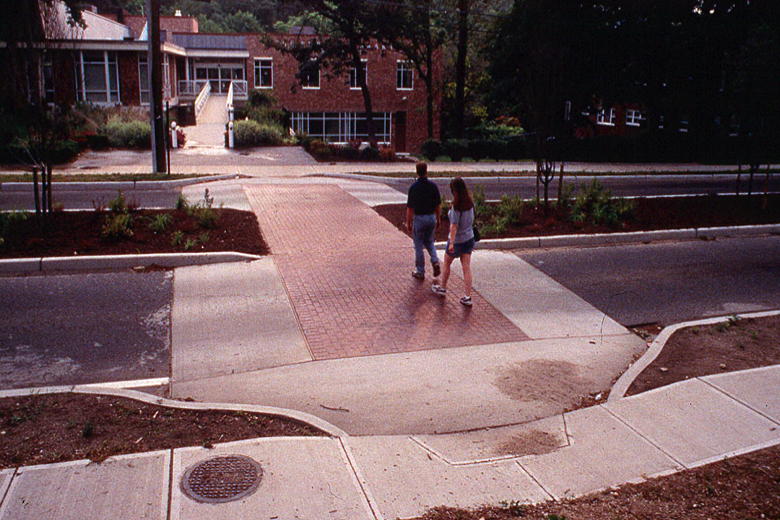
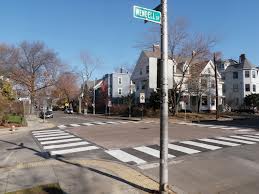
From Streetsblog, at this link:
raisedcrosswalk11.jpg


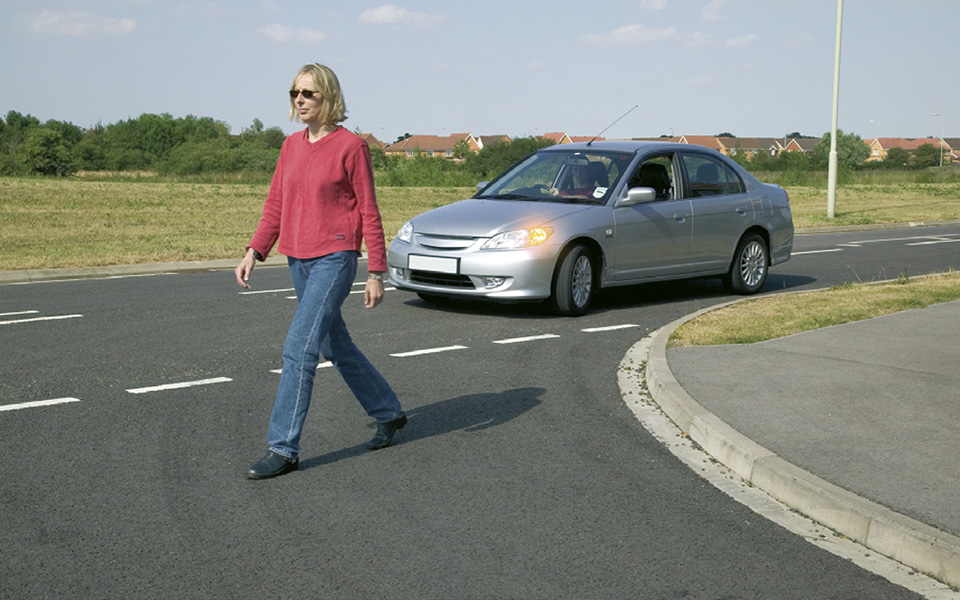
And from this link:
RaiPed1.jpg
As your photos show, this solution works well in a shopping plaza, and maybe on a local 2 lane road immediately in front of a school.
 
4-way stops cause huge traffic backlogs on small streets with moderate volume on both roads. This is very common in Toronto where smaller roads are used as bypasses for construction or traffic on main roads. A 4-way would be more efficient as a traffic circle or making only one road the priority and making the other road yield.
 
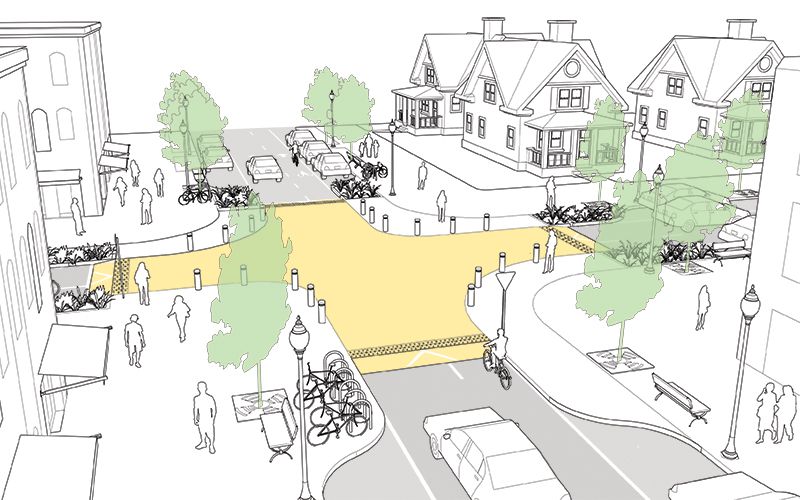
Ontario should get rid of the all-way stop signs, and replace them with raised intersections flush with the sidewalks and yield signs.

From this link:


raised-intersections-1.jpg

Cambridge_Assagizorg.jpg


Drivers are then forced to slow down.

I sometimes wonder if anyone in this city knows what a red yield sign is? I have seen drivers come to complete stops with no other drivers or pedestrians around. I've also witnessed drivers blowing through a Yield sign while pedestrians and cyclists were trying to cross!!
 
I like the idea of raised crossover surfaces but they need to be gradual to permit snow removal. Abrupt speed bumps impair snow removal and can trap ice/water and affect drainage. While fancy road markings might be effective, they are of limited benefit when they are covered in snow.

I get the sense that all-way stop intersections are often used in certain areas of Toronto to control flow (to the point of hopefully discouraging traffic) rather than simply to protect the intersection. All-way stops still have a valid role, especially in rural and small urban settings and many intersections, including those in urban areas, simply have little to no pedestrian traffic to warrant special infrastructure. The prairie provinces leave (or at least used to) many of their rural intersections uncontrolled, but most everybody using them understands the rules and the sightlines are clear. I can't imagine uncontrolled (i.e. unsigned) intersections in Ontario, let alone in built-up areas - it would simply be carnage.
 
I like the idea of raised crossover surfaces but they need to be gradual to permit snow removal. Abrupt speed bumps impair snow removal and can trap ice/water and affect drainage. While fancy road markings might be effective, they are of limited benefit when they are covered in snow.

I get the sense that all-way stop intersections are often used in certain areas of Toronto to control flow (to the point of hopefully discouraging traffic) rather than simply to protect the intersection. All-way stops still have a valid role, especially in rural and small urban settings and many intersections, including those in urban areas, simply have little to no pedestrian traffic to warrant special infrastructure. The prairie provinces leave (or at least used to) many of their rural intersections uncontrolled, but most everybody using them understands the rules and the sightlines are clear. I can't imagine uncontrolled (i.e. unsigned) intersections in Ontario, let alone in built-up areas - it would simply be carnage.

Used to be that the Driver's Handbook was free (now online at link), which I picked up each time I had to renew my family's license plate sticker. Was able to read through it looking for changes. These days, having to pay out $14.95 for a copy means very few current drivers actually get a chance to re-read the handbook, so don't refresh their driving memories.
 
I wish they would raise crossovers to sidewalk level, for an extended space out from it, so there would essentially be speed bumps to slow traffic right down. You could probably get rid of the flashing lights and buttons (so long as the crossing is well lit).

Wouldn't work where there are streetcars, but I think it should be standard everywhere else, at least whenever a street is repaved/reconstructed.

This is already implemented in a handful of locations in Toronto, although they haven't been fantastically maintained.
 
Ontario should get rid of the all-way stop signs, and replace them with raised intersections flush with the sidewalks and yield signs.

From this link:


raised-intersections-1.jpg

Cambridge_Assagizorg.jpg


Drivers are then forced to slow down.

Here's a radial idea: Get rid of stop and yield signs altogether. Replace them with proceed with caution and yield to pedestrian signs. A similar idea has been implemented in the UK, and seems to be a successful traffic calming method. The status quo (stop signs) means that a driver stops (or pretend to stop) at intersections, checks that no other car is at the intersection, and then blasts through the intersection with impunity now that they have right of way. Removing the stop signs mean that drivers would now have to use extra caution, since no vehicle really has right of way. They'd need to constantly be checking that no other vehicle is coming from any direction that could cause a potential collision. Combine this with raised intersections and narrower curve radii for extra traffic calming.


Here's a radial idea: Get rid of stop and yield signs altogether. Replace them with proceed with caution and yield to pedestrian signs. A similar idea has been implemented in the UK, and seems to be a successful traffic calming method. The status quo (stop signs) means that a driver stops (or pretend to stop) at intersections, checks that no other car is at the intersection, and then blasts through the intersection with impunity now that they have right of way.

I don't see that working in Toronto. It's great for a tiny town like the one in the video where people aren't rushing to go anywhere, but here in Toronto a handful of aggressive drivers would turn it into a disaster if it was used on any main street.
 
A couple problems at minor intersections:
There's also the very real challenge of timing the lights for *both directions of streetcar*. This problem came up in the San Diego Trolley studies, the Melbourne experience, and I'm sure others. This mandates a higher order of flow and headway control, something Toronto is unlikely to institute at this rate.

The "King Street Project": Toronto's attempt to join the modern era by trading in box tops and empty bottles.
 
Replace them with proceed with caution and yield to pedestrian signs. A similar idea has been implemented in the UK, and seems to be a successful traffic calming method.
Not on any of their tram routes.

Get rid of stop and yield signs altogether. Replace them with proceed with caution and yield to pedestrian signs. A similar idea has been implemented in the UK, and seems to be a successful traffic calming method.
lol...As a Brit/Cdn Dual, I can assure you that the concept of 'pedestrian right of way' is almost totally absent in UK law, save for the right to ramble over private fields and land and marked road crossings.

Legally, pedestrians have the right-of-way at controlled intersections and in marked crosswalks; but the law also states that "no pedestrian shall unnecessarily stop or delay traffic while in a marked or unmarked crosswalk."
Rules for pedestrians (1 to 35) - The Highway Code - Guidance - Gov.uk
https://www.gov.uk/guidance/the-highway-code/rules-for-pedestrians-1-to-35

Edit to Add: This is new to the UK Highway Code:

Rule 170
Take extra care at junctions. You should

  • watch out for cyclists, motorcyclists, powered wheelchairs/mobility scooters and pedestrians as they are not always easy to see. Be aware that they may not have seen or heard you if you are approaching from behind
  • watch out for pedestrians crossing a road into which you are turning. If they have started to cross they have priority, so give way
  • watch out for long vehicles which may be turning at a junction ahead; they may have to use the whole width of the road to make the turn (see Rule 221)
  • watch out for horse riders who may take a different line on the road from that which you would expect
  • not assume, when waiting at a junction, that a vehicle coming from the right and signalling left will actually turn. Wait and make sure
  • look all around before emerging. Do not cross or join a road until there is a gap large enough for you to do so safely.
the-highway-code-rule-170.jpg


Rule 170: Give way to pedestrians who have started to cross

(Don't forget to invert 'right' and 'left' when interpreting this)

The status quo (stop signs) means that a driver stops (or pretend to stop) at intersections, checks that no other car is at the intersection, and then blasts through the intersection with impunity now that they have right of way.
It means that if they hit a pedestrian legally crossing, then they (driver) are legally liable.
 
Last edited:

Back
Top