
News   Dec 23, 2025
 314     3 
News   Dec 23, 2025
 707     1 
News   Dec 23, 2025
 1.3K     0 

London Rapid Transit (U/C)

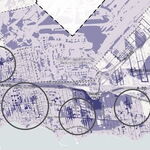
I was reading a London Free Press article this morning discussing the City of London’s traffic congestion ranking. In addition to posting the article, I will post the source - TomTom’s Traffic Ranking Index. This index uses GPS data to determine the most congested cities globally (based on the approximate time taken to travel 10 km). The most recent ranking is from 2023 data.

When you set the filter to North America, from a city-centre perspective, London is ranked as the 12th most congested city in North America, and the 5th most congested metro area in North America. Canadian cities are disproportionately represented at the top of the North American metro list, occupying 8 of the top 10 spots.

Additional data from the City, presented in the article, shows that Wonderland/Oxford, Commissioners/Wellington, Oxford/Highbury, Southdale/Wellington, and Fanshawe Park/Richmond are the most congested intersections in the city, ranging from around 65,000 to 73,000 AADT. I think this obviously continues to show that there is an incredible need for the completion of the full BRT system, in addition to further extensions and/or spurs. I still think they should have gone for a full LRT system instead, but that ship sailed long ago.
 
Last edited:
I was reading a London Free Press article this morning discussing the City of London’s traffic congestion ranking. In addition to posting the article, I will post the source - TomTom’s Traffic Ranking Index. This index uses GPS data to determine the most congested cities globally (based on the approximate time taken to travel 10 km). The most recent ranking is from 2023 data.

When you set the filter to North America, from a city-centre perspective, London is ranked as the 12th most congested city in North America, and the 5th most congested metro area in North America. Canadian cities are disproportionately represented at the top of the North American metro list, occupying 8 of the top 10 spots.

Additional data from the City, presented in the article, shows that Wonderland/Oxford, Commissioners/Wellington, Oxford/Highbury, Southdale/Wellington, and Fanshawe Park/Richmond are the most congested intersections in the city, ranging from around 65,000 to 73,000 AADT. I think this obviously continues to show that there is an incredible need for the completion of the full BRT system, in addition to further extensions and/or spurs. I still think they should have gone for a full LRT system instead, but that ship sailed long ago.

Due to Canadian cities being much smaller than the USA cities, London is currently the 11th largest city.If it were in the USA, it would be around # 30.
When we look at the USA's top 10+ cities, most have a rail RT, with some even having a commuter rail like GO going to them.
When we look at similar sized cities, Wefind many that might have some sort of BRT, but not much else.
 
Due to Canadian cities being much smaller than the USA cities, London is currently the 11th largest city.If it were in the USA, it would be around # 30.

When we look at the USA's top 10+ cities, most have a rail RT, with some even having a commuter rail like GO going to them.
When we look at similar sized cities, Wefind many that might have some sort of BRT, but not much else.
Looking that those list, the first 5 Canadian cites have RT with Toronto including Mississauga and Brampton. Both Mississauga and Brampton should be listed on their own as they are near 800,000. York Region has An BRT system.

The first 25 cities in the US have RT other than El Paso, Columbus, Nashville, San Antonio, Oklahoma City, Jacksonville, Las Vegas,. El Paco use a streetcar loop using rebuilt PCC that run every 30 minutes. Nashville has a single line commuter rail running only at peak time weekdays using 2 dd coaches. Oklahoma has a loop streetcar. Jacksonville has a people mover that runs in a loop weekdays. Las Vegas has express buses. Indianapolis just built 2 BRT and building a 3rd one.

Detroit that is 2 hours to the west of London has a loop RT like the SRT as well the Qline that only haft built that runs every 15 minutes with low ridership and don't class the city with RT per say..

Cities below London that have RT are Baltimore, Cleveland, Atlanta, that I class as a commuter line based on the speed it travels at as well how far it goes for all 4 lines. Baltimore is finally going to get their 2nd subway after it was to be built over a decade ago until the ex-governor kill it since he wasn't a transit person nor supported transit. Cleveland, has a BRT that is almost true with LRT lines in their own ROW.


I can confirm that Wonderland/Oxford, is a mess as well Wonderland itself that there was a plan to widen it to 7 lanes, but got shelf. The congestion from my experience is not that bad and it depends on the day, time of day and what is going on. I hate driving Wellington and try to avoid it as much as I can.
 
Looking that those list, the first 5 Canadian cites have RT with Toronto including Mississauga and Brampton. Both Mississauga and Brampton should be listed on their own as they are near 800,000. York Region has An BRT system.

The first 25 cities in the US have RT other than El Paso, Columbus, Nashville, San Antonio, Oklahoma City, Jacksonville, Las Vegas,. El Paco use a streetcar loop using rebuilt PCC that run every 30 minutes. Nashville has a single line commuter rail running only at peak time weekdays using 2 dd coaches. Oklahoma has a loop streetcar. Jacksonville has a people mover that runs in a loop weekdays. Las Vegas has express buses. Indianapolis just built 2 BRT and building a 3rd one.

Detroit that is 2 hours to the west of London has a loop RT like the SRT as well the Qline that only haft built that runs every 15 minutes with low ridership and don't class the city with RT per say..

Cities below London that have RT are Baltimore, Cleveland, Atlanta, that I class as a commuter line based on the speed it travels at as well how far it goes for all 4 lines. Baltimore is finally going to get their 2nd subway after it was to be built over a decade ago until the ex-governor kill it since he wasn't a transit person nor supported transit. Cleveland, has a BRT that is almost true with LRT lines in their own ROW.


I can confirm that Wonderland/Oxford, is a mess as well Wonderland itself that there was a plan to widen it to 7 lanes, but got shelf. The congestion from my experience is not that bad and it depends on the day, time of day and what is going on. I hate driving Wellington and try to avoid it as much as I can.
For Jacksonville:

Point was that most of the cities the size of London elsewhere has an RT, while London citizens are fighting it tooth and nail.
 
Looking that those list, the first 5 Canadian cites have RT with Toronto including Mississauga and Brampton. Both Mississauga and Brampton should be listed on their own as they are near 800,000. York Region has An BRT system.

The first 25 cities in the US have RT other than El Paso, Columbus, Nashville, San Antonio, Oklahoma City, Jacksonville, Las Vegas,. El Paco use a streetcar loop using rebuilt PCC that run every 30 minutes. Nashville has a single line commuter rail running only at peak time weekdays using 2 dd coaches. Oklahoma has a loop streetcar. Jacksonville has a people mover that runs in a loop weekdays. Las Vegas has express buses. Indianapolis just built 2 BRT and building a 3rd one.

Detroit that is 2 hours to the west of London has a loop RT like the SRT as well the Qline that only haft built that runs every 15 minutes with low ridership and don't class the city with RT per say..

Cities below London that have RT are Baltimore, Cleveland, Atlanta, that I class as a commuter line based on the speed it travels at as well how far it goes for all 4 lines. Baltimore is finally going to get their 2nd subway after it was to be built over a decade ago until the ex-governor kill it since he wasn't a transit person nor supported transit. Cleveland, has a BRT that is almost true with LRT lines in their own ROW.


I can confirm that Wonderland/Oxford, is a mess as well Wonderland itself that there was a plan to widen it to 7 lanes, but got shelf. The congestion from my experience is not that bad and it depends on the day, time of day and what is going on. I hate driving Wellington and try to avoid it as much as I can.
Wait, Cities below London? Do you mean they have a smaller population? Because I'm sorry but Atlanta is a monolithic city that traditionally rivals Toronto in terms of size and population. The only way that's true is if you somehow only stick to strict city limits and don't include the Metro area (which for Atlanta is over 6 million!). Same applies to cities like Cleveland that has an urban area of almost 2 million, and Baltimore is a 2.8M metro area that's sandwiched right in between 2 other massive cities of Washington DC and Philly. This is before bringing up the fact in the case of Cleveland and Baltimore, these are cities whose heydays are well behind them, and their metro systems were built during a more optimistic time for their cities, before they had massive exoduses and declines. Regardless, these are cities that are more comparable to cities like Vancouver and Montreal, definitely not something puny like London.
 
Wait, Cities below London? Do you mean they have a smaller population? Because I'm sorry but Atlanta is a monolithic city that traditionally rivals Toronto in terms of size and population. The only way that's true is if you somehow only stick to strict city limits and don't include the Metro area (which for Atlanta is over 6 million!). Same applies to cities like Cleveland that has an urban area of almost 2 million, and Baltimore is a 2.8M metro area that's sandwiched right in between 2 other massive cities of Washington DC and Philly. This is before bringing up the fact in the case of Cleveland and Baltimore, these are cities whose heydays are well behind them, and their metro systems were built during a more optimistic time for their cities, before they had massive exoduses and declines. Regardless, these are cities that are more comparable to cities like Vancouver and Montreal, definitely not something puny like London.
Look at the list for population as that what I am going by. If you include the region, yes it is larger.

The city and the residents have fought against having LRT including the University that even the BRT was a major fight to get
 
Look at the list for population as that what I am going by. If you include the region, yes it is larger.

The city and the residents have fought against having LRT including the University that even the BRT was a major fight to get
I get that's what you did, but my point is that's an awful way of finding cities to compare London with. I specifically highlight Atlanta because the MARTA network is a regional metro system which was meant to be a Hybrid between Metro and Regional Rail, with the ultimate goal of serving the whole greater Atlanta area (granted it never that far from Atlanta because Southern US politics). Keeping in mind even just the population of the urban area is a fundamental piece of context that's important to remember when doing such comparisons.
 
Look at the list for population as that what I am going by. If you include the region, yes it is larger.

The city and the residents have fought against having LRT including the University that even the BRT was a major fight to get
Funny thing is, Atlanta has a metro and street car. The MARTA and the Atlanta Streetcar.
 
I was reading a London Free Press article this morning discussing the City of London’s traffic congestion ranking. In addition to posting the article, I will post the source - TomTom’s Traffic Ranking Index. This index uses GPS data to determine the most congested cities globally (based on the approximate time taken to travel 10 km). The most recent ranking is from 2023 data.

When you set the filter to North America, from a city-centre perspective, London is ranked as the 12th most congested city in North America, and the 5th most congested metro area in North America. Canadian cities are disproportionately represented at the top of the North American metro list, occupying 8 of the top 10 spots.

Additional data from the City, presented in the article, shows that Wonderland/Oxford, Commissioners/Wellington, Oxford/Highbury, Southdale/Wellington, and Fanshawe Park/Richmond are the most congested intersections in the city, ranging from around 65,000 to 73,000 AADT. I think this obviously continues to show that there is an incredible need for the completion of the full BRT system, in addition to further extensions and/or spurs. I still think they should have gone for a full LRT system instead, but that ship sailed long ago.
It's a shame.

Not having any freeways should have made the case for rapid transit easier. Instead, they got a bunch of stroads and a frankenstein BRT system that's half RapidTO, half Viva. This is the sort of thing that should cost $90 million, not $450 million. Canada and its rising costs. /sigh

Look at the list for population as that what I am going by. If you include the region, yes it is larger.

The city and the residents have fought against having LRT including the University that even the BRT was a major fight to get
The city population is worthless in US conversations. It would be like talking about our (Toronto) transit, but only based on the population of the pre-1967 City of Toronto.

As for LRT, I agree that London fought hard against transit, but sometimes, que sera sera.
 
^Using the ‘Urban Area’ measurements by the OECD will solve the problem of different areas. Useful as has global rankings that show Canadian metros closer to UK cities than US.
 
I was reading a London Free Press article this morning discussing the City of London’s traffic congestion ranking. In addition to posting the article, I will post the source - TomTom’s Traffic Ranking Index. This index uses GPS data to determine the most congested cities globally (based on the approximate time taken to travel 10 km). The most recent ranking is from 2023 data.

When you set the filter to North America, from a city-centre perspective, London is ranked as the 12th most congested city in North America, and the 5th most congested metro area in North America. Canadian cities are disproportionately represented at the top of the North American metro list, occupying 8 of the top 10 spots.

Additional data from the City, presented in the article, shows that Wonderland/Oxford, Commissioners/Wellington, Oxford/Highbury, Southdale/Wellington, and Fanshawe Park/Richmond are the most congested intersections in the city, ranging from around 65,000 to 73,000 AADT. I think this obviously continues to show that there is an incredible need for the completion of the full BRT system, in addition to further extensions and/or spurs. I still think they should have gone for a full LRT system instead, but that ship sailed long ago.
london's fatal mistake was to not build an urban expressway system to take traffic off of local roads. Cross-city traffic needs to battle it across the city on local streets which just drives up congestion and makes for a much more unpleasant local environment and makes it more challenging to build anything but mega-arterials focused on car movement.

The experience driving in London compared to other comparable southwestern Ontario cities like Hamilton and Kitchener is night and day - and it's because Hamilton and Kitchener have expressway systems to take car traffic off of local streets.
 
london's fatal mistake was to not build an urban expressway system to take traffic off of local roads. Cross-city traffic needs to battle it across the city on local streets which just drives up congestion and makes for a much more unpleasant local environment and makes it more challenging to build anything but mega-arterials focused on car movement.

The experience driving in London compared to other comparable southwestern Ontario cities like Hamilton and Kitchener is night and day - and it's because Hamilton and Kitchener have expressway systems to take car traffic off of local streets.
I think it's interesting that not building urban expressways and still switching to personal vehicular transport modes and suburbanization results in the worst of both worlds.

My experience is that London roads somehow feel beefed-up to compensate, and are less pleasant to walk on.
 

Back
Top