News   Apr 02, 2026
 722     1 
News   Apr 02, 2026
 390     0 
News   Apr 02, 2026
 385     1 

GO Transit: Service thread (including extensions)

@smallspy any word on where the rest of the service improvements we've both heard about went? I'm assuming they're still coming pre-election.

The scaling back of the proposed improvements seems to have taken everyone that I know of within the organization by surprise. But I see no reason not to believe that the originally projected changes won't still happen soon.

Dan
 
1648225308976.png
 
Looking at the schedules, its set all the way until May 25. The YRT comparisons might actually be accurate… I really hope its just a placeholder date and we get a real update before then or we might start seeing this happen...
SPORTING_Art_Evergreen-Catching-out_t670.png
6703784-0-image-a-2_1543331621289.jpg
 
View attachment 388091

GO Transit - Maybe it's time to add a few more trains to the schedule
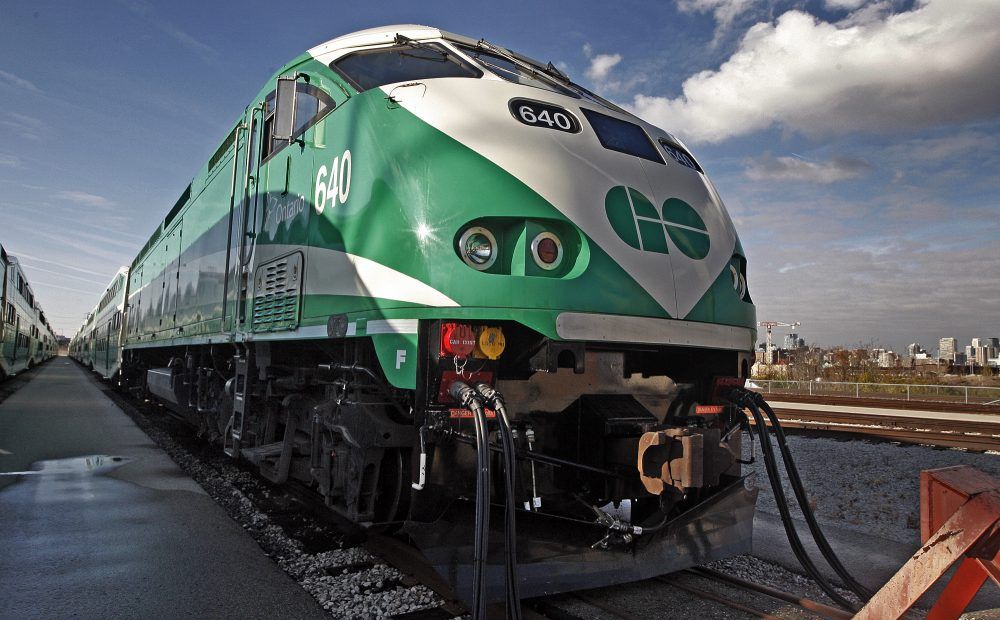
To be fair: I have yet to see any train anywhere on this planet which regularly has a seating capacity comparable to a 12-car GO train (more than 1900 seats). To compare: S-Bahn trains in Germany typically operate with no more than 9 single-level cars (576 seats, if triple sets of DB Class 423) and Regional Express trains typically consist of 4-6 bi/multi-level cars.

(Note that GO trains are basically a hybrid of the two German train categories I mentioned)
 
Last edited:
To be fair: I have yet to see any train anywhere on this planet which regularly has a seating capacity comparable to a 12-car GO train (more than 1900 seats). To compare: S-Bahn trains in Germany typically operate with no more than 9 single-level cars (576 seats, if triple sets of DB Class 423) and Regional Express trains typically consist of 4-6 bi/multi-level cars.

(Note that GO trains are basically a hybrid of the two German train categories I mentioned)
Yeah but theres a really good reason for that.

Because its a lot better to offer frequent service with smaller trains.
 
To be fair: I have yet to see any train anywhere on this planet which regularly has a seating capacity comparable to a 12-car GO train (more than 1900 seats).
Manually tallying up the seats visible in my walkthrough of a 12-car Niagara train, I found about 1750 seats. It's possible I missed a few here and there, but I don't think I missed 200 seats.

Capture4.JPG


Russian State Railways apparently operates 14-car double-decker trains on some main intercity routes, though I can't find stats for them. Even if you account for a lower seating density due to the intercity configuration, the capacity should be comparable.
%D0%AD%D0%9F20-024%2C_Russia%2C_Ryazan_region%2C_Ryazhsk-I_station_%28Trainpix_195334%29.jpg

https://commons.wikimedia.org/wiki/File:ЭП20-024,_Russia,_Ryazan_region,_Ryazhsk-I_station_(Trainpix_195334).jpg

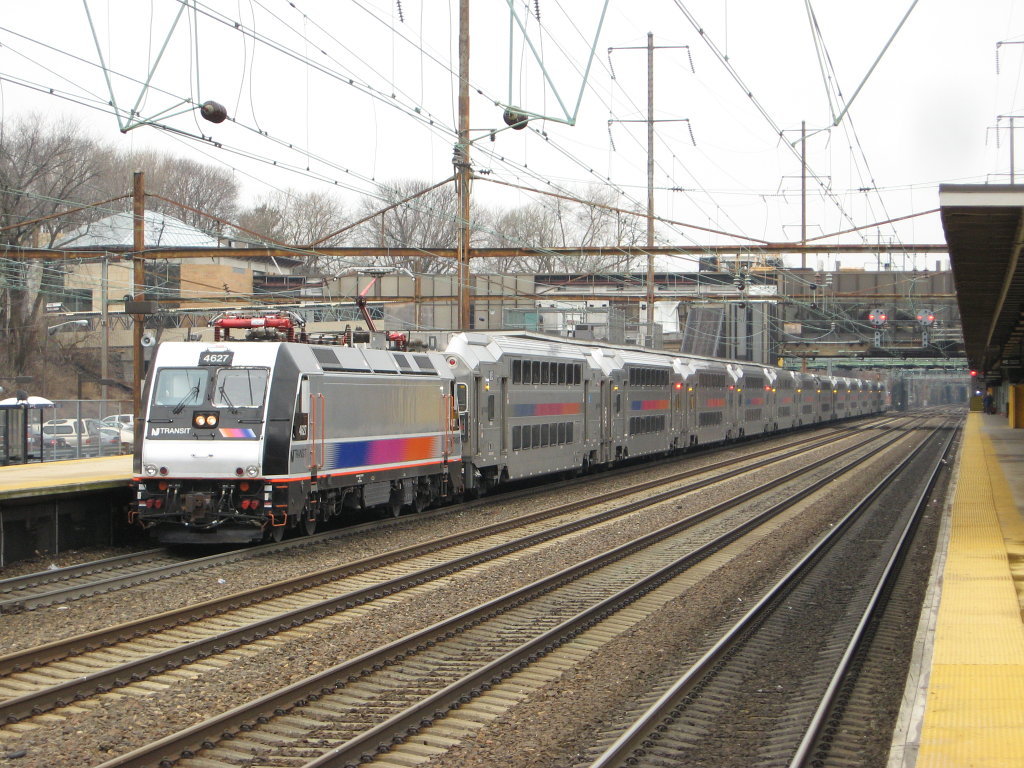
New Jersey Transit operates 12-car MultiLevel trains during peak periods, with a total of 1580 seats.

NJT_ALP-46_4627_at_Trenton_Station.jpg

https://commons.wikimedia.org/wiki/File:NJT_ALP-46_4627_at_Trenton_Station.jpg

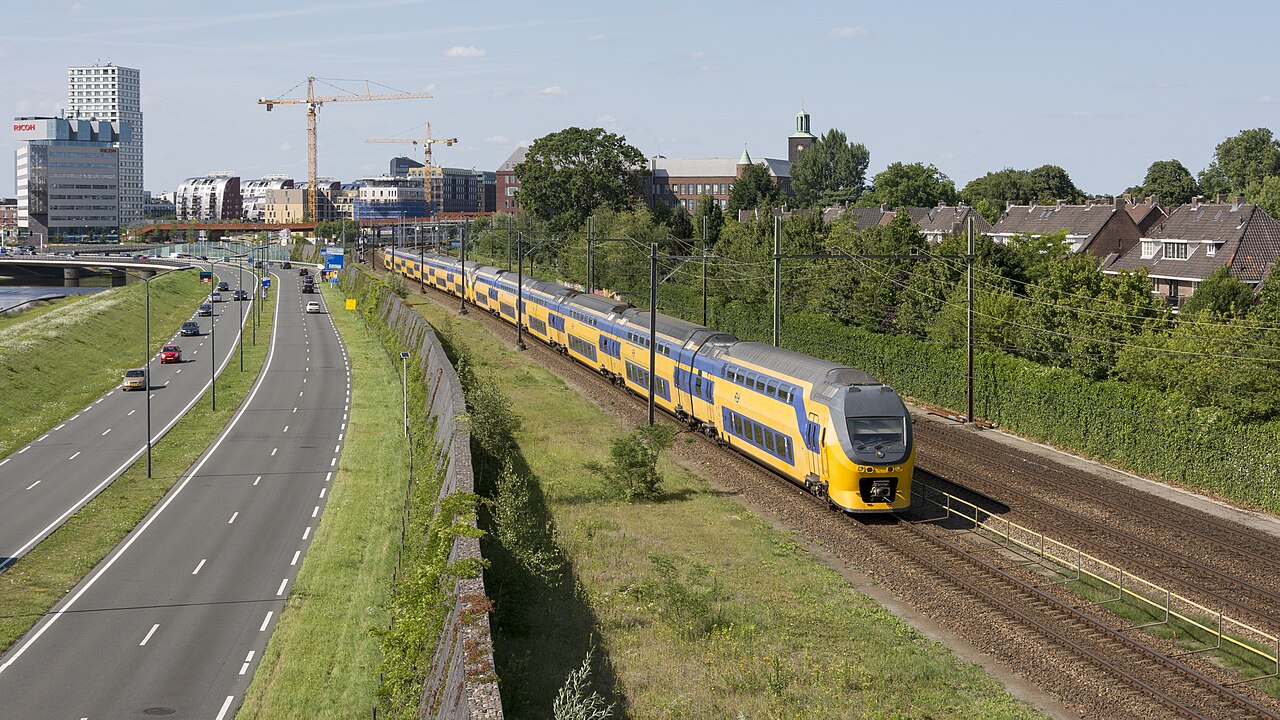
Nederlandse Spoorwegen regularly operates 12-car bilevel trains on the main commuter routes (e.g. Amsterdam-Den Haag-Rotterdam; Amsterdam-Utrecht-Eindhoven). But they only have 1200 seats, probably due to the inclusion of first class, and massive legroom even in second class.
1280px-Den_Bosch_NSR_VIRM-6-8717%2C_8721_IC_3557_Venlo-Heerlen_%2836155194755%29.jpg

https://commons.wikimedia.org/wiki/..._8721_IC_3557_Venlo-Heerlen_(36155194755).jpg


All of the above (including GO) is based on pre-pandemic consists.

To compare: S-Bahn trains in Germany typically operate with no more than 9 single-level cars (576 seats, if triple sets of DB Class 423) and Regional Express trains typically consist of 4-6 bi/multi-level cars.
From what I've seen the RRX Regional Express trains are mostly 8 car half-bilevel sets (800 seats). Here's a clip I filmed yesterday (Saturday).

 
Last edited:
Manually tallying up the seats visible in my walkthrough of a 12-car Niagara train, I found about 1750 seats. It's possible I missed a few here and there, but I don't think I missed 200 seats.

View attachment 388113
I was basing myself on Series I-IV cars, but I have to concede that Series VI-IX cars seem to be more representative to GO's current fleet:
1648401560797.png


Russian State Railways apparently operates 14-car double-decker trains on some main intercity routes, though I can't find stats for them. Even if you account for a lower seating density due to the intercity configuration, the capacity should be comparable.
%D0%AD%D0%9F20-024%2C_Russia%2C_Ryazan_region%2C_Ryazhsk-I_station_%28Trainpix_195334%29.jpg

https://commons.wikimedia.org/wiki/File:ЭП20-024,_Russia,_Ryazan_region,_Ryazhsk-I_station_(Trainpix_195334).jpg

New Jersey Transit operates 12-car MultiLevel trains during peak periods, with a total of 1580 seats.

NJT_ALP-46_4627_at_Trenton_Station.jpg

https://commons.wikimedia.org/wiki/File:NJT_ALP-46_4627_at_Trenton_Station.jpg

Nederlandse Spoorwegen regularly operates 12-car bilevel trains on the main commuter routes (e.g. Amsterdam-Den Haag-Rotterdam; Amsterdam-Utrecht-Eindhoven). But they only have 1200 seats, probably due to the inclusion of first class, and massive legroom even in second class.
1280px-Den_Bosch_NSR_VIRM-6-8717%2C_8721_IC_3557_Venlo-Heerlen_%2836155194755%29.jpg

https://commons.wikimedia.org/wiki/..._8721_IC_3557_Venlo-Heerlen_(36155194755).jpg


All of the above (including GO) is based on pre-pandemic consists.


From what I've seen the RRX Regional Express trains are mostly 8 car half-bilevel sets (800 seats). Here's a clip I filmed yesterday (Saturday).

I deliberately chose "seats" as a metric, because any count of "standees" is subject to an arbitrary conversion factor (e.g. 4 standees per m^2 of standing area), which makes it impossible to compare capacity across manufacturers and countries.

That said, that Russian train seems to be the only train I've (now) seen with (presumably) a higher seating capacity than a 12-car GO train, but that does not change that 12-car GO trains are among the highest-capacity trains operating on this planet.

Nevertheless, I agree with @robmausser that running shorter and more frequent trains rather than these absurd 12-car monster trains would be preferable...
 
I deliberately chose "seats" as a metric, because any count of "standees" is subject to an arbitrary conversion factor (e.g. 4 standees per m^2 of standing area), which makes it impossible to compare capacity across manufacturers and countries.
Yes I discovered this a couple weeks ago when I was trying to calculate a metric of "average number of doors per passenger" to compare boarding efficiency for different rolling stock. The estimates for standees were so wildly inconsistent that I just gave up.

That said, that Russian train seems to be the only train I've (now) seen with (presumably) a higher seating capacity than a 12-car GO train, but that does not change that 12-car GO trains are among the highest-capacity trains operating on this planet.
Yes it was purely an excercise in "let's see what we can dig up on the old interwebs. I think there may also be some 12+ car double-decker Indian Railways intercity trains but I need to keep digging on that one.

Nevertheless, I agree with @robmausser that running shorter and more frequent trains rather than these absurd 12-car monster trains would be preferable...
Certainly. 12-car GO trains run slower than frozen molasses. What is especially silly about GO's 12-car sets is that they only have 4 powered axles. The Russian locomotive pictured has 6 powered axles; NJ Transit usually runs two locomotives on such long trains, for a total of 8 powered axles; and the 12-car NS VIRM sets have 12 powered axles.

It's also worth noting that both of the routes where Nederlandse Spoorwegen uses 12-car trains already have Intercity service every 10 minutes all day (including off-peak), in addition to local service every 15 minutes or better. Part of the reason for such large trains is that the country has such a tightly-scheduled hourly service pattern that increasing train lengths is in some cases the only practical way of increasing capacity.
 
Last edited:
Yes I discovered this a couple weeks ago when I was trying to calculate a metric of "average number of doors per passenger" to compare boarding efficiency for different rolling stock. The estimates for standees were so wildly inconsistent that I just gave up.


Yes it was purely an excercise in "let's see what we can dig up on the old interwebs. I think there may also be some 12+ car double-decker Indian Railways intercity trains but I need to keep digging on that one.


Certainly. 12-car GO trains run slower than frozen molasses. What is especially silly about GO's 12-car sets is that they only have 4 powered axles. The Russian locomotive pictured has 6 powered axles; NJ Transit usually runs two locomotives on such long trains, for a total of 8 powered axles; and the 12-car NS VIRM sets have 12 powered axles.

It's also worth noting that both of the routes where the 12-car trains are used have Intercity service every 10 minutes all day (including off-peak), in addition to local service every 15 minutes or better. Part of the reason for such large trains is that the country has such a tightly-scheduled hourly service pattern that increasing train lengths is in some cases the only practical way of increasing capacity.
It's all in perspective of what is slow or fast, and in the design of the schedules.
They ordered and designed the MP40 to meet their criteria and to meet their schedules. Or to build the schedules around the specifications around the capabilities of their trains.

Sure EMU's are faster but even at the standards of today and post covid traffic 1 hour and 15 minutes from West Harbor to Union is very competitive vs taking the car. If you take any weather delays or accidents driving is probably slower.

At 9L per 100km 67km is. $13.70 in gas. $13.60 with the GO train and you dont have to pay for the wear and tear or insurance not to mention car payments.

I think that's a pretty good deal. I'm sure the express train could do that trip in 50min.
 
The goal of Metrolinx should be making route 16 less competitive than trains.
Careful what you wish for, next thing you know the 16 will be stopping at McMaster, Burlington Park & Ride and Oakville Park & Ride along the way.

It wouldn't be unprecedented. Route 30 used to run non-stop from Bramalea to Kitchener, providing faster Toronto-Kitchener trips than direct trains. GO rectified this imbalance by making the 30 do a detour to an office park in Meadowdale.

The 40 used to act as an express service between Hamilton and Square One, while route 47 provided local service along the same route. But now the 40 also makes two intermediate stops at Park & Ride lots. Benefiting a few potential riders at those small parking lots in the middle of nowhere (who were already served by the 47) at the expense of the riders between the downtowns of two large cities.

And don't get me started on the continued lack of express service on route 12 Burlington-Niagara, route 25 Waterloo-Missauga, route 29 Guelph-Mississauga, or route 88 Oshawa-Peterborough.
 
Last edited:

Back
Top