





Allandale25
Superstar
^ Good point. Since Family Day is in February in the winter I guess even with covid-19 lots of people wanted to get out during the summer on the long weekend.
|
|
|

Peak period express trains are also a problem when they disrupt standard operations. In my case, my ideal daily trip is between oshawa and danforth stations. The 6:55 (15 min peak service train) and 7:10 (standard half hourly train) used to run express after Pickering making them useless too me unless I'm willing to back track from union. The afternoons were the same with an hour gap between trains at danforth (4:41 And 5:41. With the 5:41 terminating at Pickering anyway)
Express trains should be in addition to not a replacement of the standard operations.

I must have gotten the eastbound and westbound trip times confused giving me 4 minutes savings vs 1 minutesThe current schedule is 1 minute faster between Kitchener and Guelph than the pre-Covid schedule. The remainder of the travel time savings were introduced in September 2019. There are still several more minutes which will be saved as part of the ongoing upgrade project, primarily around Guelph and Georgetown stations.
View attachment 268609
View attachment 268608
View attachment 268607
A big part of the reason that it's slower to go via Downsview Park is that the train stops at York U station in the first place. If the train skipped York U, it would get to Downsview Park 2 minutes earlier, which would make Downsview Park + Subway only 3 minutes slower than York U station + shuttle bus (calculation here). It makes no sense to delay ~2000 passengers per train by 2 minutes in order to save 3 minutes for the ~10 people going to York U.
The only real issue here is the lack of fare integration. Money is a poor argument for keeping the station, because doing so includes numerous unnecessary costs
- operating a fully-subsidized bus shuttle to the campus
- maintaining the platform and walkways (snow clearance etc)
- fuel to accelerate full 10 or 12-car double-decker trains
- lower ridership (revenue) due to a 2-minute longer ride
- additional time required from the train staff
etc.
Instead of wasting money on these pointless items, I'd rather York U and GO put that money toward fare discounts.
Agreed...........but hold on..............there's a Woodbridge Heights in Oshawa?
^ Thanks Paul and Dan. The other thing I thought of when reading your replies is that because VIA doesn't have platform level loading at Guelph, they may need to bring over that ramp that is used for people in wheelchairs?
VIA's dwell time is a bit longer than GO but their acceleration is a fair bit faster too, so realistically they should be able to match GO's times. On other lines VIA does tend to post better times than GO trains with comparable stopping patterns.
Interesting that ridership is still at a 90% drop in Ontario. Here in the Netherlands there was also a >90% drop in ridership in March, and they massively slashed train service. My line (Rotterdam - The Hague) dropped from 10 trains per hour to 2, for example.
Then they reinstated the pre-Covid schedules a few months ago and ridership has picked up again since. The more recent counts show ridership at around 40% of what it was (which is actually ideal for the moment, because everyone can keep a seat apart, but there aren't too many empty pairs). I wonder how much of the discrepancy between Ontario and the Netherlands is due to cultural differences, differences in trip types, and how much is simply due to the reduced service. The rate of infections seems similar in both places.
Interesting that ridership is still at a 90% drop in Ontario. Here in the Netherlands there was also a >90% drop in ridership in March, and they massively slashed train service. My line (Rotterdam - The Hague) dropped from 10 trains per hour to 2, for example.
Then they reinstated the pre-Covid schedules a few months ago and ridership has picked up again since. The more recent counts show ridership at around 40% of what it was (which is actually ideal for the moment, because everyone can keep a seat apart, but there aren't too many empty pairs). I wonder how much of the discrepancy between Ontario and the Netherlands is due to cultural differences, differences in trip types, and how much is simply due to the reduced service. The rate of infections seems similar in both places.
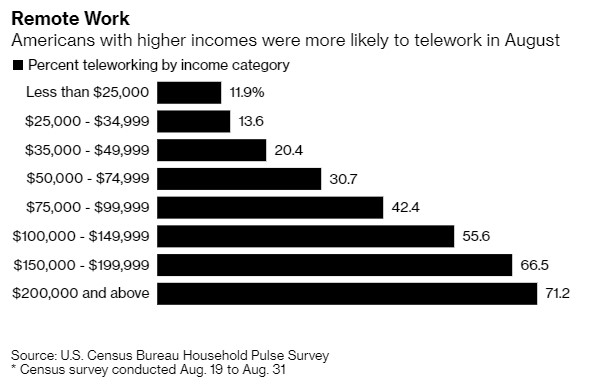
In any case, I suspect there will be a permanent decrease in the traditional 9-to-5 commuter ridership as literally everyone in an office job has now been set up to work from home. I expect that many companies will take the opportunity to downsize their physical offices and have employees physically commute only a couple days per week.
Of course this is a major threat to GO, whose core money-maker has always been park-and-ride commuters to the financial district. But the upside is that the GO Rail transformation already underway will already help GO adapt to the changing travel patterns, which will have a less-pronounced peak period. It might just mean that we don't need to run as many peak-period extras to suppelement the all-day two-way base service pattern. Those extra trains are relatively expensive to operate since they are owned/stored/maintained just to run one or maybe two round trips per day. Reducing the peak-period spike could also bring some savings in infrastructure since we woulnd't need to build as much capacity that is unnecessary for rest of the day.
In the Netherlands, there is surprisingly little extra service at rush hour. There are some local lines which jump from 2 tph to 4, or 4 to 6, but overall it's not a huge difference. For example, the 10 trains per hour between Rotterdam and The Hague is both the peak and off-peak service pattern. Demand is instead managed using peak-period pricing (regular riders can get 40% off outside of peak periods), and changing the train length. Intercity lines tend to run 10- or 12-car bilevels at rush hour (pairs of 4-car and 6-car bilevel EMU sets), but off peak, you often see individual EMUs of 4 or 6 cars. Around 09:00 you often see destination signs with a message warning passengers that the rear half of the train goes no further than [x]. The rear unit is simply uncoupled during a regular station stop and taken to a layover yard nearby.

 awealthofcommonsense.com
 news.ontario.ca

50 MB with a registered Presto card ... and who wouldn't have one of those?lol 10MB? What is even the point?
50 MB with a registered Presto card ... and who wouldn't have one of those?
I seldom eat through more than 50 MB of data during a transit trip, according to the Rogers bills I see. Should be able to just about anything except stream video.