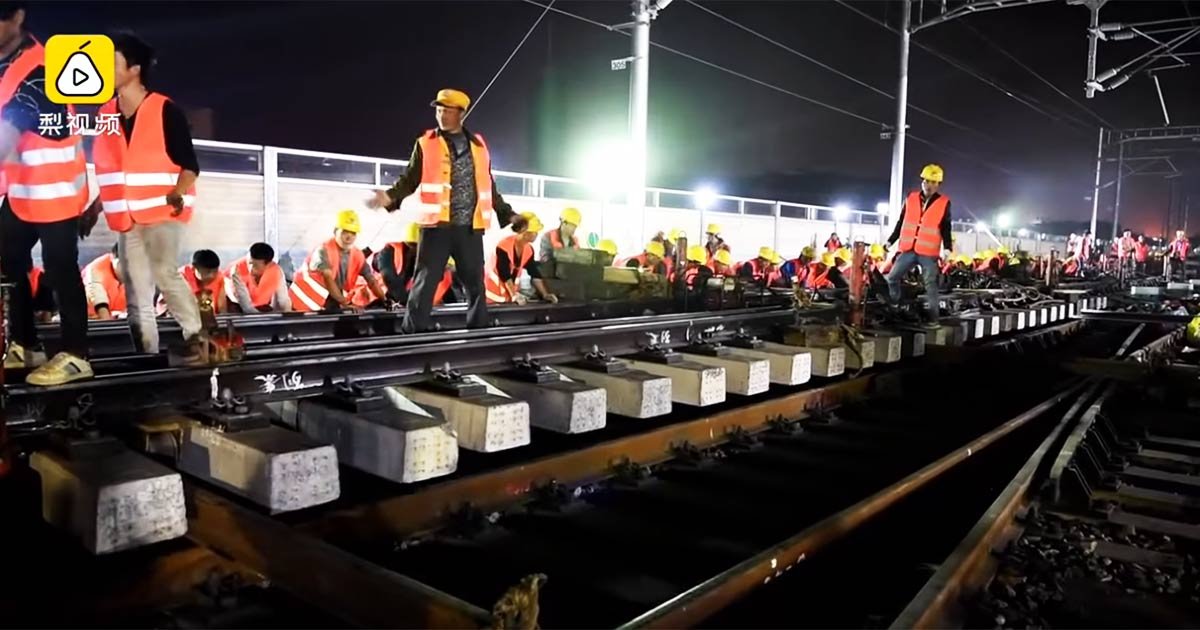
There are probably reasons I am unaware of and someone will explain how its not so simple (Thank you in advance to anyone who educates me), but I have always found it interesting how able road crews are capable of working on live roads and highways, expecting probably 10s of ks of motorists of all abilities and sanities to not crash into them, but with the tightly managed rail controls and experienced engineers live rail work on is nigh on impossible / discouraged.
There is a huge difference in the knowledge and training requirements for the average highway construction worker and forepersons versus what every last worker on a railway site needs to be qualified in with respect to operating rules and procedures
There are plenty of rail contractors out there today, but many only emerged in the last 5 years or so. Many are in growth mode and their workforces are still new to all this. Their supervision is still learning their jobs. Some are cast-offs from Class 1 railways and aren't necessarily the best minds out there. There are major rail projects in other provinces so even where it exists Ontario is competing for such skilled labour.
ML in particular has had plenty of near-misses where contractors misunderstood or disregarded the established operating rules. There was even one fatality a couple years ago on a ML work site, and another more recently on a ML contractor's work site..
This will change over time, as this labour force grows and matures, but it's a specialty within the Canadian construction workforce and one simply can't parachute perfectly capable trades people who do highway or building construction onto a railway job. ML's decision to physically separate virtually all construction work from live trackage is extreme, but not wrong-headed.... but it's a statement of just what a gap exists at the moment.
As to working at night, the time required to mobilise and then demobilise is not condusive to a lot of important jobs. Imagine building a 40-storey downtown tower using 5-hour work windows every evening. And if you have ever been in the stop and go flow of a 400-series highway that is down to one lane at 01:00 due to construction.... highway construction isn't necessarily pretty, either.
The issue for me (and that bridge is a good example) is - in any business I have seen, if the company's C suite execs submit a report to their Board saying that something will be ready next year, and a year goes by, and that thing isn't ready....the trip back to the Board to fess up will be painful. Better have your CV tidied up. In ML's case, none of these projections seems to be noticed or remembered or followed up by the Board, and people just turn up and keep promising new things that will be ready in another year. Look, squirrel..... seems to be quite helpful towards keeping your job.
At one point, I was told that ML and its contractors had a falling out over the contractors' demands for more all-weekend closures on the Stouffville line, which ML was unwilling to allow. As it turns out, the bridge became the critical path, and so the remaining work just plodded along to completion but now sits unusable as the tracks don't connect at the bridge. But ML has never acknowledged the delay from the original commitment. It's a micro Crosstown, I'm surprised that the media and the Markham-Stouffville communities have left this one alone. This doesn't need investigative reporting or inside sources, enough key facts are already in the public domain.
- Paul