


ZEBuilder
Active Member
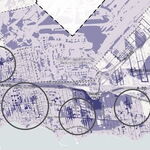
Just to clarify, you're suggesting the above maps are misleading/false? (they show the flyunder as being at Silver Junction, clearly west of the Credit River. )
Yes. The current plan (30%) is to the east of the Credit River.
|
|
|
Just to clarify, you're suggesting the above maps are misleading/false? (they show the flyunder as being at Silver Junction, clearly west of the Credit River. )


Makes sense to me. I think that's why the two northern parcels were acquired. Only a small piece of the southern parcel is adjacent to the tracks. The 2015 reference I'm sure is just the general vicinity. Images posted again below as they are now back a few pages.Yes. The current plan (30%) is to the east of the Credit River.
I think this means there's no need for a 2nd platform at Georgetown GO. Hourly trains can pass on the 2-track grade separation, and at Acton, Guelph, & Shantz. Roughly equal distances apart.Yes. The current plan (30%) is to the east of the Credit River.
This is epic!! After all the crooked line MS paint style drawings we've all done in here in anticipationView attachment 698257
I’ve always wanted a proper visualisation of what this section would look like when it’s fully built out, but Metrolinx has never released renderings like that.
it’s not the best I tried to do it myself:
View attachment 698255

Indeed. Just to visualize this from the GO RER Initial Business Case Appendix A-J (2015):
View attachment 698093
View attachment 698095
The Heritage Road Layover location per the 2022 EPR:
View attachment 698099
Note: PDF page 1,159 notes there was a reduction in the Heritage Road Layover design from the 2015 image noted above:
What makes you think that the noise disappears with electrification?What happens when we "eventually" electrify the lines and noise is no longer an issue?

Well that resolves a lot of confusion I had about the map. The terrain west of Georgetown is tricky, and with all the land secured east of the river, things weren't adding up.Yes. The current plan (30%) is to the east of the Credit River.

Note: PDF page 1,159 notes there was a reduction in the Heritage Road Layover design from the 2015 image noted above:
It doesn't. I'm familiar with the "wooshing" sound a lot of these higher speed, electric trains make as they fly by.What makes you think that the noise disappears with electrification?
Dan
It doesn't. I'm familiar with the "wooshing" sound a lot of these higher speed, electric trains make as they fly by.
Just wondering why in England, people will live right beside a busy mainline, and the noise from the trains passing by doesn't seem to bother them. But here in Ontario we have to erect massive, sun blocking, noise walls inorder to appease the folks who live right beside the tracks.
Woodbine is confirmed again as being a joint UPX stop. 5 intermediate stops on on express train

That was the plan - I think each train would stop at 3 of the 6 intermediate stations, but there were public objections, so they cancelled it.They don't mention all stop so it's possible, there's some express configuration for UP?

For hourly service you need passing tracks precisely 30 minutes apart. Currently the travel time is 29 minutes from Guelph to Georgetown so for the grade separation to work as a passing location the travel time would need to be reduced by about 5 minutes between Guelph and the grade separation. They can definitely save a few minutes by resolving the yard slow zone in Georgetown but that still leaves another couple minutes to be found.I think this means there's no need for a 2nd platform at Georgetown GO. Hourly trains can pass on the 2-track grade separation, and at Acton, Guelph, & Shantz. Roughly equal distances apart.
But there'll be no "slack" in the system, one late train will disrupt the service.
As has been pointed out further up this thread, in England the trains have been running there for many, many years at similar frequencies. Where they are improving the frequencies they are only increasing incrementally. But don't kid yourself either, there are numerous places where they have greatly increased the services on the lines and have put up massive sound walls. Look up the works for Thameslink and the Elizabeth line, for instance.It doesn't. I'm familiar with the "wooshing" sound a lot of these higher speed, electric trains make as they fly by.
Just wondering why in England, people will live right beside a busy mainline, and the noise from the trains passing by doesn't seem to bother them. But here in Ontario we have to erect massive, sun blocking, noise walls inorder to appease the folks who live right beside the tracks.