

Northern Light
Superstar
Ok....I don't want to get too much further into the weeds on Pickering GO Station.............but.......I couldn't resist looking to see if the parking lot was on Streetview, it is..........but only from August 2018.
So I have to make two observations right off the bat...........here's a picture:
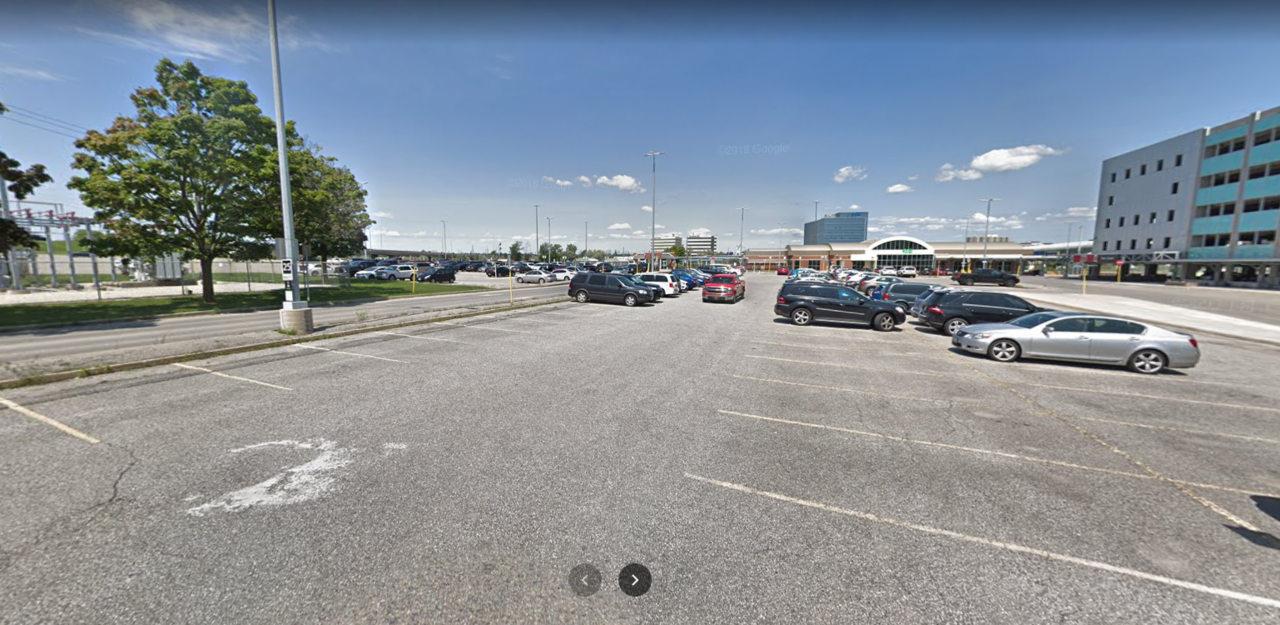
Yes, that is road salt, in August, that is well and truly nuts. But it also tells me something.............if water were flowing over this spot it would have washed away or spread out at least.............
Which got me looking........parking lots are supposed to be graded so that they drain any surface water from rain or melted snow, usually into a stormwater drain, but sometimes into a swale or a permeable area of parking lot that can absorb the water.
Grading is typically too hard to see w/the naked eye, in pictures, but the salt tells a partial tale, its obvious that water reaches this spot via grading, but can't escape. That, of course is a recipe for guaranteed ice in winter and to cause excess salt usage to combat it.
Aha, an overhead view reveals where our drains are:
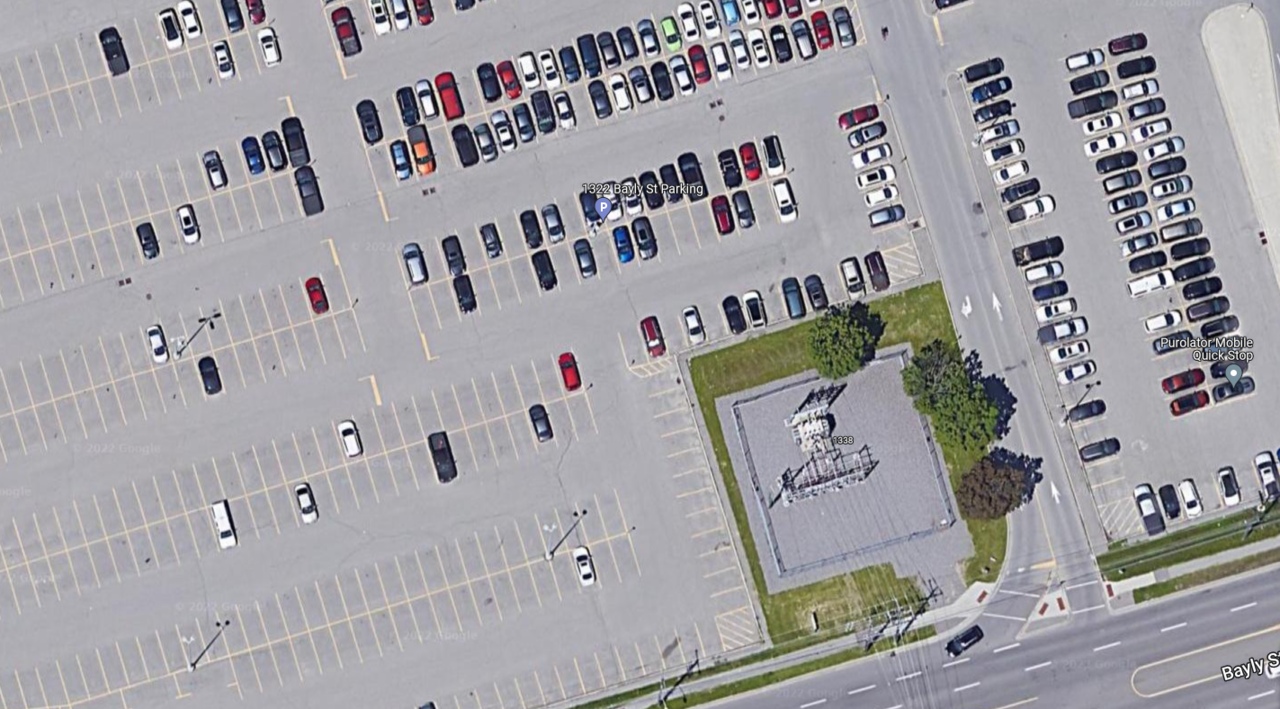
So, in the image above, the drains are primarily located in the main E-W driving aisle, with some secondary ones against the island adjacent to the entry driveway and the bus loop area. They appear as 2 black squares, side by side, not to be confused with the tops of the light standards.
***
Look closely at that image.....can you see it? There are light white stains in various areas of the parking lot which indicate salt accumulation and staining. You can see it next to the curb by the hydro sub station

Ha, I can see this particular problem really clearly now, at-grade.....
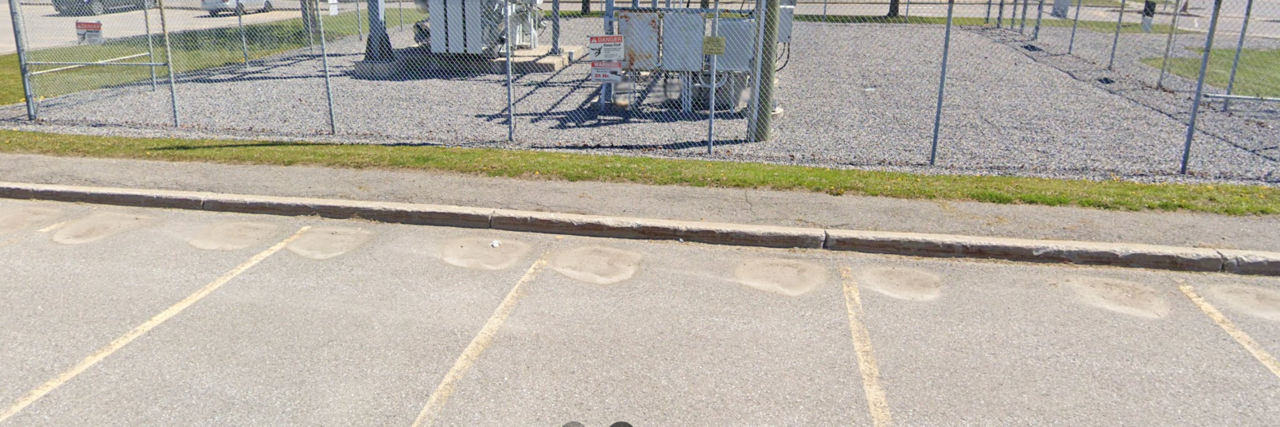
There are depressions from the front wheels of the vehicles that park here which are causing water and salt to accumulate. There is both a design fix for this, and is easily correctable with a quick mill and pave job.
***
Man this parking lot is terrible from an ecological perspective, even as parking lots go.

One virtually unending expanse of pavement, with nearly zero trees, the pavement fully exposed to solar heating and therefore contributing to the urban heat island effect. ......
So I have to make two observations right off the bat...........here's a picture:
Yes, that is road salt, in August, that is well and truly nuts. But it also tells me something.............if water were flowing over this spot it would have washed away or spread out at least.............
Which got me looking........parking lots are supposed to be graded so that they drain any surface water from rain or melted snow, usually into a stormwater drain, but sometimes into a swale or a permeable area of parking lot that can absorb the water.
Grading is typically too hard to see w/the naked eye, in pictures, but the salt tells a partial tale, its obvious that water reaches this spot via grading, but can't escape. That, of course is a recipe for guaranteed ice in winter and to cause excess salt usage to combat it.
Aha, an overhead view reveals where our drains are:
So, in the image above, the drains are primarily located in the main E-W driving aisle, with some secondary ones against the island adjacent to the entry driveway and the bus loop area. They appear as 2 black squares, side by side, not to be confused with the tops of the light standards.
***
Look closely at that image.....can you see it? There are light white stains in various areas of the parking lot which indicate salt accumulation and staining. You can see it next to the curb by the hydro sub station
Ha, I can see this particular problem really clearly now, at-grade.....
There are depressions from the front wheels of the vehicles that park here which are causing water and salt to accumulate. There is both a design fix for this, and is easily correctable with a quick mill and pave job.
***
Man this parking lot is terrible from an ecological perspective, even as parking lots go.
One virtually unending expanse of pavement, with nearly zero trees, the pavement fully exposed to solar heating and therefore contributing to the urban heat island effect. ......