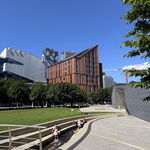
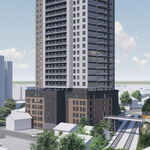
This is very accurate. For people who have never lived around or regularly used a system that makes extensive use of elevated rights of way, the very notion of such a thing is typically dismissed out of hand. For those who have, such opposition is practically incomprehensible. It would be as strange to folks who are used to subways as having others recoil at the idea of being forced underground and spending their commute waiting in cold dank stations and crawling through dark tunnels.
Yuck. I'll take sunshine and fresh air, thank you. That would be a bizarre take, right?
For what it's worth, in Richmond, the SkyTrain Canada Line right of way on Number 3 Road demonstrates a great example of how elevated transit can integrate well into the public realm while providing frequent, automated, medium-capacity service along a major suburban arterial street. Station spacing in Richmond ranges from as little as 650 metres to about 900 metres and the line averages 32 kph overall, so between 50% and double the average speed of Line 6, depending on who you believe. The SkyTrain Expo and Millennium Lines average 40 kph, incidentally.
View attachment 702303
The comparison to Line 6 is relevant, too, because were the Bombardier-led team to have won the Canada Line RFP, it would have used LRT vehicles in a median-running line along this very corridor, not dissimilar at all to the current crop of Ontario LRT projects.
Bombardier proposed a mixed-mode solution, with SkyTrain running from downtown to the airport and LRT running further south in Richmond. The SNC Lavalin-led team proposed a common vehicle and complete grade separation for the entire line, which was a key differentiator in its plan. The entire 19-kilometre, 16-original station Canada Line, including its operations and maintenance centre, was built with a budget of $2.1 billion (2004 dollars) or $3.3 billion today with inflation, and it was completed in five years from project award to commencement of revenue service.
Prior to any of this, too, Richmond had a central median-running BRT-ish line (the 98 B-Line) on Number 3 Road. This line between Richmond, the airport, and downtown Vancouver carried 20,000 daily passengers before its replacement by the SkyTrain Canada Line, which now carries about 120,000 people per day. In Richmond, its busway had transit signal priority, including advancing before left-turns. Here's what that looked like:
View attachment 702305
Here's how this exact location looks today (the first Streetview is actually just looking north from this same intersection):
View attachment 702306
For clarity, when they built the Canada Line, the northbound travel lanes were moved into the footprint of the median busway while the guideway and expanded sidewalks were built curbside in the former footprint of northbound travel lanes. This reduces the actual width of the road and has the benefit of reducing crossing time for pedestrians and increasing safety. The intersection clearance time for vehicles is also reduced, allowing for a shorter overall traffic light cycle time.