




unimaginative2
Senior Member
Three different cities, one theme
Toronto, Calgary and Vancouver may be poles apart, but their office landlords (merrily) sing from same sheet
TERRENCE BELFORD
Special to The Globe and Mail
November 6, 2007
They are as different as cities get and yet today they share a common bond.
There is Toronto, Canada's financial centre with about 140 million square feet of office space of which 74.4 million is downtown. Then there is Calgary, a boom town by any measure, where world demand for energy is creating a rush to add to its existing stock of 47.8 million square feet of office space. Finally, there is Vancouver. Surrounded on three sides by water, that city offers 38.8 million square feet in total with slim prospects for adding more downtown.
What binds them together is seven years of economic prosperity, which has led to office vacancy rates in the low single digits and the prospect for rental increases higher than anything seen so far this decade.
"Those three are very different indeed, but what they do share is a landlord's market for office space," says Wayne Barwise, vice-president of office development at Cadillac Fairview Corp. Ltd. in Toronto. "Vacancy rates, especially in the downtown cores, are so low that available space is nearly negligible."
The results, he adds, are rental increases that can run as high as 15 to 20 per cent for new or renewed leases, depending on the building.
In Vancouver the impact has been quite dramatic.
"We have seen rents increase about 40 per cent over the last 24 to 36 months," says Aaron Ulinder, associate vice-president in CB Richard Ellis Ltd.'s Vancouver office. "While A-class-space rents average maybe $31 a square foot net, we are seeing landlords get $40 a square foot in some buildings, and on some floors with great views."
At the end of June, Vancouver's downtown had a 3.5-per-cent vacancy rate and the Greater Vancouver area stood at just 6.6 per cent.
In Calgary, the story is similar. Its downtown area had a 2.8-per-cent vacancy rate and, over all, the city sat at 2.9 per cent. In effect, there was virtually no space available.
Greg Kwong, managing director for CB Richard Ellis in Alberta, says newer office buildings are able to command in the high $30- or low $40-a-square-foot range. "They can even get that in many class B buildings if they can find enough space to suit the needs of major tenants."
In Toronto, the bank towers in the central core have a vacancy rate of just 2.7 per cent, rising to 6.4 per cent for the overall downtown area. Experts are predicting rents to tick upward anywhere from 10 to 15 per cent within the next 12 months.
But aside from unprecedented demand for office space and tight markets, those three cities appear to share very little else in common, the experts says.
"They are very different," says Tom Farley, president of Canadian operations for Brookfield Property Corp. "Toronto is a mature market with a healthy mix of residential, retail and commercial throughout the downtown area. Vancouver is restricted when it comes to adding new downtown space because it is surrounded by the ocean, the mountains, the U.S. border. A condominium boom has snapped up building sites that might have gone for office space, and Calgary is undergoing an unprecedented boom because of global demand for Western Canadian oil."
Aaron Ulinder, associate vice-president in the Vancouver office of CB Richard Ellis, says that city differs from the others in the size of the average tenancy.
"As a branch office city, the size of the average tenancy would be maybe 5,000 square feet, compared with 15,000 to 20,000 in Calgary and 30,000 and up in Toronto," he says. "Tenants seeking 2,500 square feet are par for the course."
What that means is that developers are reluctant to create new buildings on spec even with tight market conditions.
"There is much more risk involved," says David Bowden, president of Colliers International Canada. "Size of tenancies is small and that impacts the ability to fill buildings quickly."
Vancouver will see little relief from the current tight market until 2010 or 2011, Mr. Ulinder predicts. Two new projects totalling about 650,000 square feet are expected to come on stream in that period. Bentall Corp. is planning a 400,000-square-foot tower at Thurlow and Alberni Streets, and Aquilini Investment Group plans an office tower on the northwest corner of the GM Place site.
Calgary is an anomaly, says Mr. Kwong at CB Richard Ellis. "I always explain to people that we have only one million people, a fraction of the population of either Toronto or Vancouver, but the highest per capita ratio of office space in the country."
Yet despite the total amount of office space, demand has far outstripped supply. He says one million square feet will have come onto the market this year, followed by another 2.5 million next year and almost all that space has already been snapped up.
"The spec market is thriving. Three years ago developers announced 2.5 million square feet of new space in four separate building and within months of those announcements between 25 per cent and 45 per cent of that space had been spoken for."
The main challenge going forward is the impact that the increase in provincial royalties on energy will have, he says.
"Let's say the foot is still on the gas pedal but easing up slightly. I can't see a bust as long as people drive cars."
Tale of the tape of three cities
Toronto
Inventory (sq. ft.) 43,348,531
Vacant space 2,209,526
Vacancy 5.10%
Year-to-date absorption 984,842
Under construction 3,361,044
Net rental rates $22.76
Taxes and operating costs $22.80
Completions through 2008 996,017
Calgary
Inventory (sq. ft.) 18,424,421
Vacant space 449,469
Vacancy 2.40%
Year-to-date absorption 1,063,385
Under construction 5,606,300
Net rental rates $43.90
Taxes and operating costs $15.08
Completions through 2008 934,115
Vancouver
Inventory (sq. ft.) 9,790,828
Vacant space 224,449
Vacancy 2.30%
Year-to-date absorption 111,951
Under construction 238,000
Net rental rates $29.13
Taxes and operating costs $17.13
Completions through 2008 372,500
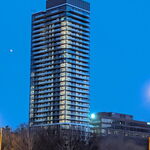
DOUGLAS COULL/THE GLOBE AND MAIL
SOURCE: CB RICHARD ELLIS LTD.
Toronto, Calgary and Vancouver may be poles apart, but their office landlords (merrily) sing from same sheet
TERRENCE BELFORD
Special to The Globe and Mail
November 6, 2007
They are as different as cities get and yet today they share a common bond.
There is Toronto, Canada's financial centre with about 140 million square feet of office space of which 74.4 million is downtown. Then there is Calgary, a boom town by any measure, where world demand for energy is creating a rush to add to its existing stock of 47.8 million square feet of office space. Finally, there is Vancouver. Surrounded on three sides by water, that city offers 38.8 million square feet in total with slim prospects for adding more downtown.
What binds them together is seven years of economic prosperity, which has led to office vacancy rates in the low single digits and the prospect for rental increases higher than anything seen so far this decade.
"Those three are very different indeed, but what they do share is a landlord's market for office space," says Wayne Barwise, vice-president of office development at Cadillac Fairview Corp. Ltd. in Toronto. "Vacancy rates, especially in the downtown cores, are so low that available space is nearly negligible."
The results, he adds, are rental increases that can run as high as 15 to 20 per cent for new or renewed leases, depending on the building.
In Vancouver the impact has been quite dramatic.
"We have seen rents increase about 40 per cent over the last 24 to 36 months," says Aaron Ulinder, associate vice-president in CB Richard Ellis Ltd.'s Vancouver office. "While A-class-space rents average maybe $31 a square foot net, we are seeing landlords get $40 a square foot in some buildings, and on some floors with great views."
At the end of June, Vancouver's downtown had a 3.5-per-cent vacancy rate and the Greater Vancouver area stood at just 6.6 per cent.
In Calgary, the story is similar. Its downtown area had a 2.8-per-cent vacancy rate and, over all, the city sat at 2.9 per cent. In effect, there was virtually no space available.
Greg Kwong, managing director for CB Richard Ellis in Alberta, says newer office buildings are able to command in the high $30- or low $40-a-square-foot range. "They can even get that in many class B buildings if they can find enough space to suit the needs of major tenants."
In Toronto, the bank towers in the central core have a vacancy rate of just 2.7 per cent, rising to 6.4 per cent for the overall downtown area. Experts are predicting rents to tick upward anywhere from 10 to 15 per cent within the next 12 months.
But aside from unprecedented demand for office space and tight markets, those three cities appear to share very little else in common, the experts says.
"They are very different," says Tom Farley, president of Canadian operations for Brookfield Property Corp. "Toronto is a mature market with a healthy mix of residential, retail and commercial throughout the downtown area. Vancouver is restricted when it comes to adding new downtown space because it is surrounded by the ocean, the mountains, the U.S. border. A condominium boom has snapped up building sites that might have gone for office space, and Calgary is undergoing an unprecedented boom because of global demand for Western Canadian oil."
Aaron Ulinder, associate vice-president in the Vancouver office of CB Richard Ellis, says that city differs from the others in the size of the average tenancy.
"As a branch office city, the size of the average tenancy would be maybe 5,000 square feet, compared with 15,000 to 20,000 in Calgary and 30,000 and up in Toronto," he says. "Tenants seeking 2,500 square feet are par for the course."
What that means is that developers are reluctant to create new buildings on spec even with tight market conditions.
"There is much more risk involved," says David Bowden, president of Colliers International Canada. "Size of tenancies is small and that impacts the ability to fill buildings quickly."
Vancouver will see little relief from the current tight market until 2010 or 2011, Mr. Ulinder predicts. Two new projects totalling about 650,000 square feet are expected to come on stream in that period. Bentall Corp. is planning a 400,000-square-foot tower at Thurlow and Alberni Streets, and Aquilini Investment Group plans an office tower on the northwest corner of the GM Place site.
Calgary is an anomaly, says Mr. Kwong at CB Richard Ellis. "I always explain to people that we have only one million people, a fraction of the population of either Toronto or Vancouver, but the highest per capita ratio of office space in the country."
Yet despite the total amount of office space, demand has far outstripped supply. He says one million square feet will have come onto the market this year, followed by another 2.5 million next year and almost all that space has already been snapped up.
"The spec market is thriving. Three years ago developers announced 2.5 million square feet of new space in four separate building and within months of those announcements between 25 per cent and 45 per cent of that space had been spoken for."
The main challenge going forward is the impact that the increase in provincial royalties on energy will have, he says.
"Let's say the foot is still on the gas pedal but easing up slightly. I can't see a bust as long as people drive cars."
Tale of the tape of three cities
Toronto
Inventory (sq. ft.) 43,348,531
Vacant space 2,209,526
Vacancy 5.10%
Year-to-date absorption 984,842
Under construction 3,361,044
Net rental rates $22.76
Taxes and operating costs $22.80
Completions through 2008 996,017
Calgary
Inventory (sq. ft.) 18,424,421
Vacant space 449,469
Vacancy 2.40%
Year-to-date absorption 1,063,385
Under construction 5,606,300
Net rental rates $43.90
Taxes and operating costs $15.08
Completions through 2008 934,115
Vancouver
Inventory (sq. ft.) 9,790,828
Vacant space 224,449
Vacancy 2.30%
Year-to-date absorption 111,951
Under construction 238,000
Net rental rates $29.13
Taxes and operating costs $17.13
Completions through 2008 372,500
DOUGLAS COULL/THE GLOBE AND MAIL
SOURCE: CB RICHARD ELLIS LTD.
