

News   Apr 20, 2026
 606     0 
News   Apr 20, 2026
 426     0 
News   Apr 20, 2026
 1.1K     3 

Taxis and ride-sharing in Toronto

Here’s the text...

An Ontario judge has rejected a $1.7-billion attempt by taxi plate owners to sue Toronto over losses suffered after Uber entered the city.
In a recently released Ontario Superior Court of Justice decision, Justice Paul Perell ruled that Toronto had no legal requirement to shield owners of the plates from financial harm caused by the city’s actions.
“There is no obligation to protect the economic interests of those granted taxi licences,” Justice Perell wrote. “Legislative activities inevitably affect individual citizens; for some the affect is positive, and for others the affect is negative.”


By denying certification, his decision means the case cannot proceed as a class action. However, one of the three plaintiffs said they were mulling their legal options and are planning to consult their fellow members of a taxi industry umbrella group, which has been supporting the suit.
“Number one, we can appeal it, and we have 30 days to do that. Or we can … go at it in another way, as individuals,” said Lawrence Eisenberg, adding that the judge left plate owners “no choice” but to fight on.
“He said basically that the city can do anything it wants.”


Mr. Eisenberg owns three taxi plates while fellow plaintiffs Behrouz Khamza and Sukhvir Thethi have two and one, respectively. They argue that the city, having created the conditions that gave the taxi plates their value, should be held responsible for having changed the rules to allow Uber, thereby damaging their assets.


The plates, which are issued by the city and can be bought and sold on a secondary market, permit the owner to operate a taxi or to have someone do so on their behalf. City-enforced limits on the number of plates had long helped push up their market value, which at one point hit a high of around $380,000.
However, the advent of ride-hailing companies such as Uber Technologies Inc. increased the number of vehicles chasing customers and caused plate values to plummet. According to one industry veteran, they are now trading for $10,000 to $12,000.


Justice Perell’s ruling comes after years of turmoil in the taxi industry, which has been hit hard by the emergence of Uber and other ride-hailing companies. The industry, in many cities accustomed to operating in a protected market, has seen major losses. A number of cases of driver suicide, particularly in New York, have been attributed to financial problems.

Around the world, cities have struggled to manage these new transportation providers.
Canadian jurisdictions have taken different approaches. Vancouver has long been closed to ride-hailing companies, with British Columbia announcing only this month that it would permit them. The Quebec government is ready to compensate taxi plate owners who have lost money, although the industry wants more and has taken the government to court.
In Toronto, which failed in its attempt to get an injunction to stop Uber and eventually rewrote its regulations to allow ride-hailing, there has been no serious talk at city hall about compensation.


The plaintiffs alleged in their statement of claim that the city did not properly enforce its own laws and did not act to protect the value of their plates. They launched their attempted class-action suit last year, specifying damages of $340,000 for each of the 5,500 taxi plates issued by the city, and moved for certification in March.
The lawyer for the plaintiffs declined comment this week. A spokeswoman for the city of Toronto said in an e-mail that staff “will be reviewing the decision and determine next steps as appropriate.”
In his ruling, the judge noted that the plaintiffs had to meet a five-point test for certification. He determined that they had satisfied several of the criteria and he was quite harsh on some of the city’s arguments, calling one feeble and saying another “misses the target by the proverbial country mile.”
But Justice Perell ultimately ruled that the plaintiffs failed the part of the test requiring that there be a legitimate cause of action.

IMO, North American plate owners and their stranglehold on the industry are the very reason Uber exists.
 
Last edited:
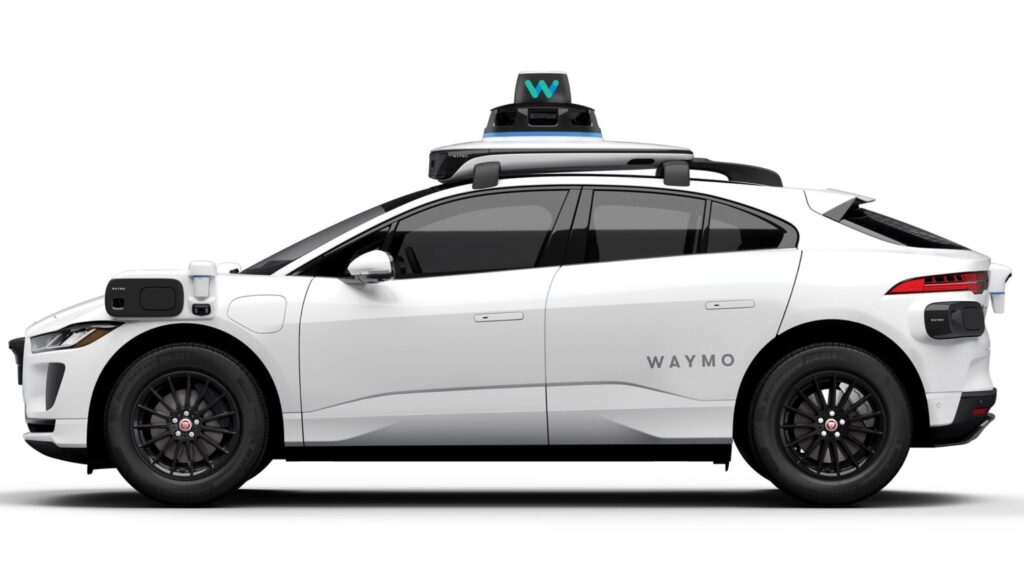
Reviving this thread to discuss Mayor Chow's resistance to Waymo in Toronto because it would put taxi drivers out of business.

Waymo reportedly plans to test robo taxis in Ontario. Toronto’s mayor has her doubts about its technology
Any move toward autonomous vehicles must not put people out of work or undermine workers’ livelihoods. The mayor will not support Waymo if it costs jobs, drives down wages for other workers, or contributes to precarious work in our city,” he said. “Waymo must demonstrate this will not happen.”

On the flip side, it would begin to solve the long time scammer system in our taxi industry that hurts Torontonians and visitors to our city. Cabbies refusing short fares is so common and so openly done that you'd think it would be easy for bylaw officers to catch them by simply going to a cabbie and requesting a short fare. They frequently refuse the fare or haggle a higher upfront rate.

Today, outside Union Station, with UP Express out of service, taxi drivers were price gouging desperate stranded people. I heard $90 quoted by one, then $150 by another and one cabbie quoted a family $50 per person (not sure they were including the kids, which would have been $200). All of these are illegal. There's a fixed price to Pearson International: It's $53 from downtown Toronto. The $150 one asked for was 3X that price.

tempImageM5dBV1.png


I say, bring on the robots. They're safer, and they don't scam you.
 
Will robot drivers be safer, that's still to be seen.

It's already been seen. Waymo isn't new. Peer reviewed studies have shown it to be a mind-blowing 90% safer.


tempImage7Iek52.png


gcpi_a_2499887_f0003_c.jpg


It's not hard to understand why, particularly if you're a driver or pedestrian or cyclist. The way human drivers behave accounts for the majority of accidents. Speeding, distraction, fatigue, road rage, failing to observe the rules of the road. You see this daily. Waymos don't speed, they observe the rules of the road, and don't get tired or angry. If you've ridden in a Waymo, the frustration comes from the opposite: they feel like they're slow drivers when they're just following the rules verbatim.

Once they own the market they will almost certainly resort to the same price gouging.

Fair concern but this is solved by fostering a competitive environment and regulating the industry the same way the taxi industry is regulated. Unlike taxi drivers, a fare in an app isn't going to have human reasons to deny a fare or overcharge and would likely get caught with a simple screenshot.
 
I don't much like taxi drivers, but if we bring on the robots to eliminate the jobs of any group we have beef with, it won't be long before no one has any jobs at all. Which is, of course, exactly what the tech dorks want. If you are a person with a job in 2026, the tech firms are working as hard as they possibly can to make sure you don't have it.

We are all going to be very sorry in 15 years.
 
It's already been seen. Waymo isn't new. Peer reviewed studies have shown it to be a mind-blowing 90% safer.
Self reported, peer reviewed studies. In areas where the weather is fairly mild and warm year round. Also in some markets where it doesn't enter the highways at all. Listen, I'm all for the dream of hoping in a car without a driver listening to terrible music, smelling like a gallon of cologne or worse, and talking on the phone the whole trip. But I do not trust our technobro overlords to have our safety or interests at heart. Robotaxis are only at half the distance needed to make a conclusion IMO, and at even less in challenging weather conditions.

Fair concern but this is solved by fostering a competitive environment and regulating the industry the same way the taxi industry is regulated. Unlike taxi drivers, a fare in an app isn't going to have human reasons to deny a fare or overcharge and would likely get caught with a simple screenshot.
The app will just have an algorithmic reason to de-prioritize your trip or "surge" price your trip to make it worth it. We've already abandoned regulating similar issues with Uber, not sure I share your optimism that we'd do so to Waymo.
 
I don't much like taxi drivers, but if we bring on the robots to eliminate the jobs of any group we have beef with, it won't be long before no one has any jobs at all. Which is, of course, exactly what the tech dorks want. If you are a person with a job in 2026, the tech firms are working as hard as they possibly can to make sure you don't have it.

We are all going to be very sorry in 15 years.

Oh there will be jobs created but not here. Waymo is not literally 100% automated. Close, but not 100%.

 
Self reported, peer reviewed studies. In areas where the weather is fairly mild and warm year round. Also in some markets where it doesn't enter the highways at all. Listen, I'm all for the dream of hoping in a car without a driver listening to terrible music, smelling like a gallon of cologne or worse, and talking on the phone the whole trip. But I do not trust our technobro overlords to have our safety or interests at heart. Robotaxis are only at half the distance needed to make a conclusion IMO, and at even less in challenging weather conditions.
Definitely true. I'd be interested in seeing how Waymo handles winter.

My only anecdotal comment on this is that I had a few friends of mine travel to California recently and used Waymo for getting to/from work; the women were especially appreciative of not having to interact with a physical driver. Robots don't resolve everything but they do resolve some things...
 
I don't much like taxi drivers, but if we bring on the robots to eliminate the jobs of any group we have beef with, it won't be long before no one has any jobs at all. Which is, of course, exactly what the tech dorks want. If you are a person with a job in 2026, the tech firms are working as hard as they possibly can to make sure you don't have it.

We are all going to be very sorry in 15 years.
Better bring back the elevator operators, switchboard operators, ditch diggers, etc.
 
Better bring back the elevator operators, switchboard operators, ditch diggers, etc.
What a facile comparison. In the age of AI, we aren't talking about replacing some redundant jobs. They want to replace all of them. Whether they'll be able to is up for discussion, but when somebody tells you what they want to achieve, believe them. By speaking of the replacement of all human jobs as an inevitability, you are playing directly into the AI dorks' wet dreams.


Technology without humanity is bad. But sure, I'm just some old man stuck in the past. Enjoy your technofascist AI hellscape.
 
I don't much like taxi drivers, but if we bring on the robots to eliminate the jobs of any group we have beef with, it won't be long before no one has any jobs at all. Which is, of course, exactly what the tech dorks want. If you are a person with a job in 2026, the tech firms are working as hard as they possibly can to make sure you don't have it.

We are all going to be very sorry in 15 years.

The important piece AI catastrophizers forget about is that without income, there are no consumers, and without consumers, the tech class don't have businesses. And without income, governments have to provide for every individual lest their necks end up in a guillotine. Yes, the world is going to change and the next 10 years will be unrecognizable from the prior 10. But I'm happy that we're in Canada where the pandemic demonstrated how quickly our government could pivot to a universal income system.

What a facile comparison. In the age of AI, we aren't talking about replacing some redundant jobs. They want to replace all of them. Whether they'll be able to is up for discussion, but when somebody tells you what they want to achieve, believe them. By speaking of the replacement of all human jobs as an inevitability, you are playing directly into the AI dorks' wet dreams.


He was honest and he didn't reveal the truth "by accident". He said so right at the end of his point: We're going to have to figure it out. We will.

Technology without humanity is bad. But sure, I'm just some old man stuck in the past. Enjoy your technofascist AI hellscape.

We're not going to stop technology by resisting robo taxis, It's inevitable and just like @afransen pointed out, we've undergone major societal changes before and we will again.

Nonetheless, I didn't intend on having a deep discussion on AI but I guess it's necessary, though I suggest we can focus on AI within the scope of this thread.

1. Waymo is safe. Safer than a human driver. The ride is more comfortable and private too.
2. Competitors will arrive, it'll have to compete with human drivers on price and experience. I
3. Apps can be regulated and enforced far more thoroughly than the scammer cabbies we have right now in Toronto.
 
What a facile comparison. In the age of AI, we aren't talking about replacing some redundant jobs. They want to replace all of them. Whether they'll be able to is up for discussion, but when somebody tells you what they want to achieve, believe them. By speaking of the replacement of all human jobs as an inevitability, you are playing directly into the AI dorks' wet dreams.


Technology without humanity is bad. But sure, I'm just some old man stuck in the past. Enjoy your technofascist AI hellscape.
I'm not sure why we should consign people to pointless labour like operating elevators, telephone switchboards or digging ditches when we have technology to accomplish that labour without that effort. Driving a car that is capable of driving itself is just about as pointless as operating an elevator that can operate itself. If the economic pie is growing, the important part is not who does the labour but how the product is allocated. Trying to stop technological adoption is hopeless.
 
Self reported, peer reviewed studies.

The peer reviewed part is kind of the important part. If the self reporting were dishonest, it would come out in the peer reviews. That self driving vehicles are safer than humans is increasingly widely accepted. The outstanding debate is in the circumstances when there are accidents, assigning responsibility. I'd take 92% fewer accidents with a blurred line on responsibility over human drivers who we can blame. The responsibility debate will get solved.

In areas where the weather is fairly mild and warm year round.

Waymo has been testing in Michigan since 2017 and Buffalo in 2023, specifically in winter weather, including visibility (via LiDAR) in sudden complete whiteouts where human drivers would not be able to drive safely.

Also in some markets where it doesn't enter the highways at all.

That's regulation per jurisdiction. Ontario's automated vehicle pilot program allows for highway driving.
 
I'm not sure why we should consign people to pointless labour like operating elevators, telephone switchboards or digging ditches when we have technology to accomplish that labour without that effort. Driving a car that is capable of driving itself is just about as pointless as operating an elevator that can operate itself.
That's not my point. My point is that this so called "progress"* is zeroing in on just about every aspect of life all at the same time. In a vacuum, if you removed one so-called "pointless" profession, there would still be others. But again, the tech bros don't want that. They're trying to make it so that machines are better than humans at everything. When that happens, according to your parameters, all professions will be pointless. Hooray!

It's really disturbing how so many people openly celebrate this type of "progress". Progress, as defined in the 2020s, refers to the enshittification of life for non-billionaires, and nothing more.

The important piece AI catastrophizers forget about is that without income, there are no consumers, and without consumers, the tech class don't have businesses. And without income, governments have to provide for every individual lest their necks end up in a guillotine. Yes, the world is going to change and the next 10 years will be unrecognizable from the prior 10. But I'm happy that we're in Canada where the pandemic demonstrated how quickly our government could pivot to a universal income system.
1) The pandemic didn't demonstrate anything close to a universal income system. Plenty of people who worked as front line workers weren't eligible for a penny.
2) How confident are you that a universal income would allow people to live the same quality of life that a well paying job would, i.e. being able to live comfortably in quality housing, buy quality food, practice their personal interests, and go on holiday once in a while? Considering how we define "minimum wage", I would say that is optimism bordering on foolishness. If a UBI is ever introduced, it will be in that vein, and will do nothing to let people lead a life of substance and stave off ennui, boredom, depression.
3) If AI takeover without sufficient compensation happens, no one is going to protest at all. Lots of people are already getting an extremely raw deal and, like in this thread, they clamour for big business and tech firms to make things even worse, if they even notice the situation in the first place and don't just bury their heads in their TikToks.
 
The peer reviewed part is kind of the important part.
Peer reviews focus on methods and conclusions. They would have no way of telling if Waymo underreported certain instances.

Waymo has been testing in Michigan since 2017 and Buffalo in 2023, specifically in winter weather, including visibility (via LiDAR) in sudden complete whiteouts where human drivers would not be able to drive safely.
None of which is included in their safety reports. Their reporting only includes LA, SanFran, Austin, and Phoenix.

That's regulation per jurisdiction. Ontario's automated vehicle pilot program allows for highway driving.
That's immaterial to their safety data in other jurisdictions.
 

Back
Top