
News   Apr 17, 2026
 683     0 
News   Apr 17, 2026
 1.5K     6 
News   Apr 17, 2026
 654     0 

Cycling infrastructure (Separated bike lanes)

Thanks! It's so great. Delighted to know the lanes are in the plan. Don't care if it takes a while to build.

These lanes will help if some of the Dundas lanes get ripped out. The Dundas lanes are popular in the east end but don't go all the way downtown and, it seems to me, are vulnerable to being removed in the Regent Park area sometime in the future. Last time I looked, some of the signs declaring the lanes as temporary pandemic measures were still up.

With good lanes on Gerrard St E, people coming in from the east end on Dundas could get downtown on quality infrastructure. The River lanes would connect to the Gerrard, Shuter or West Donlands lanes, depending on the final destination.

There was a real missed opportunity to widen the Dundas Street right of way when Regent Park was redeveloped that would have allowed for cycle tracks the whole way between Parliament and River while maintaining some traffic throughput and minimizing streetcar delays.
 
Who monitors these reports? Does it simply create 311 reports?
It emails 311 with details the website asks for, and requires city staff to themselves create a service request. But not all required details are always captured, and 311 has no way to ask for more details and staff have said they sometimes just can't create the request because of missing info. There are some seriously legitimate criticisms and deficiencies with the current 311 system but that site is such a naive and ignorant "solution".
 
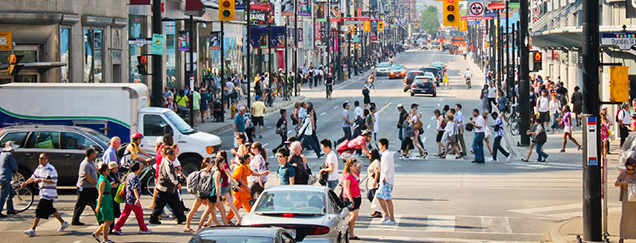
A public drop in event is being held for yongeTOmorrow on Tuesday, April 21 (5:30 - 8:30 PM) at Central YMCA (20 Grosvenor Street). While it appears the cycle tracks from College to Gerrard will stay despite Bills 212 and 60, I'm disappointed the pedestrian priority zones near Dundas were dropped.

If you can't make it to the consultation, you can provide your feedback by Tuesday, May 5.


1775329586894.png

1775329600434.png

1775329651700.png

1775329666259.png
 
It emails 311 with details the website asks for, and requires city staff to themselves create a service request. But not all required details are always captured, and 311 has no way to ask for more details and staff have said they sometimes just can't create the request because of missing info. There are some seriously legitimate criticisms and deficiencies with the current 311 system but that site is such a naive and ignorant "solution".
Yes, I agree that just because something is possible it is not necessarily a good idea. There was a similar volunteer effort about a decade or more ago (SeeClickFix) that finally died for exactly the reasons you give. Better to work with 311 staff to improve their system - which is certainly in need of some improvements.
 
Last edited:
Better to work with 311 staff to improve their system - which is certainly in need of some improvements.
In fairness, I think that being able to give people a tangible example of how the reporting process could be better might be helpful in getting city staff to the table to improve the system. There may also be city staff that _want_ to improve the usability of the reporting forms, but that need some public pressure to be able to push back, e.g. on parts of the current forms that meet the needs of the City legal department, but do a poor job of serving citizens.

Using the 311 email as the API for a community-built issue reporting app may be clunky, but it's really the only option if you want to demo something that works, since there's no way (at least that I'm aware of) to request for your app to plug into 311 directly.

I remember seeing at a recent U of T School of Cities talk that the transportation department also finds the requirement to report things by address to be frustrating. It makes it harder for citizens to report problems, and it also makes it harder for them to find, triage, and fix the infrastructure that is broken.
 
  • Like
Reactions: PL1
In fairness, I think that being able to give people a tangible example of how the reporting process could be better might be helpful in getting city staff to the table to improve the system. There may also be city staff that _want_ to improve the usability of the reporting forms, but that need some public pressure to be able to push back, e.g. on parts of the current forms that meet the needs of the City legal department, but do a poor job of serving citizens.

Using the 311 email as the API for a community-built issue reporting app may be clunky, but it's really the only option if you want to demo something that works, since there's no way (at least that I'm aware of) to request for your app to plug into 311 directly.

I remember seeing at a recent U of T School of Cities talk that the transportation department also finds the requirement to report things by address to be frustrating. It makes it harder for citizens to report problems, and it also makes it harder for them to find, triage, and fix the infrastructure that is broken.
About 18 months ago I sent in several suggestions to the then Director of 311 and he set up a Zoom at which I went through them to his staff. A few of my suggestions were implemented but he was then 'let go' (or he left?). There is now also a City Committee that 'supervises' 311 - the Service Excellence Committee. At first look, its members do not look to be too useful but to be fair they DO listen and one can filter suggestions through them. One thing that has changed is that they again take regular emails which can be essential if the problem you want to report is not covered by one of their Forms!!
 
Further to yesterday's note about the yongeTOmorrow consultation, I wrote up a blog post explaining what has happened to the project since it was approved by City Council in 2021. We need to show up to the April 21 public consultation and demand that the pedestrian zones be reinstated.

 
Further to yesterday's note about the yongeTOmorrow consultation, I wrote up a blog post explaining what has happened to the project since it was approved by City Council in 2021. We need to show up to the April 21 public consultation and demand that the pedestrian zones be reinstated.

While I support the initiative, currently provincial approval would be required to reduce lanes (IIRC). The next government *should* rip up that legislation and I'd suggest being ready with a plan for when that happens.
 
For those of you wondering about the Lower Don Trail, Brian Tao recorded this video showing it is accessible from Corktown Common to Pottery Road, though there are still some fences to get around.

 
While I support the initiative, currently provincial approval would be required to reduce lanes (IIRC). The next government *should* rip up that legislation and I'd suggest being ready with a plan for when that happens.

The current reading of the legislation by City staff w/whom I speak is that the province does not in fact forbid road narrowing, or lane removals, it empowered itself to do so, but has not.

The current reading is only that removing lanes in order to install Cycle Tracks is forbidden, unless the Minister grants permission.

That's why lane reduction is also being pursued on Ossington.
 
The current reading of the legislation by City staff w/whom I speak is that the province does not in fact forbid road narrowing, or lane removals, it empowered itself to do so, but has not.

The current reading is only that removing lanes in order to install Cycle Tracks is forbidden, unless the Minister grants permission.

That's why lane reduction is also being pursued on Ossington.
@tallcoleman

I am given to understand that the City will require provincial permission.

I gather they think they may get it. TBD.
Hopefully they are correct, or simply the Ford govt won't intervene. From Gemini:

1. Bill 212: Reducing Gridlock, Saving You Time Act (2024)

This was the first major move by the province. It specifically targets bike lanes but leaves the door open for broader restrictions:
  • Approval Required: Municipalities must get provincial approval before installing new bike lanes that require the removal of a motor vehicle lane.

  • Existing Lanes: It gave the province the power to order the removal of existing bike lanes. Specifically, it mandated the removal of lanes on three major Toronto arteries: Bloor Street, University Avenue, and Yonge Street.

  • The "Other" Clause: While the headlines focused on bikes, the act includes language allowing the Minister of Transportation to prescribe "other purposes" that would require provincial approval for lane reductions.

2. Bill 60: Fighting Delays, Building Faster Act (2025)

Passed in late 2025, this legislation further tightened these rules and expanded their scope:
  • The Prohibition: It prohibits municipalities from reducing the number of marked lanes for motor vehicles when installing new bicycle lanes.

  • Expanded Authority: The Act explicitly states that the province can designate "any other prescribed purpose" for which lane reductions are prohibited. This means the government can, via regulation (without passing a new law), block cities from removing lanes for things like:

    • Widening sidewalks
    • Adding transit-only bus lanes
    • Creating "pedestrian-only" zones or public plazas
 
Hopefully they are correct, or simply the Ford govt won't intervene. From Gemini:

1. Bill 212: Reducing Gridlock, Saving You Time Act (2024)

This was the first major move by the province. It specifically targets bike lanes but leaves the door open for broader restrictions:
  • Approval Required: Municipalities must get provincial approval before installing new bike lanes that require the removal of a motor vehicle lane.

  • Existing Lanes: It gave the province the power to order the removal of existing bike lanes. Specifically, it mandated the removal of lanes on three major Toronto arteries: Bloor Street, University Avenue, and Yonge Street.

  • The "Other" Clause: While the headlines focused on bikes, the act includes language allowing the Minister of Transportation to prescribe "other purposes" that would require provincial approval for lane reductions.

2. Bill 60: Fighting Delays, Building Faster Act (2025)

Passed in late 2025, this legislation further tightened these rules and expanded their scope:
  • The Prohibition: It prohibits municipalities from reducing the number of marked lanes for motor vehicles when installing new bicycle lanes.

  • Expanded Authority: The Act explicitly states that the province can designate "any other prescribed purpose" for which lane reductions are prohibited. This means the government can, via regulation (without passing a new law), block cities from removing lanes for things like:

    • Widening sidewalks
    • Adding transit-only bus lanes
    • Creating "pedestrian-only" zones or public plazas

This is correct. The province has not, to my understanding enacted any 'other prescribed purpose' at this time.
 

Back
Top