News   Dec 23, 2025
 43     0 
News   Dec 22, 2025
 1K     0 
News   Dec 22, 2025
 303     0 

Toronto Eglinton Line 5 | ?m | ?s | Metrolinx | Arcadis

They could use Geo-thermal heat or heat recovery using the heat in the sewers.
although it sounds all fine and dandy, in reality geothermal is prohibitively expensive for a project of this scope. not to mention its not even guaranteed that it will be possible to engineer that for the stations. best solution would be to throw some electric heaters inside the shelters like they have at rhc and use hydronic heating for the terminuses
 
I totally get the function vs aesthetics debate, but I think the "shelters" on Eglinton are too little for a rapid transit line. Just because the shelters on Spadina and St. Clair are sub-par doesn't mean the Eglinton should be too, all in the name of "equity". In order to truly be a shelter, it needs to have covering on at least 4 of the 5 sides (roof included). By the looks of those Eglinton shelters, they're two sides, at best.

mohawk_college_transit_terminal.jpg

As for the weather and elements part of it, in my opinion it's not the cold that matters, it's the rain, wind, and blowing snow. I'm fine with being bundled up when it's -20C outside, I just don't want to have wind whipping at my face or snow blowing in my face while I'm waiting. Just give me something to stand behind that blocks most of that from most directions, and I'll be happy.
I don;t see how shelters on St Clair are below par. They do have glass diving the shelter from cars plus a bench to sit on and plants. I really think the seating could have been down away with. St Clair is too narrow and results in the roadway consistently curving.

If some of the stops on Crosstown had been eliminated as previously discussed on this forum perhaps there would have been money for the heating plus more enclosed shelters. Perhaps this should have been a consideration when deciding if all the stops were necessary
 
Last edited:
I'm actually surprised Crosstown platforms won't have this, it would make sense. Then again I'm also surprised the wall and canopy aren't extending the full length of the platform. Ditto for the apparent lack of an art component.
Serious how much warmth would we get from heated concrete floors? The only thing it prevents is ice and snow buildups from puddles. It would be nice that they don't have to shovel snow. You're not going to feel much unless you walk around barefoot. It's not really relevant to heat shelters anyways. If the heat is very strong, I'm more worried that concrete would crack pretty quickly.

If they ran water pipes through an enclosed shelter, they would be a different story. Still, glass shelter and heat don't mix. It's not going to be cozy. The average wait for a train is 3 to 6 minutes, not 15 to 30 minutes. The crosstown is suppose to be very frequent, so it's not as important as VIVA or Zum where headways are much much wider. It's just a nice thing to have.

I don;t see how shelters on St Clair are below par. They do have glass diving the shelter from cars plus a bench to sit on and plants. I really think the seating could have been down away with. St Clair is too narrow and results in the roadway consistently curving.

If some of the stops on Crosstown had been eliminated as previously discussed on this forum perhaps there would have been money for the heating plus more enclosed shelters. Perhaps this should have been a consideration when deciding if all the stops were necessary
They would just result in more people walking longer in the cold. The faster you get to a platform, the faster you'll on the train and be warm. That 15-20 min parallel bus service that accompanies wider stops ain't gonna help. Just saying 1km wide stops aren't better.
 
I totally get the function vs aesthetics debate, but I think the "shelters" on Eglinton are too little for a rapid transit line. Just because the shelters on Spadina and St. Clair are sub-par doesn't mean the Eglinton should be too, all in the name of "equity". In order to truly be a shelter, it needs to have covering on at least 4 of the 5 sides (roof included). By the looks of those Eglinton shelters, they're two sides, at best.

Even just a row of shelters like at the Mohawk College Transit Terminal would be an improvement over what is being proposed. They also have heat lamps in them that are push button activated, and stay on for a period of 5 minutes when pushed. On a $6.6 billion project, springing for a few of those is hardly breaking the bank.

mohawk_college_transit_terminal.jpg

As for the weather and elements part of it, in my opinion it's not the cold that matters, it's the rain, wind, and blowing snow. I'm fine with being bundled up when it's -20C outside, I just don't want to have wind whipping at my face or snow blowing in my face while I'm waiting. Just give me something to stand behind that blocks most of that from most directions, and I'll be happy.


It's because that's where the cost savings of the LRT is coming from, no tunnels where needed and simple bus style shelters instead of multi-level stations.
 
although it sounds all fine and dandy, in reality geothermal is prohibitively expensive for a project of this scope. not to mention its not even guaranteed that it will be possible to engineer that for the stations. best solution would be to throw some electric heaters inside the shelters like they have at rhc and use hydronic heating for the terminuses

Geothermal heating would have been more doable if the stations were below ground ;)
 
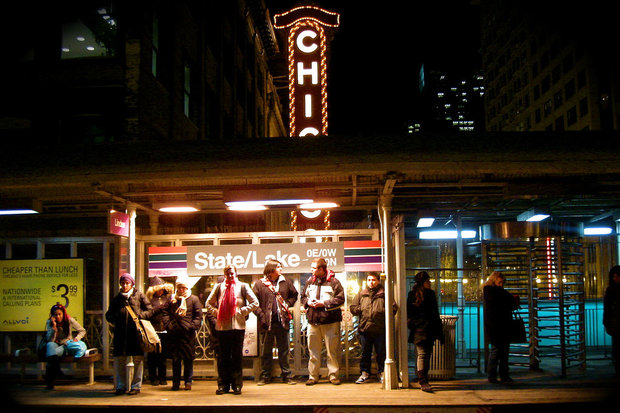
I recall seeing enclosed waiting areas on some El platforms in Chicago, with electric heating elements overhead. I've only ever visited in summer so haven't had chance to test them, but seems like a sensible and relatively low-cost concession to their climate (and ours). This isn't rocket science.

At the other extreme, in Dubai they have fully-enclosed, air-conditioned bus shelters. Not that you see anyone using them.
 
Note the outdoor stations on the Chicago L. Built on the cheap.

Look at the station design as you view past them.

What's your point? Just because Chicago have simple stops, we should take comfort with building mediocrity? By the way, they have heat lamps for cold weather, I doubt those Crosstown stops even have them
 
I recall seeing enclosed waiting areas on some El platforms in Chicago, with electric heating elements overhead.

Markham and Vaughan have them at all the Viva Rapidway stations. It works really well in the winter, but in the summer those enclosed shelters (luckily only a part of the stations) get scorching hot.
 
Serious how much warmth would we get from heated concrete floors? The only thing it prevents is ice and snow buildups from puddles.

That's the only reason I'd support it (I'm not generally interested in providing warmth to passengers considering it's a high-frequency rt line with an island stop). Would be interested to know how much more it costs to lay this piping in the concrete and how energy intensive it is vs bare concrete. I'd assume it to be very little...just a brine pumped around, perhaps using low wattage PV+storage for power. If the end result is no rocksalt, I'm all ears. Don't care for salt. Ruins shoes, dog paws, looks ugly, bad for environment, those who lay it down dump it unevenly, etc. But I still think the canopy and wall should extend the full 60m, not just for warmth but shade also.
 
That's the only reason I'd support it (I'm not generally interested in providing warmth to passengers considering it's a high-frequency rt line with an island stop). Would be interested to know how much more it costs to lay this piping in the concrete and how energy intensive it is vs bare concrete. I'd assume it to be very little...just a brine pumped around, perhaps using low wattage PV+storage for power. If the end result is no rocksalt, I'm all ears. Don't care for salt. Ruins shoes, dog paws, looks ugly, bad for environment, those who lay it down dump it unevenly, etc. But I still think the canopy and wall should extend the full 60m, not just for warmth but shade also.
Its a very expensive addition to the project. If you look at the system being used on the GO platforms they are using glycol system which requires a full mechanical system, boiler, pump, etc. to operate. They are using this system because they probably have a building where they can house this equipment and they have a lot of area to heat, If you were to do this for the Crosstown you would probably go with electric heating cables in the concrete - which require high voltage 3 phase power.

So increased costs associated with the installation and then maintenance and energy costs moving forward. Not saying they shouldn't do it - but these add up and should be part of the discussion. (they also breakdown regularly and repairs are not easy/cheap)
 
The Chicago L has heaters at most of their outdoor stops.

inline_winter_heatlamps.jpg
extralarge.jpg


Something we should definitely push for on the Crosstown.

Except that heat rises and cold sinks. Inefficient use of energy. The heat source should be below so that the heat will rise.
eddy_day0405.gif

Which is why floor or pavement heating is better.
 
I wonder if radiant heaters like that are roof mounted to prevent fires from water/salt/paper/clothing nearer floor level?
 

Back
Top