


APTA-2048
Senior Member
Routes 6 and 21. There will be 11 buses in total.Do we know which routes are getting the all electric buses? Theres 7 in total if I recall correctly
|
|
|
Routes 6 and 21. There will be 11 buses in total.Do we know which routes are getting the all electric buses? Theres 7 in total if I recall correctly
There does seem to be some signaling glitches with the ATP - we should be able to hit 70 on the Waterloo Spur. Places with an up arrow or down arrow seem to be the places where the ATP kicks in. I was talking to a signaling engineer (who did not work on this project) and they think that the ATP speed blocks are incorrectly placed (too far behind stations) so there is improper control.From the Finch West LRT thread:
I keep seeing this, but it actually doesn't. It's faster than the iXpress bus it replaced at all times of the day; waaay faster during peak times.
The signal priority works well, southbound from the hospital to Central Station is magic, and anyone demanding priority for Finch West, Eglinton, or Hurontario should treat themselves to this peek at what their world could be. That said, there are some issues that should be solvable:
- For nearside stops, the signal should trigger and the pedestrian crosswalks start counting the moment the operator closes the doors. Trains shouldn't have to inch a few meters from the platform to stop on a loop and then wait for the signal to start cycling. This would resolve a lot of the issues in downtown Kitchener. Better yet, put the loop at the stop and trigger the light when the train pulls in. By the time the ped countdown's finished and the cross traffic stopped, the train should be departing. If it's not and it misses the 10 second window for its transit signal, well; then it waits a cycle. If this happens consistently, tune it with with the necessary extra seconds delay to where missed cycles become a true exception rather than the rule. This should be a solvable problem.
- The magical priority waves should be able to continue around a corner. For whatever reason though, it feels like the programmers treat each corner as a reset button that blows the wave.
- There's a mysterious southbound slowdown at the facing point freight crossover in Waterloo Park. This is a movable frog switch; trains should NOT have to crawl through it, and the northbound train certainly doesn't. If it's the track geometry, rework it. If it's an ATP glitch, debug and resolve it. This has been going on since a few months after the line opened (perhaps since the day they enabled ATP), why has it not been fixed?
- There's another mysterious slowdown southbound after clearing the expressway tunnel and crossing the creek bridge 600 metres ahead of Hayward. I get that the Hayward S is an awkward situation forced by CN/CP not giving up the border of their interchange yard, but this happens well ahead of it, and in another ATP section just like Waterloo Park. Fix it. Heck, add a new signal block if that's what it takes.
I'd bet that simply resolving these could shave 5 minutes from the end-to-end trip time.
As a car driver, I also take issue with the signal programming: The gates for the Courtland Ave crossing drop far too early, holding up a lot of traffic unnecessarily and even backing up onto Manitou. Other gated crossings have developed similar issues, although there's still the odd one that's stellar in its brevity. I don't understand why these aren't measured *, evaluated, and the predictors tuned on an annual basis. If that's not in the current contract with Keolis, then it bloody well better be in the next one...
---
* Just shoot some video and note the time stamps, or do frame counts + 1 if you need absolute accuracy without undershooting, but there's no need to mobilize the expensive stopwatch and clipboard crews that were used during commissioning.
SideNote: we have updated planning info for the Cambridge-Guelph Rail concept:I have been working on a technical document outlining the reasons why ion is slow (snippet below) (note this is non-official)View attachment 523335
 www.engagewr.ca

There do seem to be some signaling glitches with the ATP - we should be able to hit 70 on the Waterloo Spur. Places with an up arrow or down arrow seem to be the places where the ATP kicks in. I was talking to a signaling engineer (who did not work on this project) and they think that the ATP speed blocks are incorrectly placed (too far behind stations) so there is improper control.
SideNote: we have updated planning info for the Cambridge-Guelph Rail concept:
Cambridge to Union Passenger Rail Connection Initial Business Case
Initial Business Case to explore passenger rail service between Cambridge and Guelph, connecting to Union Station via the Kitchener GO Line

Much of the increased ridership can be attributed to the influx of international students to the area.
I would be a lot more impressed if there was a larger modal shift, but there isn’t.
Schools nowadays run summer courses for Int. students.Sure routes feeding into the college are exceptionally busy but you certainly see more families and younger people using it when compared to 5 years ago so there is definitely a modal shift happening, sure it isn't necessarily substantial yet but it's definitely happening. It was particularly noticeable in the summer when there wasn't classes occuring.

Schools nowadays run summer courses for Int. students.
Conestoga has the highest number of Int. students in Ontario which is probably why we're seeing huge ridership numbers on the ION.
View attachment 547390
Much of the increased ridership can be attributed to the influx of international students to the area.
I would be a lot more impressed if there was a larger modal shift, but there isn’t.
Much of the increased ridership can be attributed to the influx of international students to the area.
I would be a lot more impressed if there was a larger modal shift, but there isn’t.


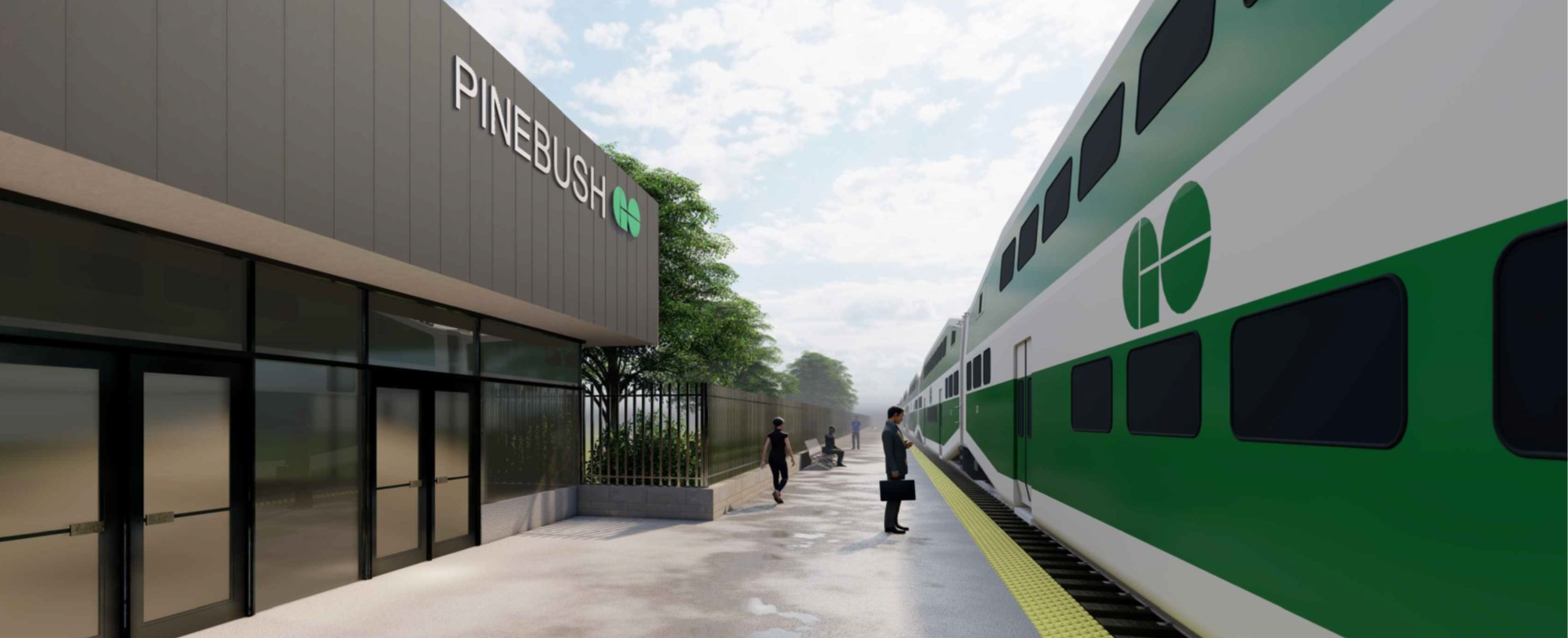
Some updates! Phase 1 seemingly advancing, Phase 2 (the station passenger waiting area) awaiting ICIP funding confirmation. The project has been re-named to the Kitchener Central Transit Hub.

You got to go back before 1916 when the city was call Berlin in the first place for the German population at the time. It got change after the war started.I still wish they'd call it Berlin HBF; at least commission a mural or something with that name on it somewhere, like on the grade separation wall facing King Street.