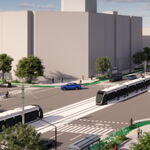
News   Apr 01, 2026
 318     0 
News   Apr 01, 2026
 511     0 
News   Apr 01, 2026
 849     0 

Waterfront Transit Reset Phase 1 Study

How should Toronto connect the East and West arms of the planned waterfront transit with downtown?

  • Expand the existing Union loop

    Votes: 230 70.6%
  • Build a Western terminus

    Votes: 17 5.2%
  • Route service along Queen's Quay with pedestrian/cycle/bus connection to Union

    Votes: 35 10.7%
  • Connect using existing Queen's Quay/Union Loop and via King Street

    Votes: 26 8.0%
  • Other

    Votes: 18 5.5%

  • Total voters
    326
I really would like to know as well. In 2023, the tunnel and station rebuild alone was 1B. The stations in Segments 2/3 without the Cherry Street north connection were 1.3B. And the Cherry Street connection was 337M.

5 kilometers of streetcar tracks for 1.3 billion was excessive then. And now it is more expensive. It is an at-grade streetcar!

From this doc from 2023:
One billion for the loop is already excessive to me, but even ignoring that... Assuming the 20% increase in cost was uniform, the on-street segment excluding the underground segment and union would be 3.2km for 1560 mil, or 500 mil/km. This on street section alone is slightly less expensive than the 5 crosstown per km, 2x 6FW, and more expensive then TYSSE per km! (Thankfully out of the range of current subway projects-- but not by much, ~0.6x YNSE)

Remember that this is a whole lot more than just some surface streetcar tracks - the union station terminal is massive project in itself and this includes a long list of waterfront public realm projects with very high quality landscaping features in it’s scope as well.
I'm not aware of this total bill including other public realm projects. Where did you get that info from?
 
One billion for the loop is already excessive to me, but even ignoring that... Assuming the 20% increase in cost was uniform, the on-street segment excluding the underground segment and union would be 3.2km for 1560 mil, or 500 mil/km. This on street section alone is slightly less expensive than the 5 crosstown per km, 2x 6FW, and more expensive then TYSSE per km! (Thankfully out of the range of current subway projects-- but not by much, ~0.6x YNSE)


I'm not aware of this total bill including other public realm projects. Where did you get that info from?
public realm improvements along Queen Quay East are included in the scope - in accordance with the approved design plans online.
 
Just to be clear, this project is very large. The LRT is only one portion of the overall project. The broder project is the

* large loop and loading areas under Union
* improvements at the Queens Quay station
* a new portal on Yonge Street
* the Yonge Slip fill and re-route of the entrance for the hotel
* the Parliament Slip fill
* the extension of Queens Quay straight to Cherry Street
* the new tunnel on Cherry Street
* the public realm work all along Queens Quay E,
* the LRT

I am not sure how much of this is included in the 3B, but nobody can compare this to a simple LRT project.
 
Last edited:
Just to be clear, this project is very large. The LRT is only one portion of the overall project. The broder project is the

* large loop and loading areas under Union
* improvements at the Queens Quay station
* a new portal on Yonge Street
* the Yonge Slip fill and re-route of the entrance for the hotel
* the Parliament Slip fill
* the extension of Queens Quay straight to Cherry Street
* the new tunnel on Cherry Street
* the public realm work all along Queens Quay E,
* the LRT

I am not sure how much of this is included in the 3B, but nobody can compare this to a simple LRT project.
Should be remembered that most everything south of today's Front Street is landfill. Anything built on top will have to dug deeper, cleaned, and built with better foundations.
 
Should be remembered that most everything south of today's Front Street is landfill. Anything built on top will have to dug deeper, cleaned, and built with better foundations.
While it is true that the land south of Front is mainly landfill, almost all of the streetcar track is on the surface so the amount of excavation required is not huge and much of it will be on top of areas where former (heavy) rail lines used to run on south side of Lake Shore (from Parliament to York.)
 
i dont want to be some joykill as I want this project to succeed but I really am concerned about this. The Star reports that the cost estimates for the line are now 3 billion dollars, or 789mn/km. Given this is supposed to be a city project, not MX- this does not even include O&M or probably vehicle acquisition! Not that the price would be acceptable even if it did, and this doesn't even factor the inevitable creeping cost as every transit project blows well past contingency and into overbudget...

This is not even acceptable from the "Costs have risen in Toronto!" Or whatever. This project is projected to cost, per km, 1.3x Eglinton Crosstown, 3x 6FW, and nearly as much as THE YONGE NORTH SUBWAY EXTENSION.

What in the world is going on??? I joked previously that one day we will be painting red TTC lanes for the cost we built subways... I almost did not want to post this comment because the data seems so ridiculous that someone is going to chime in and say "Duh, well that cost also includes +50km of new streetcar tracks".

At 6FW costs, this should cost 1bn dollars, and at the cost projected to build the ION Cambridge extension, it should cost 700 mil... not 3 billion...
I feel the extra funds been requested are to go elsewhere with-in TTC system as the cost to build the surface ROW should be no more than $50 million per km of double track up from the $25 million has used in the past. You are looking at about $50 million to build a tunnel under the rail corridor.. I will use $100 million for the portal and the wye area and that will take the cost of building the two lines to $500 million with extra for unknown. This is only for TTC work with Waterfront Toronto doing the road, sidewalks and bike lanes under their cost

It very possible that Waterfront Toronto has add their cost to the $3 billion price tag but falls well short of any billion price tag leaving TTC the lion share for doing Union Loop which is overkill from my point of view.

What every the cost was for the Parliament Slip fill in will be higher for the Yonge Slip due to extra work for it.

The faster you get any line open regardless if it is an east-west line to Commissioner, it saying Transit is First like it was supposed to be in 2003. Leaving that QQE extension in limbo until Union is done increase the needs to use a car to get around for new residents or people to get down to the new parks and waterfront.
 
Assuming the Union Loop is built as per previous renderings, maybe someone here can break down future loading/unloading arrangements?
What confuses me about these renderings is related to how long the platforms are, and that they're depicted as accommodating two Flexities parked back to back, both on the East and West platforms. Is this basically future proofing for longer vehicles into the future?
It would be an impressive space nonetheless.

Edit* is this due to vehicles arriving from the East and having a Westbound vehicle taking their spot, and vice versa?


210621_slide19_unionloop.jpg


2 .jpg
 
Last edited:
Should be remembered that most everything south of today's Front Street is landfill. Anything built on top will have to dug deeper, cleaned, and built with better foundations.
True, but all the towers base were taken to the lake bed that existed when the fill in stated. Extra pilling can be used to support the tower base if needed. Look what was found during the billing of CityPlace that was on the bed of the lake when excavation took place.

The Island Of Ookwemin Minising towers will be different for the base as piling will be needed to deal with the chemicals bury deep down that will need special paint on all underground foundations to protect them from corrosion from the chemicals.

All TTC work will be done in clean fill
 
Assuming the Union Loop is built as per previous renderings, maybe someone here can break down future loading/unloading arrangements?
What confuses me about these renderings is related to how long the platforms are, and that they're depicted as accommodating two Flexities parked back to back, both on the East and West platforms. Is this basically future proofing for longer vehicles in the future?
It would be an impressive space nonetheless.

Edit* is this due to vehicles arriving from the East and having a West bound vehicle taking their spot, and vice versa?


View attachment 725775

View attachment 725777
I think it has more to do with giving each route its own platform area since Union will be the terminus of 3 routes the 509, 510, and the East Bayfront line with a fourth platform serving as both an unloading platform as well as future proofing for a potential Bremner route.
 
Assuming the Union Loop is built as per previous renderings, maybe someone here can break down future loading/unloading arrangements?
What confuses me about these renderings is related to how long the platforms are, and that they're depicted as accommodating two Flexities parked back to back, both on the East and West platforms. Is this basically future proofing for longer vehicles into the future?
It would be an impressive space nonetheless.

Edit* is this due to vehicles arriving from the East and having a Westbound vehicle taking their spot, and vice versa?


View attachment 725775

View attachment 725777
We're assuming that we'll be using the existing single-ended streetcars we have already. Why? What about going with double-ended streetcars? Existing streetcars can be converted to double-ended, if needed. The parts should be interchangeable.

When would the Waterfront East LRT be available for use? Would we need new streetcars by then?

With crossover tracks along the line, we can easily put in short-turns without resorting to the added expense of loops. We can save money that way.

Even Union Station Loop could get 4 streetcar bays for different streetcar routes, if all the streetcar routes use double-ended streetcars in the distant future. The loop could end up becoming a storage track for 2+ streetcars.
 
We're assuming that we'll be using the existing single-ended streetcars we have already. Why? What about going with double-ended streetcars? Existing streetcars can be converted to double-ended, if needed. The parts should be interchangeable.

When would the Waterfront East LRT be available for use? Would we need new streetcars by then?

With crossover tracks along the line, we can easily put in short-turns without resorting to the added expense of loops. We can save money that way.

Even Union Station Loop could get 4 streetcar bays for different streetcar routes, if all the streetcar routes use double-ended streetcars in the distant future. The loop could end up becoming a storage track for 2+ streetcars.
Walter: As you know, the TTC has already purchased additional streetcars to serve the extended QQE route. It will run with the current cars for several decades before the next streetcar order is required. Whether single ended or double ended cars are best is not universally agreed but there is REALLY no point in bringing it up here.
 
Is the City/TTC been looking into battery trains? They have been running on Detroit's Q-Line for a decade with no problems. Getting rid of the poles save both money and time and would be much more esthetically pleasing along the Waterfront. Also, dare I ask, what is the timeline for both the start of construction and completion? If it's going to go on Toronto time and take a decade then the "newer" streetcars they have now will be reaching 20 years old which is the point where they will begin to need more maintenance so have "extra" battery trains would be prudent. It also is a reflection of where streetcar/tram technology is heading because in 30 years, I think you will find catenary streetcars beginning to be phased out by manufacturers as battery technology increases exponentially eventually making the maintenance of catenary systems uncompetitive.

Due to the above, I also agree with Monarch that they should just be bi-direction vehicles to get rid of the expensive "loop" issue and would make any eventual extensions easier.
 
Is the City/TTC been looking into battery trains? They have been running on Detroit's Q-Line for a decade with no problems. Getting rid of the poles save both money and time and would be much more esthetically pleasing along the Waterfront. Also, dare I ask, what is the timeline for both the start of construction and completion? If it's going to go on Toronto time and take a decade then the "newer" streetcars they have now will be reaching 20 years old which is the point where they will begin to need more maintenance so have "extra" battery trains would be prudent. It also is a reflection of where streetcar/tram technology is heading because in 30 years, I think you will find catenary streetcars beginning to be phased out by manufacturers as battery technology increases exponentially eventually making the maintenance of catenary systems uncompetitive.

Due to the above, I also agree with Monarch that they should just be bi-direction vehicles to get rid of the expensive "loop" issue and would make any eventual extensions easier.
You are aware that Detroit LRV's run partly on battery as well overhead? Also, the batteries had to be upgraded after the failure on opening day where cars had to be charge at almost every station and sat there for 10 minutes to charge that delay the headway and spacing for the next year.

You can have charging stations and that will require two poles and backets to support the short section of overhead for TTC stops Going battery will see the removal of all intersections overhead to give the streets a clean look than today.

As for duel ends, I have been calling for them since day one as it free up the land for the loops by using stub tracks as well reducing the squeal of the wheels on sharp loop that are complained about yearly by local residents. BBD claim before the first LRV show up that squeal wheels were a thing from the past. The first night of testing on the street, you could hear the squealing sound as 4000 left Hillcrest yard and can be heard in the video of the move I shot. Even today you can hear the squealing for loops and turns. You need to add a lot of crossovers to short turn a car as well dealing with traffic as they change directions. It will cut down on the wasted time for a car to make a loop to turn around.

Yes you can swap out non power ends with a power one at great cost and time to do it as well test the car to make sure both ends are working like they should. Order a new fleet will take longer than what BBD did as most supplier don't delivery that many cars a year. these days.
 
Is the City/TTC been looking into battery trains?
No. We've only just finished buying the extra streetcars for the Flexity's - part of which are the ones for this line.

We must be decades away from even speccing the next generation of streetcars, and surely we won't be seeing deliveries until at least the 2050s and 2060s. Assuming they don't add a lot more streetcar lines before 2050.

Who knows what will be going on by then. Perhaps each streetcar will have a small cheap fusion reactor, so that we don't need wires.:)
 

Back
Top