News   Mar 31, 2026
 1.3K     2 
News   Mar 31, 2026
 228     3 
News   Mar 31, 2026
 1.2K     0 

VIA Rail

In all honesty though, speed will for sure be a key determining factor on success. With car culture so prevalent, apart from relibility, there must be a benifit for going by rail Remember if your were to travel to Montreal, you must include from the train station to the final desitination (hotel, conference centre) which can add an hour to the trip. If HFR only gives a 15 min boost in travel times, it will not sell well. The general public doesnt care if the train is frequent or reliable. Most of them will ride the train once a year or 2 years. If its not fast and cant offset the travel times theres no point. In todays standard, under 4hrs by rail
should be standard. IIRC there was a presentation a couple years ago stating their goal of 445, which is WAY too low and unacceptable for 21st century intercity travel thats only about 550km. In order for HFR/HSR to be successful in the long term, it MUST beat a car from station to destination within DT montreal if theyre going to charge more per ticket than a tank of gas/battery charge. .
 
An additional $2B spent on HFR would probably get Toronto-Montreal much closer to 4 hrs anyway. So why spend all that on infrastructure that VIA can't control?

That's why I'd say, build new track. The cost of building up in the Shield is the unknown that I fear greatly.

- Paul
 
That's why I'd say, build new track. The cost of building up in the Shield is the unknown that I fear greatly.

- Paul

I fear that far less than spending $6B only to have CN screw VIA again. At what point do we stop making the same mistake over and over again?

The good part about the Havelock Corridor is that a path is already built. The uncertainty comes from new portions or corridors being built, not so much for relaying track or upgrading an existing corridor. We can manage those upgrading costs later by simply building as budgets allow.

Also, something to consider. $2B could be enough to basically upgrade the Ottawa-Coteau stretch to HSR standards. That isn't the Canadian Shield. And could get Ottawa-Montreal down to 75 mins or less. Makes that route more commutable. Cuts Toronto-Montreal travel times too.
 
IIRC there was a presentation a couple years ago stating their goal of 445, which is WAY too low and unacceptable for 21st century intercity travel thats only about 550km. In order for HFR/HSR to be successful in the long term, it MUST beat a car from station to destination within DT montreal if theyre going to charge more per ticket than a tank of gas/battery charge. .

And what would ridership be at the cost of that ticket, given that the government is trying not to subsidize rail travel?

There are plenty of folks who say they'd take the train if it's faster. But they would want a ticket price lower than today. That's not a tenable proposition without substantial subsidies.

A Tokyo-Osaka Shinkansen ticket is about ¥14 000. About CA$ 160. That is one-way. Toronto-Montreal is actually 10% longer. But let's use this as a corollary. How many people would be willing to pay $320 round trip Toronto-Montreal?

This would work out about as well as the Union-Pearson Express. Everybody said they would use an airport train if it was built. They priced it lower than an airport limo ride and included a TTC fare in there. What happened? No ridership and the government had to take tens of millions in losses and cut fares by more than half (from $27.50 to $12). So we should all be skeptical when people say HSR has ridership, if it's built. HFR is a good, lower capital test of commitment. We'll see how much support there is for rail travel and the price sensitivity of riders. Plans can be made from there.
 
Last edited:
In all honesty though, speed will for sure be a key determining factor on success. With car culture so prevalent, apart from relibility, there must be a benifit for going by rail Remember if your were to travel to Montreal, you must include from the train station to the final desitination (hotel, conference centre) which can add an hour to the trip. If HFR only gives a 15 min boost in travel times, it will not sell well. The general public doesnt care if the train is frequent or reliable. Most of them will ride the train once a year or 2 years. If its not fast and cant offset the travel times theres no point. In todays standard, under 4hrs by rail
should be standard. IIRC there was a presentation a couple years ago stating their goal of 445, which is WAY too low and unacceptable for 21st century intercity travel thats only about 550km. In order for HFR/HSR to be successful in the long term, it MUST beat a car from station to destination within DT montreal if theyre going to charge more per ticket than a tank of gas/battery charge. .

I would argue that time is more important than speed. Time spent driving is largely wasted and/or stressful. Time spent on a train can be productive and/or relaxing, so even if the entire trip takes a bit longer.

Also, don't forget that for road trips, the time Google Maps says isn't necessarily the actual door to door travel time. It won't take into account the time you spend getting food, fuel and beverages as well as taking bio breaks. None of those need to be added to train travel time. The improved reliability of HFR will mean that your travel time will also be less likely to be affected by traffic or poor weather than if driving.
 
And what would ridership be at the cost of that ticket, given that the government is trying not to subsidize rail travel?

There are plenty of folks who say they'd take the train if it's faster. But they would want a ticket price lower than today. That's not a tenable proposition without substantial subsidies.

A Tokyo-Osaka Shinkansen ticket is about ¥14 000. About CA$ 160. That is one-way. Toronto-Montreal is actually 10% longer. But let's use this as a corollary. How many people would be willing to pay $320 round trip Toronto-Montreal?

This would work out about as well as the Union-Pearson Express. Everybody said they would use an airport train if it was built. They priced it lower than an airport limo ride and included a TTC fare in there. What happened? No ridership and the government had to take tens of millions in losses and cut fares by half. So we should all be skeptical when people say HSR has ridership, if it's built. HFR is a good, lower capital test of commitment. We'll see how much support there is for rail travel and the price sensitivity of riders. Plans can be made from there.

Yup. There is a common myth out there that HSR would be faster than flying and cheaper than driving. With increased speed comes increased costs. I would argue that while for some time is more important than money, for most, money is more important than time.
 
Yup. There is a common myth out there that HSR would be faster than flying and cheaper than driving. With increased speed comes increased costs. I would argue that while for some time is more important than money, for most, money is more important than time.

Correct. And those demand trade offs can be modeled.

Every time I talk to an infrequent user about VIA, the complaints are cost and travel time. Usually in that order. Despite what people might say, they don't seem to be clamouring for HSR if they have to pay higher fares. HFR, therefore, fits the bill. Service improvement at a price that most people are willing to pay.

The next time somebody complains about how slow VIA is and starts spouting off about HSR in Asia or Europe, ask them if they'd pay $300 for a round trip HSR ticket.
 
Last edited:
That's why I'd say, build new track. The cost of building up in the Shield is the unknown that I fear greatly.

- Paul
I'd say the greater unknown is how much a third track on the CN line would actually cost given how inflated the price of the last expansion became, and whether that would actually have any benefit. Via would still be at the mercy of CN no matter how many tracks are built. Maybe we should learn from history so that we can stop dooming ourselves to repeat it.

Via gets it. Hopefully the government does too.
 
Correct. And those demand trade offs can be modeled.

Every time I talk to an infrequent user about VIA, the complaints are cost and travel time. Usually in that order. Despite what people might say, they don't seem to be clamouring for HSR if they have to pay higher fares. HFR, therefore, fits the bill. Service improvement at a price that most people are willing to pay.

The next time somebody complains about how slow VIA is and starts spouting off about HSR in Asia or Europe, ask them if they'd pay $300 for a round trip HSR ticket.
Youre painting a false narrative. thing is though were not even arguing for Shinkansen levels of service here. If it were to be like the Nozomi,,Toronto to Montreal can be acheived in about 2.5hrs. Under 4hrs is what a charger on limited express can easily achieve at 160km/h avg.
I'm sure you wont be paying $300 round trip for that. Just because you have more trains doesnt mean it will be filled. You need an incentive, and as you said the current costs are a concern. What makes you think that running more frequent service will actually bring costs down?
There needs to be another more easily tangible incentive, which is speed. we dont need to have 300km/h trains. Hell even 200km or even 160km/h is plenty enough. the problem is that they are setting the bar so low that there is no real improvement over travel time
 
And what would ridership be at the cost of that ticket, given that the government is trying not to subsidize rail travel?

There are plenty of folks who say they'd take the train if it's faster. But they would want a ticket price lower than today. That's not a tenable proposition without substantial subsidies.

A Tokyo-Osaka Shinkansen ticket is about ¥14 000. About CA$ 160. That is one-way. Toronto-Montreal is actually 10% longer. But let's use this as a corollary. How many people would be willing to pay $320 round trip Toronto-Montreal?

This would work out about as well as the Union-Pearson Express. Everybody said they would use an airport train if it was built. They priced it lower than an airport limo ride and included a TTC fare in there. What happened? No ridership and the government had to take tens of millions in losses and cut fares by more than half (from $27.50 to $12). So we should all be skeptical when people say HSR has ridership, if it's built. HFR is a good, lower capital test of commitment. We'll see how much support there is for rail travel and the price sensitivity of riders. Plans can be made from there.

Given that airfare between those two cities is around $180 to $200. We have a serious issue with competitiveness. Heavy subsidies would be needed (not like air travel isn't subsidized), could the answer be in the smaller communities along the way (Kingston, etc) since those places don't have to compete with air travel.

It's kind of like the Canadian. A lot of people rude to travel between stations along the route, few actually do the full 4 day trip.
 
Within 10 years of HFR's possible opening (let's say 2025)

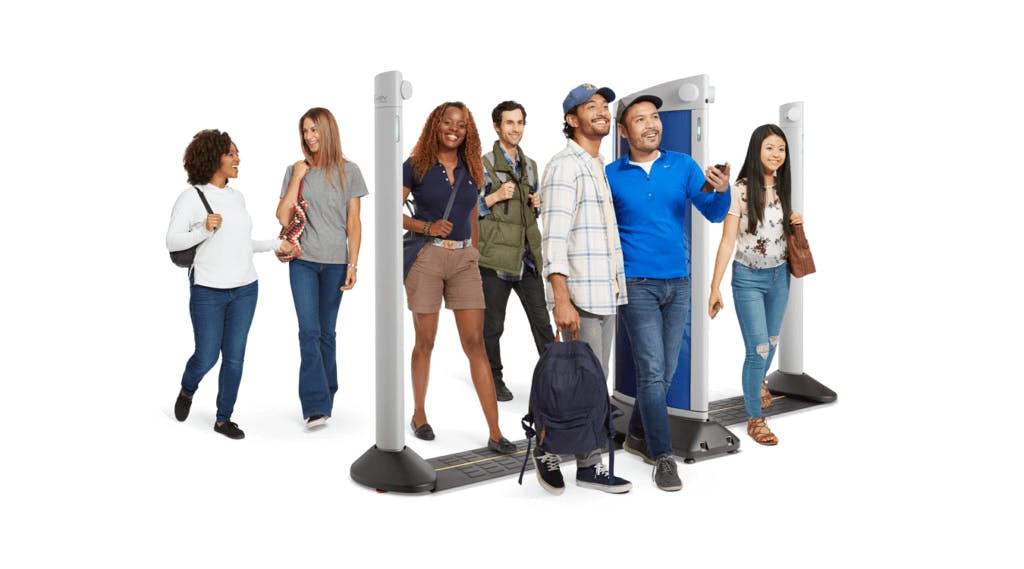
Airport security screening will be as simple as walking through a millimetre wave scanner.


There will be large zero-emissions aircraft in the skies to carry people between cities costing a fraction of the amount in fuel a similar flight does today.


There will be zero-emissions air taxies shutting passengers from city centers to major airports.


All of which will chip away at the value of HFR. Every day this project gets delayed makes this project less likely to succeed.
 
Within 10 years of HFR's possible opening (let's say 2025)

Airport security screening will be as simple as walking through a millimetre wave scanner.


There will be large zero-emissions aircraft in the skies to carry people between cities costing a fraction of the amount in fuel a similar flight does today.


There will be zero-emissions air taxies shutting passengers from city centers to major airports.


All of which will chip away at the value of HFR. Every day this project gets delayed makes this project less likely to succeed.
Yes, you can read about it all in my book from 1980 detailing what the year 2000 would be like.
 

Back
Top