News   Apr 01, 2026
 162     0 
News   Apr 01, 2026
 392     0 
News   Apr 01, 2026
 674     0 

VIA Rail

There was talk of that 2-3 years ago, but with the Ontario Line plans, it reduces the ultimate capacity on the Kingston Sub to only 4 tracks - which GO needs just with the current VIA operations - let alone increased operations.

I've certainly taken Montreal to Toronto trains that achieved the 4:30 during that era. And even were close to 3:59 in that era. The theoretical minimum is about 3:45 (though rarely achieved).

If you are going to drop $4 billion you can readily achieve 4.5 ... or better on some runs.

There's been talk/speculation of it more recently than that, partly because of GO's plan for the Richmond Hill layover on the Don Spur.
 
I hope that this talk about using CP Winchester tracks was not inspired by my questions about such a routing over the summer. They were purely speculation based on the assumptions that VIA could use the then intact double track to run trains at 160km/h without major upgrades given that the line is straight. Given that such a intact alternative does not already exist, such a bloating of the HFR project clearly does not make sense. It has already been shown on these boards that the main priority of the HFR route design should be minimizing trip times. However, at this point, I am just waiting to see the findings of the engineering report. I hope that it includes provisions for future speed and capacity improvements as demand permits and am very curious about how it plans to address the challenges of connecting the north shore route to Quebec into the Montreal central station.
 
There's been talk/speculation of it more recently than that, partly because of GO's plan for the Richmond Hill layover on the Don Spur.
Perhaps ... during the consultation for that storage space, Metrolinx was clear that nothing about their plan stops VIAs use of that corridor.

I think what it indicates is that HFR (or HST) is years or decades away, with no serious plans to implement anytime soon. All the other signs point a similar direction, between the years of lack of approval in the budget, the lack of a single word of comment by the current minister, the lack of any recent comments from VIA. She's dead Jim ...
 
I've certainly taken Montreal to Toronto trains that achieved the 4:30 during that era. And even were close to 3:59 in that era. The theoretical minimum is about 3:45 (though rarely achieved).

If you are going to drop $4 billion you can readily achieve 4.5 ... or better on some runs.

Past performance is not indicative of future results. The reality is that freight traffic has increased and the freight trains themselves have gotten longer. If you looked at a Pre-Covid schedule, the average would have been over 5 hrs. I think it was 5:15 hrs or thereabouts. And that was before adding delays.

Also, I don't see why spending more money necessarily must result in a speed increase. The primary goal of HFR is higher frequency and reliability. Speed is a secondary benefit and not applicable to every city pair.

Also this whole thing is supposed to be cost neutral, which makes investing for speed all the more difficult because despite all the talk from rail fans, the return for investment on speed is very poor. Billions required for a pool of passengers restricted to a fraction of current airline passengers.
 
Perhaps ... during the consultation for that storage space, Metrolinx was clear that nothing about their plan stops VIAs use of that corridor.

I think what it indicates is that HFR (or HST) is years or decades away, with no serious plans to implement anytime soon. All the other signs point a similar direction, between the years of lack of approval in the budget, the lack of a single word of comment by the current minister, the lack of any recent comments from VIA. She's dead Jim ...

It will be interesting to see what's released given $71 million was spent by the JPO. As discussed here before, a couple of scenarios:

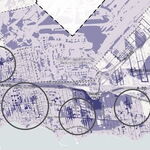
1) The budget funds HFR. To back it up, more documentation on the HFR route is released and public community consultations start. It's my understanding there have already been stakeholder conversations along the corridor. If we use the Ontario Line as an example, Metrolinx hasn't released detailed civil engineering track plans yet but they have released content like this (I picked the most contentious portion but by coincidence the potential OL-GO-HFR via LSE/ST corridor) so it would be nice to see something similar to address some questions/speculation/debates here on alignment choices. Especially because all other HSR proposals generally used the same corridor getting into/out of the City of Toronto but HFR proposes something different - correct me if I'm wrong (cc @crs1026 @smallspy)

2) The budget does not fund HFR and the Minister says while it's a good idea, they won't proceed in the short term. Given we the public provided $71 million, it would be nice for some of the documentation to still be released on the alignment. Maybe to the level of the GO Bolton line report in 2010? PDF here. I get that there could be risks to protecting the corridor/land values/NIMBYism to releasing the corridor material but not proceeding, but I still think it would be worth it and I don't see a major political risk. Even if there is a strong backlash in certain communities or ridings, it's a big corridor.

As fun as it is to see some of the maps posted here by various users (including @reaperexpress), it would be great to see what the JPO decided (or options) or something more specific than the HFR maps available. It would just be helpful to see as much public information posted as possible. AECOM and Aurp are the consultants as noted in January 2020.

 
Your explanation is quite compelling.

I would come at it from another angle: Suppose we can find whatever amount of capital the incremental Ottawa bypass would rquire, using the CP line as the straw man. Now remember that VIA is planning to also retain the Lakeshore service, with reportedly 12 trains per day west of Brockville and 6 east of there. Now remember that the whole issue with the Lakeshore line is the conflict with CN freight. 12 trains is still a lot of conflict.
I would expect that the business case for spending that available capital on the CN line to assure the performance of that Lakeshore service would exceed the business case for spending the same amount to extract a small gain in travel time on through Montreal-Toronto business.

Relaying the Winchester, at minimum, would be roughly 60 miles of new rail and ties. If the vision is to lay a new line end to end, not encroaching on CP's freight infrastructure, that's an even bigger bit of capital....25 miles of new grading plus the track itself to sidestep the remaining double track sections. All, with a huge presumption that CP will be amenable.

Spend that money on the Kingston line, and, even with a "hub" at Kingston, the performance and marketability of that service would likely deliver equal or better return. Who knows - one might even find that a couple of those 6 local trains would run right through, on a total Montreal-Toronto time as good or better than through Ottawa.

I'm not saying that will ever happen, just making the point about the return on the simplest bypass versus other uses of the money. And there are other things I can think of that would also be better uses.

- Paul

So we're back to basically a variant of ViaFast.

I really don't get the obsession people have with trying to brainstorm every single idea to avoid HFR on the proposed routing. Do all railfans think that VIA is so incompetent that none of these ideas have been gamed out internally at all?

We need to recognize that successful passenger rail in the Corridor requires us to build dedicated passenger rail corridors. There is no way around this. Everything else is half measures. It worked for GO. It will work for VIA. Let's get on with building this.
 
Perhaps ... during the consultation for that storage space, Metrolinx was clear that nothing about their plan stops VIAs use of that corridor.

I think what it indicates is that HFR (or HST) is years or decades away, with no serious plans to implement anytime soon. All the other signs point a similar direction, between the years of lack of approval in the budget, the lack of a single word of comment by the current minister, the lack of any recent comments from VIA. She's dead Jim ...
Did ML ever say that? All I ever saw was a statement that ML was continuing to discuss VIA's needs. The consultation material for the Don Valley yard clearly shows trains parked right where VIA wants to be, and no diversion trackage.

The conspiracy theorist in me thinks ML knows exactly what they are doing. VIA can have whichever routing it wants... just bring your chequebook. VIA gets to pay for parking for three GO trains somewhere else.

- Paul
 
So we're back to basically a variant of ViaFast.

I really don't get the obsession people have with trying to brainstorm every single idea to avoid HFR on the proposed routing. Do all railfans think that VIA is so incompetent that none of these ideas have been gamed out internally at all?

We need to recognize that successful passenger rail in the Corridor requires us to build dedicated passenger rail corridors. There is no way around this. Everything else is half measures. It worked for GO. It will work for VIA. Let's get on with building this.
I don't think you got what I was saying. I was not challenging HFR. It's the plan, period.

I do believe that investment will also have to happen on the Kingston line eventually. VIA's stated plan (well, it's what was said exactly once, to some local politicians... ) was for twelve trains a day west of Brockville. That level of service will face much the same level of conflict with freight as the pre-COVID service plan. If freight business grows, eventually something will have to give.

My point was simply to demonstrate that investing in a Winchester bypass would spend money in the most wrong place.

But yeah, with further investment, the trip time comparison might be that close.... when the time comes to fund trip time improvements, don't rule the option out.... the HFR route will be expensive to upgrade.

- Paul
 
Did ML ever say that? All I ever saw was a statement that ML was continuing to discuss VIA's needs. The consultation material for the Don Valley yard clearly shows trains parked right where VIA wants to be, and no diversion trackage.

The conspiracy theorist in me thinks ML knows exactly what they are doing. VIA can have whichever routing it wants... just bring your chequebook. VIA gets to pay for parking for three GO trains somewhere else.

- Paul

I don't get the parking part in that one sentence. Can you expand on what you me?
 
I don't think you got what I was saying. I was not challenging HFR. It's the plan, period.
Then I would suggest that you speak less convoluted, because I also struggled to understand the point you were trying to make and how it related to our discussion about HFR.

I do believe that investment will also have to happen on the Kingston line eventually. VIA's stated plan (well, it's what was said exactly once, to some local politicians... ) was for twelve trains a day west of Brockville. That level of service will face much the same level of conflict with freight as the pre-COVID service plan. If freight business grows, eventually something will have to give.
I would assume that a focus on local needs would mean a lower and more uniform average speed (i.e. no more non-stop TRTO-KGON à la train 40) and better spaced out (i.e. no more train 646 at 16:35, followed by train 68 at 17:00, train 650 at 17:45 and train 668 at 18:07) - both of which should reduce the conflicts with CN operations. Major investments might be necessary if we want to move to half-hourly Dutch-style InterCity services, but we certainly aren’t there yet...

The conspiracy theorist in me thinks ML knows exactly what they are doing. VIA can have whichever routing it wants... just bring your chequebook. VIA gets to pay for parking for three GO trains somewhere else.

- Paul
I had the pleasure to work closely with my colleagues at Metrolinx and at CN and I’m happy to reassure you that the conspiracy theories are really just that...
 
Last edited:
It will be interesting to see what's released given $71 million was spent by the JPO. As discussed here before, a couple of scenarios:

1) The budget funds HFR. To back it up, more documentation on the HFR route is released and public community consultations start. It's my understanding there have already been stakeholder conversations along the corridor. If we use the Ontario Line as an example, Metrolinx hasn't released detailed civil engineering track plans yet but they have released content like this (I picked the most contentious portion but by coincidence the potential OL-GO-HFR via LSE/ST corridor) so it would be nice to see something similar to address some questions/speculation/debates here on alignment choices. Especially because all other HSR proposals generally used the same corridor getting into/out of the City of Toronto but HFR proposes something different - correct me if I'm wrong (cc @crs1026 @smallspy)

2) The budget does not fund HFR and the Minister says while it's a good idea, they won't proceed in the short term. Given we the public provided $71 million, it would be nice for some of the documentation to still be released on the alignment. Maybe to the level of the GO Bolton line report in 2010? PDF here. I get that there could be risks to protecting the corridor/land values/NIMBYism to releasing the corridor material but not proceeding, but I still think it would be worth it and I don't see a major political risk. Even if there is a strong backlash in certain communities or ridings, it's a big corridor.

As fun as it is to see some of the maps posted here by various users (including @reaperexpress), it would be great to see what the JPO decided (or options) or something more specific than the HFR maps available. It would just be helpful to see as much public information posted as possible. AECOM and Aurp are the consultants as noted in January 2020.
Scenario 3) HFR isn't ready, and the government indicates again it views the project favourably.
Scenario 4) HFR doesn't need funding in the budget and proceeds on its own timeline.

Like I get that this forum is all hot and bothered about the project being in the budget, but for reasons discussed here before, there is no reason it has to be.
 
I do believe that investment will also have to happen on the Kingston line eventually.

Why? The current infrastructure can handle 12 trains a day with no real issue. And presumably with lower levels of demand, VIA has lots of room to add capacity by growing the length of the trains rather than growing the schedule.

But yeah, with further investment, the trip time comparison might be that close.... when the time comes to fund trip time improvements, don't rule the option out.... the HFR route will be expensive to upgrade.

You (and a few others) keep assuming full cooperation from freight operators when the time comes. Half a century of non-cooperation wasn't enough? How much more do you folks need? It's exasperating sometimes that people who know that history and still think it's all going to work out.

You are also fixating on Toronto-Montreal travel times. That's the only scenario where investment on the lakeshore corridor for trip time improvement might be considered. But all those passengers will now be taking HFR trains so there's no justification at all for pursuing trip time improvements for Toronto-Montreal with the lakeshore corridor.

This requires a mental shift. Post-HFR people need to start thinking of all lakeshore services not from the perspective of Toronto and Montreal travelers but from the perspective of a Kingston originating passenger. And think of HFR as the line specifically connecting the larger metros. The investments should be targeted accordingly.
 
Scenario 3) HFR isn't ready, and the government indicates again it views the project favourably.
Scenario 4) HFR doesn't need funding in the budget and proceeds on its own timeline.

Like I get that this forum is all hot and bothered about the project being in the budget, but for reasons discussed here before, there is no reason it has to be.
You do make a good point. I’m not sure the government would want such a big ticket item to get lost on budget day. We know for a fact VIA submitted HFR’s final business case in December to the Feds. The project could be funded by the Infrastructure Bank, so no budget item needed. I just want this to move forward!
 
You do make a good point. I’m not sure the government would want such a big ticket item to get lost on budget day. We know for a fact VIA submitted HFR’s final business case in December to the Feds. The project could be funded by the Infrastructure Bank, so no budget item needed. I just want this to move forward!

Politicians not announcing a big ticket item would be truly rare.
 
The consultation material for the Don Valley yard clearly shows trains parked right where VIA wants to be, and no diversion trackage.

Interesting. I presumed VIA would duck down the Stouffville line (via a new interchange at West Highland Creek) to avoid as much of CPs 2-track central corridor as possible. A single stop at Kennedy (a fairly major interchange: crosstown, Eg East LRT, Line 2, GO Express/Local), then express to Union on LakeShore; Danforth and Oshawa stops would be eliminated.
 
Last edited:

Back
Top