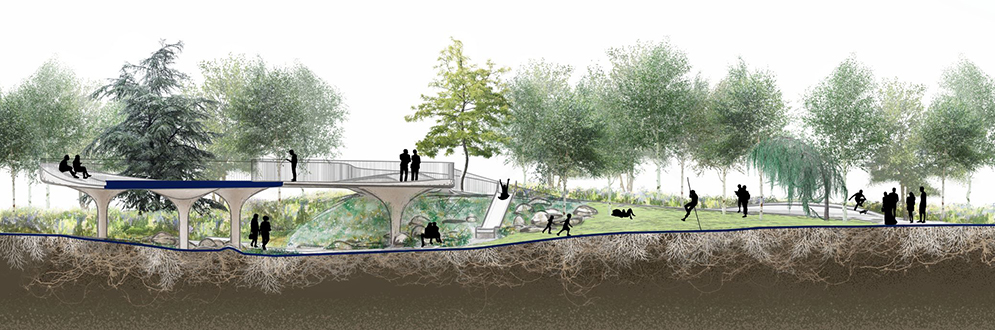
PMA and its bottle-cap rims is by far the Greenest design; but both that and the DTAH design will draw the wrath of @smably for extensive use of architectural seating.
I will reserve my wrath for DTAH but spare PMA (in part).
An amphitheatre is one case where I'm OK with architectural steps, assuming it's thoughtfully designed and properly programmed. (The music garden, for example, is a great example of good amphitheatre programming.) In this design, I notice that the placement of the steps should theoretically provide a barrier-free, if zigzagging, route to the top:
That's a pretty good way to ensure that someone who can't climb stairs can still use the entire space and have a similar experience to someone who can climb stairs.
However, I can see a few potential problems with this design off the top of my head. If no lip is provided on the steps, someone in a wheelchair could roll over the edge while navigating the switchbacks. The ramp might also be inaccessible to blind or low vision users without a tactile strip in the centre of the walkway. I would also hope to see space provided for wheelchair users to stop without blocking the ramp so they could easily join people sitting on the steps.
Big disclaimer: I am in no way an accessibility expert and I don't intend to speak on behalf of people with disabilities. Architects could (and should!) design for accessibility by hiring people with disabilities, training their non-disabled staff on accessible design, and engaging accessibility consultants throughout the design process.