
News   Dec 15, 2025
 188     0 
News   Dec 15, 2025
 1.4K     1 
News   Dec 15, 2025
 441     0 

Toronto Eglinton Line 5 | ?m | ?s | Metrolinx | Arcadis

How long until the line east of Laird is closed and Laird to Don Mills is rebuilt, so that Don Mills and everything west (including the Eglinton West extension) is fully grade separated and east of Don Mills becomes the genesis of the Eglinton East LRT?
I don't know if you'd even have to close the line. The only place where automobile traffic crosses the track is at Leslie.

If you were to grade separate, I'd think the easiest thing to do is to widen the CP span over Eglinton, and keep the eastbound turning lanes for Leslie on the north side of the tracks, between the Laird and Don Valley portals.

If Eglinton line doesnt WOW after finch, say goodbye to further LRT expansions in toronto.
I don't see that precludes grade-separating at Leslie. Do you antipicate slow LRT service between Laird and Pearson?
 
How long until the line east of Laird is closed and Laird to Don Mills is rebuilt, so that Don Mills and everything west (including the Eglinton West extension) is fully grade separated and east of Don Mills becomes the genesis of the Eglinton East LRT?
In theory if you had a maintenance facility in the East End, and the Ontario Line was open you could have an Eglinton East LRT running from science centre east, which would funnel traffic to and from the Ontario Line.

That will never happen. Noone is going to fund that kind of rebuild.

You would have to rebuild the Laird to Don Mills section as a tunnel. And then, rebuild the Don Mills Stn itself, add 2 more tracks so it can serve as a terminus for both the western and the eastern line.

What would you gain?
- The eastern section doesn't become any faster
- The western section becomes a bit faster, and a bit easier to operate, but the improvements are minor
- The riders yell and scream that they lost the ability to travel across Don Mills without a transfer, basically for no gains that matter to them
- Other transit riders yell and scream that Eglinton is getting the funding twice in a row, while they are getting zilch
- And worst of all, you do not gain a lot of capacity in the western section, that is now fully grade separated. The trains can run a bit more frequently, but then you hit the next capacity bottleneck, which likely to be the size of platforms and the capacity of elevators / stairs. A tansit line designed for 10k to 13k PPHPD, does not turn into a 30k+ transit line, just because you removed one section.
 
Last edited:
Truly. This argument that this project would be a roaring success if only the authorities had listened to reason and wisely chosen to make it significantly more complex and expensive...
Even though the potential to screw up a driverless metro with platform screen doors is lower than a mixed grade LRT with two tunnels, I wouldn't put it past Metrolinx and the TTC to somehow screw that up as well. At least a driverless metro with PSD usually has >99% service reliability.

There is just a higher floor for automated metro than a overly complicated Line 5 with bespoke subsystems. A badly run LRT is much worse than a badly run metro.

"You learn the lesson all commuters must know immediately: when something really matters, you leave early or take an Uber, but you never rely on the TTC. [...]
In most major cities, the transit experience is reversed. Hong Kong’s Mass Transit Railway system (MTR) operates at a 99.9 per cent on-time rate; Dubai reaches 99.7 per cent; New York, even with its aging system, sits at 84 per cent. Vancouver operates around 96 per cent."
Yeah, we’ve never seen slow zones in the subway, schedule bloat, lineups at terminals, operational problems, lines that never get built, etc. Such a transit paradise.
It's disingenuous to compare a brand new LRT with a subway system up to 71 years old , when you should be comparing LRT to modern metro. The TTC's subway service reliability as well as 𝚊̶𝚕̶𝚕̶-̶𝚖̶𝚘̶𝚍̶𝚎̶* surface on-time rate of 57.98% [1] is much lower than the typical >99% for automated metro w/ PSDs. A big part of the never ending slow zones is the lack of funding to upgrade to ballastless track, as is the standard for modern metros. Penny wise pound foolish.
1765689717299.png
1. https://toronto.citynews.ca/2023/07/061/ttc-buses-streetcars-subway-reliability/

*correction
 
Last edited:
Even though the potential to screw up a driverless metro with platform screen doors is lower than a mixed grade LRT with two tunnels, I wouldn't put it past Metrolinx and the TTC to somehow screw that up as well. At least a driverless metro with PSD usually has >99% service reliability.

There is just a higher floor for automated metro than a overly complicated Line 5 with bespoke subsystems. A badly run LRT is much worse than a badly run metro.

"You learn the lesson all commuters must know immediately: when something really matters, you leave early or take an Uber, but you never rely on the TTC. [...]
In most major cities, the transit experience is reversed. Hong Kong’s Mass Transit Railway system (MTR) operates at a 99.9 per cent on-time rate; Dubai reaches 99.7 per cent; New York, even with its aging system, sits at 84 per cent. Vancouver operates around 96 per cent."

It's disingenuous to compare a brand new LRT with a subway system up to 71 years old , when you should be comparing LRT to modern metro. The TTC's subway service reliability as well as all-mode on-time rate of 57.98% [1] is much lower than the typical >99% for automated metro w/ PSDs. A big part of the never ending slow zones is the lack of funding to upgrade to ballastless track, as is the standard for modern metros. Penny wise pound foolish.
View attachment 7026251. https://toronto.citynews.ca/2023/07/061/ttc-buses-streetcars-subway-reliability/
Don't put too much faith in reliability as a measure. Nobody would consider the confederation line a shining beacon of success, but it usually has a 99.8% reliability rating as defined by it's contract. I'm sure Eglinton will as well, but it's likely not going to feel like it

 
Last edited:
Don't put too much faith in reliability as a measure. Nobody would consider the confederation line a shining beacon of success, but it usually has a 99.8% reliability rating as defined by it's contract. I'm sure Eglinton will as well, but it's likely not going to feel like it

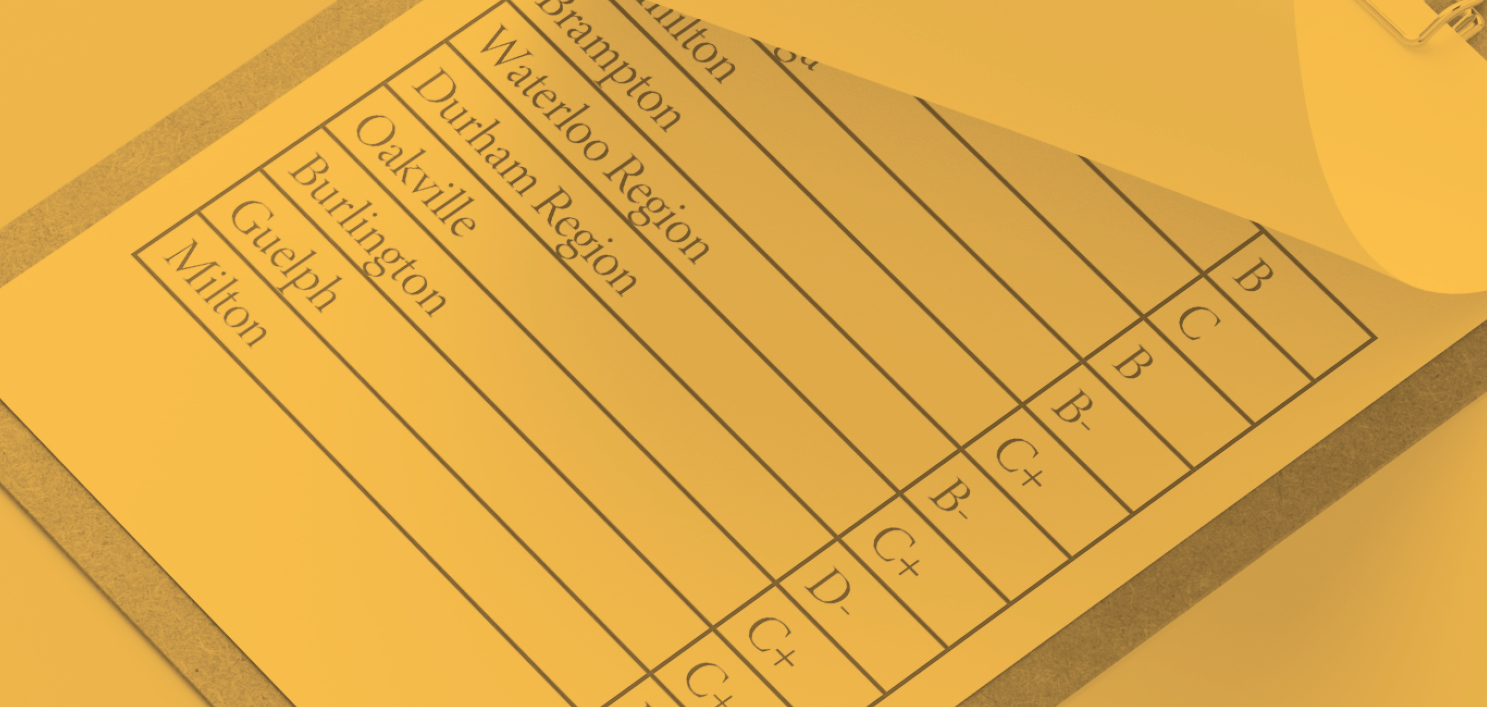
You're splitting hairs and missing the point of what I am saying. Of course I mean an independent third-party's definition of reliability, on-time rates, other metrics etc... I thought I didn't need to point out the obvious more than I already regularly do. Noone out here is claiming the O-Train is as reliable as the MTR or even the SkyTrain, even though different numbers from different people based on different definitions might make one believe so. Read the report linked in the CityNews article from above if you have the time. That's where the 57.98% 𝚊̶𝚕̶𝚕̶-̶𝚖̶𝚘̶𝚍̶𝚎̶ surface transit on-time rate comes from. "Guelph has the most reliable transit with an on-time score of 88%, followed by Hamilton at 82%,and Burlington, Mississauga and Waterloo at 79%. Toronto had the least reliable surface transit at 58%."

TTC's definition of subway service reliability based on headway adherence gives ~ a 1.5 to 3 minute buffer, which would be unimaginably late in Japan. For the purpose's of any useful comparison the authors are not going to blindly accept the word of each agency. Self-reported metrics are the "we've investigated ourselves and found no wrongdoing" numbers.

 
Last edited:
It's called follow the money. When you control the money, you control. Full stop. It is the City that sets the fares. It is the City that runs the municipal roads. It is the City that sets the speed limits. It is the City that funds the TTC. It is the City that controls lights & signals. It is the City that controls parking. The TTC is just a division of the City that runs a certain type of vehicles on the road and that's it. The City ultimately controls EVERYTHING about the TTC. It is the City that determines whether you will close down a stop/station. If the City decides that the TTC will do this-or-that, no matter how stupid the policy may be, the TTC MUST do it whether they like it or not. This is why every issue, such as this one, has to go to Council and/or the Mayor's office in the first place. This is why St.Clair and Spadina have signal priority design but are not allowed to use them.........the City tells them they can't and the TTC has no choice to follow their dictates.

If Toronto didn't have such a two-faced, incompetent, and gutless wonder of a Mayor and Council, this would not be an issue.

I call BS on this. We have one of the most pro-transit mayors in history. The city is trying everything it can, but we have a province determined to stick its nose in anything the city wants to do.

I won’t be surprised if more active transit priority hasn’t already been kiboshed by Ford behind the scenes. I guarantee there are dozens of stories like this that have been kept quiet if only because our mayor wants to keep diplomatic lines open with our bully of a Premier:

 
I call BS on this. We have one of the most pro-transit mayors in history. The city is trying everything it can, but we have a province determined to stick its nose in anything the city wants to do.

I won’t be surprised if more active transit priority hasn’t already been kiboshed by Ford behind the scenes. I guarantee there are dozens of stories like this that have been kept quiet if only because our mayor wants to keep diplomatic lines open with our bully of a Premier:

Source: You made it up.

Its been quite clear over the past few months that the line being slow and no active priority has been entirely on the city. I'm not sure what you're trying to accomplish with this blame shifting.
 
We have one of the most pro-transit mayors in history.
Chow might have her opinions but she is utterly incompetent and useless of a mayor. Having good opinions on things doesn't make you a good mayor. She had two years to know about the Line 6 issues for example and did nothing and is only surprisingly reacting to them now.
 
That will never happen. Noone is going to fund that kind of rebuild.

You would have to rebuild the Laird to Don Mills section as a tunnel. And then, rebuild the Don Mills Stn itself, add 2 more tracks so it can serve as a terminus for both the western and the eastern line.
Why tunnel? There's but a single intersection, at Leslie.

What's wrong with my much, much, cheaper suggestion of re-engineering the roadway and CP rail bridge to squeeze an extra eastbound lane on the north side of the tracks, for the two troublesome turning movements? You'd still need lights for pedestrians, but they can 100% be only used when there's no LRVs in sight (which is how I assume the pedestrian crossing I never use at Queen Quay station work).

You could probably re-engineer the roads for next two crossings (the turning lanes for the DVP) as well. And eliminate the Swift/Credit Union lights. This would drop the problematic length with intersection to about 3.5 km.
 
Source: You made it up.

Its been quite clear over the past few months that the line being slow and no active priority has been entirely on the city. I'm not sure what you're trying to accomplish with this blame shifting.

So posting a news article stating that the province is behind the scenes hobbling what the city can do (especially when it comes to cars) has no bearing on anything? C'mon.
 

Back
Top