News   Apr 28, 2026
 579     0 
News   Apr 28, 2026
 6.9K     13 
News   Apr 28, 2026
 1.1K     2 

PM Mark Carney's Canada

Cautiously optimistic. I hope it is not overly mandated with trying to build national champions. The retail investment angle is a bit odd...
Why is the retail angle odd? It's a way to attract private (and foreign?) funding into the development projects. Its a good strategy to accelerate development beyond what taxpayer money can afford.
 
Well said. That doesn't mean that Ottawa does not have a role to play in Alberta's oil industry, but that should be as booster and problem solver to any barriers. Imagine if instead of a NEP that capped prices and transferred wealth out of Alberta, PET built a NEP in partnership with Alberta with the primary goal of boosting the province's wealth, in the understanding that what's good for Alberta is good for the country. Such a plan might have seen federally-mandated oil pipelines built to the Pacific and more importantly from Alberta to the refineries in Atlantic Canada. This would boost jobs and infrastructure investment across the country - leading Canada in the 1980s with a solid national energy plan, and much less Western alientation. Another objective could be diversifying oil shipments to new markets.
I would wonder if the logistics of building a pipeline from Alberta to the Atlantic in the 1980's would be too great a hurdle. That's an enormous distance and it would be one of the longest in the world. Also, it's unclear to me if Irving could take in the tar sands oil back then to refine it, but one interesting thing is that it would probably now be reaching end of life and need a complete replacement for the same amount of dollars to build a new one now.
 
Why is the retail angle odd? It's a way to attract private (and foreign?) funding into the development projects. Its a good strategy to accelerate development beyond what taxpayer money can afford.
They are proposing a guaranteed return. So something like an equity linked GIC? Not a great idea IMO, really just a gimmick.

Retail investors generally want short term liquidity. A SWF is generally a long term asset manager that is not mandated with providing short term liquidity.
 
They are proposing a guaranteed return. So something like an equity linked GIC? Not a great idea IMO, really just a gimmick.

Retail investors generally want short term liquidity. A SWF is generally a long term asset manager that is not mandated with providing short term liquidity.
Yeah, not sure about the guaranteed principle (not return) that is promised. Potential for upside, guarantee of no downside. It's similar to a principle-protected note (PPN) or a defined protection/buffer ETFs. My only question is how the principle is protected: as in, who pays the difference if the fund incurs a downside yet needs to pay out the full principle.

Regardless, investment in a sovereign wealth find is not supposed to be short-term and doesn't need to be liquid. This sounds more like an "alternative investment" product. It's great for diversifying your investment portfolio given that you have a medium- to long-term investment horizon. Typically, alternative investments are only available to the ultra-wealthy. Launching an alternative investment product for regular folk is a win for anyone looking to take advantage of the opportunity.
 
  • Like
Reactions: PL1
I would wonder if the logistics of building a pipeline from Alberta to the Atlantic in the 1980's would be too great a hurdle.
IDK, but to me it's nuts that Canada's primary oil refinery on the Atlantic has no direct access to Canadian oil and instead refines mainly US oil. I assume there would be other refineries in Ontario and perhaps Quebec along the 4,800 km way from FortMac to Saint Johns. The former USSR's 1960's era Druzhba pipeline was over 4,000 km long, but not in one straight line.

1777319878584.png
 
Last edited:
  • Like
Reactions: EBT
IDK, but to me it's nuts that Canada's primary oil refinery on the Atlantic has no direct access to Canadian oil and instead refines mainly US oil. I assume there would be other refineries in Ontario and perhaps Quebec along the 4,800 km way from FortMac to Saint Johns. The former USSR's 1960's era Druzhba pipeline was over 4,000 km long, but not in one straight line.

View attachment 732365
With hindsight, a great option would have been to build a refinery in Churchill, MB back then, and pipeline Alberta oil there. Though logistics of constructing that all through middle-of-nowhere territory still would have been enormous.
 
With hindsight, a great option would have been to build a refinery in Churchill, MB back then, and pipeline Alberta oil there. Though logistics of constructing that all through middle-of-nowhere territory still would have been enormous.
Even today Churchill is ice bound for four to six months. No oil tanker is going to risk that, no matter if ice breakers are available to help.

IMG_3950.png
 
Last edited:
  • Like
Reactions: PL1
IDK, but to me it's nuts that Canada's primary oil refinery on the Atlantic has no direct access to Canadian oil and instead refines mainly US oil. I assume there would be other refineries in Ontario and perhaps Quebec along the 4,800 km way from FortMac to Saint Johns. The former USSR's 1960's era Druzhba pipeline was over 4,000 km long, but not in one straight line.

View attachment 732365
According to a CBC article, the Irving Saint John refinery gets about 55% of it oil from the US, about 21% from Saudi Arabia and the rest from Nigeria. About 80% of its product goes to the US.


With hindsight, a great option would have been to build a refinery in Churchill, MB back then, and pipeline Alberta oil there. Though logistics of constructing that all through middle-of-nowhere territory still would have been enormous.
A refinery in Churchill would make no sense. A refinery cannot operate efficiently on a stop-and-start basis and with the port icebound for a significant part of the year, you would either need a lot - a real lot - of storage or risk losing your operating personnel for many months out of the year.

As much an additional export terminal is a good idea, it would have to be finished products (or gas) that can be moved or re-directed as the season allows. I can see either ice-hardened tankers and/or CCG escorts to extend the season, but that adds to the cost. It could also reduce cots for shipping diesel and LNG to the eastern Canadian arctic.

Moving some energy products, as well as improving the export market for prairie grain and potash can make for a viable port, but I don't see it as a savior project that moves the dial a great deal as some politicians and proponents due. Same with, in my mind, the fantasy proposals of putting a terminal in Moosonee, simply because it has a rail line.

 
This will 100% be a slush fund for corporations.
The surprising thing is how open they are about it. Most people have figured out they are being robbed, but have given up complaining.
Carney is a master at juggling money to hide the paper trail. It would probably require an 8-part mini-series to fully explain where the money went - and few have patience to sit through all the facts to understand the laundering.
 
According to a CBC article, the Irving Saint John refinery gets about 55% of it oil from the US, about 21% from Saudi Arabia and the rest from Nigeria. About 80% of its product goes to the US.


A refinery in Churchill would make no sense. A refinery cannot operate efficiently on a stop-and-start basis and with the port icebound for a significant part of the year, you would either need a lot - a real lot - of storage or risk losing your operating personnel for many months out of the year.

As much an additional export terminal is a good idea, it would have to be finished products (or gas) that can be moved or re-directed as the season allows. I can see either ice-hardened tankers and/or CCG escorts to extend the season, but that adds to the cost. It could also reduce cots for shipping diesel and LNG to the eastern Canadian arctic.

Moving some energy products, as well as improving the export market for prairie grain and potash can make for a viable port, but I don't see it as a savior project that moves the dial a great deal as some politicians and proponents due. Same with, in my mind, the fantasy proposals of putting a terminal in Moosonee, simply because it has a rail line.
You can build a lot of storage. They've done it in the middle east.

But the comment here was a comparison of a scenario where you choose building a cross-country pipeline that couldn't realistically be done, vs. one in Churchill, and even if that wasn't realistic either, it's an easier and higher likelihood of providing value and even ever happening than piping across the whole country.
 
I don't think a refinery in Churchill makes much sense. They are big dollar investments, and should be carefully situated to be resilient future changes, so closer to demand/population centres and well-located with respect to import and export markets.
 
IDK, but to me it's nuts that Canada's primary oil refinery on the Atlantic has no direct access to Canadian oil and instead refines mainly US oil. I assume there would be other refineries in Ontario and perhaps Quebec along the 4,800 km way from FortMac to Saint Johns. The former USSR's 1960's era Druzhba pipeline was over 4,000 km long, but not in one straight line.

View attachment 732365
It is absolutely nuts and despite Carney's constant refrain that "we can give more to ourselves than anyone can take away from us" I have not heard Carney talk about remedying this insane situation. An all-Canadian pipeline from Alberta to the east coast should have been the #1 priority when Carney got into office but there has been no talk about this. I listened to the CBC's interview of Carney yesterday and Carney touted investments that he would be making in community centers and hockey arena's (no joke). Carney talks like he is living in an alternative universe which I suppose he is.

Making matters worse is the fact that the oil refineries in Sarnia receive Alberta oil from Enbridge Line 5 which runs through Wisconsin and Michigan. Despite past threats from the Governor of Michigan to close down Enbridge Line 5 there has been no talk about building an all-Canadian pipeline.

Canada is not a serious country. No other country blessed with our energy wealth would leave itself so vulnerable to the whims of the Americans. Donald Trump could in one of his daily tantrums could decide tomorrow to shut-off the supply of oil to Canadian refineries in Ontario and New Brunswick.

For decades Canadian "leaders" of both parties have allowed environmental groups to stymie needed pipeline development. I'm convinced most of these groups are just cut-outs for the US State Department specifically USAID. The Americans have never wanted us to be able to export our energy wealth to the world. They have always wanted to keep Canada captive.

The United States produces 13 million barrels of oil a day while importing almost 5 million barrels of oil a day from Canada. What if our 5 million barrels of oil a day were sent instead to Asia and Europe where we could get more money per barrel?
 
Last edited:
I don't think a refinery in Churchill makes much sense. They are big dollar investments, and should be carefully situated to be resilient future changes, so closer to demand/population centres and well-located with respect to import and export markets.
And one private money is unlikely to spend multi-billions in building.
 
I don't think a refinery in Churchill makes much sense.
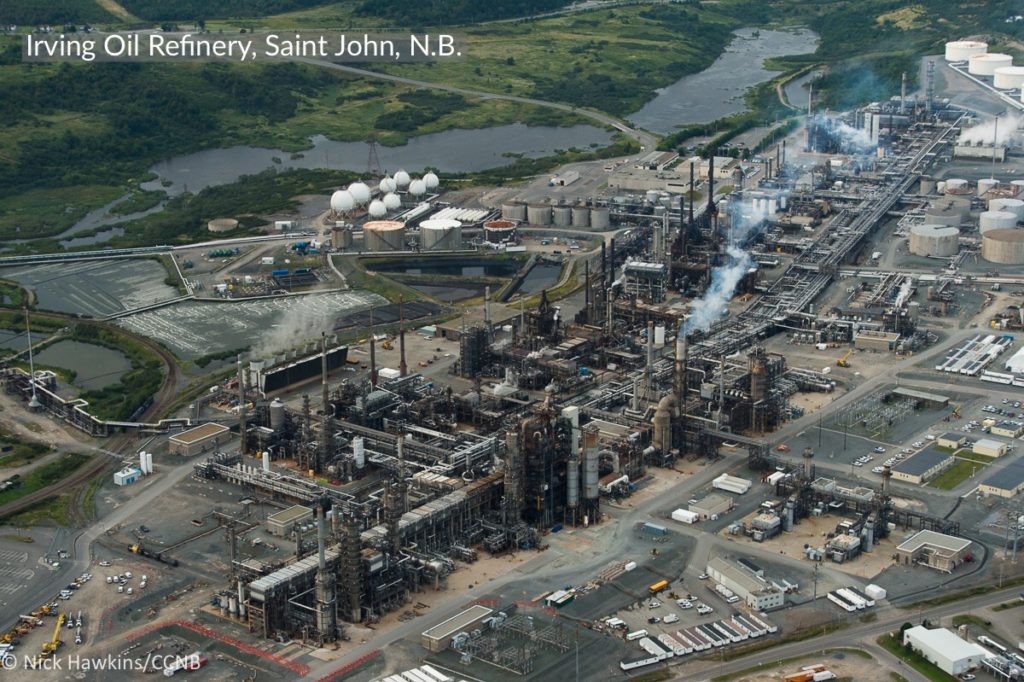
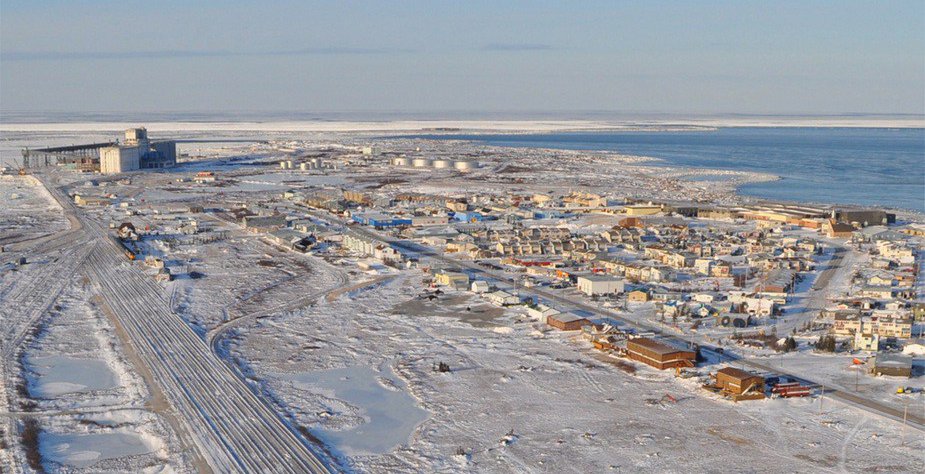
Agreed. A pipeline to Churchill for seasonal shipping can be viable, but not a refinery. Here’s Irving’s refinery (4,000 direct employees) in Saint John, NB, and the town of Churchill (population. 870) below. For starters, every environmental and indigenous group would protest placing such a belching beast on the subarctic coastline. Then, there’s no population base to work the refinery, and no road to move equipment, etc.
RefineryIrvingOil.jpg


2867-1-churchill-manitoba.2e16d0ba.fill-1370x700-c100.jpg


But the comment here was a comparison of a scenario where you choose building a cross-country pipeline that couldn't realistically be done, vs. one in Churchill
A seasonal pipeline could work, but you don't need a huge storage farm. Instead divert the oil when the port is iced in.
 
Last edited:

Back
Top