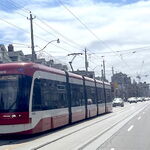
Because batteries are terrible for the environment.
As opposed to the Orion/New Flyer/Novabus diesels polluting the environment for the last 20-25 years they've been running? Or the millions of ICE vehicles we have on the road regardless of buses?
BEB's have a larger carbon footprint up front, but their zero emission pays off when you reduce production of greenhouse gases operating them YoY as opposed to a diesel that produces GHG even after production. You operate that BEB long enough, the environmental footprint will be significantly less than a diesel that continues to operate on the road. ICE has the GHG's from the production process (including mining for materials), delivery process, and the operating process, BEB's have GHG's from the production process (including mining), and delivery. The operating process is zero emission.
With a grid dominated by fossil fuels from buses and passenger vehicles that have been operating for decades, saying batteries are bad for the environment while ignoring the other impacts that every ICE vehicle as well as the oil/fuel production process for ICE vehicles on the road has seems disingenuous.
I am very skeptical of battery powered electric vehicles with the impact of lithium mining and battery disposal. I think transit agencies should electrify with overhead wires or third rail instead. I think it sends the wrong message too, that not having a car and getting on a normal bus is bad for the environment.
It's fine to be skeptical. However, it also means that you have to look at both sides of the coin. Batteries aren't just disposed of, they're recycled for usable material and repurposed in many different ways. They can return to battery backups, other battery electric buses, and other devices that require lithium ion batteries. I haven't seen diesel being repurposed or recycled into anything.
If we're concerned about the impact of lithium mining without batting an eye at the scale that oil production is on, we're ignoring the environmental aspects and impacts of oil production as well. The reality is that everything has an environmental impact. We as humans have environmental impacts on everything we do. However, if we're going to sit there and say we're not going to hop on a battery electric bus because somehow the high ground is that the diesel buses already exist, we're ignoring that while the upfront GHG production of a battery electric bus is high, the YoY operation of the battery electric bus means that we can remove a diesel bus from fleet operation, and eventually work towards zero emission, as opposed to continuing to operating a diesel bus. That means that the BEB will take the spot of a diesel that can be removed from the fleet.
Overhead catenaries are going to take a significant amount of time for the procurement, construction, implementation, testing and other processes, while we can get battery electric buses that do either depot or stop charging today, and decommission a diesel bus today.
To your last point - The idea is that the amount of people on any of the buses takes someone off the road that would otherwise be polluting it with a GHG producing ICE vehicle themselves. It's pooling for instance 43 people into a bus, as opposed to each of those 43 people all having a vehicle. Carpooling shares the same idea. You're cutting down on emissions produced by picking up 4-6 people in your vehicle because you all work at the same building. You all commute together instead of each of you having your own vehicle. Now imagine doing that with a battery electric vehicle. Those people may as well be walking or running or riding the bike to work, but they're instead taking a bus that has zero emissions.
The point being made here is we need to be making fair comparisons instead of immediately saying x is bad, as if option y is the better, more environmentally friendly option.