





AlvinofDiaspar
Moderator
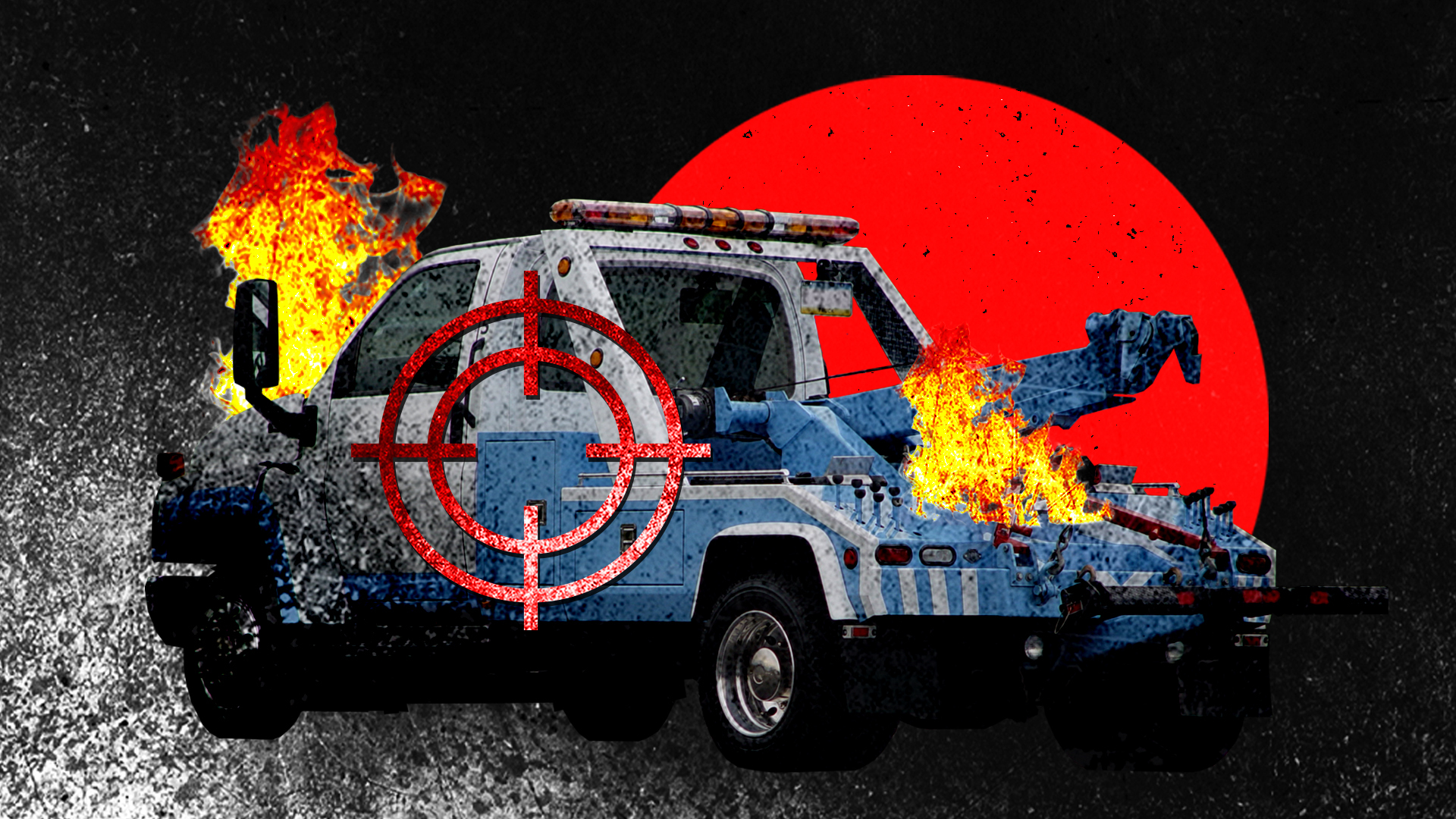
There is some talk of it being associated with the ongoing tow truck war.
AoD
AoD
|
|
|

There is some talk of it being associated with the ongoing tow truck war.
AoD
 www.thedrive.com


Just to note, firing guns at human beings should always be considered attempted murder. Let's not normalize gun violence.Since it was the opening night of the pub, I imagine it is owned by someone aligned with one group in the mob wars, and another group was sending them a message. It's possible a lot of the patrons were also aligned with the owners. I heard the exact number on the radio this morning, which I've forgotten, but about half were injured by bullets, and half by things like breaking glass, falling, etc. Which suggests indiscriminate firing to trash the place and scare people rather than an attempted murder.


Are we allowed to critique this ‘report’ or even ask who the illustrious panel members were and their credentials?The City of Toronto is releasing recommendations from an expert wildlife panel to continue addressing the challenges posed by unusually bold coyote encounters in Fort York and Liberty Village.
This independent, third-party panel – with decades of combined experience in coyote management, biology and animal behaviour – conducted a comprehensive review (https://can01.safelinks.protection.outlook.com/?url=https://www.toronto.ca/wp-content/uploads/2025/03/8fb1-Consolidated-Summary-Report-Expert-Panel-on-Coyotes-in-Fort-York-Liberty-Village-FINAL.pdf&data=05|02|david.crawford@mcgill.ca|66d2d3638c98442257a708dd663e03fc|cd31967152e74a68afa9fcf8f89f09ea|0|0|638779138729399742|Unknown|TWFpbGZsb3d8eyJFbXB0eU1hcGkiOnRydWUsIlYiOiIwLjAuMDAwMCIsIlAiOiJXaW4zMiIsIkFOIjoiTWFpbCIsIldUIjoyfQ==|0|||&sdata=lGTUjeywLcNPG+GihbgmXSEaalNP7XM00jCiQ7NWqZY=&reserved=0) of the City’s response to coyotes in the area between November 2024 and March 2025 to research the situation and provide the City with options for potential next steps.
The findings show the City’s approach aligns with best practices on coyote management in other North American cities while also identifying the issues are consistent with food-conditioned behaviour.
Up to four coyotes in the area have learned to associate humans with food because of direct and indirect feeding. The aggressive behaviour towards dogs was also found to be typical and timed with the reproductive season.
Panel recommendations
Due to these observations, the panel recommends that hazing (such as employing loud voices or noises) continues and that the City take measures to add resources to successfully recondition the animals in line with proven, long-term intervention strategies. These suggestions will enable the City to step up its efforts to address the coyotes in an efficient way.
The recommendations will be used to inform upcoming updates to the City’s Coyote Response Strategy (https://can01.safelinks.protection.outlook.com/?url=https://secure.toronto.ca/council/agenda-item.do?item=2025.EC18.8&data=05|02|david.crawford@mcgill.ca|66d2d3638c98442257a708dd663e03fc|cd31967152e74a68afa9fcf8f89f09ea|0|0|638779138729425224|Unknown|TWFpbGZsb3d8eyJFbXB0eU1hcGkiOnRydWUsIlYiOiIwLjAuMDAwMCIsIlAiOiJXaW4zMiIsIkFOIjoiTWFpbCIsIldUIjoyfQ==|0|||&sdata=mv9IEi0bC+l+/hMHyEkpu+z+dTBJsCAq8XTlJsLIom4=&reserved=0), which are expected to go to the Economic and Community Development Committee later this year (https://can01.safelinks.protection.outlook.com/?url=https://secure.toronto.ca/council/agenda-item.do?item=2024.EC16.10&data=05|02|david.crawford@mcgill.ca|66d2d3638c98442257a708dd663e03fc|cd31967152e74a68afa9fcf8f89f09ea|0|0|638779138729441085|Unknown|TWFpbGZsb3d8eyJFbXB0eU1hcGkiOnRydWUsIlYiOiIwLjAuMDAwMCIsIlAiOiJXaW4zMiIsIkFOIjoiTWFpbCIsIldUIjoyfQ==|0|||&sdata=a920meThfXFa+Kz+IvXxAbXlepbS1qpOsWiYM2opjoQ=&reserved=0).
The wildlife expert panel recommended the City immediately:
Procure a specialized team to assess these coyotes, apply adapted aversion techniques, monitor results and report back to City staff;
Continue aversion techniques that utilize bodies, voices and handheld objects (rather than projectiles, bullets or dogs, all of which could increase the defensive reactivity of the coyotes);
Remove human food sources by continuing to enforce no dumping and no wildlife feeding bylaws;
Repair fences and improve lighting and sightlines;
Increase community education for the public about how dumping, wildlife feeding and dogs off leash impact coyote activity.
The City understands the urgency of this matter and is committed to completing all recommendations during this process. This work requires the participation of City staff and residents so the neighbourhood can be restored to co-existing safely with wildlife. The City thanks those who live, work and play in Fort York and Liberty Village for their patience and cooperation.
If animal behaviour changes in a way that affects public safety, the City will consider a range of further actions.
Coyote response action in Fort York and Liberty Village to date
For the last four months, City staff have responded to coyotes in the community to address resident concerns.
Patrols in the area occur daily and staff are conducting aversion to retrain the coyotes. The City has and will continue to improve outdoor lighting, repair fences, increase signage and enforce proper garbage disposal.
This is in addition to resident education sessions, flyer distribution and multiple community meetings to equip residents with coyote tips and listen to their feedback.
Staff will continue to assess additional techniques as needed.

the TTC has been musing about adding more washrooms for some time now.
Is that even possible?
Short of placing a trailer outside a station I don't see how this would work in most locations.
It's not like you can shoehorn a washroom into one of the Downtown stations or even somewhere like Greenwood.
Other stations like Lawrence West or the TYSSE stations have room for them.
Sure.
Why? Every station has washrooms for staff. Most have more than one.........there's usually one for bus/streetcar operators on grade, one for collectors/csa in the concourse/mezzaine, and in many there's another for subway operators at platform level.
There's plumbing, there's, electrical, and ft2..........what else do you need?
Some stations are tighter than others.........not all are suited to mall-access, gender-segregated washrooms, some might be single-person use, as is the norm at most GO stations. That's tine too, based on demand.
See above............. every station has washrooms.
Not all stations are easily renovated to have open-access, gender-segregated washrooms..... although, its achievable in most, but in some cases at extra cost and effort.
There's room in all stations for some form of washroom; but not necessarily for all forms of washrooms.
At least, not cheaply.
Fair points.
Anything is possible with enough money but there are better things to piss away money on.
Disagree.
The need for washrooms is substantial, and the desire/amenity value is significant.
Its not that much money if you're not going universal.
I don't suggest washrooms at EVERY station in the near term, and i don't believe that is contemplated, however theoretically desirable.
I think we're looking at:
1) Fulfilling existing policy on subway line transfer stations. (St. George and Spadina)
2) Transfer Stations to GO (debatable, but likely, Main, Dundas West, York Mills and Yorkdale)
3) High volume stations, where there are sufficient staff to patrol washrooms. Llkely, Bathurst, Victoria Park, St Clair, St.Clair West and a smattering of others.
Fair.
I'd still rather see the money used for fare enforcement.
Warden got to the point where people were using drugs in the washrooms.
More washrooms are a great idea but without proper fare enforcement and supervision it will go about as well at St Clair West's third exit.