




Cobra
Senior Member
I have to agree that this would make more sense and a more truthful representation of reality

|
|
|
He missed 535 Eglinton...I have to agree that this would make more sense and a more truthful representation of reality
View attachment 699720


It's not just a TTC thing, it's a North America thing. It's because we have a culture that a) prioritizes the illusion of safety above all else, and b) is so litigious that the only solution to anything is to restrict restrict restrict.For the life of me...why is the TTC afraid of speed???
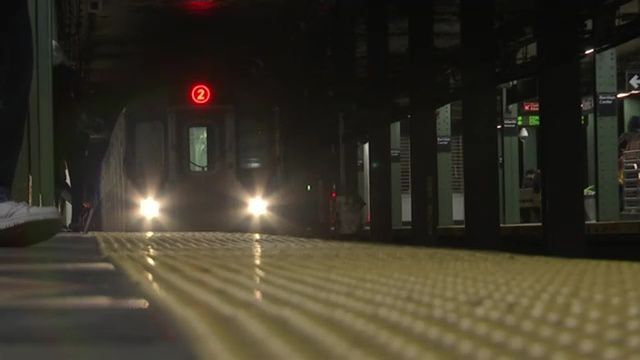
 www.ny1.com
More of a legal liability culture than a "safety" culture...It's not just a TTC thing, it's a North America thing. It's because we have a culture that a) prioritizes the illusion of safety above all else, and b) is so litigious that the only solution to anything is to restrict restrict restrict.
New York added a lot of timers on their subway in the 1990s that slowed trips down considerably, out of an abudance of caution after the Williamsburg Bridge accident.
MTA weighs ending intentional slowing of trains in effect since deadly 1995 crash
The MTA is studying a simple idea to reduce the plague of subway delays: Run the trains faster.
Metrolinx is also like this. The speed limit around Renforth station is 20 km/h, and they're so fanatical about it they demanded that the TTC ban all buses without geofencing abilities so that they could strictly follow that speed. And if anyone on here actually used the transitway, they'd know that the part of it that is owned by MiWay is no speed demon either, despite being entirely grade separated and exactly the sort of transit solution that the anti-LRT types love to hype up. And it's going to be real fun when the new MCIs for GO enter service, too, as Transport Canada rules since September 2020 prohibit standees on buses with seatbelts.
Anyone who is going after LRT as being the problem is barking up the wrong tree entirely. Look around you, the problem is the safety culture that we have created.

It was long as well. If you look at the current list, the longest one on the entire system is only 200 metres. For the current southbound zone between Sheppard West to Wilson it's reduced from 46 km/hr to 20 km/hr; but it's only 186 metres long. And then the other one, from Yorkdale to Lawrence West, is only 183 metres long ... with the speed reduced from 48 km/hr to 45 km/hr.I don't know about that. That dreaded one they used to have near Sheppard West was the slowest I think I have ever moved on a subway or lrt anywhere I've been
That's true, T3G, but somewhat misleading. If you look at the two Finch to Vaughan restrictions, one is 25 km/hr - reduced 2 km/hr from the usual 27 km/hr (on the Union to St. Andrew curve). And the other (near Davisville) is a 25-km/hr limit, down from 32 km/hr ... that is only 152 metres long! I'm doubt most would even notice either!With the sole exception of the Yorkdale-Lawrence West slow zone, all of the reduced speed zones have a maximum speed between 15 and 25 km/h, which buses and European LRTs routinely go faster than.
The opening day schedule is just a placeholder?As Steve posted, the 46min is just a placeholder at this stage.

I get that the idea is to get clicks, but I wish people would actually inform people of the reasons for why things are the way they are. It’s not just this issue, but you see it a lot with transit people on social media.I have to agree that this would make more sense and a more truthful representation of reality
View attachment 699720


I think there's a difference between lines that have a ton of slowzones due to decades of decay and poor maintenance versus a BRAND NEW "Rapid" Transit Line.Just putting this reminder here before we get people attempting to discredit the chosen mode of transport again based on sketchy agency-level operating procedures.
View attachment 699616
What part of this video is meant to be impressive exactly? A tram that barely reaches 55km/h in a section of road with barely any intersections, and somewhat lengthy stop spacing? The section afterwards when it actually enters city streets it caps out at 45km/h and stays that way for the next couple of stops. 45km/h, ie the speed of a car driving through a residential neighbourhood. Like its faster than the streetcars we have here in Toronto, but its not exactly performance that would justify a "Line 6" branding even if it was in Toronto. Certainly not something that should be called "Rapid Transit".And a demo of what we could also have if North American institutions didn't prize the illusion of safety over common sense:
