News   Apr 17, 2026
 737     0 
News   Apr 17, 2026
 1.6K     6 
News   Apr 17, 2026
 707     0 

Alto - High Speed Rail (Toronto-Quebec City)

CBC’s Cross Country Checkup recently aired an episode focused on discussing and debating Alto. During the program, two experts with opposing views on the project — Matti Siemiatycki and Michael Schabas—answered questions from callers.

Link to the episode: https://www.cbc.ca/listen/live-radi...rail-nation-builder-billion-dollar-boondoggle

Recent polling is showing broad support for the HSR project among the public. That is not being reflected so far among the newspaper columnists and political commentators, shown by recent articles published in the Globe and Mail, Toronto Star, and National Post (a given).
 

Attachments

  • 1776262942263.png
    1776262942263.png
    53.4 KB · Views: 4
CBC’s Cross Country Checkup recently aired an episode focused on discussing and debating Alto. During the program, two experts with opposing views on the project — Matti Siemiatycki and Michael Schabas—answered questions from callers.

Link to the episode: https://www.cbc.ca/listen/live-radi...rail-nation-builder-billion-dollar-boondoggle

Recent polling is showing broad support for the HSR project among the public. That is not being reflected so far among the newspaper columnists and political commentators, shown by recent articles published in the Globe and Mail, Toronto Star, and National Post (a given).
Tome, that shows their bias and we cannot forget this.
 
Tome, that shows their bias and we cannot forget this.
Perhaps they are all beholden to the fossile fuel industry, like Peter Mansbridge ...
God forbid we create an efficient and fast way to travel between major metropolitan areas that does not depend on jet fuel. You would think that this is a no-brainer in the current energy crisis.
 
Perhaps they are all beholden to the fossile fuel industry, like Peter Mansbridge ...
God forbid we create an efficient and fast way to travel between major metropolitan areas that does not depend on jet fuel. You would think that this is a no-brainer in the current energy crisis.
These same people are usually the ones screaming about Canada’s lacking productivity and GDP growth compared with the U.S. and other developed nations, about how we need to build pipelines crisscrossing the country to earn “energy superpower” status, no expenses spared. And then they are the first ones to become fiscal bean counters when it comes to transit infrastructure.
 
It's the nature of news reporting to look for what will attract ridership, and to respond with critical analysis of a government proposal. And to give air time to those with opposing views.

Simply put, more newspapers will be sold by reporting on the flaws of the government's actions, and the controversy created in the community, than by commending government for a good idea.

No journalist wants to sound like a shill for the party in power.

And frankly, are we all certain that government knows how to spend such a large sum of taxpayer money wisely and effectively?

A skeptical media that doesn't take its eyes off this project is probably a good thing to have.

- Paul
 
It's the nature of news reporting to look for what will attract ridership, and to respond with critical analysis of a government proposal. And to give air time to those with opposing views.

Simply put, more newspapers will be sold by reporting on the flaws of the government's actions, and the controversy created in the community, than by commending government for a good idea.

No journalist wants to sound like a shill for the party in power.

And frankly, are we all certain that government knows how to spend such a large sum of taxpayer money wisely and effectively?

A skeptical media that doesn't take its eyes off this project is probably a good thing to have.

- Paul
But they are aiming to prevent the project altogether, they are not trying to improve it
 
But they are aiming to prevent the project altogether, they are not trying to improve it
One has to wonder, for a country that is relatively pro-transit (compared to the USA), why there is so much vocal opposition from a small contingent of urban-y elites that almost certainly won't lose property through expropriation.

I get the HS2 and California counterexamples but those seem to be exceptions, not the rule.
 
One has to wonder, for a country that is relatively pro-transit (compared to the USA), why there is so much vocal opposition from a small contingent of urban-y elites that almost certainly won't lose property through expropriation.

I get the HS2 and California counterexamples but those seem to be exceptions, not the rule.

I feel they are the ones that would push for jets at the Island airport. They are the ones who see flying as the gold standard travel.
 
They are the ones who see flying as the gold standard travel.
Which is laughable. As if they've never left the continent. HSR tends to be quieter than planes.

In my experience, business class on HSR in China beats short haul A320 or 737 any day of the week (business class on narrowbodies is a scam).

Special elevator to the platform to avoid crowds, lie flat seats, meal and beverage service. They'll also move your luggage onto the train from the business class lounge.

If you're bemoaning the lack of lie flat seats or carrying your own luggage briefly for a 90 minute flight or equivalent, you may as well fly private. Or try to book a widebody jet with lie flat seats (which I believe is possible for Toronto to Montreal). Neither of which are realistic for the vast majority of people.

If I'm travelling light and feel like speedwalking to save time, then planes are fine.
 
One has to wonder, for a country that is relatively pro-transit (compared to the USA), why there is so much vocal opposition from a small contingent of urban-y elites that almost certainly won't lose property through expropriation.
Because our capitalist setup has the same outcomes as the capitalist setup to the south of us, and due to our proximity most of their capitalist tendencies bleed over here. Our urban elites have the same tendencies as their urban elites and vice-versa. The same vested interests, the same wanted outcomes. The same investments.

Likewise, our mainstream media has the same wants and goals as theirs do, and in many cases share the same owners or same types of owners. Let's not forget the pictures of the Rogers family huddling around Trump.

As such, our media, owned at this stage by billionaires with capitalist interests, don't reflect the same wants and needs of its readers or general public. At this stage they're pushing narratives and thoughts onto people rather than representing the vice-versa.
 
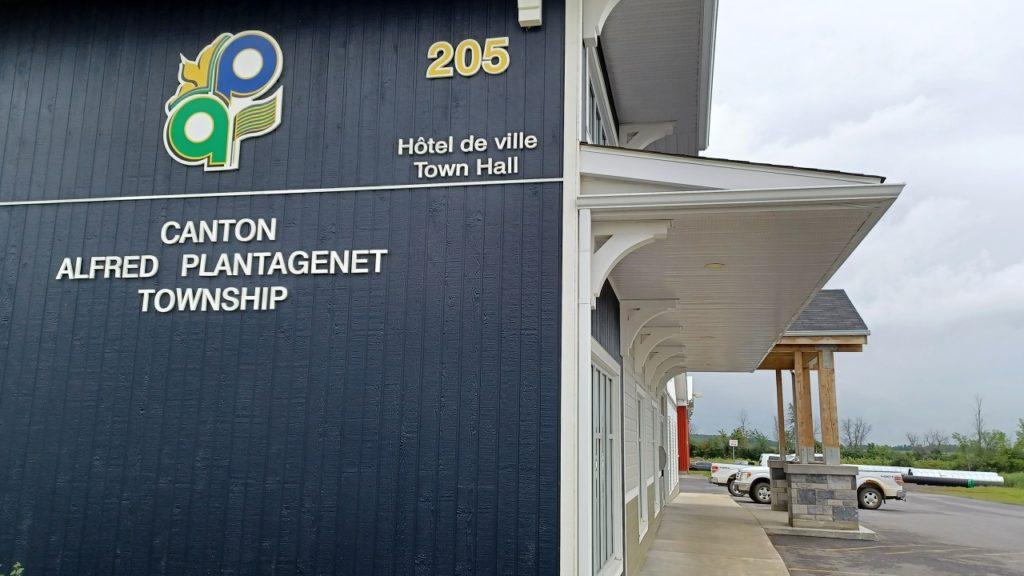
Somebody needs to start supporting this project loudly and publicly, in the places between Ottawa and Montreal. Here's what can happen when that isn't done properly. (Don't worry, I won't flood the forum with posts every time a town opposes Alto. Just pointing out a recent and remarkable example).

A council of five guys (these guys specifically), serving a place with a population under 10,000 people, heard from a single constituent. This constituent's own property is not in the corridor, but nonetheless a lot of worries and what-ifs were raised. The constituent advocated some truly incredible positions, such as saying that fair-market-value compensation for expropriations is insufficient! This one constituent asked the council to pass a resolution opposing the project. Complaining that Alto did not respond to three invitations to speak to the council, and viewing the project as having no local benefits whatsoever, they passed such a resolution.

The point isn't the resolution. It's the politics of it. Someone should be answering these concerns now, and should be taking a shot at persuading these people to support the project. Otherwise, either there will be no high-speed train, or it will cost too much and take too long to build. End rant.

Anyway, here is the reporting on the town in question:
 
It's true that rural opposition currently has a real head-scratcher tone these days. CBC Ottawa interviewed someone this week who called $1000 compensation for walking onto a farm for a few hours to do a survey and count gophers insulting and peanuts. We're continually told farmers are all bankrupt and martyrs to the land, and yet a grand for basically nothing is an insult. Of course farmers are one of a few groups CBC are not allowed ever to challenge or disagree with, so no pushback.
 
It's true that rural opposition currently has a real head-scratcher tone these days. CBC Ottawa interviewed someone this week who called $1000 compensation for walking onto a farm for a few hours to do a survey and count gophers insulting and peanuts. We're continually told farmers are all bankrupt and martyrs to the land, and yet a grand for basically nothing is an insult. Of course farmers are one of a few groups CBC are not allowed ever to challenge or disagree with, so no pushback.
Going to have to agree here. Two things can be true.

Every reasonable concerns deserves to be listened to. However, Every reasonable concern is not equally valid.

For example:

Indigenous concerns over land rights are a much bigger deal than farmers concerns over land rights.

Concerns over acesses to severed land is a reasonable concern. Assuming that it is your land that will be destroyed = not reasonable.

HSR is expensive, questioning the economics is fair. Stating authoritatively that only the rich will ride this thing so therefore it should never be built. Not reasonable.

Environmental and ecological concerns are reasonable. However many jurisdictions with HSR, prove that such issues can be mitigated for.


As with most NIMBY behavior, I fear that the loud NOs are drowinging out all of the reasonable NOs, the yes buts and the Yes totally. I'm deathyl curious to see what'll happen when the alignment is revealed in the fall.

As a side point. The govt not reporting on HFR vs HSR is becoming a bigger issue. Because ppl, even so called experts who should know better are talking as if HFR rail could have been accomplished on the via corridor and thus reduce costs and the need for appropriations significantly, with HSR only providing marginal benefits...
Most of us will push back on that but without such a report, CBC hosts are unlikely to push back on the argument.

 
Last edited:
As with most NIMBY behavior, I fear that the loud NOs are drowinging out all of the Yes'. Curios to see what'll happen when the alignment is revealed in the fall.

My prediction is that 80% of the opposition will go away once people realise that someone else's land is threatened, not theirs.

I would add to the list - questioning the ability of any government (and particularly a left leaning one, which Carney may not be but his party still is) to plan and execute a project of this size, without disfunctional decisionmaking and insufficient project management, and without catering to inside connections and political considerations, is fair. Ranting generally about government as an evil in our society isn't.

The puzzle for me is, it appears that a large component of the land acquisition may be railbanked or abandoned rail lines, rather than a new greenfield route driven cross country. Why would Alto not highlight this fact? It greatly reduces the threat factor, and it's hard for people to oppose using land that has been railway row for a very long time.

- Paul
 
Last edited:

Back
Top