
News   Apr 02, 2026
 2.2K     2 
News   Apr 02, 2026
 1K     0 
News   Apr 02, 2026
 2.5K     2 

VIA Rail

This would mean acquiring a whole other fleet. And then building a less than optimal corridor. Not a great term long term choice.
Yeah tilting trains are can increase speeds in the short term, but they suck in the long term due to maintenance. Hence why VIA has stopped using tilting trains.

Tilting the body of the coach changes the angle of forces on passengers, but it does nothing to reduce the forces on the rails. So running really fast through tight corners will make the tracks more expensive to maintain, tilting trains or not. Then there's the additional weight and complexity which comes with the tilting system itself. VIA removed the tilting mechanism from the LRC coaches because it made the trains lighter, faster-accelerating and more fuel-efficient, and also saved a lot of money in equipment maintenance.

Remember that it is typically easier to secure capital funding for flashy infrastructure projects than it is to secure boring old operating funds. In order maximize VIA's chances of long-term survival, it therefore makes sense to use non-tilting equipment and focus the investments into improved infrastructure.
 
This would mean acquiring a whole other fleet. And then building a less than optimal corridor. Not a great term long term choice.

Lets talk HSR. Lets look around the world. No HSR train out there doesn't have some sort of tilting bogies. It is the nature of higher speed. If a line had to be built for speeds over 300 km/hr without tilting trains, you would need straight track the entire route. That doesn't work in the real world.

Lets go back to Via's HFR. Lets say they want to maintain 90 mph/ 150km/hr, tilting trains makes sense This means that some of the curves we think are too tight, might actually be fine for speeds over 150km/hr.
 
Lets talk HSR. Lets look around the world. No HSR train out there doesn't have some sort of tilting bogies. It is the nature of higher speed. If a line had to be built for speeds over 300 km/hr without tilting trains, you would need straight track the entire route. That doesn't work in the real world.

Lets go back to Via's HFR. Lets say they want to maintain 90 mph/ 150km/hr, tilting trains makes sense This means that some of the curves we think are too tight, might actually be fine for speeds over 150km/hr.

You missed my point:

1) VIA already has options on their Siemens buy. Enough for 50% more than they bought. Buying a whole new fleet would mean much higher purchase prices, lack of commonality with spares, different support contract, etc. That is not cheap.

2) If you start out designing a line to require tilting trains at 90 mph, the potential to upgrade the line to higher speeds becomes severely limited.
 
You missed my point:

1) VIA already has options on their Siemens buy. Enough for 50% more than they bought. Buying a whole new fleet would mean much higher purchase prices, lack of commonality with spares, different support contract, etc. That is not cheap.

2) If you start out designing a line to require tilting trains at 90 mph, the potential to upgrade the line to higher speeds becomes severely limited.

Im sorry I dont agree

1. So what? Sunk costs. If it costs $2 billion to straighten the line out, and only $500 million for a new tilting fleet, then better trains should be procured. The other Siemens trains could definitely be used in other parts of the VIA network, or to replace the Stainless Steel trains.

2. The upgrade to HSR will inevitably require many upgrades to the route that would be not only silly to invest in this early, but could cancel the project entirely. Higher class track, grade separations, straightening of track through Canadian shield etc. If costs escalate, it could cause the whole project to be cancelled outright. Via needs to bring the route to fruition at a price tag that wont have the federal government scoffing, and then when the route is established, interim upgrades that are a more digestible cost can be brought forward. Best value but highest price never goes well in the political sphere.
 
Tilting trains on the Québec City - Windsor Corridor? What a novel concept!
I don't remember the Turbos ever tilting. Did they? Were they locked ... most of the time I rode them were in the last couple of years of service ...

LRCs were fun ... seemed to tilt randomly and wrong-way at times ...
 
Lets talk HSR. Lets look around the world. No HSR train out there doesn't have some sort of tilting bogies.

Sure, let's look around the world at some 300+ km/h trains.

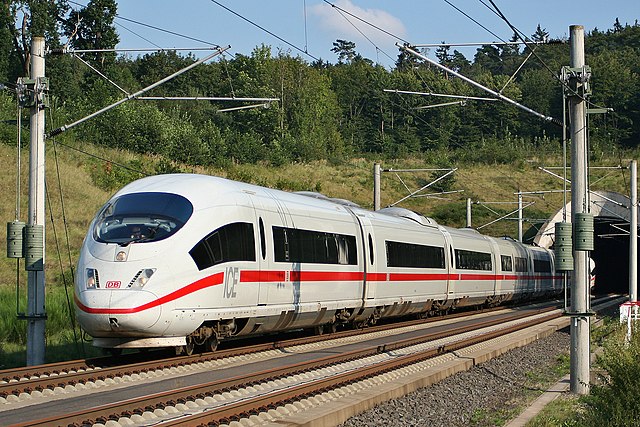
Siemens Velaro, used in Germany, England, China, Russia, Turkey, Netherlands, Spain, Belgium, Switzerland, France - doesn't tilt
640px-ICE_3_Oberhaider-Wald-Tunnel.jpg


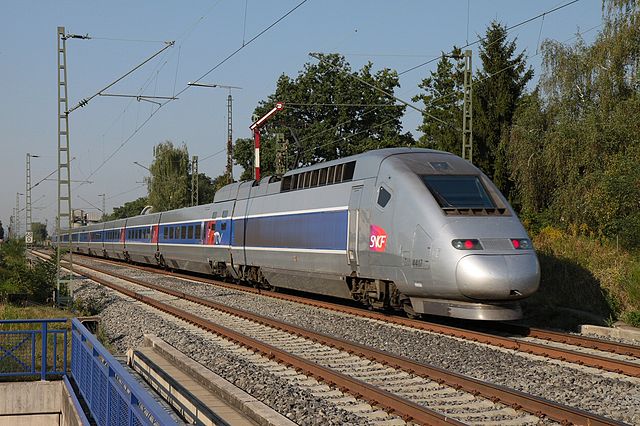
Alstom TGV, used in France, Korea, Spain, Morocco, Switzerland, Belgium, Netherlands, Germany - doesn't tilt
640px-TGV4417Forchheim.jpg


Alstom AGV, used in Italy - doesn't tilt
640px-Italo_NTV_Class_ETR_575_No_575-154.jpg


Bombardier Zefiro, used in Italy and China - doesn't tilt
640px-Elettrotreno_ETR.400.jpg


TREVI ETR500, used in Italy - doesn't tilt
640px-Naples%2C_Central_station%2C_gorgeous_long-distance_train.jpg


Hyundai Sancheon, used in Korea - doesn't tilt
640px-KTX-Sancheon.jpg


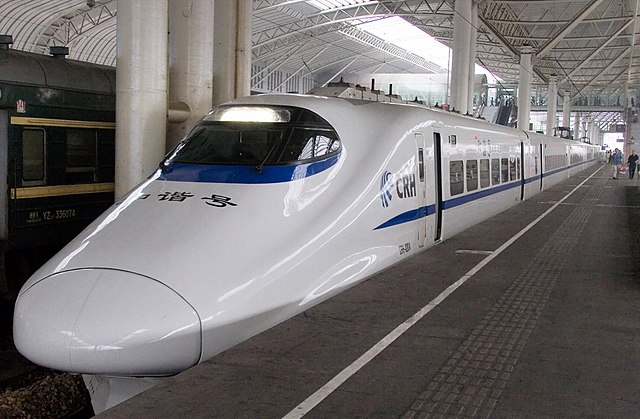
Hitachi/Kawasaki E2, used in Japan and China - doesn't tilt
640px-China_railways_CRH2_unit_001.jpg


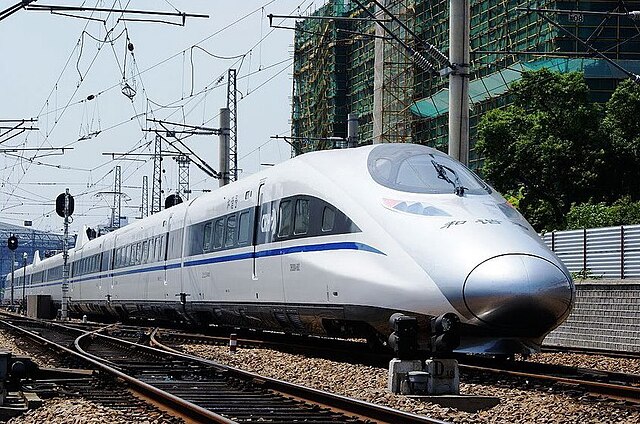
CRRC CRH380A, used in China and Hong Kong - doesn't tilt
640px-CRH380Afromshanghai.jpg


CRRC Fuxing, used in China - doesn't tilt
640px-CR400AF-2001%40BJN_%2820170626110730%29.jpg


The above list includes every wheeled 300+km/h trainset in service according to the wikipedia list of high-speed trains, except for the JR N700, E5, and E6, which have active tilting, and the Talgo 350, which has passive tiliting.

In general, 300+km/h high speed trains do not tilt. The main exception is in Japan where the Tokaido Shinkansen has a relatively low speed limit (around 270 km/h for non-tilting trains) since it's the world's oldest high-speed line and originally operated at only 210 km/h. The rest of the world's 300+ km/h high-speed systems build the lines to the intended operating speed and do not need tilting trains.

It is the nature of higher speed. If a line had to be built for speeds over 300 km/hr without tilting trains, you would need straight track the entire route. That doesn't work in the real world.

Yes, to run 300 km/h, they do indeed need to "straight track the entire route", as you say. That's what all those high-speed rail lines are about. They have enormous curve radii, to allow trains to operate at 300+ km/h.

High speed lines in red (>=250 km/h)
Capture.JPG


Lets go back to Via's HFR. Lets say they want to maintain 90 mph/ 150km/hr, tilting trains makes sense This means that some of the curves we think are too tight, might actually be fine for speeds over 150km/hr.

The curve radius on the eastern segment is about 550 metres. There is absolutely no way you're running 150 km/h with any kind of train, tilting or not. Sorry.
 
Last edited:
I don't remember the Turbos ever tilting. Did they? Were they locked ... most of the time I rode them were in the last couple of years of service ...

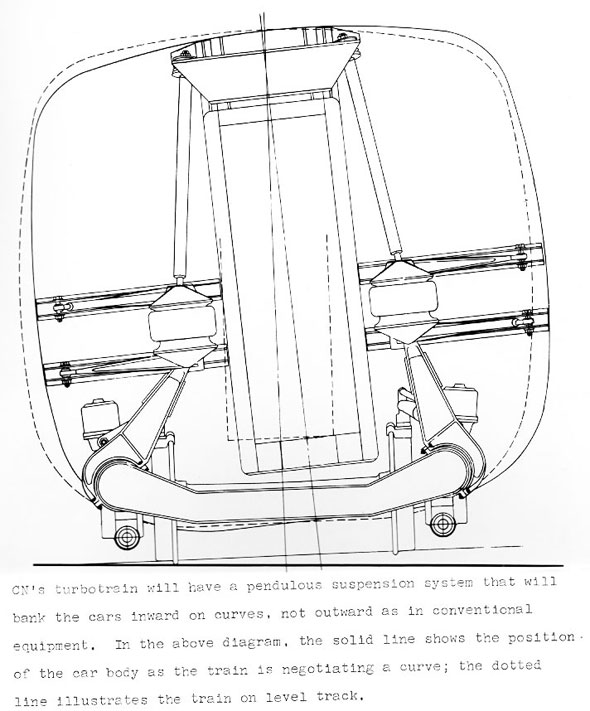
The Turbos had a passive tilting system, similar to today's Talgo trains.
20120910-Turbo-Tilt-Alt.jpg

image via BlogTO

It's possible that they got locked in the upright position in their later years, I don't know.
 
Ah! Didn't know that. Though if it's passive ... perhaps it worked, so not very noticeable! The LRC was eerie ... at times you'd complete the curve, be on the straight again, and then, a bit too late you could noticeably see it then tilt back to normal. Of course, one never would notice it much if it worked ...
 
This discussion about building a new route through the most problemmatic section of the old CP Havelock Sub is quite timely.

It was announced today that a business group in the Frontenac area are lobbying for VIA to build a bypass to the Sharbot Lake section of the old Havelock Sub. The issue is that the old CP line runs through the central section of that town, which sits on a very narrow peninsula. Residents have realised that restoring the rail line, and running hourly trains in each direction, will be hugely intrusive.

Here's a press report on the town's objection. They are proposing a roughly 18 km bypass around the town, roughly from Mountain Grove to Ungava, parallelling Highway 7.

Frankly, I'm surprised it took the town this long to object. A HFR line will really mess up this little hamlet. Having said that, it would probably be cheaper to buy out and move the entire downtown than build the proposed bypass. And curiously they seem to have no objection to four-laning Highway 7 through their town (albeit a touch to the north).

However, per @reaperexpress's work, if the proponents wanted to point out the minutes that would be saved by a bypass, it might just fly.... the bypass would eliminate one of the really tricky curvy portions of the line. Done right, it could be a very fast section.

Their submission is attached. EDIT: Use this link https://drive.google.com/file/d/15zoc1B45FuAfbNQQzDe6EHikNwRPFFS7/view?usp=sharing

- Paul

If I get time I'm tempted to draw out what this Sharbot Lake bypass could look like.
 
So what? Sunk costs. If it costs $2 billion to straighten the line out, and only $500 million for a new tilting fleet, then better trains should be procured.

Except that it's not just buying a different and more expensive fleet. It's the cost to support a whole other fleet. And the scheduling that would probably see the project delayed years. If they were buying another fleet, they would have to be generating draft RFPs as we speak.

The upgrade to HSR will inevitably require many upgrades to the route that would be not only silly to invest in this early, but could cancel the project entirely.

You assume an upgrade to HSR is coming. I'm not at all optimistic this will come for decades, given government debt levels. I am going to bet that once HFR is built, we will see no substantial improvements for at least two decades, as every other project takes priority, including rail investments elsewhere in the country. It's not going to be politically feasible to move on an HSR upgrade before Corridor West gets the HFR treatment, and Calgary-Edmonton gets service. How much do you think will be left in the kitty after? So I'd rather they build something that will serve us well for at least 2-3 decades.
 
Except that it's not just buying a different and more expensive fleet. It's the cost to support a whole other fleet. And the scheduling that would probably see the project delayed years. If they were buying another fleet, they would have to be generating draft RFPs as we speak.


You assume an upgrade to HSR is coming. I'm not at all optimistic this will come for decades, given government debt levels. I am going to bet that once HFR is built, we will see no substantial improvements for at least two decades, as every other project takes priority, including rail investments elsewhere in the country. It's not going to be politically feasible to move on an HSR upgrade before Corridor West gets the HFR treatment, and Calgary-Edmonton gets service. How much do you think will be left in the kitty after? So I'd rather they build something that will serve us well for at least 2-3 decades.
Shame really... maybe ill see the hsr dream realised when I get old and wheelchair bound....
 
Lets talk HSR. Lets look around the world. No HSR train out there doesn't have some sort of tilting bogies. It is the nature of higher speed. If a line had to be built for speeds over 300 km/hr without tilting trains, you would need straight track the entire route. That doesn't work in the real world.

The only tilting 300km/h train in service today is the Japanese Shinkansen N700 - and it only tilts 1 degree, not enough to be noticeable.

No 300km/h-capable train in the world today tilts in the same manner as is being talked about in this thread. It is an unnecessary waste. A properly-engineered high-speed line doesn't need it.

What does exist is higher-speed trains (200 to 250km/h) which tilt - but those are done much like as is being talked about here, a way to increase speeds on existing lines without spending the money on a brand new, purpose-engineered corridor. They are also sometimes used on the high-speed lines, but as their top speed isn't the same as the true high-speed trains care must be taken when scheduling the runs.

I don't remember the Turbos ever tilting. Did they? Were they locked ... most of the time I rode them were in the last couple of years of service ...

LRCs were fun ... seemed to tilt randomly and wrong-way at times ...
The Turbos had a passive tilting system, similar to today's Talgo trains.
20120910-Turbo-Tilt-Alt.jpg

image via BlogTO

It's possible that they got locked in the upright position in their later years, I don't know.

The Turbo absolutely tilted as laid out in reaperexpress's attachment. In fact, on entering the approaches to both Montréal's Gare Central and Toronto's Union Station, announcements were broadcast over the PA telling passengers to remain in their seats as the trains would sway over the tight trackwork when entering the stations. Many younger passengers would ignore these pleas and would enjoy themselves in the gangways between cars, where the effects were particularly exaggerated.

One of the downsides of the system, however, was that it couldn't easily be locked out as the tilting system also formed a major part of the suspension of the train. VIA tried towards the end of its life but couldn't do it. Because of the design, even if stopped on a curve the train would continue to tilt - it couldn't come back up to straight.

Dan
 
The only tilting 300km/h train in service today is the Japanese Shinkansen N700 - and it only tilts 1 degree, not enough to be noticeable.

No 300km/h-capable train in the world today tilts in the same manner as is being talked about in this thread. It is an unnecessary waste. A properly-engineered high-speed line doesn't need it.

What does exist is higher-speed trains (200 to 250km/h) which tilt - but those are done much like as is being talked about here, a way to increase speeds on existing lines without spending the money on a brand new, purpose-engineered corridor. They are also sometimes used on the high-speed lines, but as their top speed isn't the same as the true high-speed trains care must be taken when scheduling the runs.


The Turbo absolutely tilted as laid out in reaperexpress's attachment. In fact, on entering the approaches to both Montréal's Gare Central and Toronto's Union Station, announcements were broadcast over the PA telling passengers to remain in their seats as the trains would sway over the tight trackwork when entering the stations. Many younger passengers would ignore these pleas and would enjoy themselves in the gangways between cars, where the effects were particularly exaggerated.

One of the downsides of the system, however, was that it couldn't easily be locked out as the tilting system also formed a major part of the suspension of the train. VIA tried towards the end of its life but couldn't do it. Because of the design, even if stopped on a curve the train would continue to tilt - it couldn't come back up to straight.

Dan

Tilting in the 70s and 80s was a very new practice and thus there were always issues.

Tilting in 2020 is not an issue, tons of trains have active tilt systems that are extremely reliable.
 
Except that it's not just buying a different and more expensive fleet. It's the cost to support a whole other fleet. And the scheduling that would probably see the project delayed years. If they were buying another fleet, they would have to be generating draft RFPs as we speak.


You assume an upgrade to HSR is coming. I'm not at all optimistic this will come for decades, given government debt levels. I am going to bet that once HFR is built, we will see no substantial improvements for at least two decades, as every other project takes priority, including rail investments elsewhere in the country. It's not going to be politically feasible to move on an HSR upgrade before Corridor West gets the HFR treatment, and Calgary-Edmonton gets service. How much do you think will be left in the kitty after? So I'd rather they build something that will serve us well for at least 2-3 decades.

VIA already has plans to electrify the line at a later date, so while this might not happen as you put, the plan VIA has is to build this in phases, including diesel first and electrification second (as well as building parts of the line first and expanding later) Whether or not this happens of course is subject to many things, but that is the plan.

Electrifying would require a new, and different trainset than the rest of the fleet.

We could simply use the Siemens originally on the line to meet deadlines, then order an electric tilting train fleet and move the Siemens to other parts of the network, as an incremental improvement.

VIA already uses a mixed fleet of trains. I dont see why its an issue now, and with plans to electrify the line its a perfect opportunity to improve the trains, especially because they have to in order to electrify the line.

Electrification would also offer better acceleration, which would improve times slightly (if you have to slow down for curves, a better acceleration profile improves "make up time" in the straightaways)
 
Last edited:
Tilting is great, but I bristle about it in the context of VIA HfR because - we should not gloss over the limitations imposed by choosing a very constraining ringht of way in the interest of low initial cost.

The worst possible outcome would be if, after commissioning HFR and gaining a couple years’ experience, somebody decides that the curves are too rough for passengers, or the stresses on track are too hard to maintain, or the tilting is not working right..... or the equipment mix puts some lower performing equipment in the mix...... and then someone says “well, adding ten minutes to the schedule won’t make it *that* much less marketable”.......#Turbo #LRC #Canadian #HEP2.......yet another tradeoff that drives VIA towards mediocrity.

We need to know that tilting will indeed deliver on its role in the performance envelope, in this specific application. We can’t assume that off the pages of Railway Age. I eagerly await the ”studies” to tell us more.

I understand that HFR does not need to be “High Speed” to be viable and we admirers have to dampen some of our expectations....but HFR definitely needs to be “good enough”. If it isn’t a quantum better than what we have, it will not turn any heads or change attitudes to rail passenger service in this country. We can’t assume tilting will be a silver bullet.

- Paul
 

Back
Top