News   Feb 04, 2026
 211     0 
News   Feb 04, 2026
 418     0 
News   Feb 04, 2026
 934     0 

Toronto Eglinton Line 5 | ?m | ?s | Metrolinx | Arcadis

Ionview as well. Given that how the "priority signaling" and left turns at intersections are going to be worked out is a mystery, having so many stops in such short distances is quite risky for timing and reliability.

The Hakimi/Lebovic - Eglinton intersection is 490m away from the Pharmacy - Eglintion station and only 300m from the Warden - Eglinton. That's not rapid transit station spacing.
if this stop is done away with, what will the impact really be? How many residents will even object and if they do how long will it last. Seems to me to be worth it to cut this among a few other stops in the east end there
 
if this stop is done away with, what will the impact really be? How many residents will even object and if they do how long will it last. Seems to me to be worth it to cut this among a few other stops in the east end there
Maybe you should ask all those people waiting for the 34 midblock on Eglinton. Alternatively you can observe the number of people taking the 34 at midblock. If they don't put a stop at Ionview, they'll need one at Kennedy (the intersection). Kennedy Station is actually located midblock between Kennedy and Midland. Birchmount and Kennedy Station is 1.15km apart plus people would have to walk 200-300m. That's about a 15 minute for average pace or 25 minutes for a senior. Just wait till you grow older and realize everything is so far away while kids think your in the way for blocking the sidewalk. Some people here have no respect for seniors and prefer to rip the midblock stops out save a couple minutes while letting them suffer.

Cutting the midblock stops would just result in a major lost of ridership originating from Eglinton. It's not guarantee it will attract more riders to the system.
 
How ironic that the Crosstown gets super-close spacing in areas that don't really warrant it yet the proposed DRL has a whopping 1200 metre gap in-between Sherbourne-Queen and City Hall stations - one of the most densely populated areas of the country!
While I don't necessarily disagree with your point, the plan to have a single station at City Hall has been abandoned. The recommended route now includes stations at Queen-Yonge and Osgoode. Queen-Yonge and Sherbourne stations will be around 800 m apart.

Let's not remember transit city was designed more for locals to access better service and not someone elsewhere to zoom past the corridor. It was never intended that riders should use it from Kennedy to get downtown via Eglinton Station. Easily walkable to you doesn't mean easily walker to someone in a cane. Even with the current spacing, there will be a lot of complaints from seniors about their local stop being removed. As the population ages, there will be more support for a system that works with seniors.

Second, TTC also already concluded that removing the midblock stops won't improve speed as much as the subway. Unless it's grade separated, they'll still be caught at lights. Regarding request stops, I believe the lights would be sync and timed expecting them to stop at all stops during most of the day. Not stopping at the stop would just result in the trains stopped at the next light. The real benefit would come at lower traffic times where they can keep the lights green at midblocks.
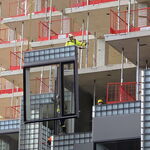
I think it's a shame that Line 5 wasn't designed to be elevated in its outer portions like the Skytrain. Or at least grade separated at intersections so it's completely separated from traffic. I get that the outer portions were designed on the cheap before there was much funding available, but having trains stop at red lights on the surface portions is going to mess with the speed and reliability of the whole line. Toronto really needs to escape the tunnel-or-nothing mentality.
 
While I don't necessarily disagree with your point, the plan to have a single station at City Hall has been abandoned. The recommended route now includes stations at Queen-Yonge and Osgoode. Queen-Yonge and Sherbourne stations will be around 800 m apart.


I think it's a shame that Line 5 wasn't designed to be elevated in its outer portions like the Skytrain. Or at least grade separated at intersections so it's completely separated from traffic. I get that the outer portions were designed on the cheap before there was much funding available, but having trains stop at red lights on the surface portions is going to mess with the speed and reliability of the whole line. Toronto really needs to escape the tunnel-or-nothing mentality.
Don't you mean tunnel, at grade, or nothing?
 
How ironic that the Crosstown gets super-close spacing in areas that don't really warrant it yet the proposed DRL has a whopping 1200 metre gap in-between Sherbourne-Queen and City Hall stations - one of the most densely populated areas of the country!

The Relief Line stop spacing along Queen is roughly the same as Line 2. We have stations on, University, Yonge, Sherbourne, Sumach, Broadview and Pape (6 Stations)

On the same stretch of Bloor, there are stations on Bay, Yonge, Sherbourne, Castle Frank, Broadview, Chester and Pape (7 Stations)

In particular, distance between Sherbourne and Yonge on Queen is exactly the same as the distance on Bloor.
 
I don't understand the fear about running a parallel bus service. There are additional costs associated with having more stops, since the end to end travel time is longer (more operators and vehicles required to operate the same level of service when it is slower). The line also becomes much less useful for people who aren't travelling from points on the line to somewhere else on the line as it slows down anyone trying to connect to or from points outside of the line.

There are also additional costs associated with running a parallel bus service. And in this case, I would bet that the costs of offering up more stops on the LRT and the slight decrease in average speed (and associated additional operating costs due to it) will be substantially less than the cost of running a paralleling bus service.

For rapid transit, each stop should be well-used enough that there's no need to "request" a stop. People are willing to walk to walk much further than 500m for a service that is fast and reliable. Most people along Queen/Dundas/any streetcar line walk rather than wait at a stop, because walking is more reliable and because they can just catch a streetcar/bus if it overtakes them.

Based on what guidelines, exactly? Are you suggesting that every single subway station has at the very least a single passenger getting on and/or off of every single train every day? Because that's frankly a ridiculous metric to try and apply.

Yes, some people are willing to walk further for a higher-quality service. But a very lot are not. Look at the ridership arriving at any given subway station - even the last stop before a station, which is almost always less than 500m away from the main entrance, will see a regular ridership of people getting on to get to the subway.

Transit is supposed to be convenient. People don't even mind a transfer from a bus to a subway if it makes it more convenient for them. But if they have to walk 500m or more in the snow and rain because you've taken their stop away from them, they're going to think twice about taking transit next time.

Dan
Toronto, Ont.
 
Based on metrics from any other system world wide. Toronto has the closest bus and tram stops. It maybe convenient if you happen to live near the stop but it's inconvenient for longer distance travel, which Toronto is terrible at. Speed is important and Toronto seems to forget this. I'm not saying we should have a magic number for stop spacing and apply everywhere. There are however general places where it makes no sense that we have near and far side stops at intersections or have tram stops where the tram can almost be at both stops at the same time. For example on Spadina Wilcox, Harbord, and Sussex are very close. Only Harbord is needed, as the other two are close enough to it that it's literally a 2-3 min walk to the next stop. The city is full of such examples. It's why routes like Spadina or Queens Quay (Harbourfront) are very slow. Stop spacing and badly timed signals affect throughput of service.
 
Transit is supposed to be convenient, but rapid transit is supposed to be fast. Its a juggling act to balance them. But running an LRT service like a bus service to save on costs kinds of defeats the purpose of the whole exercise. That said, the stops are very similar to what is on the rest of the network, and not nearly as bad as say, Spadina, where they're just outright idiotic, so we're probably fine.

Its the signal priority we should be scared about.

EDIT: Spadina really is the perfect example of LRT done poorly, my god.
 
Last edited:
For example on Spadina Wilcox, Harbord, and Sussex are very close. Only Harbord is needed, as the other two are close enough to it that it's literally a 2-3 min walk to the next stop.

It would be interesting to see an analysis of correlation (if any) of ridership per route km versus stops per route km within Toronto. I'd hazard a hypothesis that the correlation is positive (more ridership == more stops), not negative.

That's not to say that some stops can be removed, we've done that numerous times in the past, just that if there is a general positive correlation then it should be done very cautiously.
 
It would be interesting to see an analysis of correlation (if any) of ridership per route km versus stops per route km within Toronto. I'd hazard a hypothesis that the correlation is positive (more ridership == more stops), not negative.

That's not to say that some stops can be removed, we've done that numerous times in the past, just that if there is a general positive correlation then it should be done very cautiously.

I'd think that the outcome of such comparison will vary greatly from one route to another. If a route runs through densely populated areas, and is not very useful for long-range trips, then the correlation will be positive, more stops = convenience for the locals = higher ridership.

If a route runs through sparsely populated areas, but connects a major destination such as an airport, university, college to a major subway line, then the correlation will be negative, more stops = lower speed = potential long-range riders choose other routes or drive.
 
Last edited:
For the eastern section of ECLRT, the reduction in travel time that could be achieved by eliminating 2 or 3 mid-block stops is so minor that it is not worth making any changes to the official plan. I would just keep everything as is.

On the other hand, the future "Eglinton West" section between Mt Dennis and the airport might benefit from wider stop spacing. Stops at the major intersections such as Royal York, Islington, Kipling are still needed to allow transfers from the N-S bus routes, but most or all of mid-block stops can be skipped. That would necessitate a parallel local bus service, but the increase in the number of riders taking the LRT to the airport, or to ACC, might make it worthwhile.
 
For rapid transit, each stop should be well-used enough that there's no need to "request" a stop. People are willing to walk to walk much further than 500m for a service that is fast and reliable. Most people along Queen/Dundas/any streetcar line walk rather than wait at a stop, because walking is more reliable and because they can just catch a streetcar/bus if it overtakes them.

I don't know about that.

The speed upgrades you're taking about might increase speed from 22 kph to 30 kph, at most. That sounds like a lot, but do the math and you'll see that for a 5 km trip, it works out to an on-vehicle travel time savings of about 3.5 minutes.

By removing these stops, you might be making people walk another 300 to 500 metres, in all kinds of weather conditions. Personally, I'd rather shave a few hundred metres off my walking distance, at the expense of spending another 3 mins on the train. And if you do the math, you'll see that increasing walking distance by 300 metres at 5 km/h walking speed, will negate any travel times savings of the faster trains (assuming train speed increases from 22 kph to 30 kph).

In reality, given the number of lights and, and the increase in dwell times per STOP, the speed upgrades you're talking about would be lucky to increase average vehicle travel speed by a few km/h.
 
Last edited:
While I don't necessarily disagree with your point, the plan to have a single station at City Hall has been abandoned. The recommended route now includes stations at Queen-Yonge and Osgoode. Queen-Yonge and Sherbourne stations will be around 800 m apart.


I think it's a shame that Line 5 wasn't designed to be elevated in its outer portions like the Skytrain. Or at least grade separated at intersections so it's completely separated from traffic. I get that the outer portions were designed on the cheap before there was much funding available, but having trains stop at red lights on the surface portions is going to mess with the speed and reliability of the whole line. Toronto really needs to escape the tunnel-or-nothing mentality.
How can you say a $6B transit line was designed on the cheap, when some reports state that a fully grade-separated line could have been built for less cost.
The problem is that it was designed on the stupid, not cheap. Larger LRT was used to make tunneling more expensive. Larger LRT was also used on SRT to force conversion of the entire line for significant cost. The problem was that is was design as low floor LRT first - without any other consideration. Next was that it had to be in median unless not possible. When 2/3 of the line became grade-separated, nobody questioned the initial assumptions that it must be LRT.
 
TTC said something like moving from 24kph to 28kph assuming they get all green. In reality, most riders would only see 2-3 minutes of additional travel time but ridership would be higher. If everyone continues to rider, loading time would be longer with more riders concentrated stops. It's only 3 questionable stops along the crosstown plus trains would only be permitted to run 60kph max. Calgary has their C-Trains space at like 2km apart. Some are suggesting maybe they could improve their ridership by putting in more stops. C-Trains run 80kph with absolute priority. It would make a lot of difference if they do put in a bunch of stops in their case.

Based on metrics from any other system world wide. Toronto has the closest bus and tram stops. It maybe convenient if you happen to live near the stop but it's inconvenient for longer distance travel, which Toronto is terrible at. Speed is important and Toronto seems to forget this. I'm not saying we should have a magic number for stop spacing and apply everywhere. There are however general places where it makes no sense that we have near and far side stops at intersections or have tram stops where the tram can almost be at both stops at the same time. For example on Spadina Wilcox, Harbord, and Sussex are very close. Only Harbord is needed, as the other two are close enough to it that it's literally a 2-3 min walk to the next stop. The city is full of such examples. It's why routes like Spadina or Queens Quay (Harbourfront) are very slow. Stop spacing and badly timed signals affect throughput of service.
Spadina does have many stops under 200m which is too close. Queens Quay spacing are 400m apart. They did remove a stop when they rebuilt the ROW. It's still slow thanks to the amount of traffic lights and TTC speed restriction not stop spacing.

I don't know what worldwide cities you're talking about. 200-300m stop spacing is pretty common in many large cities cores. If you look at NYC or Chicago, their bus stop spacing is just as close to ours. For trams, Berlin have their stops every 300m or so even on protected ROW. However, spacing in the suburbs do tend to go up to 500m. TTC treats everything as the same is the problem.
 
From Matt Elliott's twitter at link.

“I think somebody needs to stand up for drivers in this city.” - the new Vice Chair of the Public Works committee.

Matt Elliott added,


Toronto City Clerk @TorontoCouncil
Public Works and Infrastructure has elected Councillor Stephen Holyday as Vice Chair: http://app.toronto.ca/tmmis/decisionBodyProfile.do?function=doPrepare&meetingId=11893… #tocouncil

...and others.

It will be hard for the city to actually provide better priority towards public transit vehicles with such councillors on city council.
 

Back
Top