


M II A II R II K
Senior Member
The Real Costs
September 2nd, 2010
By Glen Bottoms

Read More: http://www.amconmag.com/blog/keep-america-moving/the-real-costs/
Rail transit’s great enemy isn’t public support or political will but its enormous price tag. The expense of heavy-rail subway systems has limited recent growth to extensions of existing lines. The last heavy-rail construction completed in the U.S. was a 3.2 mile extension of Washington Metro’s blue line to Largo Town Center, completed in 2004 at a cost of $695 million ($217 million/mile). Phase I of the Metro’s 11.6 mile extension to Dulles Airport is estimated at a staggering $2.65 billion ($242.1 million/mile). The bite for New York City subway extensions is in another reality.
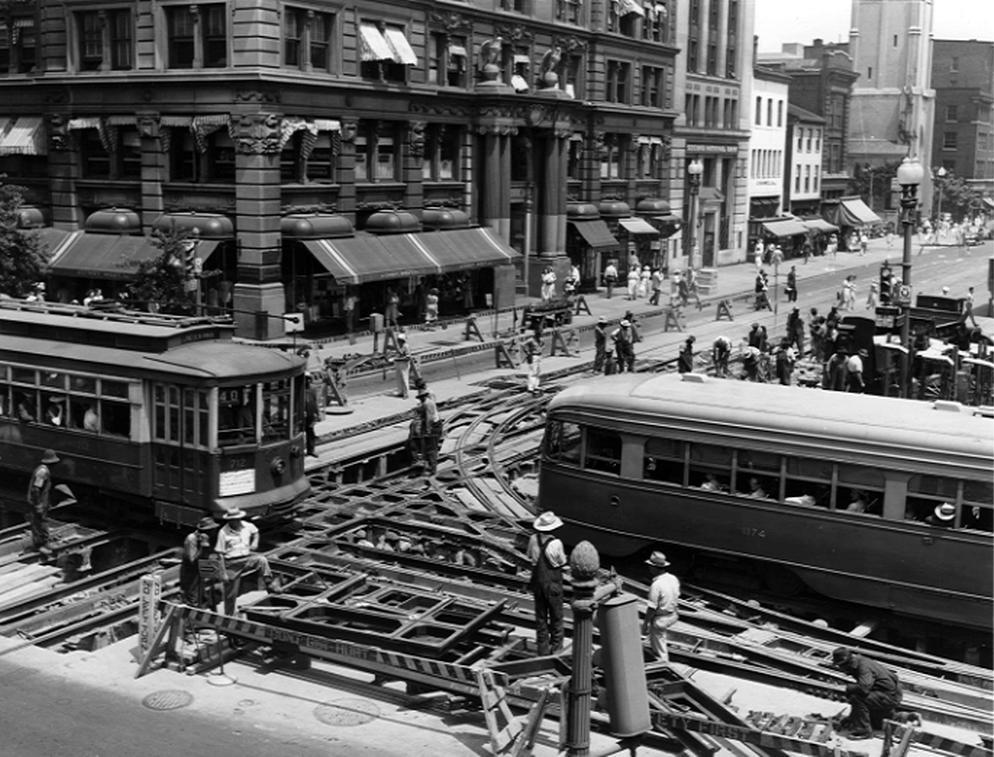
At first, Light Rail seemed to offer a solution, but its cost is steadily rising. The initial segment of Seattle’s 15.6 mile Central Link Light Rail system, which opened in 2009, cost $2.4 billion ($154 million/mile). Portland, Oregon’s proposed 7.3 mile MAX Light Rail extension to Milwaukie is estimated at $1.4 billion ($191.8 million/mile). Now that streetcars have caught on in many U.S. cities—over 60 are currently planning streetcar projects—many fear that the cost-escalation virus could infect this mode as well. The price tag on Tucson’s streetcar project, now under construction, has grown by 20 percent. Costs for proposed streetcar projects across the country range from a reasonable $10 million to an eye-popping $60 million per mile.
What accounts for this dramatic escalation? Three key factors: 1) overdesign, 2) lack of technical expertise at the overseeing transit agency, and 3) external factors like political interference and rising material costs. Consultants retained to design these systems regularly use plans that they already possess without regard to applicability or functionality, selecting higher-speed overhead wire in rail yards and city streets or specifying certain types of rail without regard for cheaper alternatives. Excessive tunneling is also a critical cost driver. Tucking Light Rail in subways to avoid disturbing traffic not only raises costs, it ignores the fact that dedicating lanes to cost-effective transit increases use. The technical knowledge to recognize these inappropriate designs is a critical element of cost control.
September 2nd, 2010
By Glen Bottoms
Read More: http://www.amconmag.com/blog/keep-america-moving/the-real-costs/
Rail transit’s great enemy isn’t public support or political will but its enormous price tag. The expense of heavy-rail subway systems has limited recent growth to extensions of existing lines. The last heavy-rail construction completed in the U.S. was a 3.2 mile extension of Washington Metro’s blue line to Largo Town Center, completed in 2004 at a cost of $695 million ($217 million/mile). Phase I of the Metro’s 11.6 mile extension to Dulles Airport is estimated at a staggering $2.65 billion ($242.1 million/mile). The bite for New York City subway extensions is in another reality.
At first, Light Rail seemed to offer a solution, but its cost is steadily rising. The initial segment of Seattle’s 15.6 mile Central Link Light Rail system, which opened in 2009, cost $2.4 billion ($154 million/mile). Portland, Oregon’s proposed 7.3 mile MAX Light Rail extension to Milwaukie is estimated at $1.4 billion ($191.8 million/mile). Now that streetcars have caught on in many U.S. cities—over 60 are currently planning streetcar projects—many fear that the cost-escalation virus could infect this mode as well. The price tag on Tucson’s streetcar project, now under construction, has grown by 20 percent. Costs for proposed streetcar projects across the country range from a reasonable $10 million to an eye-popping $60 million per mile.
What accounts for this dramatic escalation? Three key factors: 1) overdesign, 2) lack of technical expertise at the overseeing transit agency, and 3) external factors like political interference and rising material costs. Consultants retained to design these systems regularly use plans that they already possess without regard to applicability or functionality, selecting higher-speed overhead wire in rail yards and city streets or specifying certain types of rail without regard for cheaper alternatives. Excessive tunneling is also a critical cost driver. Tucking Light Rail in subways to avoid disturbing traffic not only raises costs, it ignores the fact that dedicating lanes to cost-effective transit increases use. The technical knowledge to recognize these inappropriate designs is a critical element of cost control.


