The gap between what Republicans want to sell to voters and their actions highlights how difficult it will be for the GOP to rebuild its political standing.

www.huffpost.com
Trump Says This Key Issue Is A 'Con Job.' In Reality, It Could Break Him.
The gap between what Republicans
want to sell to voters and their actions highlights how difficult it will be for the GOP to rebuild its political standing.
Republicans say they want to address voter concerns about affordability and the high cost of living, but are struggling to come up with a legislative agenda and messaging strategy to match.
This week, GOP senators are poised to block an extension of enhanced health care subsidies for over 20 million people enrolled in the Affordable Care Act. Without the subsidies, premiums are projected to skyrocket for those on Obamacare health insurance exchanges, as well as some people in the private health insurance market.
Meanwhile, major bipartisan legislation meant to boost housing construction in the U.S. that passed in the Senate Banking Committee unanimously, with the support of the White House, was dropped out of the annual defense spending bill due to GOP opposition in the House of Representatives, in another setback for efforts to bring down prices.
“Trump claims he wants to lower housing costs, but his allies in the House just axed a bipartisan bill that UNANIMOUSLY passed the Senate to do just that,” Sen. Elizabeth Warren (D-Mass.) wrote in a post online. “If Republicans keep blocking legislation to cut housing costs, Democrats will pass it ourselves when we take back Congress.”
The gap between what Republicans want to sell to voters and their actions highlights how difficult it will be for the GOP to rebuild its political standing on affordability, just one year after Trump swept into office on the back of voter anger about high prices under former President Joe Biden.
A YouGov/Economist poll released last week found just 32% of voters approve of how Trump is handling affordability, compared to 59% who disapprove.
The Trump White House and Republican leadership are trying to relieve concerns about the issue, with Trump making a trip to northeastern Pennsylvania to sell his economic record, and House Speaker Mike Johnson (R-La.) and others saying voter sentiment will improve after voters see the purported benefits of the GOP budget bill passed earlier this year ― a piece of legislation polling shows most voters loathe.
“We look forward to all the provisions of that bill being implemented, beginning really in earnest in the first part of the year,” Johnson said last week. “The first quarter and second quarter will be a very different scenario.”
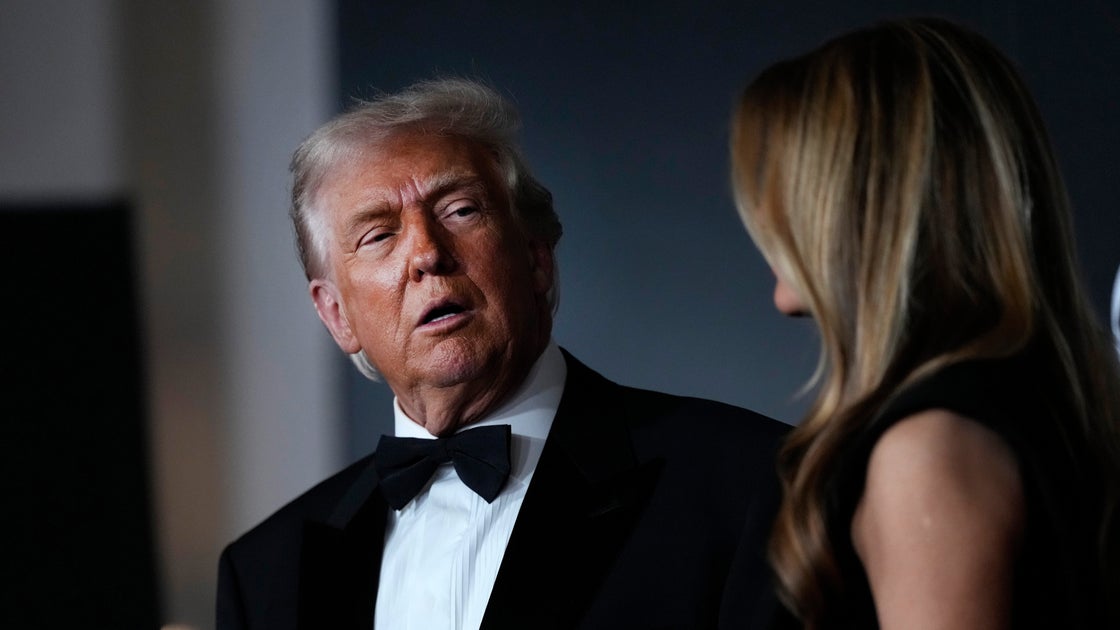
Trump has often tried to dismiss voter concerns about affordability, undercutting his own aides and allies who are urging him to focus on the key issue ahead of next year’s midterm elections. Last week, in a clip that’s likely to appear in Democratic campaign messaging, Trump dismissed the word “affordability” as a hoax and a Democratic-led “con job.”
“I inherited the worst inflation in history,” Trump explained during a Cabinet meeting at the White House. “There was no affordability. Nobody could afford anything. The prices were massively high.”
But some members of his own party are pushing back, warning the GOP could suffer in next year’s elections if they don’t do more to address costs.
“Affordability is a real issue,” Rep. Marjorie Taylor Greene (R-Ga.), a one-time ally of Trump who has since fallen out with the president, said in an interview that aired Sunday with CBS’ “60 Minutes.” “It’s one of the top issues. Not only in my district. It’s across the country.”
“Even if you get through the affordability narrative, there are going to be a number of sympathetic cases that the Democrats are going to use in campaigns next year,” Sen. Thom Tillis (R-N.C.) told HuffPost. “I think it goes beyond the baseline affordability message into real-life examples impacting target states. No doubt one of them being mine.”
Prices rose 3% in September from the prior year, per the most recent government data, meaning inflation remains a full percentage point above the level policymakers consider ideal.
“Biden’s inflation was 9%, we’re at three, but people don’t feel any better right now. They don’t. They still have a hard time at the supermarket,” Rep. Don Bacon (R-Neb.) told HuffPost.
Trump’s top economic policies are tariffs and tax cuts, though the cuts he enacted this year are mostly a continuation of prior cuts that would have otherwise expired at the end of the year. And the tariffs are making things more expensive, a fact the administration acknowledged on Monday by proposing a $12 billion bailout for farmers struggling amid Trump’s trade war.
“I feel like tariffs are undermining the economic recovery, and I know a lot of folks who aren’t willing to talk about it on our side feel the same way,” Bacon said. “The president needs to realize tariffs are not helping out with cost of living, and so we got to work on that.”
Democrats, meanwhile, think Trump and the GOP’s pivot will simply be too little, too late.
“If Trump’s coming in and trying to talk about affordability, he is going to lose,” New Jersey Gov.-elect Mikie Sherrill, who won a massive victory in November by focusing on affordability in a campaign against a Trump-backed opponent, told reporters at the Democratic Governors Association conference in Phoenix on Saturday. “It is becoming increasingly obvious to the American people that all of his promises about driving down their costs have not been met.”
Electricity bills have also skyrocketed for many Americans this year amid Trump’s war on renewable energy like solar and wind. Past-due balances increased nearly 10% from a three-month period in 2024 to the same time this year, according to a recent analysis.