
News   Dec 16, 2025
 1K     5 
News   Dec 16, 2025
 284     0 
News   Dec 16, 2025
 638     1 

Making transit construction faster

micheal_can

Senior Member
Member Bio
Joined
Dec 24, 2016
Messages
5,998
Reaction score
2,831
I really don't know where this can go.

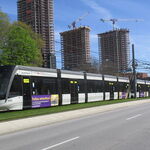
Listening to a podcast,the host brought up how everything seems to take forever to build. The Crosstown is a great example of that. ALTO HSR may become that too. I, like most of the public do not know fully how we go from announcement to opening day in grave details. When other countries, excluding China seems to build things much faster, it has me wondering what is wrong with how we do it that EVERYTHING that the governments touch seems to take forever to do. This includes local levels too. I have seen repaving projects that will take upwards of 3 years.

So, let's say that a new law/regulation required things to be built within the mandate of the person whom announced it. So, for example, the Crosstown would be opened by 2010,since it was announced in 2007. Or ALTO would be opened by 2029 as that would be the longest this next government could be in power for. Saying ALTO cannot be done that fast ignores that a line from Toronto to Vancouver was done in 10years back before there were heavy machinery that we have today.

So, how do we get a good quality system built within a reasonable time frame? Is it just money?
 
it has me wondering what is wrong with how we do it that EVERYTHING that the governments touch seems to take forever to do.
Remember that all of our transit projects are now constructed by private companies. This seems to have only slowed construction further compared to the pre-line1-tysse projects which were all TTC constructed. P3 as a model was designed to incentivize efficient construction but I think it’s pretty clear to have done the opposite.

I would advocate for a state contractor which can both design and build the transit we need which also helps remove the adversarial relationship between the government, designer, and constructor.
 
I really don't know where this can go.

Listening to a podcast,the host brought up how everything seems to take forever to build. The Crosstown is a great example of that. ALTO HSR may become that too. I, like most of the public do not know fully how we go from announcement to opening day in grave details. When other countries, excluding China seems to build things much faster, it has me wondering what is wrong with how we do it that EVERYTHING that the governments touch seems to take forever to do. This includes local levels too. I have seen repaving projects that will take upwards of 3 years.

So, let's say that a new law/regulation required things to be built within the mandate of the person whom announced it. So, for example, the Crosstown would be opened by 2010,since it was announced in 2007. Or ALTO would be opened by 2029 as that would be the longest this next government could be in power for. Saying ALTO cannot be done that fast ignores that a line from Toronto to Vancouver was done in 10years back before there were heavy machinery that we have today.

So, how do we get a good quality system built within a reasonable time frame? Is it just money?
Ok, I'll bite. Why would a sitting government pass a law that would restrict itself in that manner? Even if they were crazy enough to do so, no government would ever fund anything of any scale. If said project was not completed, what would happen? If a party was returned, would they prosecute themselves? If a new government was formed, what would it do? Throw a few ministers in jail? Remember, no law can bind a future government.

Comparisons with the CPR's trans-continental railway are pretty weak. No land acquisition, no labour safety laws (killing a few hundred wasn't seen as a problem), it was essentially surveyed as they went along. It might have been opened, but it was of minimal standards. Ties were laid on the ground in the prairies; many bridges and trestles in the mountains were barely passable. The advent of heavy machinery resulted in the need for more skilled workers to operate them.

There is no doubt room for improvement, but when multiple levels of government collide with modern circumstances, this is what happens. Maybe other countries don't have to deal with multiple governments. Keep in mind the primary goal of a Canadian government is to announce cool stuff; not actually do it.
 
I really don't know where this can go.

Listening to a podcast,the host brought up how everything seems to take forever to build. The Crosstown is a great example of that. ALTO HSR may become that too. I, like most of the public do not know fully how we go from announcement to opening day in grave details. When other countries, excluding China seems to build things much faster, it has me wondering what is wrong with how we do it that EVERYTHING that the governments touch seems to take forever to do. This includes local levels too. I have seen repaving projects that will take upwards of 3 years.

So, let's say that a new law/regulation required things to be built within the mandate of the person whom announced it. So, for example, the Crosstown would be opened by 2010,since it was announced in 2007. Or ALTO would be opened by 2029 as that would be the longest this next government could be in power for. Saying ALTO cannot be done that fast ignores that a line from Toronto to Vancouver was done in 10years back before there were heavy machinery that we have today.

So, how do we get a good quality system built within a reasonable time frame? Is it just money?
If you're referring to the original Canadian Pacific Railway Route that was constructed between 1875 and 1885, you have to look at what happened between the last 140 years. They had a significant investment, but the manpower was mostly Chinese and European labour, and they were paid $1 a day in 1875 which equates to maybe $45 to $50 in 2025 dollars. That, and they had to purchase their own safety equipment and so on.

Things moved much quicker because Canada was JUST being founded through treaties, including the land which the Canadian Pacific Railway sits upon. Things also moved very quickly because we're talking about 15,000 Chinese labourers, and anywhere from 10,000 to 11,000 European labourers - Europeans on the Eastern section, Chinese on the Western section. Building out a new rail in a developed section of the country is going to present significantly more challenges, and while I do support building it out, I just don't see any Canadian company being able to do it without it taking over a decade to do. We're talking about a significant amount of manpower.

All of this to say that we are not where we were 140 years ago. If the government wants to build ALTO, they're going to have to find a company through P3 that can come up with similar manpower if they want to open it up by 2029. No law being passed is going to speed up progress. What speeds up progress is employers being willing to train people, and being able to retain talent. I mean, have you had a look at some of these job postings? Entry level positions that are asking for 5 to 10 years of experience for a position where the wages don't make much sense in the industry unless you're somehow making passive income to make up for it.

In order to get a good quality system built within a reasonable timeframe, you need to see long term investment from construction companies in the younger and upcoming generation. This includes training both in class and on the job, certifications on equipment, constant coaching, and the ability to retain a large number of the workforce over a significant period of time. When the older generation retires and a company loses their best workers, they either go belly up, or have to battle raising wages for existing talent that won't leave their positions easily. Along with that, the bureaucratic red tape through both the provincial and federal government needs to be addressed. Bureaucratic bloat needs to be addressed. Being able to scale up and scale down bureaucratic resources to issue permits and so on needs to be solved. Essentially, the government needs to run more efficiently when a project as large as this exists. Without all of these things (and a few more that I don't know of), you'll run into issues where it takes decades longer.
 
Ok, I'll bite. Why would a sitting government pass a law that would restrict itself in that manner? Even if they were crazy enough to do so, no government would ever fund anything of any scale. If said project was not completed, what would happen? If a party was returned, would they prosecute themselves? If a new government was formed, what would it do? Throw a few ministers in jail? Remember, no law can bind a future government.

I know most politicians would never tie their hands, and the hands of their future replacements. Hence why we still have FPTP voting.

Comparisons with the CPR's trans-continental railway are pretty weak. No land acquisition, no labour safety laws (killing a few hundred wasn't seen as a problem), it was essentially surveyed as they went along. It might have been opened, but it was of minimal standards. Ties were laid on the ground in the prairies; many bridges and trestles in the mountains were barely passable. The advent of heavy machinery resulted in the need for more skilled workers to operate them.

So, has our success really become our downfall? Is the only solution to have disposable workers?

There is no doubt room for improvement, but when multiple levels of government collide with modern circumstances, this is what happens. Maybe other countries don't have to deal with multiple governments. Keep in mind the primary goal of a Canadian government is to announce cool stuff; not actually do it.
Are you advocating for ignoring other levels if one level wants something?So, if the Federal government says they want HSR, that the provinces move out of their way?
 
Ok, I'll bite. Why would a sitting government pass a law that would restrict itself in that manner? Even if they were crazy enough to do so, no government would ever fund anything of any scale. If said project was not completed, what would happen? If a party was returned, would they prosecute themselves? If a new government was formed, what would it do? Throw a few ministers in jail? Remember, no law can bind a future government.

I know most politicians would never tie their hands, and the hands of their future replacements. Hence why we still have FPTP voting.

Comparisons with the CPR's trans-continental railway are pretty weak. No land acquisition, no labour safety laws (killing a few hundred wasn't seen as a problem), it was essentially surveyed as they went along. It might have been opened, but it was of minimal standards. Ties were laid on the ground in the prairies; many bridges and trestles in the mountains were barely passable. The advent of heavy machinery resulted in the need for more skilled workers to operate them.

So, has our success really become our downfall? Is the only solution to have disposable workers?

There is no doubt room for improvement, but when multiple levels of government collide with modern circumstances, this is what happens. Maybe other countries don't have to deal with multiple governments. Keep in mind the primary goal of a Canadian government is to announce cool stuff; not actually do it.
Are you advocating for ignoring other levels if one level wants something?So, if the Federal government says they want HSR, that the provinces move out of their way?
If you're referring to the original Canadian Pacific Railway Route that was constructed between 1875 and 1885, you have to look at what happened between the last 140 years. They had a significant investment, but the manpower was mostly Chinese and European labour, and they were paid $1 a day in 1875 which equates to maybe $45 to $50 in 2025 dollars. That, and they had to purchase their own safety equipment and so on.

Things moved much quicker because Canada was JUST being founded through treaties, including the land which the Canadian Pacific Railway sits upon. Things also moved very quickly because we're talking about 15,000 Chinese labourers, and anywhere from 10,000 to 11,000 European labourers - Europeans on the Eastern section, Chinese on the Western section. Building out a new rail in a developed section of the country is going to present significantly more challenges, and while I do support building it out, I just don't see any Canadian company being able to do it without it taking over a decade to do. We're talking about a significant amount of manpower.

All of this to say that we are not where we were 140 years ago. If the government wants to build ALTO, they're going to have to find a company through P3 that can come up with similar manpower if they want to open it up by 2029. No law being passed is going to speed up progress. What speeds up progress is employers being willing to train people, and being able to retain talent. I mean, have you had a look at some of these job postings? Entry level positions that are asking for 5 to 10 years of experience for a position where the wages don't make much sense in the industry unless you're somehow making passive income to make up for it.

In order to get a good quality system built within a reasonable timeframe, you need to see long term investment from construction companies in the younger and upcoming generation. This includes training both in class and on the job, certifications on equipment, constant coaching, and the ability to retain a large number of the workforce over a significant period of time. When the older generation retires and a company loses their best workers, they either go belly up, or have to battle raising wages for existing talent that won't leave their positions easily. Along with that, the bureaucratic red tape through both the provincial and federal government needs to be addressed. Bureaucratic bloat needs to be addressed. Being able to scale up and scale down bureaucratic resources to issue permits and so on needs to be solved. Essentially, the government needs to run more efficiently when a project as large as this exists. Without all of these things (and a few more that I don't know of), you'll run into issues where it takes decades longer.
I am assuming that with the construction of ALTO, it will spur growth in HSR across Canada. So, we do need to get it right, but we also need to get it done.
 
I know most politicians would never tie their hands, and the hands of their future replacements. Hence why we still have FPTP voting.
It's not a function of politicians wanting or not wanting to do anything; it's a reality of governance. The next guy, or a future you, has the same power to make a law that negates or re-writes one you wrote. It's no different for elected governments or hereditary monarchs. Constitutions or foundational are generally harder to change, but they are still changeable.

So, has our success really become our downfall? Is the only solution to have disposable workers?
No clue what point you are trying to make.

Are you advocating for ignoring other levels if one level wants something?So, if the Federal government says they want HSR, that the provinces move out of their way?
I'm not advocating for anything, but when multiple layers of government are involved, things will get complicated. The Ford government has done some 'streamlining' of permits and approvals on public projects. Short of court involvement, they have a lot more flexibility with municipalities because of the whole 'children of the province' element. When it comes to mining and development permits in the north, it remains to be seen how successful they will be in the face of FN challenges. Recent federal campaign announcements have declared to streamline and speed up project development approvals. If the feds want to bulldoze HSR through Ontario and Quebec over any and all objections, I do wish them luck.

The trans-continental CPR had none of that to deal with. It was funded through a combination of federal loans and debentures as well as land grants. Maybe because HSR is supposed to be a private consortium they will throw bags of money at it up front to get it done faster so they can earn income earlier. Who knows.

If nothing else, I imagine the expertise to actually build a high-speed rail line in Canada is rather thin (frankly, I imagine the ability to build any large scale rail line is rather stretched). It's like housing. Governments want to build a gazillion new houses. Who going to do it?
 
It's not a function of politicians wanting or not wanting to do anything; it's a reality of governance. The next guy, or a future you, has the same power to make a law that negates or re-writes one you wrote. It's no different for elected governments or hereditary monarchs. Constitutions or foundational are generally harder to change, but they are still changeable.

Very true. The problem I see is that decades ago,we could get a buried transit line done within a decade. It took 7 years to build the initial Yonge Line. Why is Eglinton still not open? What is the issue the public does not understand that has to exist?

No clue what point you are trying to make.

The success of our society where it is expected that everyone comes home. Is that simple success the reason things take a ridiculous length of time? And, does that mean that the only way to speed things up is to accept a percentage of workers not coming home? If that is true, how horrible were things back then? I know of the TV ads that talk about the CPR being built was "one dead Chinese man for every mile of track laid". If that is the only way to build things in a reasonable amount of time, then we need to accept the extremely lengthy timelines. For example, if we apply the ALTO timeline to the CPR's ~4000km, it would have taking 60 years!

I'm not advocating for anything, but when multiple layers of government are involved, things will get complicated. The Ford government has done some 'streamlining' of permits and approvals on public projects. Short of court involvement, they have a lot more flexibility with municipalities because of the whole 'children of the province' element. When it comes to mining and development permits in the north, it remains to be seen how successful they will be in the face of FN challenges. Recent federal campaign announcements have declared to streamline and speed up project development approvals. If the feds want to bulldoze HSR through Ontario and Quebec over any and all objections, I do wish them luck.

The trans-continental CPR had none of that to deal with. It was funded through a combination of federal loans and debentures as well as land grants. Maybe because HSR is supposed to be a private consortium they will throw bags of money at it up front to get it done faster so they can earn income earlier. Who knows.

If nothing else, I imagine the expertise to actually build a high-speed rail line in Canada is rather thin (frankly, I imagine the ability to build any large scale rail line is rather stretched). It's like housing. Governments want to build a gazillion new houses. Who going to do it?
So, could we expect that after ALTO is built, that instead of 15 years, that the next1000km should take less, maybe 10 years or less due to that built up skill set?
 
I don't know. I'm just spit-balling here. There's a big gap in more than just time between the trans-continental railway and HSR. If nothing else, none of it was built through a built-up area. I doubt HSR could be built by a hoard of unskilled workers wielding picks and wheelbarrows.

Even for the original Yonge subway, I don't know for sure but doubt there were environmental studies, public hearings, etc.

Keep in mind as well that it was a priority for a brand new government in a brand new nation. It was a condition to get BC to join confederation. A government rose, fell then rose again around this one issue. It was a key focus of the government. The threat of US expansion into the south prairies was the reason CPR chose a more southerly track. HSR lacks similar priority, for better or worse.

Comparisons between eras is fairly pointless. During WWII, we built corvettes based on a trawler is a month or two and aircraft out of plywood. Both inform nothing of the present.
 
A big part of it is a Canadian culture of meetings without progress and decisions made by committees. There is no sense of urgency and things take forever to debate endlessly (analysis paralysis). We are very conservative when it comes to corporate and government decisions and the result is nothing gets done because decisions get punted. I see it in the corporate world all the time. The issue is work culture of lack of trust and overly centralized decision making. Also I would add that for government, the funding and taxation models don’t align with levels of responsibility. The federal government has the most power but least amount of actual direct responsibility. The provinces have the most power but they mis-use it and throttle the cities. The cities have the most services to provide but lack funding. For large infrastructure it takes colossal efforts to align everyone and build anything.

Meanwhile our cities design and built form is tied to the necessity of a car as transit is not a viable alternative to get around. Heck even where transit and transit infrastructure exists it’s poorly run or underutilized (eg VIVA) or our streetcars. We could make our trams fast and provide amazing speedy easy-west service downtown but instead the ROWs are slow due to lack of transit priority and too many stops.
 
For me personally, I struggle with the idea that Alto will get done in my lifetime because they're attempting to run it through several highly populated area. I'm thinking of playing Cities:Skylines and imagining that if I were to run a new transportation rail through the heart of a city, I'd need to expropriate a significant amount of land in multiple cities just to get a dedicated rail with the correct specifications, sound barriers, and so on just to make sure that things go the way that they should.

If we didn't have anyone living in these cities or towns, it would be significantly easier in terms of the permits and planning process. Because the government is going to need to inevitably expropriate land from landowners and homeowners, this process is going to take a lengthy period of times and be tied up in the court system before anything else is done.

The reason why I compared different eras or different timelines is because the land wasn't as built up back then as it is now. It's easy to see land that's sitting vacant and can be plowed for the right price if it's owned by an entity or the government. However, we also have to consider the protected sections of land we may eventually need to use as well. It's not as simple as seeing land, expropriating it, and building upon it. There's a whole lot more that goes into rail planning and having construction move along faster. A lot of these processes have procedural red tape to protect the government, and to protect people who own the land. A lot of it lies around the necessity of building this type of transportation. That's not to say it isn't necessary, but it requires the governments to expand on their initial thoughts and ideas, and provide concrete examples and context on why the land is required.

That being said - There's a lot of processes and procedures that need to be improved before we can start working quickly on new transportation projects. That - And the ability to train new employees that haven't been in this industry before, while those who have continue to work on projects until the apprentices and so on are brought up to speed.
 
First, get rid of some of these ridiculous environmental reviews. Why do Finch & Eglinton need them? What if they find something, are they going to shut down those streets to traffic? I think not but somehow, it can stop a transit line. If it is going thru a sensitive environmental area then certainly but if it is just going own a current transit corridor like LRT, subway, GO, the absolutely not.

Second, standardize all stations. Get rid of this stupid notion that stations should be Taj Mahal fill ins. Stations should be safe, accessible, and pleasant but nothing more. Also, unless it is a very high traffic area, stations should only have one main entrance.

Third, for GO rail, there shouldn't be any community consultations. GO should be respectful and put up needed things like sound barriers and making sure that the stations are pleasant but that's it. These people who CHOOSE to live near a rail line cannot bitch that now there are trains going by.

Fourth, when seeking tenders, they put up their proposals, costs, and timeline they should be held to them by force of law. They can allow small variations but no more than 3 months late nor 10% above budget. They will know this BEFORE the contract is signed so they can't take it to court later claiming they didn't know. Conversely, cities/transit agencies should present realistic timelines/costs as opposed to little more than the suggestions they are now and should not be able to change their minds on different aspects of the line once signed so you don't get the endless law suits that are plaguing Eglinton/Finch. They should incentivize building on-time/budget by offering the full amount agreed to even if they come in under budget...........as long as all work is completed to good standard, if they manage to come in, as an example, $300 million under budget, they keep that $300 million free and gratia. Ditto for projects that comes in early. Nothing will make contractors more motivated to stay on budget and get projects built quickly than free money.

Fifth, standardize vehicles so you don't need new operations/storage facilities for every different kind of vehicle all over the city. LRT should have the same gauge as TTC streetcars. OL should be using standard TTC subway trains.

Sixth, get rid of all consultancy fees. These should be done in house by the transit agencies themselves.

Seventh, use best practices and follow European standards in building. They know how to build on-time and on-budget so ML/TTC should follow their leads.

Eighth, all levels of gov't, including the cities, must put hardcore money into the projects so everyone has skin in the game and they would be accountable in the next civic election for their incompetence if not delivered on time and on budget.
 
Last edited:
First, get rid of some of these ridiculous environmental reviews. Why do Finch & Eglinton need them? What if they find something, are they going to shut down those streets to traffic? I think not but somehow, it can stop a transit line. If it is going thru a sensitive environmental area then certainly but if it is just going own a current transit corridor like LRT, subway, GO, the absolutely not.

Second, standardize all stations. Get rid of this stupid notion that stations should be Taj Mahal fill ins. Stations should be safe, accessible, and pleasant but nothing more. Also, unless it is a very high traffic area, stations should only have one main entrance.

Third, for GO rail, there shouldn't be any community consultations. GO should be respectful and put up needed things like sound barriers and making sure that the stations are pleasant but that's it. These people who CHOOSE to live near a rail line cannot bitch that now there are trains going by.

Fourth, when seeking tenders, they put up their proposals, costs, and timeline they should be held to them by force of law. They can allow small variations but no more than 3 months late nor 10% above budget. They will know this BEFORE the contract is signed so they can't take it to court later claiming they didn't know. Conversely, cities/transit agencies should present realistic timelines/costs as opposed to little more than the suggestions they are now and should not be able to change their minds on different aspects of the line once signed so you don't get the endless law suits that are plaguing Eglinton/Finch. They should incentivize building on-time/budget by offering the full amount agreed to even if they come in under budget...........as long as all work is completed to good standard, if they manage to come in, as an example, $300 million under budget, they keep that $300 million free and gratia. Ditto for projects that comes in early. Nothing will make contractors more motivated to stay on budget and get projects built quickly than free money.

Fifth, standardize vehicles so you don't need new operations/storage facilities for every different kind of vehicle all over the city. LRT should have the same gauge as TTC streetcars. OL should be using standard TTC subway trains.

Sixth, get rid of all consultancy fees. These should be done in house by the transit agencies themselves.

Seventh, use best practices and follow European standards in building. They know how to build on-time and on-budget so ML/TTC should follow their leads.

Eighth, all levels of gov't, including the cities, must put hardcore money into the projects so everyone has skin in the game and they would be accountable in the next civic election for their incompetence if not delivered on time and on budget.

I like most of what you listed. It speaks to how we have let ourselves get in the way of ourselves.
 
I don't know. I'm just spit-balling here. There's a big gap in more than just time between the trans-continental railway and HSR. If nothing else, none of it was built through a built-up area. I doubt HSR could be built by a hoard of unskilled workers wielding picks and wheelbarrows.

Even for the original Yonge subway, I don't know for sure but doubt there were environmental studies, public hearings, etc.

Keep in mind as well that it was a priority for a brand new government in a brand new nation. It was a condition to get BC to join confederation. A government rose, fell then rose again around this one issue. It was a key focus of the government. The threat of US expansion into the south prairies was the reason CPR chose a more southerly track. HSR lacks similar priority, for better or worse.

Comparisons between eras is fairly pointless. During WWII, we built corvettes based on a trawler is a month or two and aircraft out of plywood. Both inform nothing of the present.

Most of the ALTO route is through forest, not through built up areas. Most of the built up areas already have a rail corridor that it will be using.

We built the corvettes on an idea of urgency. Kinda like how we got a vaccine so fast during covid. I wonder if the case was made that this was for national security and the most pressing thing just how quick it would be done, and how good it would be compared to how it is going to be built.
 
I think the main reason that projects are slow isn't to do with environmental regs or grandiose stations. It's just manpower, pure and simple. In all industries reducing labor costs to increase profits has been the goal of businesses for decades, even if quality or speed suffer. Construction is no different. Pass by any major publics works project, and it often seems there's nobody on site. And it's because there isn't, there's no profit in building faster
 

Back
Top