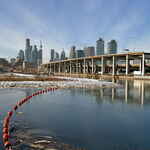
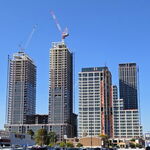
The Star ran a story over the weekend on how much it would cost to house everyone in encampments. Its well intended and made some good points, but hugely problematic.
More than 1,600 people are living outdoors, many in encampments. The Star crunched the numbers and this is what it could take to build a home for every one of them.

www.thestar.com
They put their math up so let me show that before explaining the problems:
So, lets start with the first problem which is the base number of people requiring help.
@HousingNowTO would be good to hear from on this, but I'm not buying the 1,615 figure for encampments./on-street outside of shelter number. I would peg it at least 50% higher.
But lets set that aside, the choice here was to exclude everyone in the Shelter system, as if that were an acceptable outcome. You have people in encampments, for multiple reasons, but a top one is that the shelter system is unpleasant and unsafe, its also hideously expensive for what it delivers.
If you added the 10,700 beds that were in the shelter count last year, you get total of 12,315 people requiring housing, more than 7.5x The Star's number, would peg the real number as being closer to 8.5x.
So lets re-state The Star's numbers using their capital cost estimates for one moment.
We get 4.699 Billion (based on 12, 315 x 444,125)
***
Now let's tackle part 2, the cost of the capital construction of the new units. The City is actually building units and nowhere are they delivering costs this low. I question the Dunn House figure; I want to look back at that thread, cause I remember different, but I digress.
I don't see a hope in hell of delivering an average new unit build at that price.
* note that they talk about 'upfront' costs which may well suggest they took the debt servicing cost out and allocated it to on-going costs, but that's unclear.
I will summon
@ProjectEnd for his thoughts, but in my mind, based on actual delivery costs to date, it would be unreasonable to set the figure below $650,000 per unit. That's higher than it should be, but you have to start from a real-world perspective on what the last unit cost to build, not wishful thinking.
If you multiply 12,315 x $650,000 you get $8,004,750,000 (8 Billion for short) To my mind that's a more realistic figure to use. While daunting, if, as The Star did, we amortize it over 10 years, its 800M per year, which compares to an 18B City of Toronto budget.
In the real world, a portion of the costs would be debt and then servicing costs spread over 20-25 years, so the annual hit would be lower, but I'd rather use the higher number to start, because when we shift the costs to debt we actually drive up project costs massively.
Just for the sake of offering a funding model that might be believable, I would allocate 1/3 federal money, 1/3 provincial money, 1/3 City money, and then assume the City was required to come up with ~270M per year. This would be equal to roughly a 5.5% property tax increase across the board, above inflation, if the revenue were generated that way.
But I would pursue it differently.
Right now, the LTT is generating a pittance. The City is compensating by raising other taxes. I would dedicate 100% of increased LTT revenues over the next few years to affordable housing. If the LTT returned to its former self, there's about 150M on the table.
Even a bit shy of that would pay 1/2 the tab and reduce the City's property tax hike requirement to less than 3% (above inflation)
The City would save a ton of money moving away from shelter beds and that budget saving should show up a sunset to the property tax premium. Phasing it out beginning in year 8, as shelter beds close. The beds should be closed only after latent demand is fully met, with 15% spare capacity, then beds could close at rate of 2 for each 3 beds of permanent affordable housing that open.
****
That said, the cost to acquire existing private sector units from REITs would likely be significantly less, and would involve taking on housing that is profitable in its current form.
If you employ the mixed income model, in which market rents support below market units, you could convert units to deeply affordable as they become vacant until you hit 20%, at which point you cap them for that building.
That should essentially make the buildings non-profit, but fully funded without subsidy from government.
****
On the subject of ongoing costs.........the Auditor General's report isn't a bad starting point, but if using figures from 2017, you'd better be applying an inflation adjustment. Likely on the order of about 29%
On the TCHC costing, I would like to know if that number is net of rental income or gross, that rather matters.
On the supportive housing, we need an accurate assessment of how many people need that and how many are short-term, vs long-term needs. The latter should be subsidized by the province for 'Long Term Care' of some description, while the short-term require a different funding formula, likely out of health budgets and/or City funds.
****
All in all. I appreciate the thought, but it feels like not enough effort was put into creating an accurate picture here, or figuring out exactly how funds for it could be generated.,