News   Feb 27, 2026
 4.5K     5 
News   Feb 27, 2026
 930     0 
News   Feb 27, 2026
 944     0 

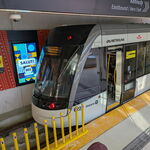
Finch West Line 6 LRT

The way in which construction was handled was ridiculous, but there's a few things that make a rebuild in the east much more possible than you imply.

1) The construction in the east was never as disruptive for as long a period of time as the tunnelled section west of Laird. Regular traffic flow returned along most of the Golden Mile years before Yonge/Eglinton had the same.

2) The public memory is much shorter than most assume, especially in a city as rapidly growing/changing as Toronto. In ten years, I'd seriously doubt many people would harken back to traffic disruptions that had mostly occurred 20 years prior at that point as a reason for not cutting major travel times down on Line 5 and improving vehicle flow on Eg East and intersecting streets, assuming decent TSP is ever in place.

A lot of this is likely contingent on Metrolinx ceasing to exist or being gutted before any proposal came forward, as their aptitude seems to be in constant decline, with Line 10 already in a disastrous state and GO expansion dying a slow death.
 
Buses crossing intersections every 2-3 minutes in each direction with signal priority, sounds like a great idea.
 
Buses crossing intersections every 2-3 minutes in each direction with signal priority, sounds like a great idea.
And spending Billions to slow down transit, an even better idea.

Also, what signal priority? Postponing left turns and extending a green for a bit longer will hardly affect perpendicular traffic.
 
That will NEVER happen.

The long suffering people along Eglinton have been put thru hell for the last 15 years and now that the line is finally finished, the very last thing they will tolerate is to start construction all over again. This is made exponentially worse by the fact that ML has a well deserved reputation of bringing in infrastructure projects way over budget and not even remotely close to the timetable they promise.

As ridership increases, they can add another car to the train but eventually, with 6 minute frequencies and a gutless wonder of a Mayor to implement full TSP, increase speed limits for the trains, and get rid of some stops, the line will simply not be able to cope with the number of riders. Due to this, they are going to have to eventually divide this line in 2.......one subway, one street running LRT akin to what the BD line and SRT was. Both trains will short-turn at the transfer point and head back to where they came. The subway section can run every 2 minutes and be automated while the street level section remains every 6 minutes or hopefully better.

They can make it relatively stress free by making the "transfer" station completely seamless by having 2 different platforms.......one for Eastbound and one for West. When you get off your one train you are literally 3 meters from the entrance to the other. People will initially be ticked off but eventually they will get use to it just as they do for other transfer points or as they did with the SRT.

If you lived along Eglinton or had a business there, would you tolerate going thru this horror story again?........I think not. It's not an ideal solution but, unfortunately, it's the only one.

I agree that rebuilding the line is a bad idea, and should not happen.

However, artificially splitting the line is another bad idea. The new "transfer" station, initially not designed as a transfer station, will become a bottleneck. If you only have one platform for each of the two half-lines, then any delay recovery becomes a lot harder. One train occupies the single platform, next train has to wait between the stops until that first train is able to move.

To my knowledge, the current weekday scheduled frequency for the whole ECLRT is 4 min, not 6. If you want to boost the "subway" section frequency to 2 min, then it is better to short-turn every 2-nd train. That puts some extra load on the station where the short turns occur, but not as much load as what the full split would cause.
 
And the infrastructure you wanted got us slower transit and took us back. You get that, right?
You've made this statement ad infinitum. Once they achieved the interim 46-minute service, it wasn't slower most times of day.

And now they've improved the travel times to 44 minutes, it's even faster at most times of the day.

With reports of vehicles achieving 41 to 42 minutes at times, before TSP implementation, there'll likely be more improvements.

Perhaps though, you can stop repeating this? I think we all know what your opinion is - whether it be correct or not.
1771711018547.png
 
I still think LRT lines in toronto can work. The biggest problem with the line is how it was designed, which can be changed in the future.

1. Stations should be minimum 650-700 meters apart. That is a 10 minute walk between stations, which is reasonable.

2. Stations at major intersections should be built separate-grade. It can be built above ground preferably or underground. This would allow frequent service without impacting traffic.

3. For minor intersections with surface stations the LRT should always be given priority through aggressive TSP. With minor intersections there is less perpendicular traffic so it should be easier to implement.
4. For separate-grade Stations at major intersection LRT required to stop, but for surface stations at minor intersections a request stop model should be implemented. From my experience riding the LRT, outside of rush hour, stations located on smaller intersection are lightly used.

5.When LRT needs to complete turn, it should be designed with gentle curves so vehicle's can maintain speed. I understand LRT are designed to take sharp turns, but it should not come at the cost of speed.

With all these changes LRT would resemble more a light metro line.
 
I agree that rebuilding the line is a bad idea, and should not happen.

However, artificially splitting the line is another bad idea. The new "transfer" station, initially not designed as a transfer station, will become a bottleneck. If you only have one platform for each of the two half-lines, then any delay recovery becomes a lot harder. One train occupies the single platform, next train has to wait between the stops until that first train is able to move.

To my knowledge, the current weekday scheduled frequency for the whole ECLRT is 4 min, not 6. If you want to boost the "subway" section frequency to 2 min, then it is better to short-turn every 2-nd train. That puts some extra load on the station where the short turns occur, but not as much load as what the full split would cause.
You raise a good point about having some trains running full route length while the underground sections doing a short-turn. The problem, is that such a system would significantly raise operational costs. When a system is automated, it doesn't cost a cent more to run a train every 2 minutes than every 10 except for electricity. By separating the 2 lines, the underground portion could be automated IF it has exclusive ROW on the tracks. You can't have an automated train run on the same tracks as a manually controlled one. This means that labour costs for the increased service would rise significantly. Considering how the TTC are terminally bitching about how little money it has, it should be automating lines where possible.
 
Perhaps though, you can stop repeating this?
If I'm responding to someone and that point is the response, then no, I will not stop repeating this point.

And you seem to be grasping for straws here. "It's not always slower than buses, sometimes it's a tad bit faster, that makes the Billions squandered totally worth it". And I've taken the FWLRT six times this month, four times in rush hour, not once has it been below 50 minutes, which is close to your bus time in rush hour. Not much better.
 
I still think LRT lines in toronto can work. The biggest problem with the line is how it was designed, which can be changed in the future.

1. Stations should be minimum 650-700 meters apart. That is a 10 minute walk between stations, which is reasonable.

2. Stations at major intersections should be built separate-grade. It can be built above ground preferably or underground. This would allow frequent service without impacting traffic.

3. For minor intersections with surface stations the LRT should always be given priority through aggressive TSP. With minor intersections there is less perpendicular traffic so it should be easier to implement.
4. For separate-grade Stations at major intersection LRT required to stop, but for surface stations at minor intersections a request stop model should be implemented. From my experience riding the LRT, outside of rush hour, stations located on smaller intersection are lightly used.

5.When LRT needs to complete turn, it should be designed with gentle curves so vehicle's can maintain speed. I understand LRT are designed to take sharp turns, but it should not come at the cost of speed.

With all these changes LRT would resemble more a light metro line.

Some problems with these ideas. Transit planning has to take into account the reality on the ground. How far apart are the major arterials? Half a mile on one city of the city, 5/8 on another. How many riders live in between, how many of those on perpendicular side roads, and how far from stops? How many do you lose if they are too far from stops. Remember, when they took out the minor stops in Etobicoke to speed up the journey, ridership estimates significantly decreased.

I've heard the duck under major intersections idea many times. If your stations are far apart, there are only stations at major intersections. So essentially you are building a line with subway stations and at-grade running, a roller coaster that maximizes costs by quintupling the cost of the stations and then energy and maintenance costs by having trains slam on the brakes to stop and stations at the bottom of a ramp, then straining the motors to climb a hill after stops. Going over major intersections is more logical, but not pretty. So eventually Why not just build a subway is the result.
 
You cant call someone a troll just because you don't like what they say. What ever happened to democracy.
They don't like the contents of what I said, so they choose the passive aggressive route and just throw words around like "trolling". This is a forum, the whole purpose is responding to what people say, addressing the details, content of their points, etc. Apparently, it's too much for some people.
 
They don't like the contents of what I said, so they choose the passive aggressive route and just throw words around like "trolling". This is a forum, the whole purpose is responding to what people say, addressing the details, content of their points, etc. Apparently, it's too much for some people.
Of course you can write what you want. But this is a forum; there is no "winning".
 

Back
Top