News   Dec 22, 2025
 67     0 
News   Dec 19, 2025
 1.6K     0 
News   Dec 19, 2025
 1.1K     0 

Toronto Eglinton Line 5 | ?m | ?s | Metrolinx | Arcadis

Chow might have her opinions but she is utterly incompetent and useless of a mayor. Having good opinions on things doesn't make you a good mayor. She had two years to know about the Line 6 issues for example and did nothing and is only surprisingly reacting to them now.
I would love it if you could give me the name of a single person who could be elected mayor, and who would have singlehandedly fixed Line 6 in just two years, under the exact same circumstances and with the exact same city council Olivia Chow has to deal with.

And don't try to give me Andy Byford or whoever. I want the name of a person who would have been a credible, serious candidate in that 2023 mayoral byelection. Mayors get elected, not installed: if they aren't electable, they don't count.
 
Source: You made it up.

Its been quite clear over the past few months that the line being slow and no active priority has been entirely on the city. I'm not sure what you're trying to accomplish with this blame shifting.
They're being blinded by their hate for provincial healthcare and education policies, along with the politicking in 401 tunnelling and automated traffic enforcement. For the record, I'm not a fan of what's happened in health and education either.

The preponderance of evidence points towards a greater share of the blame regarding poor operations lying with City council, City transportation services, TTC Board, and not least of which, TTC upper staff—as opposed to Metrolinx. Noone here is blaming line workers like operators for this fiasco with effectively no TSP plus antiquated, streetcar-like operations. The transcripts and youtube video of the TTC Board meeting from December 10 are incriminating for TTC staff, but just the tip of the iceberg. I'd like to point out though, with the new info on how bad the reliability of the vehicles and subsystems are on Line 6, this would in fact be Mosaic, and more so Metrolinx's fault. The physical infrastructure etc... being tofu dreg quality is Metrolinx's fault. If breakdowns and reliability issues effectively worsen travel times, that's Metrolinx's fault. Source for Mosaic/Metrolinx soiling the bed again: https://stevemunro.ca/2025/12/14/6-finch-west-six-days-of-delays/

But when Line 6 is operated like a streetcar, as has been pointed out extensively, and TSP is borderline nonexistent, that's on the City.
-TTC Streetcar culture has definitely permeated into the operations of this brand spanking new line. Operators are slowing down at every dip on the line that heads into a valley or underpass. This operations culture comes squarely from the period when the new Flexities got caught in underpasses and flooded due to poor storm drainage. This has no place to exist on a brand new modern LRT line that has also had significant sewer, storm and roadway construction to accommodate a new LRT.

-One can tell who is a veteran or came from the downtown Streetcar operations by their over timidness to slow down to a crawl at every intersection even with a green transit light. In addition, these operators are slowing to slight stop-and-proceed at all special trackwork. Once again this streetcar operations culture has absolutely no business being on a new modern LRT system with 100% operating switches.

It’s time to light a fire and smoke out all the incompetent managerial and personnel who refuse to adopt to a modern LRT operations and in general refuse to update their archaic streetcar operations.

I’m hoping that Metrolinx has stiff penalties against the TTC if operations are not satisfactory.

To:
@zang et al who think someone's name that rhymes with Rug Board is the root cause of most systemic problems in Ontario including Line 5 and 6.
I call BS on this. We have one of the most pro-transit mayors in history.
I believe you also aren't aware of how weak Ontario mayors are. Until strong mayor powers came in for specific situations, mayors were basically equal rank with the other councillors. Both these things can be true: Olivia Chow may be the most pro-transit mayor in history, and yet the city bureaucracy, which the TTC is part of, is predominantly to blame for the clown show operations for both Line 5 and 6.
 
Last edited:
I think you overestimate what a mayor can do over a provincial project. I'm sure there's lots of blame to go around, but TTC only got the line a few weeks back
They could have refused to assume responsibility for the line until Metrolinx achieved their promised 33-minute service - or at least the compromise 38-minute service.

Or get through a single day without having to delay or withdraw any of the streetcars from service because of mechanical issues.

Or at least communicate the changes to the running time that they'd agreed with Metrolinx to the community (and the rest of council by the sounds of it).

... Olivia Chow may be the most pro-transit mayor in history ...
I don't know where @zang gets this. The slowdown on major expansion projects that Tory agreed to with the Province suggests the opposite. Toronto was supposed to be leading Line 7, the Waterfront East line, and Yonge-Bloor station; and funding several GO stations. The city has gotten nowhere on two of those projects, and keeps cutting back and delaying the funding of GO stations.

And really - is @zang choosing to ignore her vocal opposition to needing and building the Downtown Relief Line (now called the Ontario Line)?
 
So posting a news article stating that the province is behind the scenes hobbling what the city can do (especially when it comes to cars) has no bearing on anything? C'mon.
You posted an article regarding Toronto's plans that are tangentially related to Automated Speed Enforcement, there is nothing here regarding Transit Signal Priority, nor has the province made any comment remotely indicating that they're against its installation. From the beginning Metrolinx has been quite clear that the question of TSP is entirely on the City of Toronto, and by extension Olivia Chow.
 
I don't know where you get this. The slowdown on major expansion projects that Tory agreed to with the Province suggests the opposite. Toronto was supposed to be leading Line 7, the Waterfront East line, and Yonge-Bloor station; and funding several GO stations. The city has gotten nowhere on two of those projects, and keeps cutting back and delaying the funding of GO stations.

And really - are you choosing to ignore her vocal opposition to needing and building the Downtown Relief Line (now called the Ontario Line)?
I don't necessarily agree that she has been opposing these projects, just rather that they're nowhere near the top of her priority list. In fact I'm actually not even sure what she has really done during her time as mayor in general, the only thing I know is she made some deals with Ford that still haven't been followed through on (where's the Gardiner/DVP Upload Ford?)

Meanwhile for Projects like Line 7, she's probably purposefully slowing that one down since it frankly should not exist.
 
Why tunnel? There's but a single intersection, at Leslie.

What's wrong with my much, much, cheaper suggestion of re-engineering the roadway and CP rail bridge to squeeze an extra eastbound lane on the north side of the tracks, for the two troublesome turning movements? You'd still need lights for pedestrians, but they can 100% be only used when there's no LRVs in sight (which is how I assume the pedestrian crossing I never use at Queen Quay station work).

You could probably re-engineer the roads for next two crossings (the turning lanes for the DVP) as well. And eliminate the Swift/Credit Union lights. This would drop the problematic length with intersection to about 3.5 km.

Nothing wrong with that. If the LRT operation between Laird and Don Mills can be improved for a minor cost, and with no tunneling, that's probably a good option.

My original post was mostly against the suggesting to split the service at Don Mills (which IMHO is a bad idea in any case).
 
My original post was mostly against the suggesting to split the service at Don Mills (which IMHO is a bad idea in any case).
Demand is forecast to be lower east of Don Valley station (at least after the Ontario line opens). I am concerned that with the frequent service proposed on the Ontario Line, compared to less frequent service on Ion and the Finch West line, that signal priority won't work well, as you'd be challenged to give both directions what they need at the same time.
 
Nothing inherently wrong with Sheppard having more capacity than Eglinton. Yes, Eglinton is closer to downtown, but also closer to the competing Line 2. Furthermore, the demand level partly depends on the structure of feeder routes. It is possible to shift a portion of the demand from Eglinton to Sheppard, and thus delay the moment when Eglinton runs over capacity.
I am sorry, Sheppard is a full 6 km north of Eglinton, whereas Eglinton is 4 km from downtown/Bloor. https://en.wikipedia.org/wiki/Downtown_Toronto

There is no way Sheppard could shift any statistically significant amount of demand from Eglinton and vice versa. Are you suggesting that densification and development be shifted north to Sheppard instead of Eglinton? That is the only way that would make sense, even then there are just too many jobs downtown. Also, the 401 basically cannot be widened in most of North York any more, so densifying Sheppard without a much more robust rapid transit (2-3 times larger) and/or RER system would be disastrous for road congestion. And our government(s) clearly can't afford much more subway anytime soon. IMO This would be a colossal mistake in urban planning.

In a more ideal case, Toronto's density should roughly radiate outwards from downtown, gradually declining the further you get, with the exception of high density nodes / secondary CBDs (Midtown, North York, Vaughan, Mississauga, etc...). Eglinton is the first major east-west road that crosses the Don River/valley north of Bloor. It getting a subway before a westward Sheppard extension should've been a no-brainer. And citing demand projections from highly suspect studies done by Metrolinx that ignored light automated metro for Eglinton to make sure LRT was chosen is just confirmation bias, same as Metrolinx's confirmation bias. Any serious *transit city* is not going to relegate the foremost east-west corridor outside of downtown to 15,000 pphpd (doubtful crush load on an LRT), or even the delusional 22,500 pphpd that some people might cite.
It's crazy how demonized some of us were for having the audacity to say that Eglinton (and Sheppard East) should have been a subway and that they cooked the numbers (Neptis) to make sure LRT won over subway while excluding Skytrain/OL technology from the studies.

How the table have turned today - looks like this line will have the same issues as O-Train.

Toronto is uniquely privileged to have an excellent grid system, density along long linear corridors and a few nodes, perfect for subway with stop distances >1km. Not to mention the linear density along the lake west of Toronto that is perfect for RER-style regional rail. And yet somehow we screwed up multiple critical transit projects in the last decade (Line 6 is not critical, it's not even the busiest bus corridor post-covid).

I am calling it, we'll regret this easily within my lifetime. The lack of route capacity on Eglinton will inevitably force densification and development elsewhere. Best case, adjcaent corridors like St. Clair and Lawrence. Worst case, suburban sprawl sprawl into the Greenbelt. St. Clair already has a streetcar, so I probably won't live to see it get a spur line branched off Line 1 St. Clair West. Lawrence's corridor cuts through Bridle Path, so that's a political non-starter. IMHO Midtown Toronto is destined for more congestion. Ironically, if Line 5 is slower than the bus, that might actually save it from eventually hitting overcapacity more than anything else.

 
Last edited:
Queen's Park won't give a single nickel that inconveniences a driver as long as Doug Ford's around.
I disagree.

While Ford certainly likes his cars and freeways, he is livid over this line and he has the right to be. When politicians open new infrastructure, they are there at the ribbon cutting smiles blazing hoping to sap the occasion for every political point it's worth. That's why they always show up in the first place. Finch, and soon Eglinton, however, have become nothing more than a noose around his political neck. What should have been a win has instead turned into a headache and it's just getting started.

He is also losing a lot of support from his suburban base. This notion that people who drive don't want good transit is a false one but, especially for the left, they are an easy copout. The vast majority of drivers want better transit even if they don't use it. The majority of people will never need emergency housing or social assistance but that doesn't mean they don't see it as a necessity. They know that is an essential component of a vibrant city and reduces traffic on the roads. They are equally appalled that after $15 billion spent on these two lines and years of endless construction, the people are better off not using them and taking the bus.
 
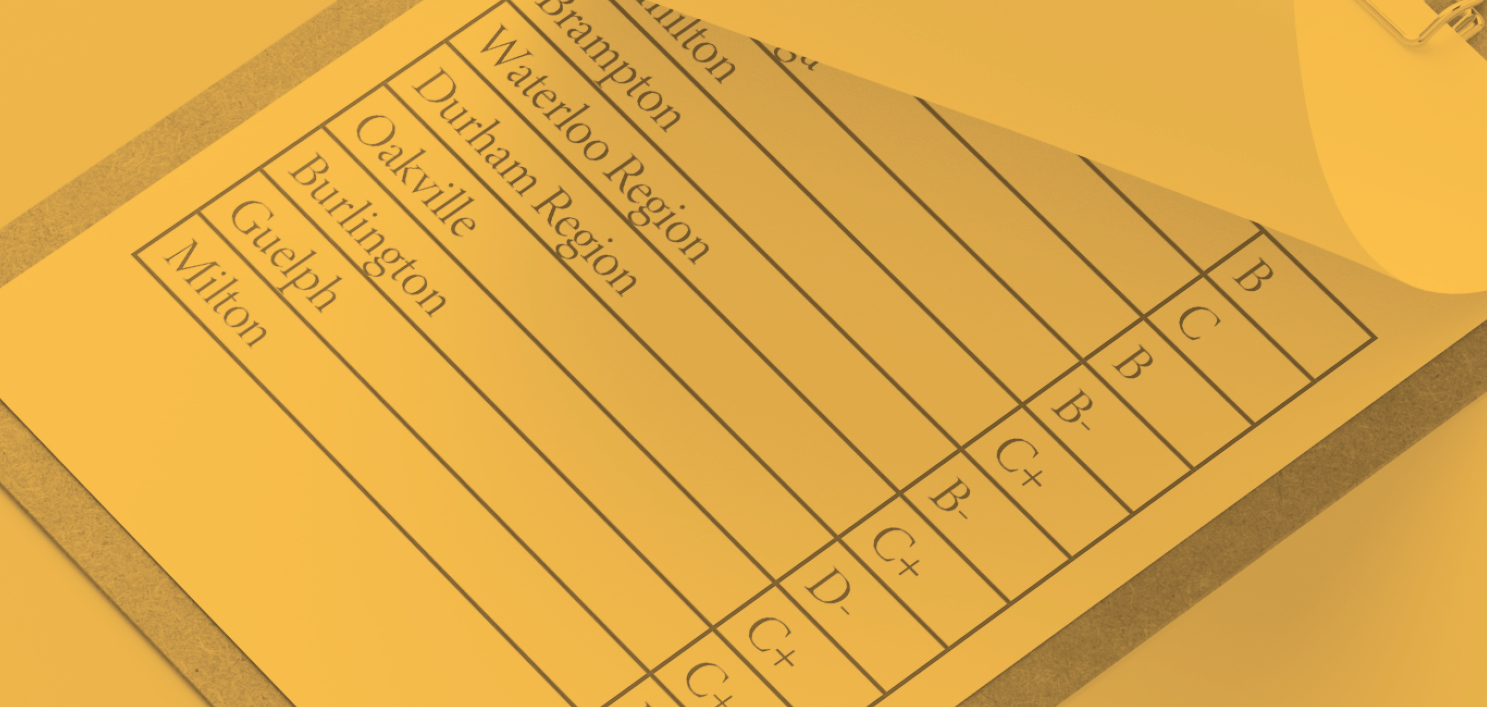
You're splitting hairs and missing the point of what I am saying. Of course I mean an independent third-party's definition of reliability, on-time rates, other metrics etc... I thought I didn't need to point out the obvious more than I already regularly do. Noone out here is claiming the O-Train is as reliable as the MTR or even the SkyTrain, even though different numbers from different people based on different definitions might make one believe so. Read the report linked in the CityNews article from above if you have the time. That's where the 57.98% 𝚊̶𝚕̶𝚕̶-̶𝚖̶𝚘̶𝚍̶𝚎̶ surface transit on-time rate comes from. "Guelph has the most reliable transit with an on-time score of 88%, followed by Hamilton at 82%,and Burlington, Mississauga and Waterloo at 79%. Toronto had the least reliable surface transit at 58%."

TTC's definition of subway service reliability based on headway adherence gives ~ a 1.5 to 3 minute buffer, which would be unimaginably late in Japan. For the purpose's of any useful comparison the authors are not going to blindly accept the word of each agency. Self-reported metrics are the "we've investigated ourselves and found no wrongdoing" numbers.

It's less splitting hair then you think. The OTrain actually only has 30 seconds leeway from it's scheduled time in it's contracted metric. When it is working, it's always like clockwork. But it's a binary switch, it either works perfectly or not at all, when it's broken the entire system goes into chaos, so disruptions have massive effects. The REM has similar wide ranging disruptions, but it's less key to Montreal's overall transit scheme so hasn't (yet) acquired the same reputation.

It's the fact that those disruptions are so bad when they happen that contributes to it's terrible reputation. The point is it's the overall experience that matters more then the metrics. Perception is reality. You could have a less reliable system by metrics, but if the disruptions are less critical, the overall perception would be that's it's fairly good.
 
She had two years to know about the Line 6 issues for example and did nothing and is only surprisingly reacting to them now.
Not sure we can say this defintivly at all, given that ttc had limited insights on the line, due in part to the contract.


If anything, the ttc board members and the head of the ttc should have flagged this to her as a potential issue. However, ALL political actors, both provincial and municipal, seems to have been caught on aware.

As someone who works in public service, senior officials only know what they are told. They are npot the experts and they do not have the time to hunt down the information like this.

Do you think ford was aware of ttc operating practices on line 6?
 
The preponderance of evidence points towards a greater share of the blame regarding poor operations lying with City council, City transportation services, TTC Board, and not least of which, TTC upper staff—as opposed to Metrolinx. Noone here is blaming line workers like operators for this fiasco with effectively no TSP plus antiquated, streetcar-like operations. The transcripts and youtube video of the TTC Board meeting from December 10 are incriminating for TTC staff, but just the tip of the iceberg. I'd like to point out though, with the new info on how bad the reliability of the vehicles and subsystems are on Line 6, this would in fact be Mosaic, and more so Metrolinx's fault. The physical infrastructure etc... being tofu dreg quality is Metrolinx's fault. If breakdowns and reliability issues effectively worsen travel times, that's Metrolinx's fault. Source for Mosaic/Metrolinx soiling the bed again: https://stevemunro.ca/2025/12/14/6-finch-west-six-days-of-delays/

But when Line 6 is operated like a streetcar, as has been pointed out extensively, and TSP is borderline nonexistent, that's on the City.

To:
@zang et al who think someone's name that rhymes with Rug Board is the root cause of most systemic problems in Ontario including Line 5 and 6.

I believe you also aren't aware of how weak Ontario mayors are. Until strong mayor powers came in for specific situations, mayors were basically equal rank with the other councillors. Both these things can be true: Olivia Chow may be the most pro-transit mayor in history, and yet the city bureaucracy, which the TTC is part of, is predominantly to blame for the clown show operations for both Line 5 and 6.

But what's the evidence that any part of the city is responsible for line 5 and 6 problems? This has been the province's baby until just recently. The TTC didn't build the lines, the city didn't design the car interactions, etc. Laying blame on any part of the city seems just like going for an easy target simply because it's now in their hands. Metrolinx has been anything but transparent over the years, and Ford has had a pretty firm grip on that.

I'm hard-pressed not to find it completely plausible that a guy who's spent a career hating on "streetcars" and sabotaging reasonable, working methods of traffic calming and enforcement (against the will of the majority no less), would quietly work to sabotage two LRT lines that were too far gone to cancel. We're not talking about a normal Premier here; we're talking about a guy who as one of his first acts in government was to threaten the NWC in an attack democratic rights in the middle of a freaking election.

Ford shouldn't be normalized or underestimated, simply because he gives folksy vibes to 905ers.
 
It's less splitting hair then you think. The OTrain actually only has 30 seconds leeway from it's scheduled time in it's contracted metric. When it is working, it's always like clockwork. But it's a binary switch, it either works perfectly or not at all, when it's broken the entire system goes into chaos, so disruptions have massive effects. The REM has similar wide ranging disruptions, but it's less key to Montreal's overall transit scheme so hasn't (yet) acquired the same reputation.

It's the fact that those disruptions are so bad when they happen that contributes to it's terrible reputation. The point is it's the overall experience that matters more then the metrics. Perception is reality. You could have a less reliable system by metrics, but if the disruptions are less critical, the overall perception would be that's it's fairly good.
Some studies will calculate average and/or median delay time etc... That way a fair comparison can be made. Your claim that metrics can be flawed is very valid. But researchers will try to avoid doing apples to oranges. Otherwise are researchers not able to make any comparisons? Surely that hasn't been the case. Anecdotally, from 1987 to 2001, " the average delay per train since the inception of JR East more than 14 years ago is about 0.5 minutes." By your experience, perhaps any OTrain delays, if at all, are skewed towards being very long, even if the average delay is very low... Another example, the TTC subway lost 45 days to delays in 365. That's equivalent to ~2 hours a day within the 20 service hours. If OTrain feels as bad as you say it is, I doubt the average delay or service reliability is truly as they report it to be. Line 1 and 2 don't feel like 83% and 91% on time (within 1.5 times the headway). End-to-end trips on Line 1 especially, have not hit 2022 average speeds since well, 2022.

Sources: https://ttcdelayinsights.ca/overview
https://www.jreast.co.jp/e/investor/ar/2001/pdf/p14_e.pdf
 
Last edited:
I disagree.

While Ford certainly likes his cars and freeways, he is livid over this line and he has the right to be. When politicians open new infrastructure, they are there at the ribbon cutting smiles blazing hoping to sap the occasion for every political point it's worth. That's why they always show up in the first place. Finch, and soon Eglinton, however, have become nothing more than a noose around his political neck. What should have been a win has instead turned into a headache and it's just getting started.

He is also losing a lot of support from his suburban base. This notion that people who drive don't want good transit is a false one but, especially for the left, they are an easy copout. The vast majority of drivers want better transit even if they don't use it. The majority of people will never need emergency housing or social assistance but that doesn't mean they don't see it as a necessity. They know that is an essential component of a vibrant city and reduces traffic on the roads. They are equally appalled that after $15 billion spent on these two lines and years of endless construction, the people are better off not using them and taking the bus.
He could create a law that all street running transit has signal priority. He has yet to do that.

So,what has he done that shows he actually is even a little bit annoyed?
 
He could create a law that all street running transit has signal priority. He has yet to do that.

So,what has he done that shows he actually is even a little bit annoyed?
He wants it faster, but not to affect traffic. A have your cake and eat it too situation.

I don't think any Ontario or city government even gave a passing thought to giving line 5 absolute priority, like Calgary or Edmonton with crossing gates and flashing lights
 

Back
Top