


BrenWilson
Active Member
Has he approved any *transit* project that hasn't already been studied for ages? Maybe SSE was the biggest shake up but that entire project was a failure at multiple levels.
|
|
|

The alignment and station locations for that follow the long-existing TTC plans - which was already approved, financed, and close to being tendered when the province took over and delayed the project from the planned 2027 opening date.Has he approved any *transit* project that hasn't already been studied for ages? Maybe SSE was the biggest shake up but that entire project was a failure at multiple levels.
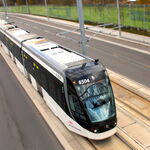
Without getting overly excited; I believe Finch LRT is a useful line to build.
1. The right-of-way will speed up the travel during the peak periods, when the street is congested. And, will hopefully make the headways more even.
2. The capacity limit is higher than what can be achieved with buses (even if buses are given dedicated lanes, like YRT's VIVA); the fixed wheel advantage enables longer vehicles.
3. The cost is high, but that reflects the general inflation of construction costs. Surface light rail is still cheaper than subways. Once we get the final per-km costs of the OL, SSE, Yonge North subways, they will end up being 3-5 times greater than the per-km cost of Finch LRT.
However, I don't really like it when Finch LRT is marketed as "rapid transit"; that's misleading, and could lead to negative public sentiments once the actual travel times are known from the line's operation. I would stick to "improved, high-capacity local transit" instead of "rapid".
Or, if anyone insists on calling Finch LRT "rapid transit", then we should call TTC's express buses "rapid transit" as well, since they operate at a similar speed.
He also showed that you don't need to study something for 2 decades to build a line. Yet this city is still studying (I mean stalling) on the Eglinton East LRT.

If the City had decided to build a subway from Eglinton to downtown without interconnecting with Line 2/Greenwood, as DRL was supposed to, they would have been crucified on here for failure to link up the lines and maximise economies in work vehicles, permit branching of Line 2 etc.You're right. All you need is some hired hack to show you something shiny and new, and he'll approve it. All of the old studies be damned.
Dan

Why let science get in the way of a good rant.... and the diagonal tunnel across downtown blocks deemed an attempt to collapse buildings.

I think they are out of funds now.The Sheppard study has been moving at quite the snail pace.
Here we see one of the earliest evil developer handouts, the construction of the 7 train to Flushing, Queens in the 1910's. It famously did nothing good for the City of New York, and the city would soon thereafter fall into decline as it foolishly built rapid transit infrastructure to lands set to see a massive influx of population.Plenty would have been said about the dipsy doodle to Unilever and back up to Queen (handout to property developers),
And of course here we see Rome's Line A brutally crossing under dozens of centuries (or millennia) old buildings, all of which have of course collapsed since the lines construction in 1980. Perhaps one day human civilization will discover the far off art of "underpinning". We can only hope....the diagonal tunnel across downtown blocks deemed an attempt to collapse buildings.
yeah so why new york back then likes to build subway lines in lands that hasnt been developed yet?Here we see one of the earliest evil developer handouts, the construction of the 7 train to Flushing, Queens in the 1910's. It famously did nothing good for the City of New York, and the city would soon thereafter fall into decline as it foolishly built rapid transit infrastructure to lands set to see a massive influx of population.
View attachment 684293
And of course here we see Rome's Line A brutally crossing under dozens of centuries (or millennia) old buildings, all of which have of course collapsed since the lines construction in 1980. Perhaps one day human civilization will discover the far off art of "underpinning". We can only hope....
View attachment 684294
On a serious note: Ford's "backroom crayoning" resulted in a better subway plan for Toronto than has been produced in decades precisely because it did not include the input of our most enlightened denizens, who seemingly have a toddlers understanding of how a building remains erect.
Manhattan was very overcrowded and NYC was booming in population, so planners and the companies that built subways at the time knew the ongoing construction of rail and road crossings of the East River would result in a deluge of population into the largely rural Queens County. Essentially, it was common knowledge that demand for the land would jump once access to the amenities/economy of the CBD was improved with infrastructure projects.y
yeah so why new york back then likes to build subway lines in lands that hasnt been developed yet?

New York City originally was just the Island of Manhattan until 1898. Manhattan used to have the largest population, now Brooklyn does. Wonder what the old cities of pre-amalgamation Toronto is currently?Here we see one of the earliest evil developer handouts, the construction of the 7 train to Flushing, Queens in the 1910's. It famously did nothing good for the City of New York, and the city would soon thereafter fall into decline as it foolishly built rapid transit infrastructure to lands set to see a massive influx of population.
View attachment 684293
And of course here we see Rome's Line A brutally crossing under dozens of centuries (or millennia) old buildings, all of which have of course collapsed since the lines construction in 1980. Perhaps one day human civilization will discover the far off art of "underpinning". We can only hope....
View attachment 684294
On a serious note: Ford's "backroom crayoning" resulted in a better subway plan for Toronto than has been produced in decades precisely because it did not include the input of our most enlightened denizens, who seemingly have a toddlers understanding of how a building remains erect.

Cool story, now tell us about the massive density that sprung up around Kennedy, or Warden. According to your logic, the presence of those subway lines should have resulted in Queens-like density, no?Here we see one of the earliest evil developer handouts, the construction of the 7 train to Flushing, Queens in the 1910's. It famously did nothing good for the City of New York, and the city would soon thereafter fall into decline as it foolishly built rapid transit infrastructure to lands set to see a massive influx of population.

 bsky.app
What a joke! We should have just constructed a VIVA style BRT along Finch.A slow order appears to have been imposed on the portal to Finch West station
august 🍂 (@auguststreet.ca)
painful to see slow zones on the finch west LRT before it even opens. this portal has been speed limited to 10 km/h. thanks to unplanned slow zones and weak, passive signal priority, trains are taking longer to complete trips, and gaps are wider. multiple cases of 12-15 min waits on line 6 😒😒