


|
|
|
You are using an out of date browser. It may not display this or other websites correctly.
You should upgrade or use an alternative browser.
You should upgrade or use an alternative browser.


Allandale25
Senior Member

nfitz
Superstar
How? Jaywalking is crossing the road, at an intersection, against the lights. If there's an intersection, then there can't be a barrier, for the cars.Once the Golden Miles develop into an urban neighbourhood, jaywalking would increase. They'll need a lot more barriers to stop people then.
Safer to let people cross mid-block if there's no traffic. Doesn't work well in rush-hour - but I've had no problems crossing even 6-lane roads like Don Mills at 2 in the morning mid-block.

ARG1
Senior Member
Maybe less to stop people from crossing, but more to guarantee stronger priority so that it could remain as "rapid transit", and not the 510 2.0. Getting people to stop crossing would require fencing between the tracks or between the tracks and the road.How? Jaywalking is crossing the road, at an intersection, against the lights. If there's an intersection, then there can't be a barrier, for the cars.
Safer to let people cross mid-block if there's no traffic. Doesn't work well in rush-hour - but I've had no problems crossing even 6-lane roads like Don Mills at 2 in the morning mid-block.
Monarch Butterfly
Superstar
How? Jaywalking is crossing the road, at an intersection, against the lights. If there's an intersection, then there can't be a barrier, for the cars.
Safer to let people cross mid-block if there's no traffic. Doesn't work well in rush-hour - but I've had no problems crossing even 6-lane roads like Don Mills at 2 in the morning mid-block.
nfitz
Superstar
Why though?Maybe less to stop people from crossing, but more to guarantee stronger priority so that it could remain as "rapid transit", and not the 510 2.0. Getting people to stop crossing would require fencing between the tracks or between the tracks and the road.
They'd save more lives by putting walls along the streets, so cars don't kill any more people on sidewalks and inside buildings.
Offhand, can't even recall hearing about any pedestrian deaths along Spadina, where people cross frequently (and legally), in the quarter-century of operation of streetcars.
ARG1
Senior Member
The issue isn't pedestrian deaths, the issue is that as a way to mitigate incidents, rail lines where the train runs on the street often have to operate significantly slower in the off chance that some guy jwalks. The reason I bring up the 510 is even ignoring the tight stop spacing, streetcars often travel far slower between blocks even if it can visibly speed up simply because of the concern that someone runs for it. The TTC in general has really strong history of slowing down vehicles as a safety measure to address some safety concern. This has happened on the 512, and especially on the 509.Why though?
They'd save more lives by putting walls along the streets, so cars don't kill any more people on sidewalks and inside buildings.
Offhand, can't even recall hearing about any pedestrian deaths along Spadina, where people cross frequently (and legally), in the quarter-century of operation of streetcars.
nfitz
Superstar
I haven't really noticed the cars running slowly - except when cars are ahead of schedule, or to keep a distance when they can see the car in front.The issue isn't pedestrian deaths, the issue is that as a way to mitigate incidents, rail lines where the train runs on the street often have to operate significantly slower in the off chance that some guy jwalks. The reason I bring up the 510 is even ignoring the tight stop spacing, streetcars often travel far slower between blocks even if it can visibly speed up simply because of the concern that someone runs for it. The TTC in general has really strong history of slowing down vehicles as a safety measure to address some safety concern. This has happened on the 512, and especially on the 509.
TTC has got a lot better at that, and increased scheduled times to make service more regular.
But I've seen no sign of behind-scheduled streetcars going slower on regular streets - which I thought would have been even more dangerous - and certainly have had deaths, when Spadina hasn't.
Transportfan
Senior Member
They'd save more lives by putting walls along the streets, so cars don't kill any more people on sidewalks and inside buildings.
Oh yeah, lets spend billions on freak accident prevention.
Human life is precious, but seriously, we can't go around trying to deathproof everything.
nfitz
Superstar
That was my point.Human life is precious, but seriously, we can't go around trying to deathproof everything.
Steve X
Senior Member
CityNews
This is the kinda events that causes TTC to tell their operators to slow down.
The point isn't deathpoofing but improve reliability. Same goes for PSDs on subway platforms. It's not all for suicide measures but to prevent litter cause track fire and allow trains to enter stations at a faster speed when they're are jammed packed.Oh yeah, lets spend billions on freak accident prevention.
Human life is precious, but seriously, we can't go around trying to deathproof everything.
As for Spadina streetcar deaths, there's a list:
Man, 81, struck and killed by streetcar
An elderly man died on Tuesday morning after he was hit by a streetcar on Spadina Avenue, just north of Queen Street.
toronto.ctvnews.ca
Last edited:
EnviroTO
Senior Member
Oh yeah, lets spend billions on freak accident prevention.
Human life is precious, but seriously, we can't go around trying to deathproof everything.
That was my point.
First, a fence or signage is not a billion dollars. Second, although it is nice to say we can't prevent all people from doing crazy things, that people need to be accountable for their own actions, or any other of things to say "hey it's obvious... isn't that enough" the problem is that we all pay when something goes wrong. This isn't like people who ask to put up handrails in the middle of the wilderness where "its nature" and if someone falls down a cliff the repercussions are felt only by those close to the individual and first responders, this is city infrastructure driven by a city employee and the citizens are going to see poor service every time there is an incident. I bristle at the thought of people that try to make the wilderness safe.... but this is the city. All we need is a few people to get hit and say they thought they were on a safe manicured grass lawn after crossing the lanes of traffic, and then grass disappears as an option. If studies have shown this works... I'm all for leaving it as it is because it looks much nicer than it would even with an aesthetically pleasing fence, but it will need to be something monitored closely and responded to quickly if people are crossing midblock all the time.
Voltz
Senior Member
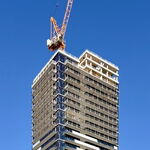
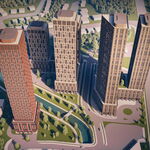
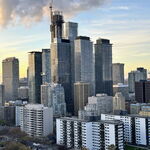
I don't think I've seen this posted here yet.
robmausser
Senior Member
I don't think I've seen this posted here yet.
All 3 pixels were so beautiful.

Johnny Au
Superstar
Progress Update: Avenue Station